CONTENT

Pop Mart (泡泡玛特) didn’t just sell toys—it built a movement. What started as a niche art toy store in Beijing is now a multi-billion-yuan empire reshaping how China and the world experience collectibles. At the core? A “blind box” format—sealed packaging, mystery figures inside, and a psychology that keeps fans coming back for more.
But this isn’t child’s play. Pop Mart tapped into something more profound: the emotional pull of nostalgia, the thrill of chance, and the aesthetics of street culture. In post-pandemic China, where “emotional consumption” and Gen Z-driven retail are dominant, Pop Mart sits at the intersection of commerce, culture, and design.
This article unpacks why Pop Mart isn’t just trending—it’s transforming. We’ll dig into how the brand cracked China’s fiercely competitive market, built iconic IPs like Molly and SKULL PANDA, and scaled globally without losing its underground edge. With up-to-date data and hard-earned insights, we’re going beyond the hype to reveal how this toy brand emerged as a cultural force.
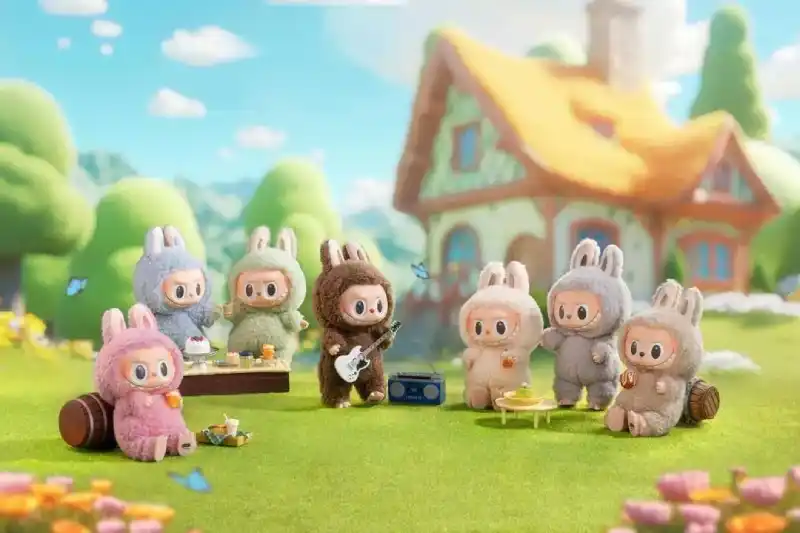
Pop Mart’s catalogs boast dozens of series, but a few key characters stand out. These IPs often become cultural icons in their own right:
Other series include cute animals (The Happy Bears, The Goosikids), mystical creatures, and various artist collaborations. Pop Mart often releases new lines or “seasons” to keep fans engaged. These IPs have become so popular that fans even demand merchandise beyond toys (e.g. keychains, clothing, phone cases).
Pop Mart saw this shift coming years before it became a phenomenon. Founded in 2010, it didn’t just ride the wave—it created it. Located near the Zhongguancun tech hub, the brand tapped into urban youth aesthetics, selling trendy stationery, lifestyle items, and novelty gifts at modest prices.
Take Labubu, for example:
It’s not just figures anymore, either. Pop Mart has smartly diversified across categories:
In fact, in January 2025, they launched POPOP, a silver jewelry line featuring characters like Molly and Labubu, targeting the affordable luxury segment. Rings and bracelets retail for under ¥400, making them stylish impulse buys with emotional appeal.
It popularized the blind-box format in China around 2014: sealed packaging that hides which character you’re getting, triggering repeat purchases and an addictive thrill of chance. According to one case‑study, Pop Mart’s blind‑box strategy “adds both scarcity and gamification … a retail lottery” where some boxes have hidden item rates of less than 1%.
Many blind boxes retail for ¥59–99 in China. This keeps the entry low‑risk and impulse‑friendly, while rare variants or “secret figures” create value and resale potential.
The format encourages collection rather than just consumption. Because you’re chasing a “complete set” or rare item, you engage longer, spend more, and remain in the ecosystem.
But the magic isn’t the box—it’s the IP inside. Pop Mart’s entire strategy revolves around turning its characters (like Molly, Skullpanda, and Labubu) into cult icons. Each series is treated like its own brand, with unique design language, storytelling, and drops.
The IP strategy allows higher margin products (because you own the IP → lower licensing cost), stronger brand equity, and expansion into multiple categories (plush, accessories, apparel, jewelry) using the characters.
The result? Emotional connection, collectibility, and a pipeline of built-in demand.
Pop Mart doesn’t just sell toys—they’ve mastered where and how to sell them, crafting a seamless omnichannel ecosystem that maximizes both visibility and sales.
Why this matters: Pop Mart’s success lies in more than just product—it’s about owning the full customer journey, whether you’re buying from a vending machine in Chengdu or unboxing a rare find via livestream in Los Angeles.
What really sets Pop Mart apart? The pricing psychology. Most blind boxes retail for just ¥59–99 ($8–15 USD)—perfect for an impulsive dopamine hit. Yet, some ultra-rare items can resell for thousands, fueling a thriving secondary market and establishing a sense of “collectible status.”
This plays perfectly into what economists call the “lipstick effect”: even when broader economic growth slows, people still spend on small luxuries that make them feel good. Pop Mart delivers just that—miniature joy at an accessible price, wrapped in mystery and design.
In 2025, China’s collectible toy space isn’t a niche corner—it’s a full-blown consumer powerhouse. Fueled by the “kidult” (adult + kid) trend and a love for emotionally driven, aesthetic purchases, the market for collectible toys in China is expected to reach RMB 150 billion ($21.5 billion USD) this year, growing at an annual rate of over 35%.
Meanwhile, broader collectible categories (toys, art, cards) are on track to top $34.1 billion by 2030. For comparison, the entire traditional toy market in China is growing at an annual rate of under 9%.
This isn’t “toys for kids” anymore. It’s adult consumers—especially urban Gen Z and young millennials—treating collectible toys as fashion, self-expression, and emotional therapy. They’re not just buying, they’re collecting, displaying, reselling, and sharing their hauls online.
Over 60% of collectible toy buyers in China are under 30. And among them, women in Tier 1 and 2 cities dominate, often making these purchases as “treat yourself” items. A recent survey showed more than half of buyers spend 1–5 hours weekly engaging with their collections—whether displaying, photographing, or trading.
It’s a lifestyle, not a hobby. What sneakers are in the U.S., vinyl toys are in China. This generation is more willing to spend on “small joys” that offer aesthetic or nostalgic satisfaction. It’s a perfect setup for a brand like Pop Mart.
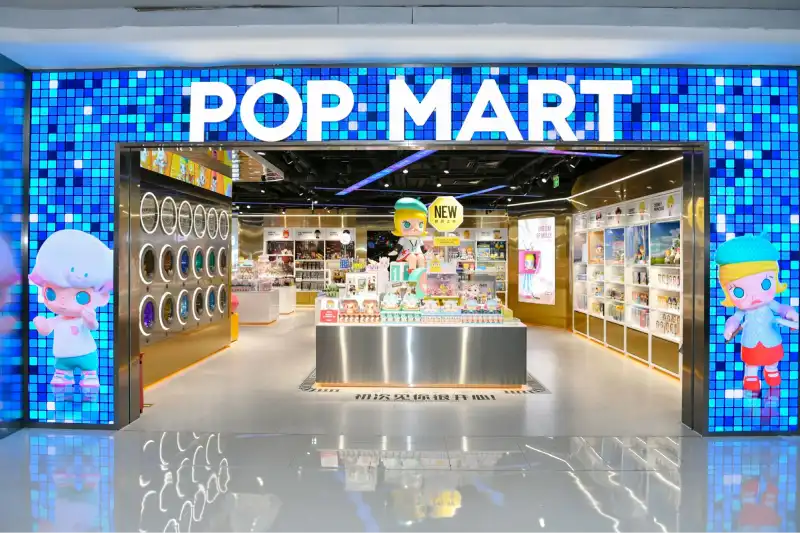
Pop Mart’s toys have transcended traditional demographics. They are no longer seen as mere children’s playthings but as status symbols among young Chinese “collectors.” The brand has tapped into Gen Z’s preferences for self-expression and “ugly-cute” aesthetics.
As one analyst observes, the ugly, snaggle-toothed Labubu epitomizes China’s embrace of quirky, offbeat characters over conventionally pretty ones. This anti-mainstream vibe appeals to young people who value individuality and nostalgia.
Celebrities and fashion influencers have amplified Pop Mart’s cachet. For instance, viral photos have shown stars like BLACKPINK’s Lisa and Rihanna attaching Labubu or Molly plushies to high-end handbags (Hermès Birkins, Chanel purses, etc.) as charms.
Influencers on RedNote (RED) and Instagram routinely post images of Pop Mart dolls styled as accessories. Even high-end fashion copycats emerged: one fan sold a miniature “Birkin” purse for a Labubu on Etsy!
Social media played a huge role: TikTok, Douyin, and Bilibili are flooded with “unboxing” videos where teens gleefully open a blind box to reveal their toy. According to Pop Mart, its mobile app ranked among the Top 10 most-downloaded free apps in the US (alongside TikTok, a Chinese app success).
Fans also organize trading communities, chat groups, and fan art around these characters. In short, Pop Mart’s IPs have ignited a fan culture similar to that of comic-book or anime collectibles, blurring lines between toys and fandom.
One of the most astonishing outcomes of Pop Mart’s craze is the robust secondary market. Rare figures (accidentally pulled from boxes or legitimately limited) trade for high prices. A report notes that a human-sized Labubu plush was auctioned in Beijing for RMB 1.08 million (US$150,000), with another rare Labubu variant selling for RMB 820,000. The entire Pop Mart-themed auction that day fetched RMB 3.73 million.
These headline-grabbing sales are more than PR stunts; they reinforce the perception that Pop Mart toys are collectible assets. Observers note that when fans see 6-figure prices at auction, even casual buyers start to view their blind-box purchases as investments.
In turn, high resale prices create more buzz, fueling new customers to chase unopened boxes in the hope of striking the rare jackpot. This self-reinforcing cycle – hype driving sales, which drives hype – has been key to Pop Mart’s impact.
Pop Mart has aggressively pushed beyond China. As of 2025, it has over 500 stores in more than 30 countries. Flagship outlets have appeared in global fashion hubs (for example, Paris’s Louvre and London’s Harrods), and new U.S. stores opened in New York and Queens. Its toys are sold online through major platforms worldwide (Alibaba, JD.com, etc.).
In mid-2025, a global livestream promotion (via AliExpress and others) launched Labubu 3.0, with all 300,000 pre-sold units sold out immediately, projecting over ¥500 million (approximately US$74 million) in revenue. Even in the UK, fans lined up for five hours at a London launch – so intensely that Pop Mart later suspended in-store Labubu sales there to cool demand.
Financial markets have taken notice. Pop Mart’s Hong Kong-listed shares surged on back-to-back record earnings in 2024–2025. For H1 2025, the company guided for revenue up 200% YoY (to over RMB 13.6B) and net profit up by>350%, mainly driven by Labubu’s virality.
Analysts have issued bullish forecasts, with a consensus estimate (based on Wind data) predicting that Pop Mart’s net profit will reach approximately RMB 7.35 billion in 2025 and RMB 10.48 billion in 2026. If achieved, these numbers imply 30–40% annual profit growth —a blistering pace for such a large company.
By 2027, the net profit is expected to approach RMB 13.75 billion. (For context, mature IP-focused companies like Disney trade at similar P/E multiples.) However, experts caution that these projections hinge on replicating Labubu’s success with new hits. Labubu accounted for 23% of 2024 revenue.
While Pop Mart did the same thing with Molly earlier, investors are watching: can Pop Mart turn this breakout into sustained momentum? Much depends on fresh characters, continued international demand, and navigating any market headwinds.
Here are some of the critical KPIs emerging from Pop Mart’s performance that analysts, investors, and business strategists should monitor:
Pop Mart’s recent performance is nothing short of spectacular — double-digit growth has turned into triple-digit growth, the product mix is shifting upward, overseas markets are booming, and the brand is moving quickly toward becoming a global consumer IP powerhouse. The challenge now is to sustain these growth levels, diversify the IP base, and manage execution risk as the business scales.
If you’re trying to decode Pop Mart’s explosive growth, their blind-box model, and the larger IP-driven consumer wave out of China, ChoZan is your edge. We don’t offer generic China insights—we build tailored experiences and data-backed learning to help you understand why this trend matters, where it’s headed, and how you can ride the wave.
ChoZan is here not just to explain Pop Mart, but to help you engage with the dynamics that made it possible. Get in touch to make sense of the most significant toy-business transformation in recent Chinese history—and figure out what it means for your brand, investment, or strategy next.
Pop Mart uses a data-driven strategy, analyzing social media engagement, online demand spikes, and cultural affinity for collectibles before entering a market. It also looks at payment platform adoption (e.g., Alipay/WeChat integrations), influencer traction, and cosplay/convention scenes to gauge community readiness for its IP.
While Pop Mart controls its IP and design pipeline, most of its production is outsourced to specialist factories in mainland China and select Southeast Asian countries. This approach allows flexibility, cost control, and the ability to scale production quickly around major product drops or global campaigns.
Unopened inventory isn’t always discounted. Instead, Pop Mart often cycles them into future promotional bundles, offline events, or as surprise gifts in larger purchases. This avoids brand devaluation and preserves the integrity of the surprise element without flooding the market with marked-down goods.
Pop Mart typically enters into fixed-term licensing agreements or co-creation deals where external artists retain some rights to their work. In many cases, artists receive royalties based on unit sales. The company often scouts talent from online communities, art schools, and social media platforms like Behance or RedNote.
Yes, and it’s already happening. Pop Mart has been quietly investing in metaverse-ready IP assets. In 2025, they began testing interactive mini-games and AR features in their app, allowing users to scan figures and unlock character lore or digital avatars. The goal is to expand fandom through digital immersion.
To combat knock-offs, Pop Mart embeds QR-based authenticity codes in packaging and encourages verification through its app. It also works closely with Chinese customs and IP enforcement bodies to monitor cross-border e-commerce platforms for copycats. Consumer education campaigns help buyers recognize official products.
Yes, Pop Mart runs a membership program through its app. Users earn points with each purchase, which can be redeemed for early access to limited drops, exclusive content, or merch not available to the public. Higher-tier members often get invited to VIP shopping nights or artist events.
Pop Mart treats events like collectible conventions, art fairs, and fan meet-ups as key brand touchpoints. These aren’t just sales opportunities—they’re community builders. Exclusive drops, artist signings, and cosplay contests help reinforce fandom, encourage collecting, and boost word-of-mouth promotion.
Absolutely. Pop Mart analyzes purchase history, social media sentiment, and app engagement patterns to predict demand for specific characters or styles. AI also assists in timing product releases to avoid cannibalization and in customizing figure selection by region.
Pop Mart has an in-house creative studio but frequently hosts design competitions and open calls for new character concepts. Many designers get discovered via online platforms or fan art contests. Successful pitches can turn into full-fledged IPs with product lines, royalties, and fanbases.
Pop Mart has started rolling out eco-friendly packaging on select product lines. It’s also experimenting with digital twins—letting users claim a digital version of a figure rather than owning multiple physical versions. Some vending machines now use energy-efficient systems, and the brand is evaluating carbon-neutral logistics partnerships.