CONTENT
China has evolved from the world’s manufacturing hub into a full-scale innovation powerhouse. Over the past decade, sustained public and private R&D investment has built advanced digital ecosystems and globally competitive technology firms across AI, robotics, energy, and advanced manufacturing.
Today, China ranks among the world’s top ten most innovative economies, according to WIPO’s 2025 Global Innovation Index. Its technology companies no longer compete on scale alone; they now lead in open-weight AI models, humanoid robotics, electric vehicles, and industrial automation—reshaping global technology competition.
With high-tech exports exceeding US$1 trillion and venture capital targeting frontier technologies, China’s tech sector is reshaping global competition. This article explores the key drivers, leading firms, rising innovators, and major trends defining the nation’s technological future.
Two pillars underpin China’s high‑tech ascent:
The “14th Five‑Year Plan” (2021–2025) and subsequent strategic initiatives such as Made in China 2025, Digital China, and the New Quality Productive Forces agenda collectively designate semiconductors, AI, advanced manufacturing, life sciences, clean energy, and space as “strategic emerging industries.”
These policies provide tax incentives, low‑interest loans, government procurement preferences, and talent programs that channel resources into high‑tech sectors.
State‑owned investors, such as the National Integrated Circuit Industry Investment Fund (a.k.a. Big Fund), have mobilized tens of billions of dollars to boost domestic chip fabrication. At the same time, private R&D investment has surged.
Data from the Artificial Analysis State of AI China report (Q2 2025) show that Chinese AI labs have narrowed the performance gap with U.S. leaders. Such leaps are only possible because of sustained funding and policy coordination.
China’s innovation output has risen faster than its inputs. According to the Artificial Analysis report, the Chinese open‑weights frontier surpassed the U.S. in November 2024 with Alibaba’s QwQ 32B Preview, and DeepSeek’s R1 0528 continues to hold an intelligence edge over other Chinese models.
The report notes that Chinese labs release new models within three months of previous launches and frequently publish open weights to accelerate adoption.
Beyond AI, the number of Chinese companies listed among the world’s top corporate R&D spenders surpassed 500 in 2024, signaling an increasing sophistication in industrial research.
Crucially, China’s innovation is now diffusing from big internet platforms to “hard‑tech” sectors such as semiconductors, robotics, and renewable energy. The success stories of DeepSeek, BYD, and CATL demonstrate that Chinese firms can develop world‑leading technologies rather than merely scale imported innovations.
Super‑apps such as Tencent’s WeChat integrate messaging, payments, mini‑programs, gaming, e‑commerce, and government services, enabling rapid user feedback and monetization across multiple verticals.
Local digital ecosystems encourage iterative development and cross‑sector partnerships; for example, Tencent’s cloud division supplies infrastructure for start‑ups, while Meituan leverages consumer data to optimize logistics and marketing. This virtuous cycle fosters giant platform companies alongside a flourishing start‑up scene.
In 2024 alone, over 150 new unicorns emerged in China, many focused on hard‑tech niches like humanoid robots, quantum computing, and AI chips.
Rising geopolitical tensions, supply‑chain disruptions, and export controls have heightened the urgency of China’s quest for self‑reliance. U.S. sanctions on high‑performance chips and restrictions on technologies such as 5G and advanced lithography have galvanized domestic innovation.
In response, Chinese companies are developing indigenous chip architectures, alternative semiconductor equipment, and homegrown operating systems. Though such efforts face obstacles, they are forcing firms to invest in long‑term technological capabilities.
The drive for “indigenous controllability” is also spurring cross‑border collaboration with countries not aligned with Washington and encouraging companies to explore dual‑circulation models—serving domestic demand while carefully expanding abroad.
China’s high‑tech boom spans multiple industries, each with its own dynamics. The sections below outline key sectors and the technologies shaping them.
AI is arguably the most dynamic area of China’s tech landscape. According to the Artificial Analysis report, the performance gap between U.S. and Chinese frontier models has narrowed dramatically since 2022. As a result, Chinese high tech leadership in generative AI is no longer defined by scale alone, but by model performance, deployment speed, and open-ecosystem adoption.
China is also witnessing a surge in AI agents—software entities capable of autonomous task execution. Roland Berger’s “Five key trends in China’s generative AI market (2025)” notes that AI agents are evolving from simple conversational interactions to fully autonomous task‑execution loops. Chinese teams are building AI agents that can filter resumes and generate detailed analyses without human intervention.
The rise of multimodal models, capable of understanding and generating text, images, speech, and gestures, will enable more empathetic human–machine interactions. A competitive race is underway among labs such as DeepSeek, Alibaba’s Damo Academy, and Baidu’s Ernie family, as well as start-ups such as Zhipu AI and MiniMax.
Semiconductor self‑sufficiency remains a national priority. China aims to produce 70% of the chips used domestically by 2025 through initiatives such as the Big Fund and local government subsidies.
Companies such as Huawei’s HiSilicon, SMIC (Semiconductor Manufacturing International Corporation), JCET, and Yangtze Memory Technologies are developing advanced process nodes, though they are still behind industry leaders.
TSMC—though headquartered in Taiwan—continues to play a vital role in China’s tech ambitions. It is the world’s largest dedicated semiconductor foundry; its advanced chip fabrication is critical to powering a wide range of digital products.
As U.S. export controls tighten, China is investing heavily in mature‑node manufacturing, chip design automation (EDA), open‑source RISC‑V architectures, and domestic lithography equipment. Start-ups such as Biren Technology and Moore Threads have released high‑performance GPUs for AI workloads, while Loongson and Phytium supply server‑class CPUs to strategic industries.
Manufacturers such as BYD, SAIC Motor, NIO, XPeng, and GAC Aion are delivering affordable EVs at scale, while battery giants CATL (Contemporary Amperex Technology Co.) and EVE Energy control over half of the global market.
BYD, for instance, not only produces EVs under its own brand but also supplies batteries and electric drivetrains to competitors. New battery chemistries—blade batteries, sodium‑ion, and semi‑solid‑state cells—are entering production in 2024–2025.
The sector benefits from supportive policies such as tax exemptions, purchase subsidies for EVs, and low‑cost financing for battery plants. Export growth is accelerating; BYD and SAIC ship to Europe, Southeast Asia, and Latin America, increasing competitive pressure on legacy automakers.
Chinese telecommunications equipment makers lead in 5G deployment and are preparing for 6G research. Huawei supplies more than half of China’s base stations and sells 5G gear to Asia, Africa, and Latin America despite U.S. sanctions.
ZTE and the state‑run China Information Communication Technologies Group complement this ecosystem. With the largest installed 5G user base—over 900 million connections—the country provides a massive testbed for low‑latency applications such as industrial IoT and autonomous vehicles. The transition to 6G is expected around 2030, and Chinese firms have filed thousands of related patents.
In consumer electronics, companies like Xiaomi and Honor push 5G smartphones with integrated AI features, while Huawei’s Mate60 Pro demonstrates progress in domestically designed chips.

Robotics has become a strategic pillar of China’s high-tech transformation, bridging AI, advanced manufacturing, and labor automation. Humanoid‑robot makers UBTECH and Unitree Robotics showcased factory‑ready robots like Walker S and H1 in early 2025, demonstrating capabilities in material handling and warehousing.
Industrial‑automation firms such as Inovance, Estun, and HIKVISION Robotics integrate machine vision with servo drives and control systems to provide turnkey smart‑factory solutions.
On the consumer side, robot‑vacuum maker Roborock and AI‑powered home‑service robots from OrionStar illustrate how robotics is moving from industrial to domestic settings. Smart manufacturing is also being driven by government programs such as “Enterprise Cloudification and Digitalization,” which encourage companies to adopt digital twins, predictive maintenance, and real‑time quality control.
China’s biotech industry is climbing the value chain from generics to novel biologics, gene therapies, and AI‑driven drug discovery. Companies such as BGI Genomics, WuXi Biologics, BeiGene, Innovent, and Abogen are building global partnerships and launching first‑in‑class drugs.
In diagnostics, Mindray and Shenzhen Basen deliver high‑end medical imaging equipment, while digital‑health platforms like JD Health, WeDoctor, and Ping An Good Doctor deploy AI to triage patients and automate prescription renewals.
Government support for public health, accelerated by the COVID‑19 pandemic, has created opportunities for telemedicine, wearable devices, and precision medicine. Regulatory reforms are streamlining drug approvals and encouraging the collection of real‑world data.
The following profiles highlight established Chinese companies whose innovations and strategic actions in 2025 merit close attention. Together, these firms illustrate how Chinese high tech is shaping global standards across AI, robotics, digital platforms, and industrial systems.
Foundational artificial intelligence firms sit at the core of China’s high-tech sector, setting the pace in model performance, open-source ecosystems, and enterprise adoption.

DeepSeek has emerged as one of China’s most influential artificial intelligence laboratories, reshaping global perceptions of Chinese AI capabilities. Founded with a research-first mandate, the company focuses on high-performance large language models released under open-weight licenses.
In May 2025, DeepSeek’s R1 model led the Chinese open-weights frontier, matching or surpassing Western models across reasoning, coding, and multilingual benchmarks. Unlike many commercial labs, DeepSeek emphasizes rapid iteration cycles, publishing new model releases within months rather than years.
DeepSeek’s open-weight strategy has accelerated downstream adoption across finance, education, enterprise software, and autonomous agents. By prioritizing transparency and developer access, the company positions itself not only as a competitor to Western AI labs but as a global collaborator shaping the future of open AI ecosystems.
Baidu began as China’s leading search engine in 2000 but has since become an AI powerhouse. The Apollo Go robotaxi service operated commercially in several Chinese cities by mid‑2024 and aims to expand nationwide in 2025.
Its ERNIE (Wenxin) family of large language models powers generative‑AI services for search, marketing, creative writing, and code generation.
Baidu invests heavily in autonomous‑driving systems, with its Apollo platform providing hardware, software, and cloud services for car makers. The company also develops chips (Kunlun), cloud infrastructure, smart speakers, and intelligent transportation solutions.
Baidu’s 2024 revenue grew modestly as advertising recovered and AI cloud demand accelerated. In early 2025, Baidu introduced ERNIE Bot 4.0 and built partnerships with automakers such as Geely and Chery to integrate its driver‑assistance systems.
The key question for executives is whether Baidu can monetize generative AI at scale and differentiate its autonomous driving technology amid competition from Pony.ai, Xpeng’s driver‑assist, and Huawei’s ADS 2.0.
Since its founding in 1999, Alibaba has grown from an online marketplace into a diversified conglomerate spanning e‑commerce (Taobao, Tmall), digital payments (Alipay), logistics (Cainiao), cloud computing (Alibaba Cloud), entertainment (Youku), and local services.
Alibaba’s expansive ecosystem draws comparisons with Amazon. In recent years, the company has embarked on a corporate restructuring to separate its business units into standalone entities—a move designed to improve governance, unlock value, and respond to regulatory scrutiny. In early 2024, Alibaba spun off its cloud division, and in 2025, it is preparing public offerings for logistics and grocery units.
The MS Advisory report indicates that Alibaba’s market capitalization stood at around US$250 billion in mid‑2025. The company generated 2024 revenue of US$130.35 billion (RMB 1 trillion), up 3.1 % year‑on‑year. Net profit reached US$11.04 billion; though slower than earlier years, this performance reflects stabilization following regulatory pressure.
In the first quarter of 2025, Alibaba reported revenue of RMB 236.45 billion (US$32.6 billion) and net profit of RMB 12.38 billion, signifying a rebound in consumer spending and improved profitability. Alipay’s parent, Ant Group, remains subject to restructuring but continues to dominate China’s mobile payments.
In AI, Alibaba’s Qwen series of language models leads the Chinese open‑weights field, second only to DeepSeek’s R1 according to the Artificial Analysis report.
Alibaba’s Tongyi Qianwen (English name: “Hunyuan Qianwen”) is integrated into enterprise applications and developer tools, and its models power features such as real‑time translation and code generation. Alibaba Cloud invests in AI chips (Hanguang) and heterogeneous computing to optimize cost and performance.
Its “cloudverse” strategy positions the company as an infrastructure provider for the metaverse, digital twins, and Web3. In retail, Alibaba uses AI for demand forecasting and dynamic pricing; its new 1‑hour delivery service leverages Cainiao’s logistics network and advanced route‑planning algorithms.
Building on advances in AI, China’s robotics leaders are translating software intelligence into physical systems deployed at an industrial and commercial scale.
Unitree Robotics (Hangzhou Yushu Technology Co., Ltd.) is a Chinese robotics firm founded in 2016 and headquartered in Hangzhou, Zhejiang Province. The company specializes in legged robots, including high-performance quadrupeds, humanoid robots, and robotic arms, and is widely recognized as a leader in civilian and industrial robotics.
Unitree initially gained international attention for its quadrupedal robots (like the Go1 and Go2 series) used for education, research, entertainment, and industrial inspection. The company has since expanded into humanoid robotics, introducing models such as the G1, which features precise manipulators and force control capabilities.
In 2025, Unitree shipped more than 5,500 humanoid robots, a figure that significantly outpaced U.S. competitors like Tesla, Figure AI, and Agility Robotics, which shipped only 150 units each. This large output reflects China’s growing mass-production capability in humanoid robotics and Unitree’s industrial traction.
Unitree’s humanoid models combine efficient locomotion, modular hardware design, and onboard AI for perception and control. The company has been granted design patents for modular humanoid structures aimed at future upgrades and functional expansion.
Unitree is preparing for an initial public offering (IPO), positioning itself as one of China’s largest robotics companies. Its IPO process began in 2025, supported by preparations with major financial institutions and increasing investor interest in embodied intelligence systems.
Unitree’s robots have appeared at major public events, including China’s Spring Festival Gala, demonstrating both technical agility and cultural engagement. The company also teased smartphone-based robot control platforms to bring embodied intelligence closer to everyday applications.
UBTECH Robotics is a Shenzhen-based robotics company focused on developing and commercializing humanoid robots and service robotics platforms. It is one of China’s most prominent humanoid robotics firms, with increasing global visibility due to active deployments and strategic orders in 2025.
In 2025, UBTECH initiated what many industry observers describe as the first large-scale industrial deployment of humanoid robots worldwide. The company delivered hundreds of Walker S2 humanoid units to manufacturers, logistics hubs, and other industrial sites, marking a shift from demonstration to real operational use. Combined confirmed global orders for the Walker series topped over 800 million yuan (US$112 million) in 2025.
UBTECH’s Walker-series robots have been shipped not just to Chinese factories but also to international markets and border logistics installations. One deal worth US$37 million will deploy Walker robots at China–Vietnam border crossings for customs and logistics tasks.
UBTECH reported that the total value of humanoid robot orders in 2025 exceeded 1.4 billion yuan (US$200 million), and the company projects its industrial humanoid production capacity will exceed 10,000 units in 2026 as global demand rises.
The company’s deployment strategy involves partnerships in aerospace manufacturing, including collaboration frameworks with Western firms such as Airbus to explore humanoid use cases in aviation production.
UBTECH’s Walker S2 and related models incorporate autonomous navigation, task sequencing, battery self-replacement, and durability enhancements that support extended operational cycles without human intervention — capabilities that are foundational for broader adoption in industrial environments.
Start‑ups like Tekein Robot and Liandong Intelligence focus on mobile manipulation and collaborative robots (cobots)—domestic robotics hardware benefits from local suppliers of servomotors, reducers, and control systems.
In the unmanned aerial vehicle (UAV) market, there is rising competition from Autel Robotics, XAG (agricultural drones), and EHang (autonomous passenger drones).
DJI, based in Shenzhen, is the world’s largest producer of civilian drones, controlling over 70 % of the consumer drone market. It supplies platforms for aerial photography (Mavic, Air), industrial inspection (Matrice), agriculture (Agras), and cinematography (Inspire). DJI’s autopilot systems and flight‑control algorithms are widely regarded as industry benchmarks.
The company invests in lidar sensors, machine vision, and robotics. It also develops handheld stabilization devices (Osmo) and FPV (first‑person view) headsets.
Regulatory scrutiny in the U.S. and Europe (due to security concerns) has prompted DJI to localize data storage and collaborate with partners on “safe drones” programs. DJI’s innovations influence industries from entertainment to construction and public safety.
Once innovation reaches maturity, platform companies provide the distribution, data, and infrastructure that enable Chinese high-tech to scale to hundreds of millions of users and enterprises.
Founded in 1998 and led by CEO Ma Huateng, Tencent operates one of the world’s largest integrated digital ecosystems. Its core platform, WeChat, combines messaging, social networking, mobile payments, gaming, online video, and a mini-program marketplace that functions as an embedded app store. Beyond consumer services, Tencent has built significant businesses in cloud computing, enterprise software, fintech, and artificial intelligence.
Tencent’s diversified portfolio is often compared to U.S. technology leaders such as Meta and Microsoft. Internationally, the company exerts influence through strategic stakes in major gaming studios, including Riot Games, Epic Games, and Supercell, extending its reach into global entertainment markets.
According to MS Advisory’s 2025 ranking of China’s largest companies, Tencent’s market capitalization stood at approximately US$630 billion in mid-2025. In 2024, the company generated RMB 660.3 billion (US$91.9 billion) in revenue, while net profit rose 68% year-on-year to RMB 194.1 billion (US$27 billion).
In the first quarter of 2025, Tencent reported RMB 180 billion in revenue and RMB 47.8 billion in net profit, representing year-on-year growth of roughly 13% and 14%, respectively. Non-IFRS profit increased 22%, reflecting improved operating efficiency despite regulatory constraints and slower economic growth.
In 2025, Tencent is prioritizing its transition toward enterprise AI and platform-level infrastructure. Its open-source large language model, Hunyuan, has been upgraded with expanded generative and reasoning capabilities. Tencent also launched Yuanbao, an AI assistant embedded in WeChat, providing summarization, translation, and content generation at scale.
The company continues to invest in generative-AI start-ups and supports developers building mini-programs and enterprise tools on its AI stack. In cloud services, Tencent applies its experience running large-scale gaming and social platforms to deliver stable infrastructure for industrial and enterprise clients. Its overseas gaming partnerships remain a key channel for international expansion as competition with Alibaba Cloud and Huawei Cloud intensifies.
ByteDance, founded in 2012, operates short‑video platforms Douyin and TikTok, the news aggregator Toutiao, productivity tools like Feishu (Lark), and the AI assistant Doubao. ByteDance’s algorithms excel at content recommendation and engagement.
The company launched Seed‑Thinking open‑weights language models in 2025, with Seed‑Thinking v1.5 recognized in the Artificial Analysis report as part of China’s open‑weights ecosystem. ByteDance integrates generative‑AI features into Douyin for video editing, script generation, and avatar creation.
Doubao, released in 2023, competes in the AI‑assistant race and has tens of millions of monthly active users. The Roland Berger report notes that AI assistants like Doubao and DeepSeek have emerged as dominant portals, widening the user gap over competitors.
ByteDance’s revenue exceeded US$110 billion in 2024, driven by advertising, e‑commerce, and new initiatives like Douyin Mall. In 2025, the company is investing in e‑commerce logistics, payment services, and international expansion (particularly in Latin America and Southeast Asia) to reduce dependence on advertising.
It also invests in gaming studios, education platforms, and enterprise SaaS. Regulatory pressure remains a challenge both domestically and overseas (e.g., potential divestiture of TikTok’s U.S. operations).
Meituan, founded in 2010 by Wang Xing, is a leading local‑services provider that connects consumers with restaurants, retailers, hotels, and ride‑hailing. It operates on thin margins but leverages scale, data analytics, and AI to optimize pricing and delivery routes.
Its platform hosts millions of merchants and processes billions of orders annually. Meituan invests heavily in autonomous delivery vehicles, robot waiters, and supply‑chain financing for restaurants.
In 2025, it expanded into community group buying and grocery retail to compete with newcomers like Dingdong Maicai and Pinduoduo’s Duoduo Maicai.
JD.com started in 2004 as an online electronics retailer and has grown into one of China’s largest e‑commerce platforms, known for fast, reliable delivery.
The company owns warehouses, fulfillment centers, and last‑mile distribution arms across China, enabling same‑day or next‑day delivery in most regions. JD uses automated warehouses with autonomous mobile robots (AMRs), robotic sorting systems, and drone deliveries in rural areas.
Its supply‑chain efficiency and quality control differentiate it from marketplace‑driven rivals like Alibaba. JD Retail is complemented by JD Logistics (third‑party logistics services), JD Health (telemedicine and pharmacy), JD Industrials (industrial supplies), and JD Technology (fintech).
JD.com remains profitable, though revenue growth has slowed as e‑commerce penetration matures. In 2024, JD spun off its cloud and AI businesses into a subsidiary (JD Cloud), focusing on supply‑chain AI, digital twins, and industrial IoT. The company invests in autonomous‑driving vans and robotaxis for last‑mile delivery and explores partnerships with car manufacturers.
Pinduoduo reimagined online retail through its group‑buying model, which encourages consumers to invite friends to purchase together at lower prices.
Since its launch in 2015, Pinduoduo has grown to hundreds of millions of active buyers, many from less‑developed regions. Its C2M (consumer‑to‑manufacturer) program communicates consumer demand directly to producers, reducing inventory and improving customization.
In 2024, Pinduoduo launched Temu, an international e‑commerce platform targeting U.S. and European customers with low‑cost goods. Temu’s rapid rise has sparked concern among competitors due to its aggressive pricing and data‑driven merchandising. Looking ahead, Pinduoduo may expand into logistics and manufacturing to better control its supply chain.
At this stage, Chinese high tech advances from software intelligence into physical infrastructure, integrating telecommunications, robotics, cloud platforms, and industrial systems at national scale.
Huawei began as a telecom equipment supplier in 1987 and has since become a diversified technology company covering carrier networks, consumer electronics, enterprise IT, cloud, and semiconductors.
Huawei’s role as a global leader in telecommunications equipment and 5G networks. Its 5G base stations and core network solutions power mobile networks across Asia, Europe, Africa, and Latin America. Huawei’s smartphone business, though battered by U.S. sanctions, has rebounded with the Mate 60 Pro, which reportedly uses a homegrown Kirin chipset fabricated domestically.
The company also develops enterprise infrastructure (servers, storage), cloud services (Huawei Cloud), and smart‑home products.
Facing U.S. export controls restricting access to cutting‑edge semiconductors and software, Huawei doubled down on R&D spending, which accounted for more than 25% of its revenue in 2024. The company runs more than 20 research centers worldwide and invests heavily in photonic computing, 6G communications, and intelligent vehicles.
Huawei’s HarmonyOS operating system has been installed on over 800 million devices in China, reducing dependence on Google’s Android ecosystem. The firm also supplies digital platforms for smart cities, power grids, and public safety.
In 2025, Huawei is expected to commercialize its Peng P10 AI accelerator and release 5.5G solutions that support deterministic latency, positioning it as a key vendor in industrial IoT and autonomous driving infrastructure.
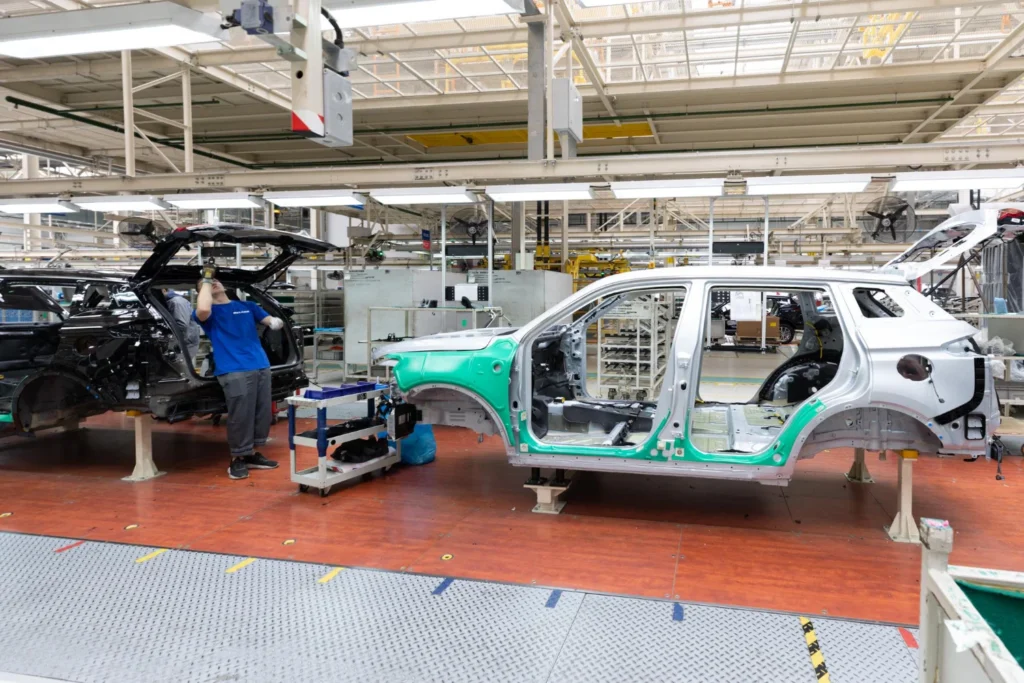
The final layer of Chinese high-tech is defined by capital-intensive industries in which software, hardware, and manufacturing converge to compete globally in electric vehicles, batteries, and advanced energy systems.
BYD (Build Your Dreams) started as a battery manufacturer in 1995 and entered the auto industry in 2003. It now ranks among the world’s top EV producers and battery suppliers. Industry data indicate that BYD sold more than 3 million plug‑in vehicles in 2024 and that its Q1 2025 net profit roughly doubled year‑on‑year, according to multiple financial news outlets.
BYD’s proprietary Blade Battery design uses a lithium iron phosphate (LFP) chemistry packaged in long, thin cells arranged like blades; this structure improves thermal stability, energy density, and cost.
The company’s DM‑i and DM‑p hybrid systems offer high fuel efficiency and performance for plug‑in hybrid electric vehicles (PHEVs). BYD supplies batteries and electric drivetrains to brands such as Toyota and Tesla, while its e‑Platform 3.0 enables third parties to quickly build EVs.
BYD operates factories in Thailand, Brazil, and Hungary and plans to build production lines in Indonesia and India. It is expanding beyond passenger cars into buses, trucks, forklifts, and monorails (SkyRail). BYD’s partnerships with ride‑hailing companies (Grab, Didi), rental fleets, and municipal governments accelerate EV adoption in developing markets.
The company invests in sodium‑ion batteries, blade‑battery derivatives, and energy‑storage solutions for utility‑scale projects. Executives should monitor BYD’s ability to maintain high margins amid intensifying price wars in China’s EV market and to manage supply‑chain risks for critical minerals.
CATL is the world’s largest EV battery manufacturer, with a market share exceeding 35 % in 2024. It supplies lithium‑ion cells to Tesla, BMW, Mercedes‑Benz, Volvo, Hyundai, and nearly all Chinese EV brands. CATL’s Qilin battery (released mid‑2024) improves energy density by integrating cells directly into the battery pack, enabling EV ranges above 1,000 km on a single charge.
The company is commercializing sodium‑ion batteries and hybrid chemistries such as M3P to reduce reliance on scarce metals. It invests in upstream mining projects (lithium, nickel, cobalt) and downstream recycling technologies.
In mid‑2024, CATL introduced Shenxing super‑fast charging, allowing EVs to gain 400 km of range in 10 minutes. CATL’s research pipeline includes solid‑state batteries and grid‑scale storage systems.
CATL has manufacturing plants in Germany, Hungary, and Indonesia and is building facilities in the U.S. (via partnerships) and Mexico. It forms joint ventures with automakers to localize production and circumvent trade barriers.
The company’s ability to balance innovation, cost control, and geopolitical risk will determine whether it can maintain dominance as new entrants and government policies shift the battery landscape.
Xiaomi, founded in 2010 and led by Lei Jun, is known for delivering high‑quality smartphones, smart‑home devices, and Internet of Things (IoT) products at accessible price points.
The company sells devices ranging from phones and laptops to smart TVs, wearables, scooters, and kitchen appliances—all integrated into its Mi Home ecosystem. Xiaomi uses a “triathlon” strategy of hardware, software (MIUI/HyperOS), and internet services, including advertising, cloud storage, and digital payments.
In 2023, Xiaomi announced its entry into electric vehicles, with its first model, the Xiaomi SU7 sedan, scheduled to begin deliveries in 2024. Early reviews praised its design and integration with the Xiaomi smart‑home ecosystem.
Xiaomi invests in robotics (CyberDog), AR/VR headsets, and AI chips. Its presence in India, Europe, and Southeast Asia provides diversification outside China. Xiaomi’s challenge lies in balancing thin hardware margins with R&D investments and regulatory uncertainties across markets.
Beyond the giants above, several fast‑growing players could reshape China’s high‑tech landscape. Chinese entrepreneurs are capitalizing on the open-weight model trend. MiniMax, Zhipu AI, Moonshot AI, HiDream AI, and 01.AI (creator of the Yi model) are releasing large language models (LLMs) with billions of parameters.
Zhipu AI is a leading Chinese AI start-up focused on general-purpose foundation models and enterprise deployment. Its GLM-4 model family supports reasoning, long-context understanding, and multimodal tasks, with applications across finance, legal services, government platforms, and enterprise productivity tools.
In 2025, Zhipu AI expanded partnerships with state-owned enterprises and large corporations, reinforcing its role as an enterprise AI supplier rather than a consumer chatbot provider. The company represents China’s push to commercialize large models through vertical integration and industry-specific use cases.
MiniMax is part of China’s new generation of AI labs developing large language and multimodal models optimized for applications such as AI agents, voice interaction, and creative tools. Its models are widely used in conversational AI, gaming, and digital content platforms.
Backed by major technology investors, MiniMax focuses on application-layer scalability, enabling developers to deploy AI features quickly without building foundation models from scratch. In 2025, it emerged as a key contributor to China’s AI agent ecosystem.
Beijing’s Moonshot AI is focused on next-generation reasoning models and agent capabilities. Supported by prominent investors, including Alibaba and Tencent, Moonshot has helped diversify China’s AI innovation base beyond big platform labs, targeting both enterprise and developer markets.
Launched in 2023, Baichuan’s LLMs have achieved traction in research and commercial applications. Its commitment to scalable open models and broad industry use cases has made the company one of China’s top AI startups worth watching in 2025.
Chinese research institutes and start‑ups pursue breakthroughs in quantum computing, quantum communication, and new materials. Companies like Origin Quantum, Baidu Quantum, and QuEra Technology (China) develop superconducting qubits and photonic quantum systems.
Meanwhile, QuantumCTek supplies quantum key distribution (QKD) products for secure networks. In materials science, Beijing Naura and Fudan Microelectronics explore gallium nitride (GaN) and silicon carbide (SiC) power devices critical for EVs and renewable energy.
NBD Nanotechnology commercializes superhydrophobic coatings, and Kezhihua produces rare‑earth permanent magnets. These niche players may be less visible but can disrupt supply chains and offer partnership opportunities for international firms.
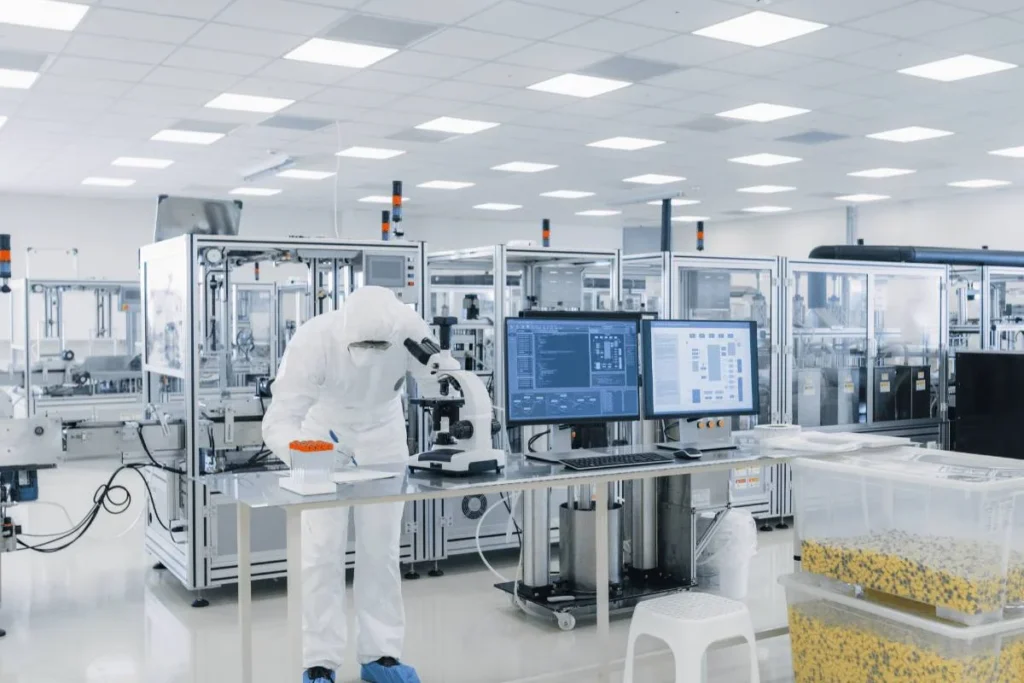
China’s high‑tech landscape will continue evolving rapidly. Based on the above analysis, several recommendations emerge for executives and policymakers:
China’s innovation engine is reshaping global technology across open-weight AI, humanoid robotics, EV platforms, and semiconductor supply chains. At CHOZAN, we help global executives and innovation teams decode these shifts through China Learning Expeditions, market research, and executive briefings.
Our programs provide direct access to companies such as Tencent, Alibaba, Huawei, and BYD, shaping the next decade of digital transformation. Executives use CHOZAN insights to benchmark China’s R&D ecosystem, evaluate open-source AI strategies, and understand AI-driven manufacturing systems. CHOZAN delivers practical frameworks and trusted connections that help organizations convert insight into competitive strategy.
Explore “Learn for China, Learn from China” initiatives to see how global brands are already applying China-driven innovation models across retail, fintech, mobility, and advanced manufacturing.
Book a consultation to connect with our research team or plan a 2026 executive learning journey into China’s high-tech future.
Most rely on local government incubators, industrial parks, and venture funds linked to municipal development zones. These programs provide workspace, tax benefits, and matching investment—allowing founders to validate ideas and access manufacturing resources within months.
Open-weight releases attract developers, expand the diversity of training data, and accelerate ecosystem adoption. They also position Chinese labs as global collaborators rather than isolated competitors, encouraging downstream applications in finance, logistics, and education.
They navigate export controls, intellectual-property concerns, and differing compliance rules. Many overcome this by forming local joint ventures, open-sourcing non-sensitive tech, or localizing production to meet regional regulatory standards.
Universities partner with national chip institutes to train engineers in design, lithography, and EDA software. Scholarships, fast-track PhD programs, and overseas-return incentives build a long-term domestic talent pipeline for semiconductor independence.
Artificial intelligence is at the core of Chinese high tech because it underpins multiple sectors covered in this analysis, including robotics, autonomous driving, smart manufacturing, and digital platforms. Chinese AI labs such as DeepSeek, Alibaba, and Baidu have narrowed the performance gap with U.S. models while emphasizing open-weight releases and fast deployment cycles.
Robotics is a strategic pillar of Chinese high tech, translating software intelligence into physical systems. Companies such as Unitree Robotics and UBTECH deploy humanoid robots in factories, logistics hubs, and warehouses to support labor automation, smart manufacturing, and the productivity gains highlighted in the robotics and automation section.
In 2025, China solidified its clean-tech dominance with record EV export values to over 150 countries, helping spread Chinese EV platforms globally. This not only boosts vehicle and battery exports but also diffuses Chinese high-tech standards and supply chains internationally, reinforcing China’s influence in energy and mobility tech.
Beyond enterprise and industrial use, AI technologies are entering cultural and social spaces — from AI pets gaining popularity for emotional interaction to growing integration of AI tools in everyday consumer apps and devices. These trends reflect broader demand for accessible AI experiences among younger demographics.
Beyond Beijing and Shenzhen, cities such as Hangzhou, Hefei, Suzhou, and Chengdu are emerging as major Chinese high tech hubs. These cities specialize in AI, robotics, semiconductors, and advanced manufacturing clusters.