
CONTENT

ERNIE 4.5 AI is Baidu’s flagship foundation model for enterprise deployment inside China. Baidu ERNIE 4.5 is embedded across search, cloud, and industry platforms, giving it distribution strength and regulatory alignment advantages in the domestic market. Leaders evaluating ERNIE 4.5 AI should assess it as an integrated enterprise system rather than a standalone large language model.
Choose ERNIE 4.5 AI if:
Do not choose ERNIE 4.5 AI if:
In 2026, ERNIE 4.5 AI competes on enterprise integration depth, compliance positioning, and ecosystem leverage rather than pure benchmark performance. The evaluation must therefore focus on governance, integration complexity, and long-term platform dependence.
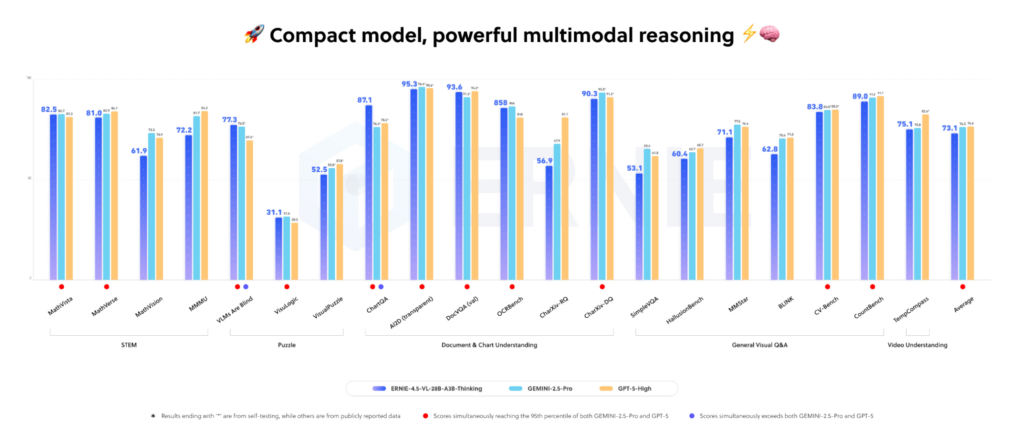
ERNIE 4.5 AI is a family of next-generation large-scale multimodal models released by Baidu in 2025. The ERNIE 4.5 series includes models of varying sizes and architectures, including mixtures of experts (MoE) variants with total parameter counts up to hundreds of billions, as well as dense models for lighter inference workloads. These models were designed to support text, image, and multimodal reasoning across enterprise-grade tasks.
Baidu took the unusual step of open-sourcing the ERNIE 4.5 family under a permissive Apache 2.0 license. This decision reflects a shift in strategy to increase adoption and lower barriers to experimentation for both commercial and academic users.
Several 4.5-series variants have shown strong performance on open platforms. For example, the ERNIE-4.5-21B-A3B-Thinking model achieved prominent placement on the HuggingFace global model ranking list in 2025, demonstrating strong performance on long-context reasoning tasks.
Wenxin Yiyan is the product layer powered by ERNIE 4.5 models. This brand name appears across Baidu Search, AI assistant services, and Baidu AI Cloud enterprise interfaces. Many enterprise users first encounter the capabilities of ERNIE 4.5 AI through Wenxin Yiyan services, which abstract model complexity and provide managed APIs and interfaces.
Understanding the distinction helps clarify technical evaluation. ERNIE 4.5 refers to the underlying model family and capabilities, while Wenxin Yiyan refers to the product and service ecosystem that exposes those capabilities for business and end-user scenarios.
Baidu released ERNIE 4.5 as an open source family of multimodal models under the Apache 2.0 license. The series includes models ranging from lightweight versions suitable for edge and low-resource scenarios to large multimodal configurations with extensive language, vision, and reasoning capabilities.
Baidu’s decision to open source these models contrasts with earlier closed approaches and signals a shift toward broader community and enterprise adoption.
Multiple variants within the ERNIE 4.5 family have demonstrated competitive performance on global benchmarks, including large-parameter models that achieve strong results in text understanding and multimodal reasoning tasks.
These results help position ERNIE 4.5 as a viable alternative for organizations that evaluate models on concrete capabilities and performance metrics in domain-specific contexts.
ERNIE 4.5 supports text and visual reasoning through a heterogeneous mixture-of-experts architecture, which allows models to capture complex patterns across modalities more effectively than earlier generation models.
Enterprises with workflows that involve document analysis, image extraction, or combined text-visual tasks can leverage these capabilities without requiring separate tooling for different data types.
ERNIE 4.5’s release occurred amid intensified competition in China’s AI space. Rivals such as DeepSeek, Tencent, and Alibaba are also pushing open or open-friendly models and agent frameworks, accelerating adoption and experimentation across industries. Baidu’s strategy places ERNIE 4.5 at the intersection of foundation model performance, ecosystem distribution, and public access.
ERNIE 4.5 sits at the core of Baidu’s larger AI platform strategy. Baidu exposes ERNIE 4.5 capabilities through APIs on Baidu AI Cloud’s MaaS platform and embeds them in its search and assistant products, which reach hundreds of millions of users.
This integration reduces friction for enterprises that already use Baidu infrastructure, enabling them to extend AI capabilities into search, content generation, and automated workflows without standalone deployments.
For leaders evaluating Chinese AI models in 2026, ERNIE 4.5’s ecosystem position matters more than raw model power alone. Its open-source nature lowers experimentation costs. Its multimodal capabilities support a wide range of use cases. Its embedding into Baidu Cloud and search products enables faster pilot and integration paths.
At the same time, enterprise planners must consider vendor concentration, regulatory compliance, and long-term dependency when assessing ERNIE 4.5’s role in their AI roadmap.
Good catch. There is overlap with the previous ecosystem section, especially around:
ERNIE 4.5 AI creates value in structured, document-heavy, Chinese-language-dominant enterprise environments. Its strengths appear in reasoning depth, semantic retrieval accuracy, and multimodal document interpretation. The following use cases reflect commercially validated workload patterns.
Large organizations in China manage fragmented policy archives, regulatory updates, internal procedures, and technical documentation. ERNIE 4.5 improves semantic retrieval precision across long Chinese documents and reduces search ambiguity in internal knowledge systems.
Banks, insurers, and compliance teams process high volumes of contracts, prospectuses, and regulatory disclosures. ERNIE 4.5 supports structured extraction, clause comparison, and summarization of dense Chinese legal text, thereby improving review efficiency.
Enterprises often handle scanned documents, charts, forms, and mixed format reports. ERNIE 4.5 processes text and visual inputs within a unified reasoning layer, enabling consistent interpretation of complex enterprise records.
Public sector entities and state-owned enterprises produce standardized policy drafts and compliance updates. ERNIE 4.5 assists with structured drafting in formal Chinese administrative language, reducing drafting cycle time while maintaining stylistic consistency.
High-volume service environments require accurate intent recognition and structured response generation in Chinese. ERNIE 4.5 improves response consistency across knowledge-driven customer interaction systems.
Enterprises testing automation in procurement review, contract validation, or supplier documentation can use ERNIE 4.5 as a reasoning engine for narrow, rule-bound task agents before expanding to broader workflows.
ERNIE 4.5 AI should be evaluated through operational criteria rather than model hype. The following scorecard helps strategy leaders assess real deployment suitability inside China based on governance readiness, integration complexity, and commercial return assumptions.
Assess the classification level of your data. ERNIE 4.5 AI deployment inside Baidu AI Cloud aligns with Chinese data governance frameworks, including cybersecurity and cross-border data controls. Organizations handling sensitive financial, industrial, or public-sector information must confirm internal approval pathways and audit-trail traceability before expanding the pilot.
Questions to ask:
Large language model deployment introduces prompt management, output review, and accountability requirements. ERNIE 4.5 AI should be tested within a defined governance structure that includes access controls, role-based permissions, and content validation workflows.
Questions to ask:
Evaluate existing infrastructure before committing to Baidu ERNIE 4.5. Organizations already operating within Baidu AI Cloud may face lower integration friction. Enterprises using multi cloud or hybrid environments must assess compatibility and orchestration costs.
Questions to ask:
ERNIE 4.5 AI evaluation must include realistic projections of inference costs, internal productivity gains, and the impact on workflow redesign. Leaders should model workload-specific ROI rather than rely on generic productivity claims.
Questions to ask:
Baidu ERNIE 4.5 operates within a tightly integrated ecosystem. Enterprises should evaluate long-term vendor exposure and switching-cost implications before scaling adoption.
Questions to ask:
This scorecard enables structured evaluation of ERNIE 4.5 AI beyond performance benchmarks and aligns decision-making with governance, cost control, and operational stability.
A serious ERNIE 4.5 AI pilot must prove three things at once. It must demonstrate task accuracy on real Chinese enterprise data, demonstrate governance control in accordance with China’s generative AI rules, and demonstrate unit economics under production load.
ERNIE 4.5 is not a single model. It is a model family with multiple variants, including Mixture of Experts options and a small dense model, so workload selection must match the right variant and context limits. Baidu’s own release describes ten variants, including MoE designs that scale to hundreds of billions of total parameters.
Use three workload bundles that map to how Chinese enterprises adopt GenAI in 2025 and 2026.
Use internal policies, contracts, compliance manuals, and operating procedures. Force cross-document reasoning, clause comparison, and citation style answers.
Use scanned PDFs, forms, tables, and images embedded in reports. Validate extraction consistency across repeated runs and measure failure modes.
Use your existing knowledge base as the retrieval source and test answer quality with strict grounding rules.
Define a baseline before ERNIE 4.5 enters the workflow. Track cost per document, review minutes per case, and rework rate. Then set hard gates.
A pilot needs controls that mirror production. China’s Interim Measures focus on provider responsibilities for security, content compliance, and governance processes. Teams should treat this as an operational requirement, not a legal footnote.
Implement four controls during the pilot.
Most enterprise teams in China do not start by self-hosting a foundation model. They start through managed platforms that provide model endpoints, tooling, and operational controls, then expand to heavier customization after proof of value.
Baidu AI Cloud’s Qianfan platform positions itself as a one-stop enterprise model development and service platform that includes Wenxin Yiyan models and other options. That matters for pilot speed and operational overhead.
Run batch inference at realistic volumes. Measure latency, throughput, reviewer time, and failure handling cost. Convert results into unit economics, such as cost per contract reviewed or cost per support case resolved.
End the pilot with a single decision memo. The memo should state the winning workload bundle, the required controls, the target operating model, and the expansion gate for production.
Evaluating ERNIE 4.5 AI requires more than technical testing. It requires a clear understanding of how Baidu’s artificial intelligence ecosystem operates in practice and how Chinese enterprises deploy foundation models under real regulatory and commercial constraints.
ChoZan works with leadership teams that need structured clarity, not headlines. Our support focuses on practical decision-making tied to measurable business outcomes.
ERNIE 4.5 AI is the latest production generation of Baidu’s foundation model family. Baidu ERNIE 4.5 supports advanced Chinese-language reasoning, multimodal processing, and enterprise deployment through both managed cloud services and open-source variants.
Wenxin Yiyan is the product and service layer powered by ERNIE 4.5 AI. When users interact with Wenxin Yiyan via Baidu platforms, they access capabilities provided by Baidu ERNIE 4.5.
Baidu ERNIE 4.5 AI is designed for enterprise scale workloads inside China. It is commonly evaluated for document analysis, knowledge retrieval, compliance support, and structured workflow automation under domestic governance requirements.
Baidu has released versions of the ERNIE 4.5 model family under an open source license. Enterprises can choose between managed cloud deployments and open-source variants based on technical capacity and governance needs.
ERNIE 4.5 competes in a market that includes models from Alibaba, Tencent, and other domestic developers. Its primary advantage lies in integration with Baidu’s search ecosystem and enterprise cloud infrastructure rather than isolated benchmark performance.
Yes. ERNIE 4.5 AI supports multimodal reasoning, including text and image inputs. Enterprises can use it for scanned documents, tables, forms, and mixed format records.
Industries with large volumes of structured Chinese documentation, including finance, insurance, public sector administration, manufacturing, and healthcare, often see clearer workload alignment with ERNIE 4.5 capabilities.
Certain ERNIE 4.5 variants support extended context windows suited to long Chinese documents and enterprise archives. Organizations should test realistic document lengths during pilot evaluation.
Key risks include vendor concentration within Baidu’s ecosystem, governance overhead, output reliability under regulated workloads, and integration complexity in multi-cloud environments.
Global companies operating primarily in mainland China may find that ERNIE 4.5 aligns with local infrastructure and governance expectations. Organizations requiring unified cross-border deployment should assess integration and regulatory constraints before selection.