CONTENT

The China fashion report 2025 begins with a simple reality. China remains one of the most influential fashion markets in the world, yet the logic behind that market is changing rapidly. According to the China Fashion Consumption Development Report presented at the China Annual Trends Summit, the country’s fashion consumption market is expected to reach roughly 2 to 3 trillion yuan ($290 billion to $435 billion) in 2025.
Growth alone does not explain the transformation. To understand these shifts, brands increasingly analyze Chinese consumer behavior to see how cultural identity, digital ecosystems, and lifestyle priorities influence purchasing decisions.
Chinese consumers are changing how they evaluate clothing, while domestic brands are redefining competition through cultural storytelling, digital integration, and technological innovation.
This report explores how evolving consumer psychology, the rise of local brands, cultural design movements, digital retail infrastructure, and advanced manufacturing are reshaping China’s fashion industry.
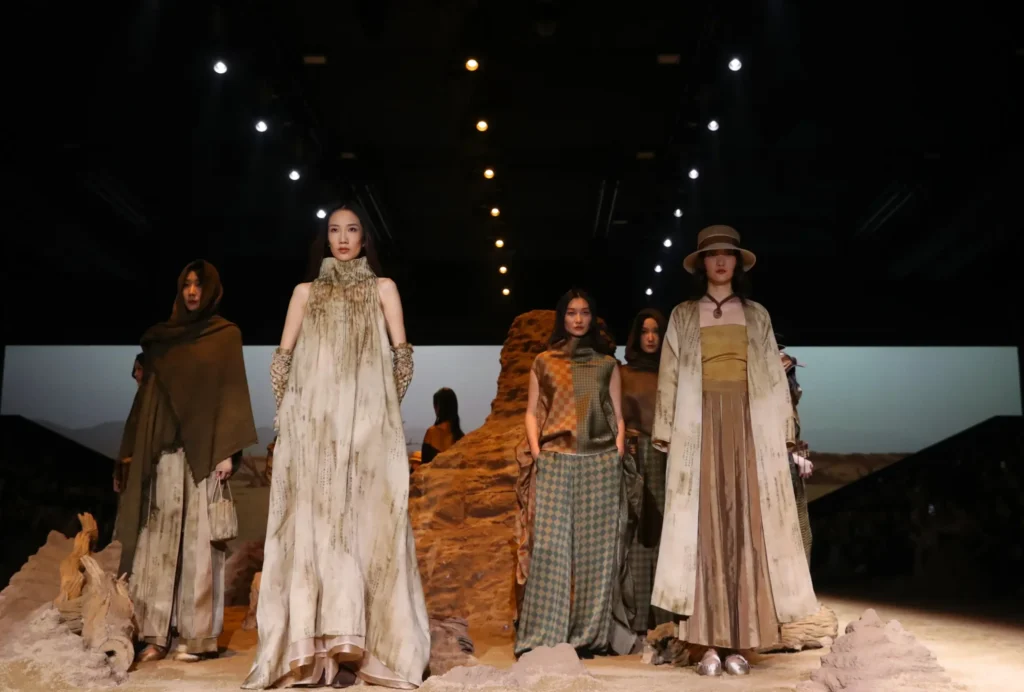
China’s fashion consumption economy now extends beyond apparel alone. The China Fashion Consumption Development Report shows that fashion spending increasingly blends clothing with lifestyle experiences and cultural activities.
Two categories dominate the market structure:
| Sector | Share of Fashion Consumption |
| Life experiences | 40–50% |
| Apparel and accessories | 30–40% |
Together, these sectors represent almost 80 percent of the total fashion consumption market, reflecting a shift from purely material consumption toward experience-driven fashion lifestyles.
Within apparel spending, clothing and jewelry inspired by Oriental aesthetics account for roughly 600–700 billion yuan ($87 billion to $101.5 billion) in annual consumption.
This structure demonstrates that China’s fashion economy now combines products, cultural identity, and lifestyle experiences into a single consumption ecosystem.
One of the defining developments in China’s fashion sector is the gradual decline of the scale-driven growth model that once dominated the industry.
For more than a decade, many apparel companies pursued expansion through larger product assortments, rapid store openings, and aggressive inventory cycles. That strategy generated impressive growth during the early ecommerce boom. Today, the industry operates under different conditions.
Consumers have become more selective about how they spend money. Fashion purchases increasingly reflect a long-term mindset that prioritizes quality, versatility, and durability. Instead of purchasing large quantities of inexpensive clothing, many shoppers now prefer fewer items with stronger design identity and longer usability.
This shift aligns with broader changes in China’s consumption patterns. Analysts describe a move toward “rational consumption,” where buyers evaluate the long-term value of products rather than short-term novelty.
These changes also influence how brands build long-term relationships with customers through consumer loyalty strategies in China. In fashion, that mindset encourages investing in pieces that remain relevant across multiple seasons.
Second-hand luxury markets illustrate this transition. Platforms dedicated to authenticated pre-owned designer goods are expanding rapidly as consumers recognize the financial and environmental benefits of extending a product’s life cycle. Research suggests China’s second-hand clothing sector may exceed 100 billion yuan ($14.5 billion) in the coming years as resale platforms increase circulation of fashion products.
This evolution reflects a maturing market in which consumers increasingly associate fashion with personal identity rather than status display.
Cultural identity has become one of the strongest drivers of fashion value in China. The phenomenon commonly known as Guochao, or the “national trend,” reflects a shift toward clothing that integrates Chinese cultural elements into contemporary design.
Surveys show that a large majority of Chinese consumers prefer brands that incorporate cultural motifs and heritage aesthetics.
Domestic brands have embraced this shift. Designers reinterpret historical symbols, traditional fabrics, and classical silhouettes within modern fashion collections. The result is a distinctive aesthetic language that blends cultural heritage with contemporary style.
The revival of Hanfu clothing illustrates the depth of this movement. The Hanfu market has expanded into an industry worth more than 20 billion yuan ($2.9 billion), with thousands of businesses producing garments inspired by historical Chinese attire.
This cultural revival demonstrates that fashion in China increasingly functions as a form of cultural expression. Understanding how culture influences purchasing decisions is central to modern Gen Z shopping habits in China. For many consumers, clothing communicates identity, heritage, and belonging rather than purely aesthetic preference.
Consumer motivations vary significantly across age groups in China’s fashion market.
Gen Z consumers prioritize emotional satisfaction and self-expression. Over 56 percent of Gen Z shoppers emphasize “self-pleasure” spending, focusing on areas such as virtual fashion and digital culture.
Young adults aged 26–35 treat fashion as an expression of lifestyle identity. More than half of this group seek emotional satisfaction through purchases related to beauty, wellness, and personal care.
Consumers aged 36–45 display a different pattern. Nearly 59 percent prefer products with cultural value, while about 74% purchase traditional clothing styles, reflecting strong interest in heritage aesthetics.
These differences explain why Chinese fashion brands increasingly develop targeted strategies for each demographic group.
The rise of domestic fashion companies represents another major structural shift within China’s apparel market.
Sportswear companies provide the clearest example. Brands such as Anta and Li Ning have expanded rapidly by combining performance innovation with cultural storytelling. Over the past decade, domestic companies have steadily gained market share while several international brands have struggled to maintain cultural relevance among younger Chinese consumers.
Industry analysis suggests domestic brands now account for a large share of sneaker and sportswear sales in China.
The success of companies such as Anta reflects a strategic advantage that local brands possess. They understand China’s digital ecosystem, respond quickly to cultural trends, and integrate design with consumer communities across social media platforms.
International companies continue to operate successfully in China, yet they increasingly compete within an environment defined by domestic innovation and cultural authenticity.
Li-Ning strengthened its position in China’s sportswear sector during 2025 through a strategy that combines product innovation with national sports partnerships. In the first half of 2025, the company reported revenue of 14.8 billion yuan ($2.15 billion), representing about 3.3 percent year-over-year growth despite increasing competition in the domestic sportswear market.
The brand continued to emphasize research and development in footwear technology and athletic apparel design. At the same time, Li-Ning reinforced its identity through partnerships with national sports teams and events. The company also gained visibility through international fashion presentations, using runway shows to connect sportswear design with Chinese cultural identity.
This strategy reflects how Chinese sportswear companies increasingly position themselves as technology-driven brands with strong cultural narratives.
China’s fashion market operates inside one of the world’s most advanced digital retail ecosystems.
Consumers often discover new clothing through short-form video platforms, livestreams, and community-driven content rather than traditional advertising. Social platforms serve as discovery engines where influencers showcase products, share styling advice, and spark conversation about emerging trends.
This model reflects the rapid expansion of social commerce in China, where content, community interaction, and ecommerce operate inside the same digital environment.
Livestream commerce represents a particularly influential channel. Platforms such as Douyin and Taobao Live illustrate the rise of livestream shopping in China, where viewers interact with hosts and purchase products in real time.
Fashion brands collaborate with hosts who present products in real time while viewers purchase items instantly through integrated ecommerce links. This format combines entertainment, product education, and retail into a single digital experience.
Major ecommerce marketplaces then convert that discovery into transactions. Platforms such as Tmall serve as key infrastructure within China’s fashion economy, connecting content, consumer communities, and online retail.
This ecosystem allows trends to spread across the market extremely quickly. A design introduced through digital content can move from initial exposure to nationwide demand within weeks.

Arc’teryx has become one of the most successful premium outdoor brands in China by positioning technical apparel as a symbol of lifestyle aspiration.
The brand has expanded rapidly through flagship stores and immersive retail experiences. Greater China now accounts for roughly 45 percent of Arc’teryx’s global revenue, reflecting the importance of the Chinese market for the company’s growth.
Chinese consumers increasingly view outdoor apparel as both functional clothing and a cultural status symbol. Many buyers wear Arc’teryx products in urban environments as expressions of lifestyle identity, even when they rarely participate in mountain sports.
This phenomenon highlights the rise of functional luxury within China’s fashion market. Performance apparel can now serve as both technical equipment and a fashion statement.
China has also become the global center of ultra-fast fashion innovation. Companies such as Shein and Temu have transformed the traditional fast-fashion model by leveraging real-time consumer data, agile supply chains, and digital marketing.
Unlike traditional retailers that release seasonal collections, ultra-fast fashion companies introduce thousands of new designs each week based on online consumer behavior and social media trends.
This system relies on three operational pillars:
This approach, often called the Shein Effect, demonstrates how Chinese companies combine digital data, manufacturing speed, and cross-border e-commerce to reshape global fashion competition. Similar dynamics also appear in China’s retail technology ecosystem, where AI, data analytics, and platform infrastructure accelerate product development cycles.
While digital platforms shape fashion distribution, technological innovation is transforming the garments themselves.
Chinese apparel companies increasingly compete through advances in materials science and product functionality. Performance fabrics, sustainable fibers, and modular design systems are becoming central features of new collections.
Sportswear brands illustrate this development. Companies invest heavily in research to create waterproof materials, lightweight insulation, and breathable textiles that match international performance standards.
Functional design has also gained popularity among consumers who value versatility. Modular garments that adapt to different weather conditions or combine multiple functions within a single product reflect the long-term consumption mindset that now shapes purchasing decisions.
The convergence of fashion design, technology, and health-oriented materials signals an important shift. Apparel increasingly functions as a platform that delivers performance, comfort, and environmental benefits rather than serving purely aesthetic purposes.
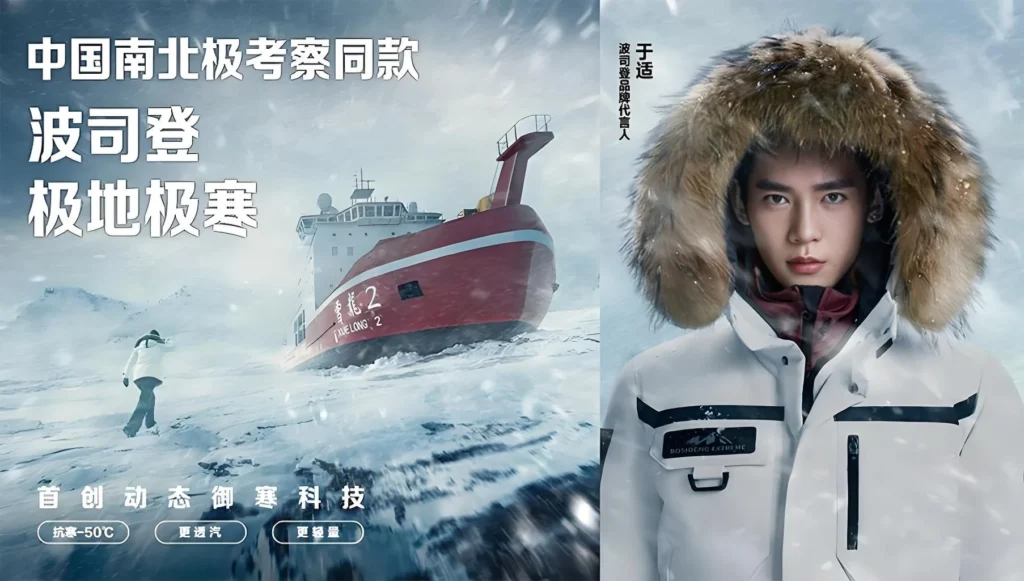
Bosideng remains the dominant down apparel company in China and continues to expand its technological capabilities.
In the first half of fiscal year 2025-2026, the Bosideng-branded apparel segment generated about 5.7 billion yuan ($826.5 million) in revenue, representing 8.3 percent year-over-year growth.
The company has invested heavily in digital manufacturing and supply chain systems that enable faster product development and inventory management. Smart factory technology and AI-supported design processes are increasingly integrated into Bosideng’s operations, improving efficiency and responsiveness to consumer demand.
Bosideng has also expanded its design strategy through collaborations with international designers and the development of high-end urban outerwear collections. These initiatives aim to position the brand as both a technical performance leader and a global fashion brand.
Sustainability has moved from a marketing concept to a baseline requirement within China’s fashion sector. These changes reflect a broader shift toward customer centricity in China, where consumers expect brands to align with social values and environmental responsibility.
The textile industry has significantly reduced emission intensity over the past two decades through improvements in manufacturing technology and environmental regulation. Industry organizations now focus on building standardized systems that measure and verify environmental performance.
One example involves developing digital product passports that track a garment’s environmental footprint throughout the supply chain. These systems allow consumers, regulators, and global buyers to access transparent data about materials, manufacturing processes, and carbon emissions.
Leading companies already integrate sustainability into product development, supply chain management, and retail operations. Initiatives include recycled yarn production, water-saving dyeing technologies, and the adoption of renewable energy in manufacturing facilities.
These practices indicate that sustainability is becoming a structural component of fashion production rather than an optional brand message.
China’s fashion industry is increasingly extending its influence beyond domestic markets.
Large companies pursue international growth through acquisitions, global retail expansion, and cross-border ecommerce. Anta’s acquisition strategy demonstrates this ambition. The company has built a global portfolio of brands while investing heavily in international retail networks.
Digital native fashion companies represent another path to global presence. Data-driven design systems and flexible manufacturing allow Chinese brands to launch new products quickly and distribute them through global e-commerce platforms.
These developments show that China’s role within the fashion industry is evolving. Many international companies now study China’s innovation ecosystems to understand how digital platforms, culture, and technology reshape modern retail strategies. The country no longer functions only as a manufacturing hub. It is becoming a source of brand innovation, design creativity, and digital commerce expertise.
Many Chinese fashion companies expand internationally through cross-border e-commerce rather than traditional retail expansion.
Platforms such as Shein and Temu sell directly to overseas consumers through online storefronts, bypassing traditional wholesale distribution channels.
This model depends on China’s logistics infrastructure and manufacturing clusters, which allow companies to produce garments quickly and ship them globally at competitive prices.
Chinese ultra-fast fashion companies, therefore, operate as global digital retailers rather than conventional apparel brands. Their success has intensified competition with Western fast-fashion companies such as Zara and H&M, which often struggle to keep pace with Chinese production cycles.
China’s fashion industry now operates inside one of the world’s most advanced digital and consumer ecosystems. Cultural identity, social commerce, and technology-driven supply chains are reshaping how brands design products and connect with consumers.
Companies that want to understand these changes often work with ChoZan, a China-focused research and digital transformation consultancy founded by Ashley Dudarenok. The firm helps global organizations learn how China’s innovation ecosystem works and how those insights can inform global strategy.
China Market Research and Strategy Consulting: Organizations seeking deeper insight into Chinese consumers and retail trends often use China market research and strategy consulting to analyze competitors, digital ecosystems, and emerging opportunities.
China Learning Expeditions and Innovation Tours: Leadership teams can experience China’s digital economy firsthand through immersive programs that bring executives into China’s retail, ecommerce, and technology ecosystems.
Keynotes and Executive Training on Digital China: Ashley Dudarenok also delivers keynotes and executive workshops on China’s digital economy, helping global brands understand trends such as social commerce, new retail, and consumer behavior.
Companies, including Fortune 500 brands, use ChoZan’s research, consulting, and learning programs to shorten their learning curve and translate China’s digital innovation into practical business strategies.
Organizations looking to understand China’s fast-moving consumer economy can also book a consultation with ChoZan to explore research, strategy, and learning programs tailored to their industry.
The trajectory of China’s fashion industry points toward continued transformation.
Successful brands will increasingly focus on long-term product value rather than rapid expansion. Cultural storytelling, material innovation, and digital integration will define competitive advantage. Sustainability will remain a central requirement for participation in global fashion supply chains.
China’s fashion consumers have matured alongside the industry. They seek authenticity, quality, and cultural relevance in the clothing they purchase.
For companies capable of delivering those qualities, the opportunity within China’s fashion market remains enormous.
The Chinese fashion market in 2025 stands out because consumers now prioritize cultural identity, product quality, and digital engagement rather than pure brand status. This shift reflects a broader change toward rational consumption and cultural storytelling across China’s fashion ecosystem
Chinese fashion spending habits are shifting toward quality, versatility, and cultural meaning. Many consumers now prefer fewer purchases with longer product value, reflecting a broader move toward rational consumption and a stronger interest in culturally inspired fashion products.
Guochao fashion in China refers to a trend where brands integrate traditional Chinese culture into modern design. Younger consumers increasingly support domestic brands that celebrate Chinese heritage while presenting contemporary aesthetics and innovative product design.
Gen Z fashion consumers in China strongly influence trends because they are digitally native and highly active on social platforms. Although they represent a smaller share of the population, they generate a disproportionate share of fashion spending and cultural trend creation.
Livestream shopping in China’s fashion retail is important because it merges entertainment, social interaction, and ecommerce. Consumers watch product demonstrations, ask questions in real time, and purchase clothing instantly through integrated digital platforms.
Chinese domestic fashion brands are gaining strength by combining cultural storytelling with digital innovation. Consumers increasingly trust local companies that understand Chinese culture and respond quickly to trends within the country’s highly connected digital retail ecosystem.
Digital commerce in Chinese fashion shapes how trends spread and how purchases happen. Consumers often discover clothing through social platforms and influencer content before completing transactions on ecommerce marketplaces integrated with those digital communities.
Sustainable fashion in China is becoming more important as consumers and regulators focus on environmental responsibility. Brands are investing in recycled materials, cleaner manufacturing technology, and supply chain transparency to align with these evolving expectations.
Many Chinese fashion brands expanding globally rely on cross-border ecommerce and digital marketing rather than traditional retail expansion. Data-driven product development and flexible manufacturing allow companies to launch collections quickly and reach international consumers online.
The future of the Chinese fashion industry will likely be shaped by cultural storytelling, technological innovation, and digital retail ecosystems. Brands that combine strong design identity with sustainable production and consumer insight will remain competitive in this evolving market.