
CONTENT

Most automakers compete on vehicle design, features, and market positioning. BYD competes at a deeper level. It builds its advantage inside the battery system, where cost, safety, and scalability are defined. This shift matters because batteries now determine how electric vehicle companies operate, price, and expand globally.
BYD’s battery strategy is not just a technical story. It is an operating model built on integration. Battery chemistry, manufacturing, semiconductors, and vehicle platforms work together as one system. As a result, BYD can reduce costs, accelerate production, and maintain control in a highly competitive market.
This is why BYD deserves attention beyond the auto industry. It offers a clear example of how China’s leading companies compete through integrated systems rather than isolated innovation. To understand BYD is to understand how the next phase of industrial competition is being shaped.
BYD was founded in 1995 as a rechargeable battery company. That origin still matters. Many automakers had to learn about batteries after entering the electric vehicle market. BYD entered the EV market with battery capability already in place.
This early foundation gave BYD a different view of the car business. The vehicle became a system that could be redesigned to focus on energy storage, power control, and manufacturing efficiency. That mindset helped BYD build a tighter relationship between battery design and vehicle architecture.
The strategic lesson is simple. When the most expensive component in an EV is controlled internally, the automaker has more flexibility in managing product planning. This is why BYD’s battery story is central to understanding its rise.
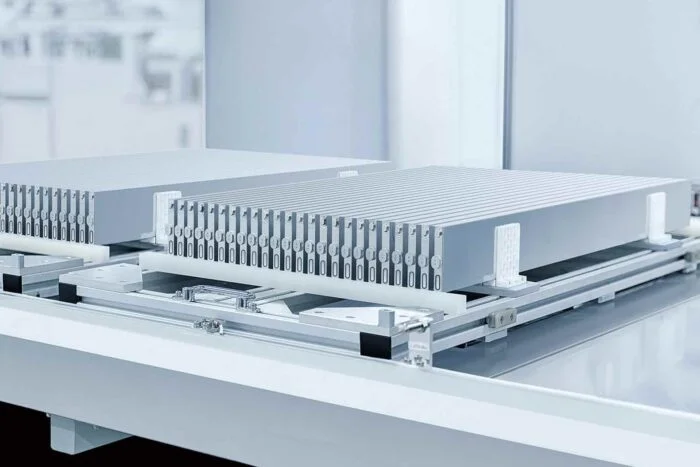
The BYD Blade Battery is the most visible symbol of BYD’s battery strategy. It uses lithium iron phosphate chemistry, often known as LFP. This chemistry has become important in mass-market EVs because it supports long cycle life and strong performance.
The Blade Battery design is important because it reflects BYD’s practical engineering culture. Instead of pursuing only the highest energy density, BYD focused on a battery format that could enable safer pack design and better space utilization. The long, narrow cell structure helps the battery pack use space efficiently within the vehicle platform.
This is where BYD battery technology becomes strategic rather than purely technical. In an EV market where price pressure is intense, a practical battery architecture can matter more than a laboratory breakthrough.
The cost advantage of BYD batteries comes from several layers working together.
The first layer is chemistry. An LFP battery avoids the expensive materials commonly used in some nickel-rich chemistries. That gives BYD a more stable range base for high-volume models.
The second layer is the manufacturing scale. BYD produces batteries in-house, giving the company greater control over capacity planning, procurement, and product timing. This reduces exposure to supplier pressure during periods of demand volatility.
The third layer is vehicle integration. BYD can design the battery, platform, power electronics, and drivetrain as a single package. That matters for BOM cost reduction because the savings do not come from a single component. They come from how the full vehicle system is simplified and produced.
For global automakers, this is the uncomfortable part of BYD’s advantage. BYD is competing through system-level cost discipline, supported by battery expertise and manufacturing control.
| Dimension | BYD | Tesla | CATL |
| Core Identity | Integrated EV + battery + energy company | EV + software + platform company | Global battery supplier |
| Battery Strategy | Fully in-house (cells, packs, integration) | Hybrid (design + partners like Panasonic) | External supplier to multiple OEMs |
| Vertical Integration | Full-stack (battery → vehicle → chips) | Partial (strong software + system control) | Focused on battery production only |
| Cost Control | High (internal supply + system design) | Medium-high (scale + engineering efficiency) | High at the cell level, limited at the vehicle level |
| System Optimization | End-to-end vehicle + battery co-design | Strong software + vehicle integration | Optimizes batteries, not full vehicles |
| Speed of Iteration | Fast (internal coordination) | Fast (software + agile engineering) | Slower for OEM-specific customization |
| Revenue Model | Vehicles + batteries + energy systems | Vehicles + software + services | Battery sales to OEMs |
| Strategic Advantage | System-level cost leadership + scale | Software-driven differentiation | Scale as a global battery backbone |
| Limitation | Less premium brand perception globally | Depends on external battery scaling | No control over the final vehicle system |
The comparison highlights a deeper industry shift. Tesla leads in software and brand, while CATL dominates as a global supplier. However, BYD operates differently. It integrates batteries, vehicles, and energy systems into a single model, which allows tighter cost control and faster deployment at scale.
This difference explains why BYD competes more effectively in price-sensitive, high-volume markets. It also shows why replicating BYD’s model requires more than better technology. It requires restructuring the company’s entire operating system.
Battery safety is as much a commercial issue as a technical one. Consumers worry about fire risk, charging reliability, battery life, and resale value. Fleet operators worry about uptime, insurance, and long-term operating risk. Governments worry about public confidence as electric vehicles move into taxis, buses, logistics fleets, and public transport.
The BYD Blade Battery helps BYD communicate clearly and credibly. Its LFP chemistry and pack design give the company a strong foundation for safety messaging, which supports adoption across different vehicle segments.
This point matters for international expansion. When a Chinese EV brand enters new markets, it must earn trust from consumers, regulators, dealers, and fleet buyers. A battery platform associated with reliability gives BYD a clearer story to tell.
This is one reason battery safety should be understood as part of brand strategy. It reduces perceived risk, supports fleet adoption, and strengthens BYD’s position in markets where EV trust is still being formed.
BYD’s greatest advantage lies in how batteries connect with the rest of the company. The company produces batteries, power electronics, drivetrains, and other core systems internally. It also develops semiconductors such as IGBT and SiC power devices, which play an important role in power control and vehicle efficiency.
This level of integration gives BYD rate stability. It also provides the company with faster feedback between engineering and manufacturing teams. When battery design, motor control, and vehicle architecture sit inside one company, product iteration can be faster and more coordinated.
This is where in-house production becomes more than a procurement decision. It becomes a strategic operating model. BYD can plan vehicle launches with greater visibility into battery supply. It can adjust product mix with more control. It can be used for battery scaling across passenger cars, buses, commercial vehicles, and stationary storage. Many companies talk about vertical integration. BYD has built it into the core of its electric vehicle strategy.
The BYD battery story also extends beyond private cars. BYD produces commercial electric vehicles, electric buses, batteries, solar products, and energy storage systems. This gives the company more ways to scale up battery use across the clean energy transition.
This matters because batteries are becoming part of the wider infrastructure. They support vehicles, buildings, grids, factories, and renewable energy systems. Companies that understand batteries as infrastructure can capture value beyond the sale of a car.
BYD’s experience in electric buses is important here. Public transport buyers care about the durability and reliability of services. These priorities match the strengths of a battery strategy built around control and practical deployment.
For business leaders, this is a key takeaway. The battery is becoming a platform. BYD’s advantage grows when its battery capabilities support mobility, storage, and energy management together.
The next stage of BYD battery technology will likely focus on charging speed, chemistry diversification, and premium performance. A BYD sodium-ion battery strategy could support future low-cost models and stationary storage applications. Sodium-ion chemistry is appealing because it can reduce reliance on more constrained materials. It may also fit use cases where durability matters more than maximum range.
A BYD solid-state battery roadmap should be treated with caution. Solid-state batteries remain a longer-term competitive frontier for the wider industry. BYD may explore this direction for premium models, yet its current scale advantage remains built on Blade Battery economics and LFP deployment.
Interest in BYD’s fast charging battery performance will also matter as consumer expectations rise. Faster charging can improve user experience, but it must be balanced with other important factors. The bigger point is that BYD does not need every future breakthrough in batteries to win. Its real advantage is the ability to turn battery choices into products that can be manufactured, priced, and deployed at scale.
BYD’s battery strategy is one example of a broader shift across China’s innovation ecosystem. ChoZan helps global leaders understand these shifts through China innovation research, executive briefings, expert dialogues, and tailored learning expeditions.
If your team needs to benchmark BYD, study China’s EV supply chain, or understand how battery innovation is shaping global competition, we can help turn market complexity into clear strategic insight. Contact ChoZan to plan a custom China innovation briefing or research project for your team.
Yes. BYD batteries are produced internally, giving the company greater control over costs, supply planning, product development, and vehicle launch timing.
BYD’s solid-state battery work falls under the longer-range roadmap. Today, BYD’s commercial advantage still comes mainly from Blade Battery and LFP scale.
BYD’s battery strategy matters because it links China’s EV scale with control over manufacturing, battery safety, and global clean energy ambitions.
BYD and CATL serve different roles. BYD battery strength comes from vehicle integration. CATL is strongest as a global supplier to many automakers.
Global companies should study BYD’s battery strategy because it shows how technology, supply control, and deployment speed can reshape industry competition.
BYD Blade Battery packs are designed for long cycle life and stable performance. Actual lifespan depends on driving habits, charging behavior, climate, and vehicle use.
BYD Blade Battery is widely known for strong performance because LFP chemistry is more thermally stable than many nickel-rich chemistries.
BYD’s control of its battery supply chain stems from its internal battery production, vehicle integration, and semiconductor capabilities. This helps BYD reduce its dependence on suppliers and volatility.
BYD battery design affects range through pack layout, chemistry, weight, and energy use. Blade Battery focuses on practical efficiency rather than maximum density alone.