CONTENT

The global battery conversation is too often reduced to a CATL-versus-everyone-else debate. That misses a more useful strategic question for executives: which Chinese battery companies can build credible scale, localized production, and chemistry advantage in markets where buyers want cost, safety, and supply diversification? Gotion belongs in that conversation now.
In 2025, global EV battery deployment reached 1.2 TWh, with China accounting for 60% of deployment. CATL still set the scale benchmark, but SNE Research data reported by CnEVPost placed Gotion High-Tech fifth globally in EV battery installations for 2025, with 53.5 GWh and a 4.5% share.
That makes the Gotion battery story less about catching CATL tomorrow and more about building a commercially useful second-tier China battery champion with LFP depth, energy storage relevance, and overseas manufacturing ambition.
China’s battery industry is moving from volume expansion to strategic segmentation. CATL dominates premium scale, BYD benefits from its closed vehicle ecosystem, and CALB has pushed hard into domestic OEM relationships. Gotion High-Tech sits in a different lane.
The company’s product portfolio covers LFP, LMFP, ternary cells, modules, packs, power battery systems, and energy storage systems. That matters because global demand is shifting toward products that balance affordability, reliability, and regulatory compliance rather than pure range claims.
The company’s 2025 annual report shows operating income of RMB 45.07 billion, up 27.35% from 2024. Net profit attributable to shareholders reached RMB 2.38 billion, up 97.49%. Power battery systems generated RMB 34.07 billion, while energy storage battery systems generated RMB 9.07 billion. This mix matters because it shows Gotion is not dependent on a single demand cycle within China’s EV market.
Q1 2026 added a more cautious signal. Revenue rose 29.30 percent year-on-year to RMB 11.71 billion, but net profit attributable to shareholders fell 79.04 percent to RMB 21.09 million. Net profit after non-recurring items rose 179.51 percent, and operating cash flow improved 21.79 percent. For investors, the message is mixed: growth remains evident, but battery competition continues to put pressure on headline profitability.
For global businesses, this is the bigger point. Gotion is a Chinese battery player shaped by domestic competition, but its revenue logic is increasingly international and multi-application. The company reported overseas revenue of RMB 10.18 billion in 2025.
Overseas sales were lower than in 2024 but still accounted for 22.59% of total operating income. That is meaningful for a supplier working across power batteries, storage batteries, and localized production models.
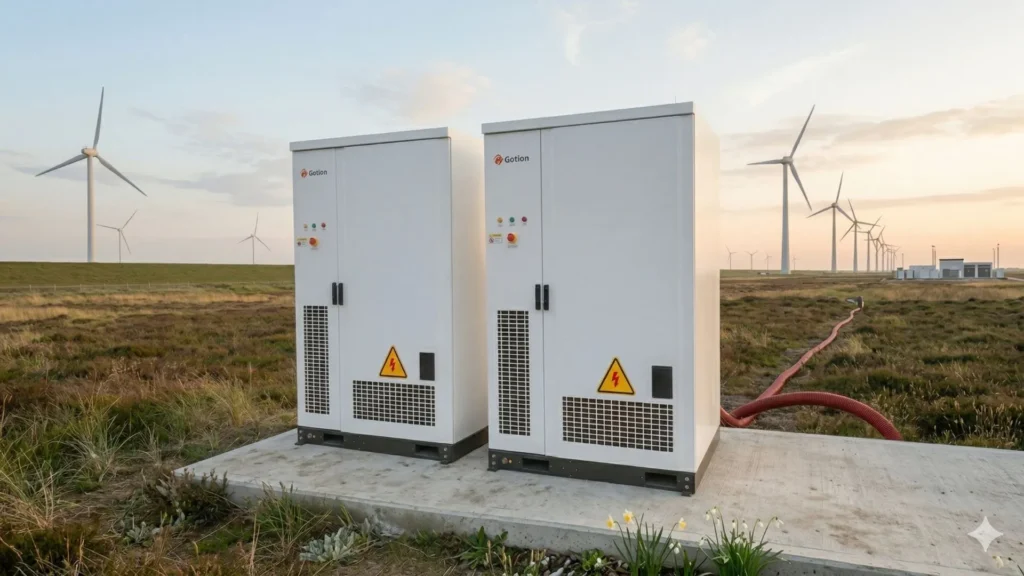
The Gotion battery advantage starts with lithium iron phosphate. LFP is attractive because it avoids nickel and cobalt, supports cost discipline, and suits mass-market EVs, commercial vehicles, stationary storage, and backup power. In China, this chemistry has become a strategic weapon because it fits the market’s demand for safe, affordable electrification.
The company’s 2025 annual report says its product portfolio includes Qichen II L600 batteries, the G Yuan hybrid liquid battery, and the Jadestone all-solid-state battery pilot line. It also reports that Qichen II reaches 240 Wh/kg at 5 °C during fast charging.
The G Yuan battery is described as delivering up to 300 Wh/kg and supporting a 1,000 km range in an application scenario. These claims should be read as company-reported technology milestones rather than independent market proof.
Customer embedding is another key point. The 2025 report says Gotion High-Tech supplied batteries for models linked to Chery, Geely, Changan, and Leapmotor. It also identifies overseas customers, including VinFast, Tata, and Rivian. The same report says standard battery cells jointly developed with Volkswagen Group were mass-produced and delivered in 2025 for use across multiple Volkswagen Group platforms.
The strategic difference from CATL is clear. CATL sells confidence at unmatched scale. Gotion offers a more flexible challenger proposition: proven Chinese LFP know-how, growing global production capacity, and a willingness to localize closer to demand.
For automakers, fleet operators, and storage developers, that can be valuable when procurement teams want a second qualified China-linked supplier rather than overexposure to one dominant name.
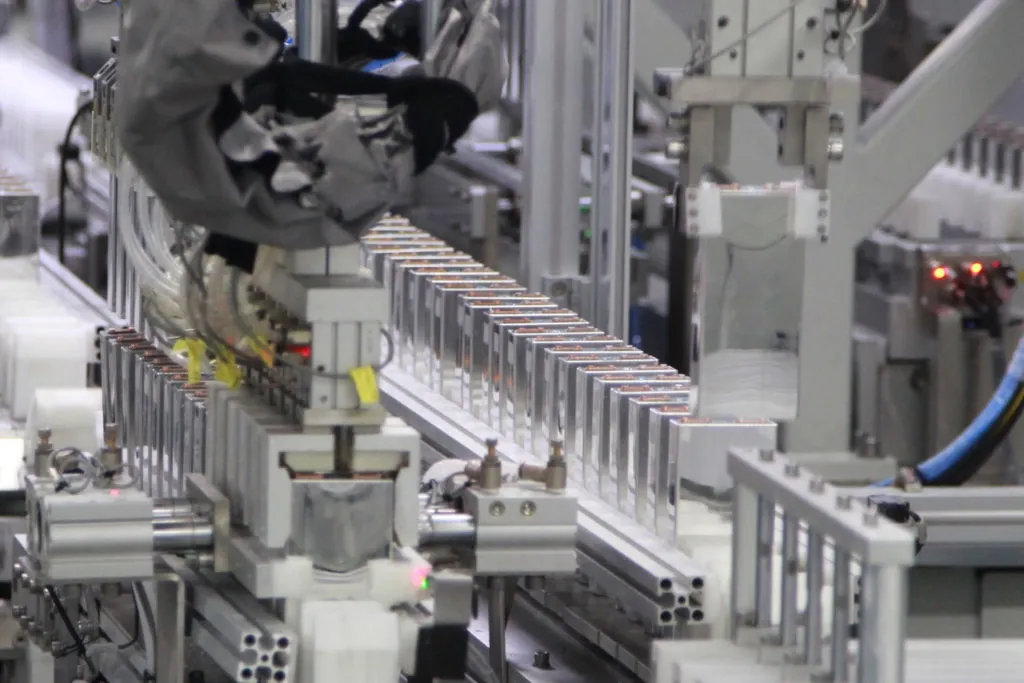
The U.S. footprint highlights both the opportunities and the political risks facing Chinese battery companies.
Gotion, Illinois, is the more constructive example. In Manteno, the company is operating from a former Kmart distribution site with 1.5 million square feet of usable manufacturing space. Local reporting in late 2025 said the site was focused on commercial and residential energy storage units, employed about 300 workers, and planned to grow to 450 by year’s end.
A separate 2026 report said Gotion Inc would work with Richardson Electronics on two U.S.-supported BESS platforms, including a 760-kWh commercial system and a 5-MWh utility-scale system assembled at Manteno.
Gotion, Michigan, tells a harder story. Reuters reported in 2025 that Michigan said the company had abandoned a planned $2.4 billion EV battery materials plant and would seek repayment of $23.6 million used for property. In 2026, Reuters reported that Gotion Inc sued Green Charter Township for damages tied to the collapsed project and said the township’s actions blocked progress.
Europe and North Africa show a broader localization strategy. In Germany, Energy Storage News reported in May 2026 that Gotion High-Tech had started manufacturing 5 MWh BESS units at its German facility, with TÜV SÜD compliance under the EU Battery Regulation.
Reuters reported in June 2026 that Gotion Power Morocco would begin construction of a gigafactory tied to a Moroccan government investment deal, with first production expected in Q3 2026.
Spain adds another upstream and circularity angle. Electrive reported in June 2026 that Gotion received €92 million under Spain’s PERTE VEC program for a cathode and recycling project in Valladolid. El País reported that Spanish authorities were backing two battery-related plants in Valladolid covering cathode materials and black mass recycling.
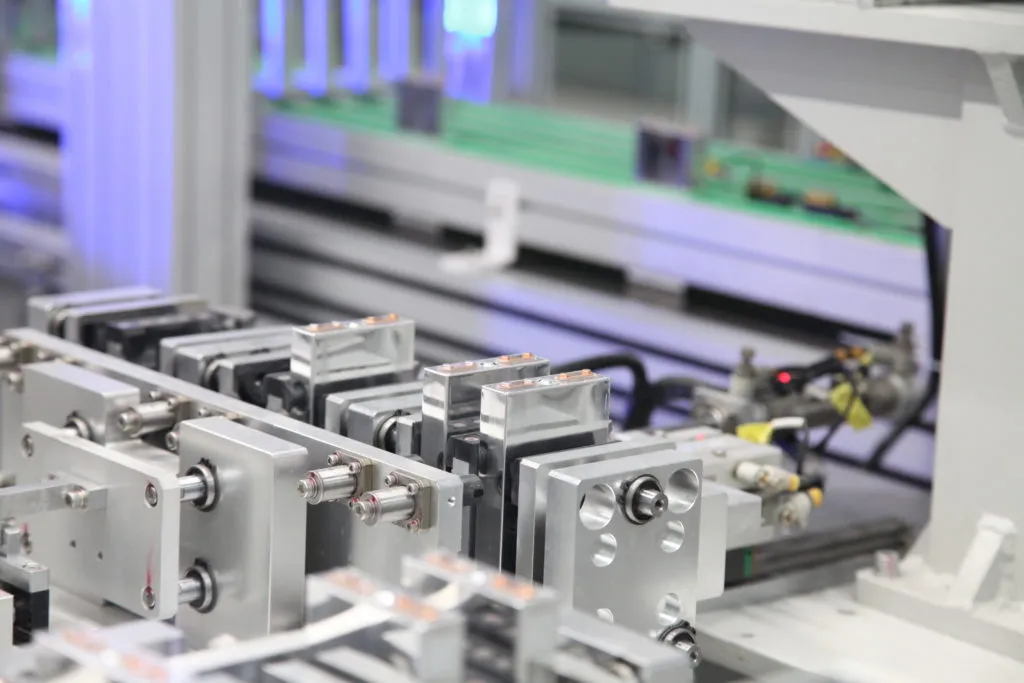
Search demand around Gotion solid-state battery technology launch reflects a real strategic shift. The company’s 2025 annual report says its all-solid-state pilot line was constructed and commissioned during the reporting period. It also refers to the Jadestone battery pilot line and the G Yuan hybrid liquid battery.
These are meaningful R&D milestones, but the publicly available evidence in 2025 and 2026 does not support treating Gotion as a mass-market commercial solid-state leader.
This does not change the near-term business model. LFP and storage remain the commercial engines. Solid-state work is more about future relevance, investor signaling, and OEM confidence.
In China, innovation narratives matter because customers and local governments look for evidence that a supplier can keep pace in the technology race.
For investors, the signal is margin quality. Revenue growth matters, but battery pricing in China remains intense. Watch how much of Gotion’s profit comes from operational improvement versus one-off financial items.
For marketers and strategy teams, the opportunity is positioning. Gotion High-Tech can be framed around practical electrification, LFP reliability, storage growth, and localized supply. That is a different story from CATL’s megascale dominance.
For technology leaders, the key question is execution. Pilot lines and product launches create attention. Customer qualification, certification, production yield, and service performance create market share. The companies that win the next battery cycle will combine Chinese speed with local credibility. Gotion is one of the few challengers already trying to do both.
China’s battery, EV, and energy storage sectors move fast, and surface-level market updates are rarely enough. Chozan helps global teams understand China’s commercial reality, track strategic players like Gotion, and translate market signals into smart action.
For executive briefings, China strategy, or thought leadership, Chozan brings the local context that global decisions need. Book a consultation to understand how these trends impact your business and investment decisions.
Yes, investors can track Gotion High-Tech through public market channels, including SIX Swiss Exchange data for its GDRs and official investor relations updates. Check broker access, liquidity, currency exposure, and China battery sector risk before acting.
Gotion Inc lists EV cells, ESS cells, EV packs, ESS packs, utility systems, and commercial and industrial storage solutions. This helps buyers screen products by application before discussing specs, warranty terms, service coverage, and delivery timelines.
Procurement teams should request cell chemistry, BMS architecture, cycle life, thermal design, certifications, traceability, warranty owner, local service coverage, and bankability references. Gotion lists chemistry, cells, BMS, modules, packs, storage, and pack assemblies.
Volkswagen’s unified cell matters because it favors standardized formats across platforms and chemistries. Gotion batteries aligned with this strategy can gain credibility with global OEMs seeking scalable sourcing, platform compatibility, and predictable battery integration.
Gotion BESS products support grid-side, generation-side, commercial and industrial, residential, and portable applications. Buyers usually evaluate safety, certification, service support, cost, and system integration quality.
Gotion LFP batteries are useful for energy storage because they offer strong safety, long lifespan, and stable performance. These features make them suitable for EVs, stationary storage, commercial systems, and sustainable energy infrastructure.
Gotion G Current is a fast-charging battery technology designed to reach 80 percent charge in under 10 minutes. This supports EV users who need shorter charging times and stronger daily driving convenience.
Gotion Inc. invests more than 10 percent of its annual revenue in research and development. This supports battery innovation, manufacturing improvements, product customization, and the company’s global patent portfolio across EV and ESS technologies.
Gotion Inc. holds more than 10,000 patents worldwide, according to the company profile. This patent base supports its work in power batteries, energy storage systems, fast charging technology, battery materials, and manufacturing processes.
Gotion Inc. is important because it spans battery cells, modules, packs, and complete systems. This vertical integration helps the company control quality, customize products, and serve EV, commercial, industrial, and energy storage customers.