
CONTENT

The China medical devices sector combines substantial manufacturing capacity with an expanding pipeline of advanced clinical products. China had 33,210 medical-device manufacturers at the end of 2025, according to National Medical Products Administration (NMPA) statistics. Its commercial relevance spans equipment sourcing, technology partnerships, and access to Chinese healthcare customers.
The commercial question is where that capacity creates a credible opportunity. A laboratory supplier, a cardiac-device developer, and a hospital equipment buyer need different evidence. Market estimates, product authorizations, and purchasing rules each reveal a different part of the answer.
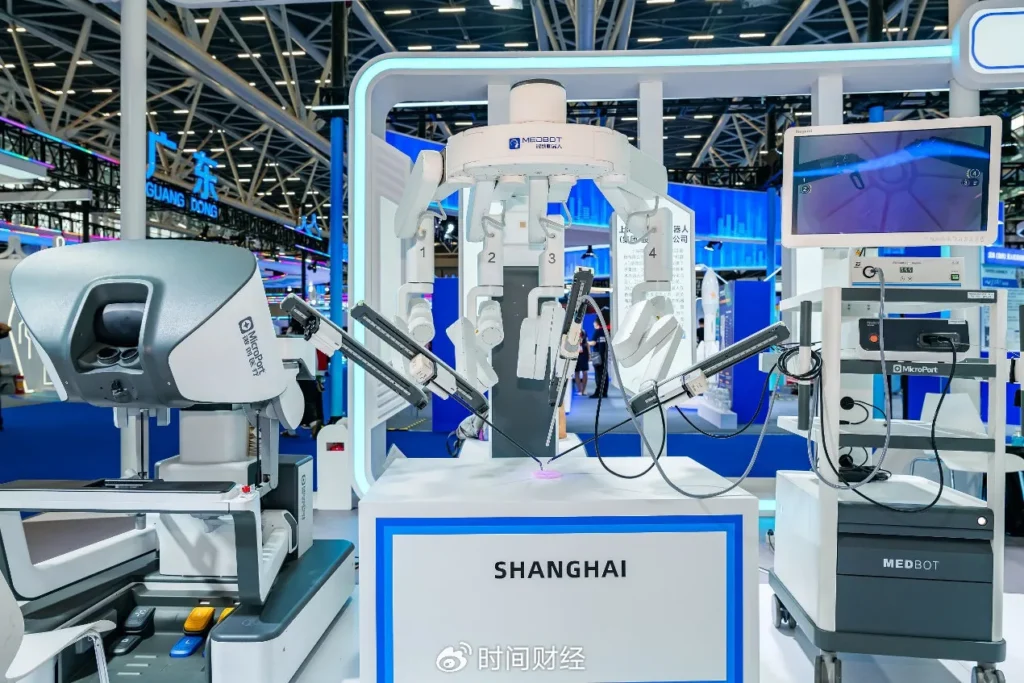
The China medical device market requires careful definition. The U.S. International Trade Administration’s September 2025 guide cites a BMI forecast of $55.2 billion by 2029. This is a forward estimate within that source’s market definition. Keep it separate from manufacturing output, export values, and total healthcare spending.
NMPA approved 76 innovative medical devices in 2025. That measures authorization activity, rather than domestic brands’ sales or market share.
The same report identifies a geographic concentration: Jiangsu, Guangdong, Beijing, Shanghai, and Zhejiang accounted for 65.1% of first registrations for domestically produced Class III devices in 2025. These regions offer a starting point for partner research.
A useful market assessment therefore starts with a product category and a target customer. A supplier should distinguish revenue from new installations, replacement equipment, recurring consumables, and service contracts.
The relevant planning inputs include eligible hospitals, replacement schedules, product eligibility, and achievable selling prices. National totals establish context; this narrower calculation supports decisions about staffing, distribution, and working capital.
Recent approvals show progress across several technically demanding categories. Commercial implications differ depending on how hospitals purchase, operate, and maintain each product.
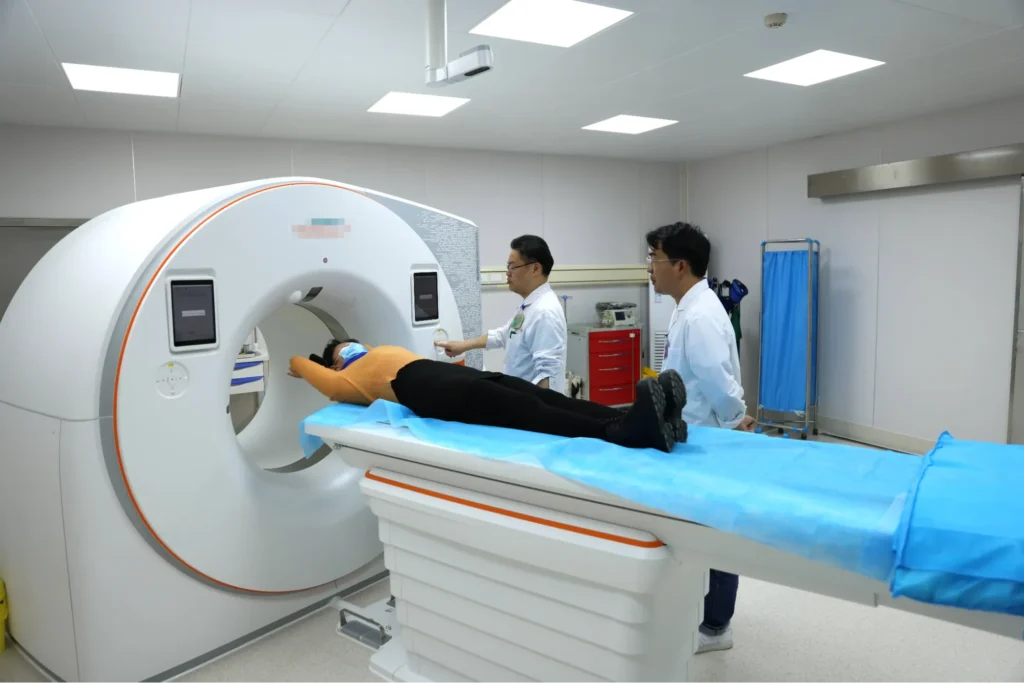
Neusoft Medical’s NeuViz P10 became the first photon-counting CT approved by NMPA in August 2025, and the world’s first 8-centimeter wide-body photon-counting CT. The system uses cadmium zinc telluride (CZT) detectors, reduces radiation dose by more than 90 percent compared with conventional CT, and increases spatial resolution to the 0.1-millimeter range. China became the third country to master photon-counting CT technology.
This gives buyers additional technology to evaluate in high-end imaging. A meaningful comparison should examine image quality at the required radiation dose, service availability, and performance across the hospital’s actual patient mix. Approval establishes a specific regulatory milestone; comparative clinical value needs its own evidence.
The NMPA approved an interventional left ventricular assist device and catheter pump kit from Shenzhen Core Medical in December 2025. The system uses a miniaturized axial motor for short-term left ventricular support during high-risk percutaneous coronary intervention, filling a domestic gap in interventional cardiac assist technology.
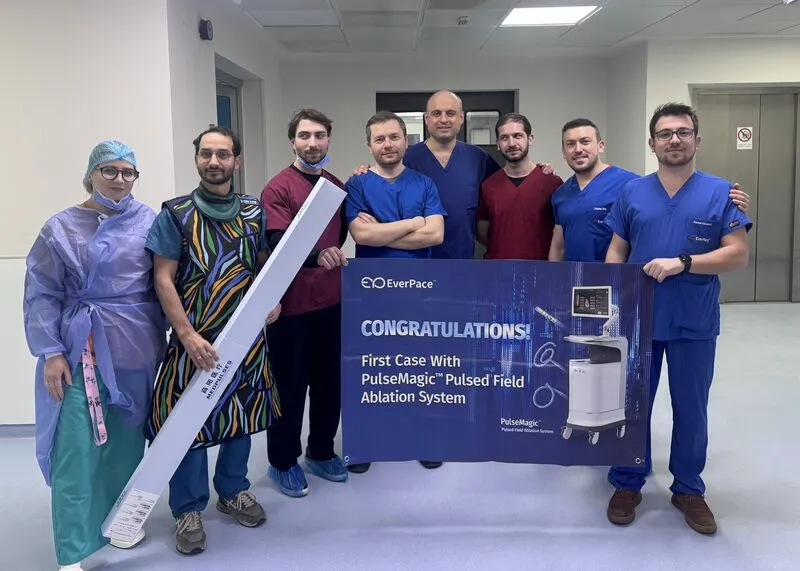
MicroPort EP announced NMPA approval and launch of its PulseMagic TrueForce pulsed-field ablation catheter in November 2025. The device combines pressure sensing and saline irrigation and works with the company’s Columbus 3D cardiac mapping system.
The strategic implication is that competition in cardiovascular devices extends across connected products. A catheter’s commercial prospects depend partly on compatible installed equipment, physician familiarity, and procedural support. Product comparisons should account for the complete treatment workflow.
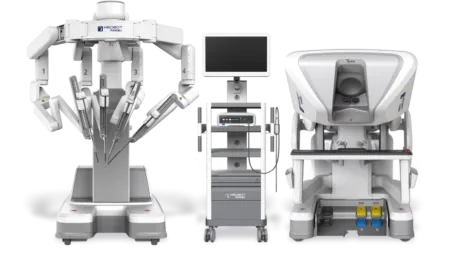
In March 2025, MicroPort MedBot announced Chinese market approval for its Toumai SP laparoscopic surgical robot, covering clinical use in urology, general surgery, and gynecology.
By early 2025, domestic surgical robot procedures exceeded 10,000 cases, predominantly complex grade-four surgeries. Remote surgery capabilities attracted international attention, with Chinese systems demonstrating procedures across distances exceeding 700 kilometers.
For robotic surgical systems, purchase decisions extend beyond the capital price. Hospitals should model procedure volumes, instrument costs, training requirements, and maintenance commitments. A technically capable platform needs an operating plan that makes regular use feasible.

China’s patient monitoring procurement totaled RMB 6.139 billion (USD 850 million) across 72,157 units in 2025.
NMPA’s registration report records approval of eight rare-disease diagnostic reagents in 2025. Separately, Mindray launched its BeneVision V Series patient monitoring solution at Euroanaesthesia 2025 in Lisbon. These developments address distinct needs in laboratory testing and bedside care.
Wearable cardiac monitors with atrial fibrillation detection sensitivity and specificity above 94 percent entered the regulatory pipeline through the Ministry of Industry and Information Technology’s AI medical device innovation program.
For diagnostics, assess the supported test menu and reagent supply continuity. For connected monitoring, examine hospital data integration and staff workflows. These questions reveal operational fit that a specification sheet alone cannot establish.
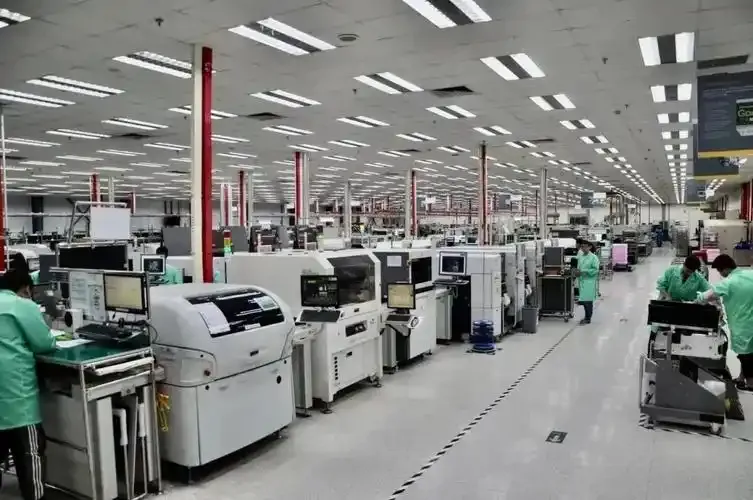
Regulatory authorization, hospital purchasing, and payment arrangements require separate planning. The ITA’s 2025 guide identifies volume-based procurement, which pools hospital purchasing needs, as a source of pressure on supplier prices. For covered categories, commercial models should test margins against realistic tender prices and supply commitments.
A separate policy changes the economics of qualifying locally produced goods. A State Council notice issued in September 2025 took effect on January 1, 2026.
Where domestic and nondomestic products compete in covered government purchasing, qualifying domestic products receive a 20% deduction from their quoted price for evaluation purposes. This affects bid comparison rather than imposing a 20% reduction in the contract price.
The notice requires equal treatment of eligible state-owned, private, and foreign-invested enterprises. Consequently, domestic manufacturing can form part of a foreign company’s China strategy. Product origin and applicable manufacturing criteria need close attention; a local sales presence alone does not establish domestic-product status.
These rules make production location a commercial decision as well as an operational one. Teams should assess the relevant tender and product requirements before committing to facilities, partners, or pricing assumptions.
NMPA released revised Good Manufacturing Practice requirements in November 2025, with implementation scheduled for November 1, 2026. The revision adds chapters covering quality assurance, validation and verification, and contract manufacturing and outsourcing.
Supplier assessments should examine preparation for these requirements. Ask who controls design changes, oversees outsourced processes, and resolves nonconforming production batches. Evidence should include documented responsibilities and records showing how the quality system works in practice.
This becomes more consequential when a relationship progresses from sample orders to sustained production. Clear accountability helps both parties identify problems, investigate their causes, and maintain consistent output as volumes change.
These product milestones support a measured view of China as a medical-technology development hub. They justify closer attention to Chinese engineering partners, product architectures, and commercialization methods. They do not establish superiority across every device category.
The first decision is the purpose of engagement. Each route needs a different project brief:
| Engagement model | Questions to resolve early |
| Source an existing product | What configuration, branding rights, minimum order quantities, and spare-parts commitments will the agreement cover? |
| Develop technology together | Who owns existing intellectual property, new inventions, and the right to commercialize the result in each territory? |
| Study an operating model | Which development decisions are transferable, and which depend on Chinese customer requirements or local economics? |
The catheter-and-mapping example offers a concrete starting point for technical dialogue. A developer could examine which interfaces allow components to evolve independently and where compatibility creates customer value. The question is how the architecture works, with any performance claims tested against evidence.
A learning visit should produce a decision that the team can act on. Set an agenda around one technical or commercial uncertainty, request relevant documentation in advance, and involve the people responsible for implementation. A defined engineering milestone, a qualified alternative component, or a revised product specification gives the exercise a measurable outcome.
This focused work clarifies China’s value as a technology hub. Companies can learn from a specific approach, adapt it to their own customers, and expand the relationship when the results support further investment.
Turn China medical devices research into a focused business agenda. ChoZan offers China market research, expert calls, and tailored learning expeditions. Its workshops and China reports provide broader context for technology and business-model change.
Book a consultation to discuss your research priorities and what your team wants to learn from China.
Start with the supplier’s legal identity, manufacturing address, and product registration or filing details. Match documents to the exact model you plan to purchase. Then request quality records, customer references, and evidence of after-sales support.
No. Destination markets impose their own requirements. China’s export-certificate rules, effective May 2026, require exported products to meet importing-country requirements. Ask for authorization covering the exact model and intended use in your target market.
No. NMPA’s 2025 catalogs exempt certain devices from clinical evaluation and certain in vitro diagnostic reagents from clinical trials. Eligibility depends on the specific product, so confirm the applicable category before planning studies or budgets.
Yes. NMPA’s 2025 policy supports local production of eligible imported Class II and III devices through specified enterprises, including certain companies under common control. Applicants must still satisfy registration, documentation, and quality-system requirements for the transfer.
Yes, subject to applicable product and seller requirements. NMPA’s 2025 guidance addresses seller qualifications, product information, transaction records, and delivery quality. Platforms must also review relevant licenses and device registration or filing status before supporting sales.
Some are. China’s regulator approved seven influenza A/B antigen kits for personal self-testing in 2025. Buyers should check each product’s authorized use and instructions, since professional testing products may require trained operators and different handling procedures.
Industrial output reached RMB 1.2049 trillion (USD 166 billion) in 2025, while retail-market estimates placed domestic sales at RMB 973.9 billion (USD 134 billion). The difference reflects methodology: industrial figures include exports and components.
Ask where patient data reside, who can access them, and how the supplier manages software updates and security incidents. Require clear documentation for remote support, system integration, and data deletion before connecting equipment to hospital networks.
Beijing, Jiangsu, Shanghai, Guangdong, and Zhejiang lead in approved innovative device counts, forming core innovation clusters where research hospitals, engineering talent, and manufacturing supply chains converge.
Yes. NMPA’s 2025 guidance says these products require professional fitting, adjustment, or trial use, with prominent notices on online product pages. An online purchase should still include the appropriate examination and fitting support for the individual user.
Yes. In March 2026, China approved a Borui Kang system intended to help eligible people with cervical spinal cord injuries regain hand-grasping ability through a glove. Its authorization covers a defined patient group, rather than unrestricted use.