CONTENT
China is advancing cargo drones from lightweight parcel delivery toward industrial lifting, regional freight, and autonomous aircraft carrying several metric tons.
Current programs span DJI’s commercially launched FlyCart 100, a demonstrated plateau logistics flight, and larger aircraft such as AVIC’s HH-200 and the Changying-8. Their significance lies in connecting places where roads, conventional aircraft, or offshore transport create costly delays.
The commercial opportunity depends on proven routes, usable payload, regulatory approval, and repeatable operating economics.
China’s advantage comes from combining aviation manufacturing, logistics demand, industrial deployment, and an active regulatory environment.
The Civil Aviation Administration of China reported that registered drones exceeded 4.788 million during the first half of 2026. This figure covers all registered drone categories, not cargo aircraft alone.
The country’s civil aviation development plan, released in August 2026, links low-altitude aviation to safety, infrastructure, technological development, and integrated transportation.
Together, these developments create the conditions for freight applications to move beyond isolated demonstrations. They do not establish that every aircraft is ready for commercial service.
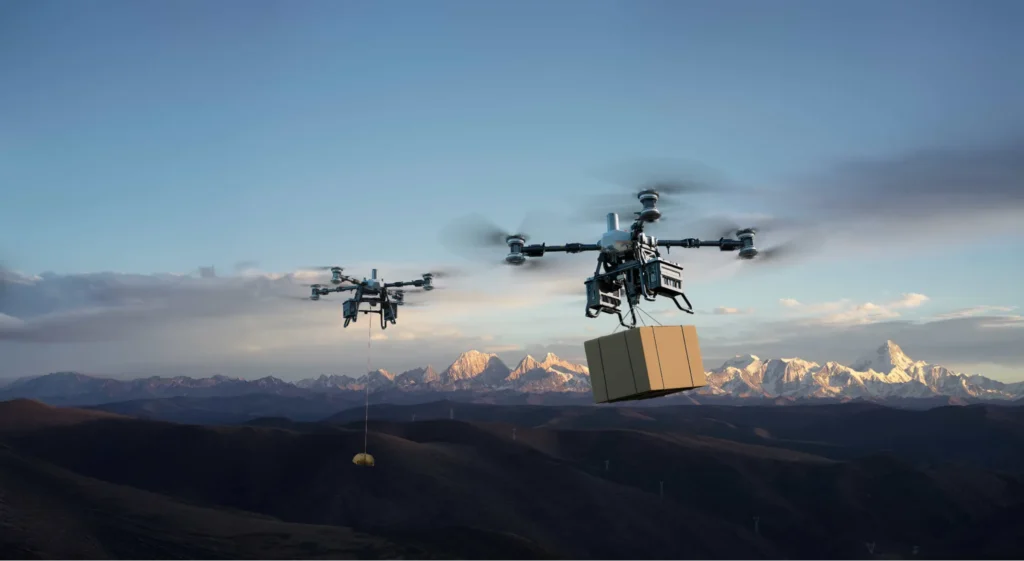
Chinese standards classify an unmanned aircraft with a maximum takeoff weight of at least 150 kilograms as a large cargo UAV.
Maximum takeoff weight includes the aircraft, propulsion system, energy source, and payload. It does not describe how much freight the aircraft can carry.
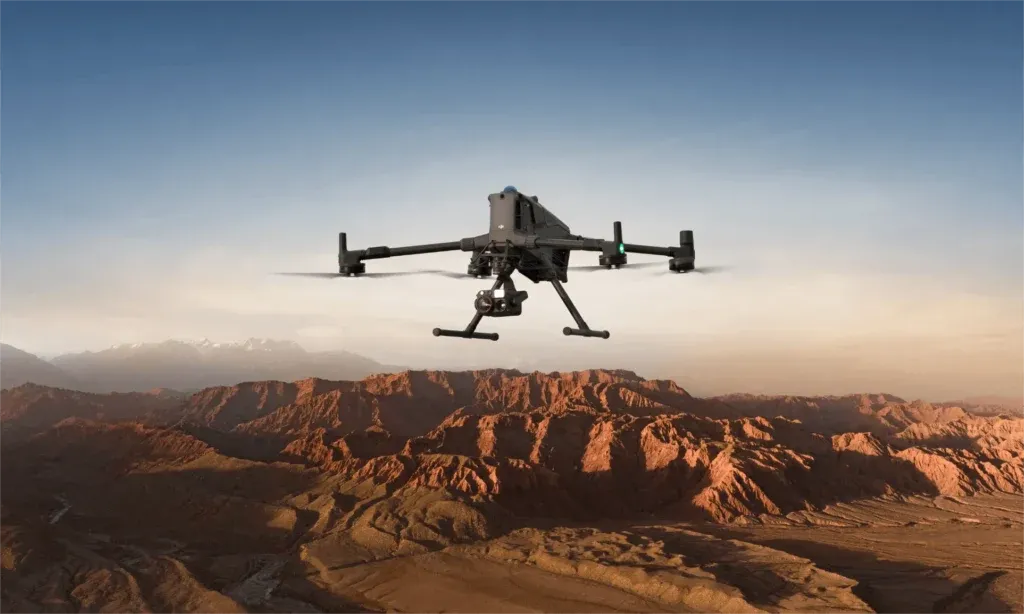
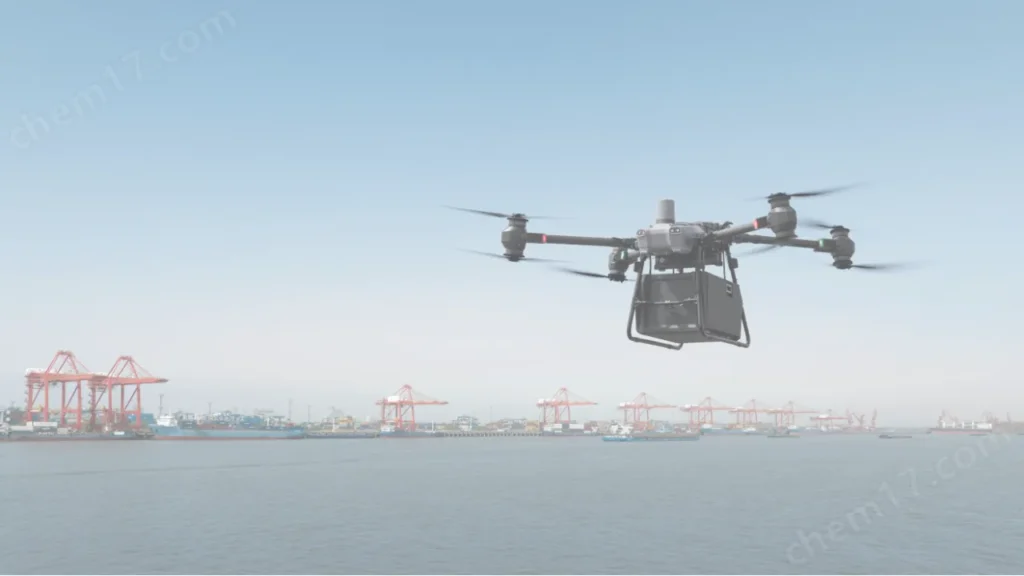
DJI’s December 2025 FlyCart 100 announcement promotes payload capacity of up to 100 kilograms. Its detailed operating figures specify 65 kilograms over 12 kilometers with two batteries, or 80 kilograms over six kilometers using an emergency single-battery configuration.
That difference matters. Assess a heavy-lift cargo drone by its documented operating configuration, required safety margin, and usable range with the intended load.
China’s cargo drone companies include established aerospace groups, specialist manufacturers, and industrial drone suppliers. Their aircraft occupy different maturity stages.
| Aircraft and developer | Reported payload | Verified development status |
| DJI FlyCart 100 | 65 kilograms over 12 kilometers with two batteries; 80 kilograms over six kilometers with one emergency battery | Global commercial product launch in December 2025 |
| Yi-Tong TP1000 | 1,000 kilograms; reported 1,000-kilometer range at full load | First flight in March 2025; 30 customer orders reported |
| AVIC HH-200 | 1,500 kilograms; reported maximum range of 2,360 kilometers | First flight in April 2026 |
| Aerospace Times Feipeng FP-985 | More than 2,000 kilograms | Completed a 1,100-kilometer plateau cargo validation flight in January 2026 |
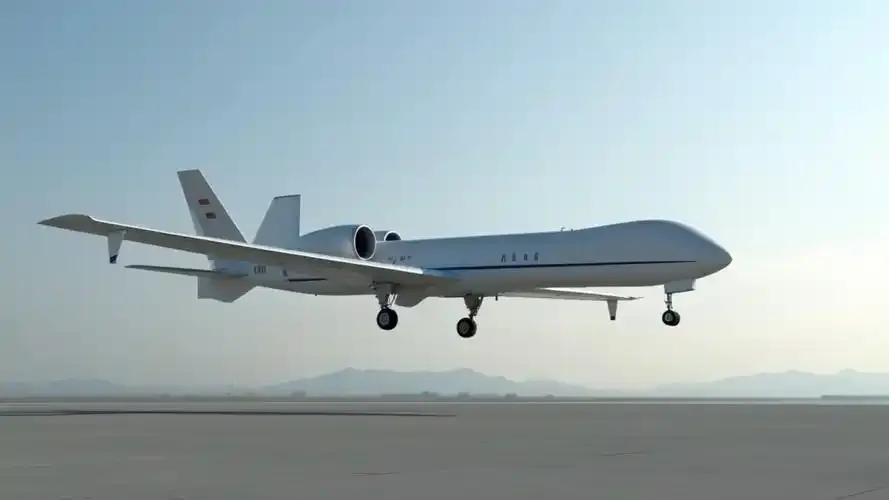
| Changying-8 | 3,500 kilograms; reported maximum range exceeding 3,000 kilometers | First full-size flight in March 2026 |
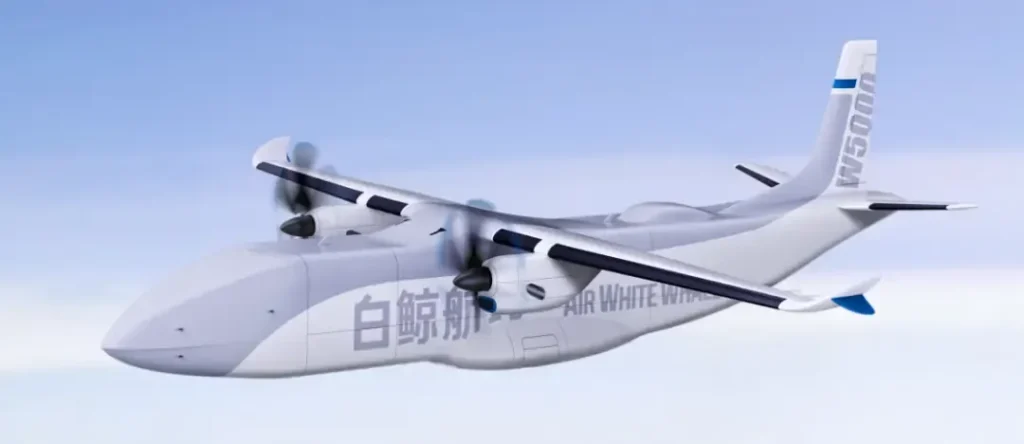
| Air White Whale W5000 | 5,000 kilograms as a reported design target | Reported as under development; full-size commercial operation not independently verified |
| AVIC Jiutian | 6,000 kilograms | Multipurpose aircraft completed its first flight in December 2025 |
Do not assume maximum payload and maximum range are achievable simultaneously unless a source explicitly confirms that combination. The TP1000’s cited source specifies full-load range; the HH-200 and Changying-8 reports do not.
The answer depends on the measurement and development stage.
The Changying-8 has a seven-metric-ton maximum takeoff weight and a 3.5-metric-ton payload. Air White Whale advertises a higher five-metric-ton design payload for the W5000, while AVIC reports a six-metric-ton payload for its multipurpose Jiutian.
These aircraft cannot support a single reliable ranking of the largest cargo drone without distinguishing maximum takeoff weight, payload, full-scale flight, dedicated freight configuration, certification, and commercial operation.
Xinhua documented a China Southern Power Grid project where 16 drones moved 2,000 metric tons of materials for 52 transmission towers along a 22-kilometer route.
The report attributed an 80% reduction in road-building costs and a 60% reduction in labor requirements to that specific project. Those figures should not be treated as industry-wide savings.
For a heavy cargo drone, the relevant comparison includes avoided temporary roads, reduced worker exposure, fewer construction delays, and easier ground access.
In January 2026, Aerospace Times reported that Feipeng’s FP-985 completed a 1,100-kilometer logistics validation flight between Xizang and Sichuan.
The aircraft carried local products, including butter tea and yak dairy. The report did not disclose the shipment’s actual weight, so its maximum payload cannot be presented as the load carried on that flight.
That distinction matters when evaluating large cargo drones for agricultural distribution, regional connectivity, and emergency supplies.
Xinhua reported an offshore cargo flight in which a two-ton-class eVTOL transported fresh produce and medical supplies from Shenzhen to an offshore platform 150 kilometers away in August 2025. The journey took 58 minutes. The report did not disclose cargo weight.
These missions suit routes where vessel schedules, distance, and urgent replacement parts create operational bottlenecks. Their value depends on delivery reliability and avoided downtime.
China has made freight a policy priority within the low-altitude economy. A State Council Information Office briefing described an approach that prioritizes cargo over passenger transport, isolated operating environments over integrated ones, and remote areas over urban centers.
The revised Civil Aviation Law took effect on July 1, 2026. It requires airworthiness certification for covered unmanned-aircraft activities unless an exemption applies and requires manufacturers to assign aircraft identification codes.
China’s August 2026 aviation plan adds broader institutional support through safety systems, infrastructure coordination, digital development, and low-altitude aviation policy.
A test flight, aircraft certificate, operating authorization, and approved commercial route remain separate milestones. A capable aircraft does not automatically have permission to fly every proposed mission.
AVIC’s HH-200 developer estimates full-life-cycle operating costs at 4.7 yuan ($0.69) per metric ton-kilometer. That figure is a developer estimate reported after a first flight, not independently verified commercial performance.
A sound assessment should account for:
Yi-Tong reported 30 TP1000 orders in 2025. Its March 2025 announcement described certification and commercial operations as future targets. The available primary regulatory sources reviewed do not independently confirm its current aircraft certification status.
That distinction applies across cargo drone companies. Customer orders, letters of intent, flight demonstrations, production capacity, and recurring freight revenue indicate different levels of maturity.
Cross-border expansion introduces additional aviation permissions, customs procedures, local certification requirements, and potential dual-use restrictions.
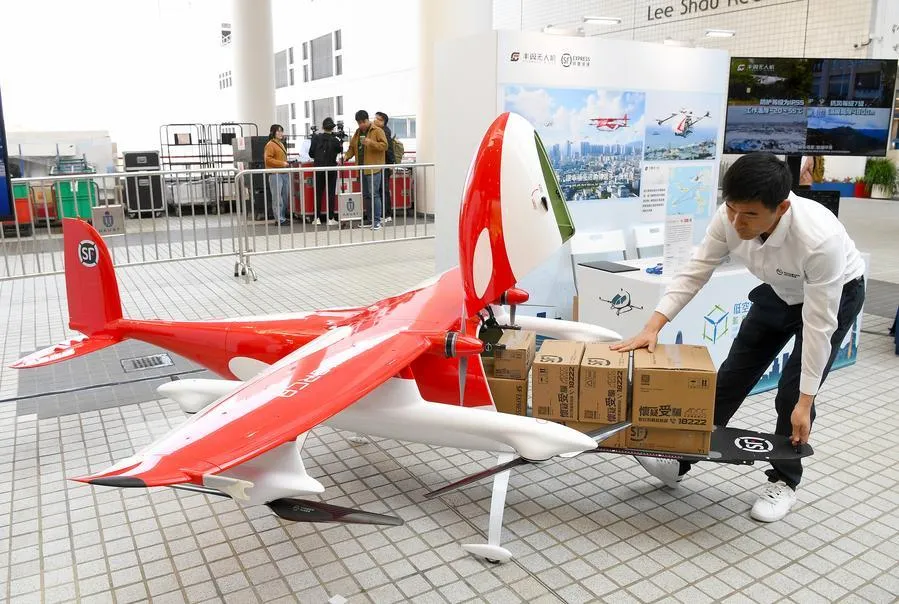
China’s strongest advantage may come from coordination across aircraft manufacturing, logistics operators, industrial users, local infrastructure, and regulation.
The important question is which routes produce repeatable economic value. A cargo drone becomes strategically relevant when it solves a specific transport problem, meets safety requirements, and connects reliably with existing freight networks.
Aircraft size will continue to attract attention. Commercial credibility will depend on approved operations, documented loads, reliable service, and economics that work outside a demonstration.
China’s cargo drones sit within a wider system of industrial policy, manufacturing, logistics, and applied innovation. ChoZan helps connect those developments through China market research and its Shenzhen and Guangzhou innovation tour. Explore the format that best matches the questions your organization needs answered.
The terms overlap, but autonomous freight aircraft generally describes larger fixed-wing systems designed for regional transport. Cargo drones can also include multirotor aircraft, unmanned helicopters, and electric aircraft used for shorter industrial delivery missions.
Yes, if the aircraft supports temperature-controlled containers and the operator maintains cold-chain handling before loading and after arrival. Payload calculations must include the cooling equipment, packaging, insulation, and monitoring devices.
No. Multirotor aircraft and vertical takeoff systems can operate from compact landing areas. Fixed-wing platforms generally require runways, although some models support shorter or less developed airstrips, depending on certification and operating conditions.
Full-payload range depends on aircraft design, weather, altitude, energy reserves, and cargo weight. Buyers should request a documented payload-range chart because maximum range and maximum payload do not necessarily apply to the same flight.
BVLOS means beyond visual line of sight, where an aircraft operates outside the remote pilot’s direct vision. Commercial approval can depend on the aircraft, route, communications, airspace management, and emergency procedures.
Some industrial models are fully electric, while larger regional aircraft may use hybrid propulsion or conventional aviation engines. The appropriate power system depends on payload requirements, route distance, available infrastructure, and turnaround time.
Cross-border service requires more than domestic aircraft approval. Operators must address permissions in each jurisdiction, customs procedures, airspace access, communications requirements, security restrictions, insurance coverage, and any applicable export controls.
Coverage can include aviation liability, cargo insurance, aircraft damage, ground risks, and business interruption. Exact requirements depend on the jurisdiction, operating route, shipment value, customer contracts, and aircraft certification.
Some aircraft include deicing, weather monitoring, redundant systems, and other protections, but approved operating limits still control each mission. Wind, visibility, icing, precipitation, terrain, and communications reliability can all restrict deployment.
They are better understood as an additional transport layer for routes where geography, urgency, or infrastructure makes road delivery difficult. Trucks remain necessary for many high-volume movements, consolidation points, and final connections.