CONTENT
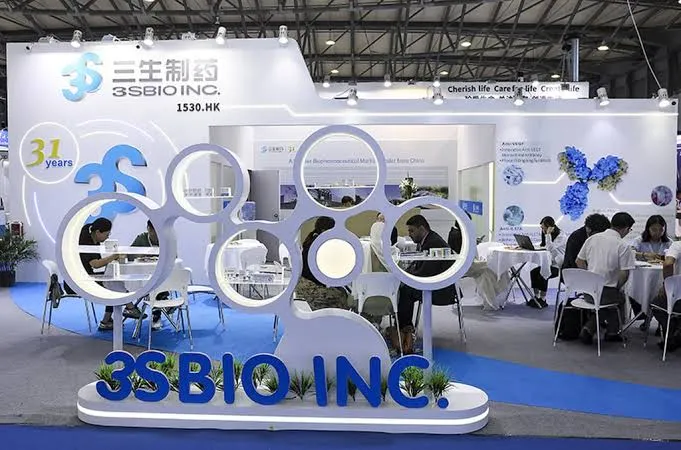
3SBio is a Chinese biopharmaceutical company that combines commercial biologics, antibody development, and international licensing. Its 2025 agreement with Pfizer connects a China-developed cancer drug candidate, SSGJ-707, with a multinational partner’s development and commercialization capabilities.
The transaction illustrates how Chinese biomedical innovation can reach global markets through negotiated partnerships. The commercial story extends beyond the headline price.
Territorial rights, clinical responsibilities, production arrangements, and recurring product sales determine what the partnership can deliver. Those details offer a grounded way to assess China’s role as a source of biotechnology innovation.
Pfizer announced the agreement on May 19, 2025, and confirmed completion on July 24. The company’s regulatory filing defines the initial licensed territory as worldwide, excluding mainland China, with a separate option covering mainland rights.
The original transaction announcement separates several economic components:
| Component | Disclosed terms |
| Initial license payment | US$1.25 billion |
| Potential milestones | Up to US$4.8 billion for development, regulatory, and commercial achievements |
| Royalties | Tiered double-digit royalties on sales, if approved |
| Equity investment | US$100 million, separate from the license payment |
| Mainland China option | US$100 million option payment already made, plus a potential exercise fee of up to US$50 million, subject to future events. |
The maximum milestone amount depends on future achievements. Keep it separate from cash already received when comparing transactions or estimating available funding.
A reporting distinction matters here. The company’s March 2026 results release describes a US$1.4 billion up front payment.Its regulatory filing separately identifies the US$ 1.25 billion license fee and China option fees. A transaction comparison should preserve those categories when assessing published upfront figures.
The allocation of development spending also changes the economics. The filing assigns Pfizer the costs of future development and regulatory work in the licensed territory. That responsibility can matter as much as the initial payment when trials expand internationally.
3SBio Inc. reported 25 key investigational candidates in its August 2026 interim update. The portfolio spans hemato-oncology, autoimmune diseases, nephrology, dermatology, and weight management.
SSGJ-707 is a bispecific antibody targeting PD-1 and VEGF. Pfizer‘s September 28, 2026, update identifies it as tivunatamig, also called PF-08634404 or PF ‘4404. These names refer to the same development program.
The selected antibodies span several development stages:
| Program | Target or modality | Disclosed development status |
| SSGJ-707 / tivunatamig | PD-1/VEGF bispecific antibody | Ongoing pivotal studies in lung, colorectal, and endometrial cancers, September 2026 |
| 705 | PD-1/HER2 bispecific antibody | Phase 2 for HER2-positive solid tumors, August 2026 |
| 610 | IL-5 monoclonal antibody | Adult severe eosinophilic asthma Phase 3 enrollment completed, August 2026 |
| 611 | IL-4Rα monoclonal antibody | China marketing application accepted for adult moderate-to-severe atopic dermatitis, August 2026 |
This mix gives potential partners more than a single asset to examine. It also requires discipline: a Phase 2 candidate and a submitted marketing application carry different evidence requirements, spending commitments, and timelines. The pipeline count alone cannot establish commercial value.
The clinical program also extends into earlier disease settings. A current Pfizer study listing describes PF-08634404 in early-stage or locally advanced lung cancer, including treatment before or after surgery. That trial addresses different questions from studies in metastatic disease. A useful pipeline assessment tracks the treatment setting alongside each molecule and development stage.
The distinction between oncology and immunology also matters commercially. Different diseases require different specialist networks, trial designs, and routes to market. An attractive platform must support the practical demands of each program.
The company’s 2026 chairman’s message reports four manufacturing sites, four contract development and manufacturing organization bases, and 115,000 liters of antibody capacity.
Pfizer‘s July 2025 announcement described plans to manufacture drug substances in Sanford, North Carolina, and finished drug product in McPherson, Kansas. In March 2026, 3SBio reported that it retained supply rights and had delivered the first batch of drug substance for global clinical development.
Together, these disclosures suggest a flexible industrial model. Chinese drug development and clinical supply can coexist with a partner’s planned production in another market. The geography of invention does not have to match every subsequent production step.
This is an analytical interpretation of the disclosed arrangements. The reviewed announcements do not confirm that the proposed U.S. production is operational or establish future supply volumes.
A partner assessment should therefore examine process transfer, batch consistency, quality documentation, and supply obligations. Reactor capacity helps establish scale; the evidence behind reliable delivery determines how useful that scale becomes.
The 2025 results filing reports total revenue growth of 94.3%. However, out-license income accounted for about 53.3% of revenue, based on the disclosed categories. Biopharmaceutical sales declined 10.3%.
The first-half 2026 filing reinforces the distinction. Total revenue increased 3.9%, while biopharmaceutical sales fell 19.3%. The company attributed the decline in product sales primarily to healthcare insurance policies, volume-based procurement, and a value-added tax policy adjustment.
The partnership can provide substantial funding while the established product business faces pricing and policy pressure. Both developments belong in the same assessment.
A useful financial review separates product revenue, licensing payments, contract services, and any eventual royalties. Each has different timing and repeatability. A large transaction can finance research without establishing that underlying medicine sales have accelerated.

The strategic interpretation is specific: this case shows that a Chinese developer can contribute an asset, development knowledge, and supply capabilities to an international partnership. One agreement cannot establish the quality of every Chinese biotech company or predict a drug’s eventual approval.
Three practical checks make the model easier to assess.
A scientific review should identify the patient population, comparator, follow-up period, and relevant safety findings. Cross-trial comparisons need particular care because different populations and study designs can produce misleading impressions of superiority. Commercial enthusiasm should follow evidence that answers the intended treatment question.
A governance plan should identify decision owners, escalation procedures, data access, and the evidence needed to commit additional resources. Trial enrollment, process-transfer acceptance, and regulatory submissions provide concrete checkpoints. A signed agreement becomes more useful when both sides can measure execution consistently.

A commercial assessment should examine reimbursement, specialist adoption, distribution, and the cost of supporting treatment. Pricing assumptions deserve stress testing against local purchasing conditions. The company’s disclosed sales pressures make this relevant even when a development program attracts international interest.
The next meaningful evidence will come from clinical outcomes, execution against supply commitments, regulatory decisions, and demand for approved products. Those measures will show how much durable value this licensing model creates.
The 3SBio case raises a broader business question: which capabilities allow Chinese innovation to travel across markets?
Chozan, founded by China digital expert Ashley Dudarenok, helps companies study China’s business practices through research, consulting, workshops, and learning expeditions. Our China research services and expert calls support focused questions about markets, competitors, and technology adoption.
Start with the report library, then explore a research or learning brief built around the decisions your business needs to make.
Book a consultation to discuss your research needs.
3SBio trades on the Hong Kong Stock Exchange under stock code 01530, commonly represented as 1530.HK. Its official investor relations pages provide company announcements, financial reports, and shareholder information.
3SBio is based in Shenyang, in China’s Liaoning province. Its operating footprint extends beyond that city. Readers assessing a potential relationship should distinguish the listed parent company, the relevant subsidiary, and the specific production facility.
Sunshine Guojian is a subsidiary of 3SBio with its own listing on Shanghai’s STAR Market, stock code 688336. Group-level research can therefore involve separate corporate entities, which matters when checking announcements and identifying contractual counterparties.
The disclosed transaction licenses a designated drug candidate and includes a separate equity investment. Pfizer did not announce a purchase of the entire company. Share ownership and rights to develop a medicine represent different commercial interests.
The public announcements describe rights to SSGJ-707, developed using the CLF2 platform. They do not announce a license to every program arising from that platform. Any broader access requires support from the applicable contractual disclosures.
FDA clearance for an investigational new drug application allows clinical investigation to proceed under applicable requirements. It does not grant commercial marketing approval. The company reported IND clearance, which readers should distinguish from an approved treatment.
Patients can search Pfizer‘s clinical trial directory using PF-08634404, their condition, or location. Each study has its own eligibility rules. The study team determines eligibility, so a listed trial does not establish that someone can enroll.
A bispecific antibody recognizes two distinct targets or sites, while a biosimilar closely matches an approved reference biologic without clinically meaningful differences. These terms describe different concepts: antibody design and similarity to an existing approved product.
The reviewed 2026 disclosures do not establish a confirmed commercial launch date. Pfizer describes tivunatamig as investigational. A trial schedule or conference presentation date should never be presented as a promised date for treatment availability.
Start with the company’s investor relations reports, then compare asset-specific statements with Pfizer‘s announcements and trial records. Check the reporting period and document date together. A recently published annual report can still describe an earlier development stage.