Table of contents

AI Quality Inspection can flag visible scratches, missing components, misalignment, printing flaws, and dimensional deviations when the imaging setup makes those differences measurable. Reports from 2025 on Chinese manufacturing show applications spanning packaging, electronics, and machine learning-assisted welding inspection. Each requires a different definition of acceptable quality.
At a Glance
AI vision inspection can flag visible scratches, missing parts, misalignment, printing flaws and measurable dimensional deviations. What it catches depends on camera access, lighting and the specific reject criteria.
Chinese examples range from high-speed print inspection to AI-supported assembly checks. For buyers, defect miss rates, false rejection rates and the time taken to act on a finding matter more than an attractive overall accuracy figure.
Optical images cannot replace testing for defects the camera cannot see.
The business question is how reliably a system catches your costly defects at production speed. A clean inspection image cannot establish every aspect of product performance. China offers useful technology and implementation examples, provided buyers separate demonstrated capability from supplier promises.
Explore the wider picture behind AI inspection in China.
ChoZan’s China Innovation Tour is a guided learning programme featuring company visits, expert discussions and technology demonstrations.
Its AI and smart-manufacturing themes offer a way to explore the wider business context of technologies such as automated quality inspection. Find out whether the programme aligns with your team’s interests.
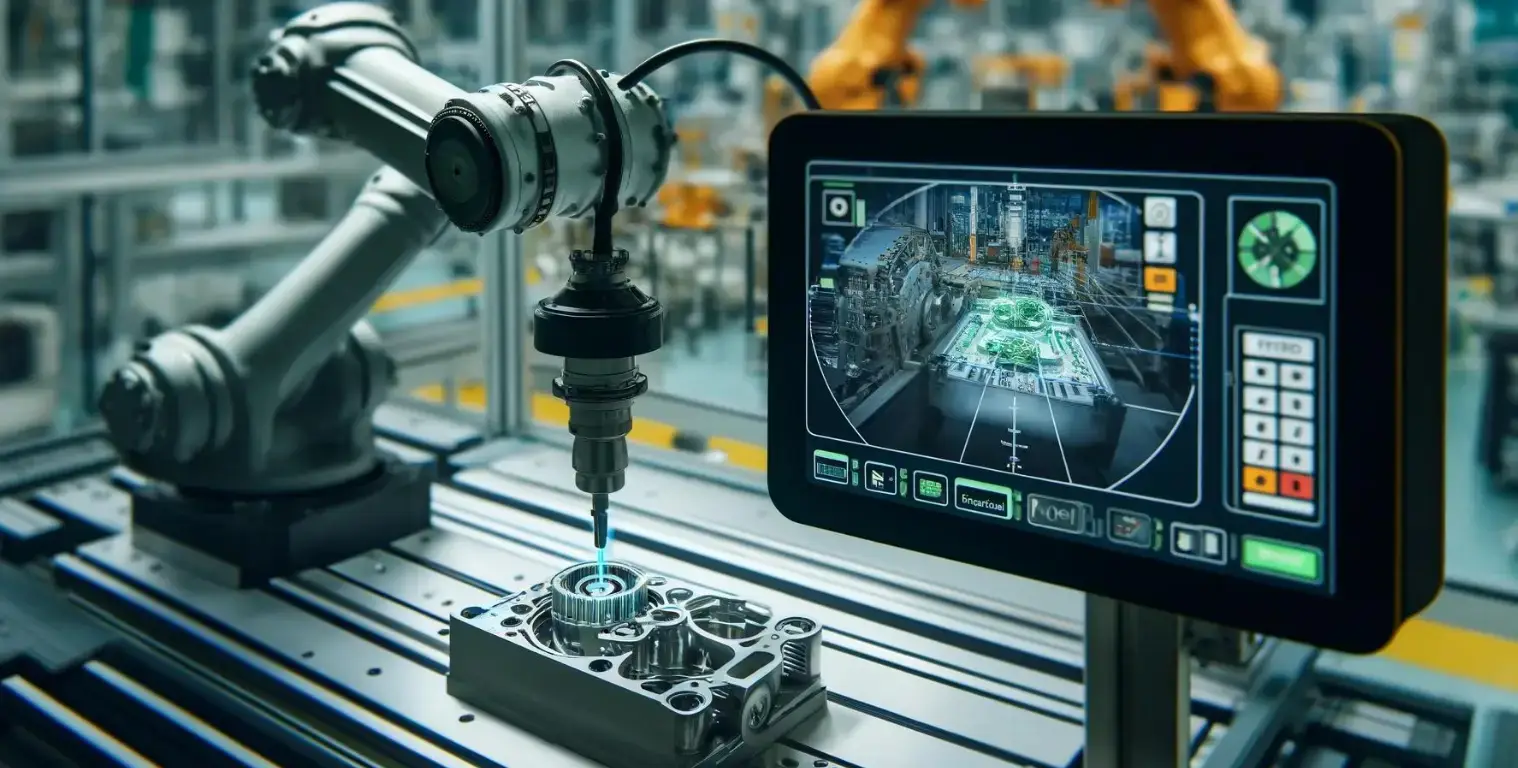
Industrial cameras capture the product, software analyzes the image, and the system sends a result to an operator or production controller. Lenovo and Trifork’s March 2025 announcement describes defect detection and object classification using shape, color, and size.
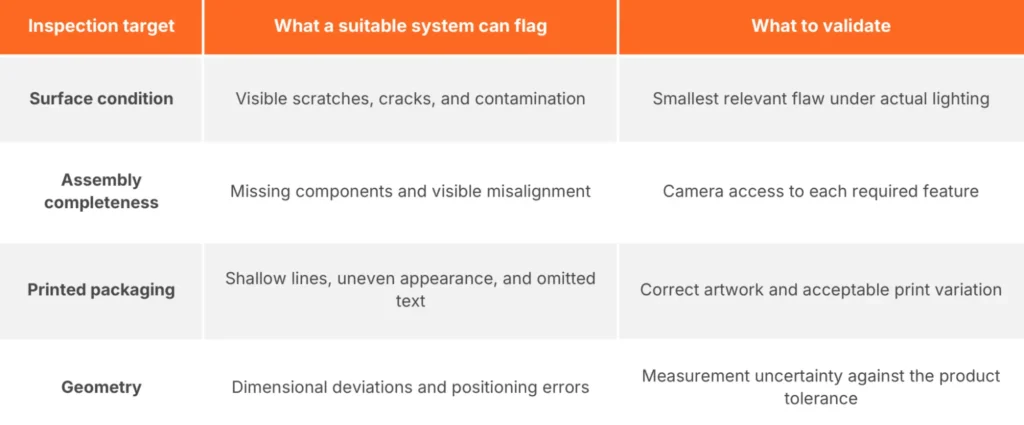
The right automated visual inspection technology depends on the inspection task. Basic presence checks may suit conventional rules. Deep learning vision inspection becomes relevant when acceptable products and defects vary enough that fixed rules are hard to maintain.
These are potential targets, not universal capabilities. AWS’s technical demonstration illustrates several visible defect categories; Chinese examples below provide more specific commercial evidence.
For machine vision quality inspection, request images of the smallest rejectable defect and the closest acceptable variation. Those examples make comparisons between visual inspection tools more useful than camera megapixels alone.
Place the station where a finding can still change the outcome. For example, assess a visible assembly feature before a housing conceals it, then link the decision to that unit’s identifier. Compare the cost of correcting the issue there with the cost after further assembly.
Define what happens to a rejected unit before purchasing the camera. The proposal should specify physical segregation, operator notification, and the conditions for release after rework. Request a demonstration that the reject mechanism removes the correct product when units travel close together.
Preserve enough evidence to investigate disputes: the original image, product identifier, defect category, decision threshold, and software version. Set a retention period that reflects your investigation needs and storage budget.
Automated visual inspection can be particularly useful for repetitive tasks where manual inspection becomes difficult or fixed-rule systems struggle with product variation.
Examples from Chinese factories demonstrate how these technologies are being applied across different manufacturing processes, from detecting printing defects to improving quality control in complex production environments.
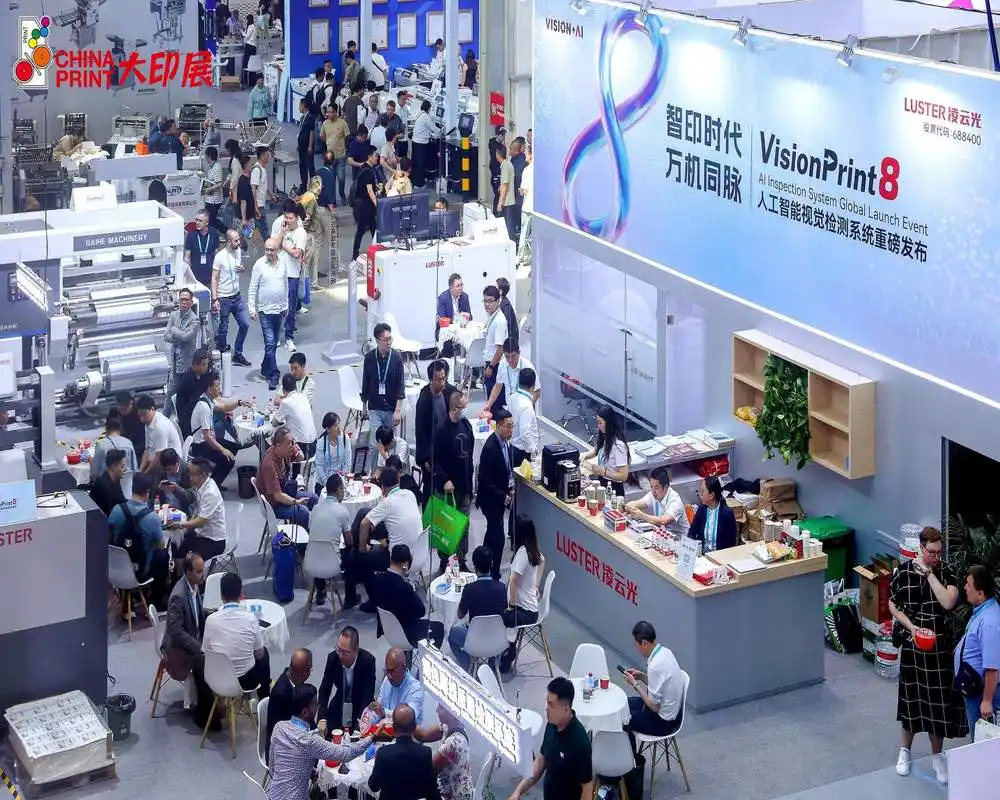
LUSTER’s June 2025 VisionPrint 8 launch report identifies shallow lines, hazing, and small text omissions as inspection targets. The company specifies operation at speeds up to 450 meters per minute and describes discrimination against false detections caused by vibration and material distortion.
They identify useful trial conditions: introduce normal tension changes, run different substrates, and check which alerts represent real print defects.
Midea’s Wuhan factory uses more than 120 AI inspection points across key stages of air-conditioner production, according to a report published on the Wuhan Economic Development Zone’s government website. The system checks components such as fan-housing clips and motor-bracket screws, automatically stopping the production line and triggering an alarm when it detects a problem.
The factory reported a 33% reduction in its market repair rate, 71% fewer batch quality incidents, and 38% fewer production-line stoppages per 10,000 units. These results reflect the factory’s broader AI-supported quality-control operations, rather than the independently measured contribution of vision inspection alone.
The World Economic Forum’s September 2025 factory assessment describes machine learning-powered welding inspection with closed-loop adjustments at Mettler-Toledo’s Changzhou site.
Huawei’s industrial AI inspection solution draws on experience across more than 200 internal production lines. In a separate Songshan Lake example, Huawei reported 99.9% inspection accuracy for tasks including detecting label defects and missing screws.
For automotive dimensional inspection, Huawei reports gap-and-flush measurement taking as little as 53 seconds per vehicle, with measurement precision better than 0.1 mm. The company also describes checking for missing components, incorrect assembly, and operations performed outside the required sequence.
In its collaboration with FAW, Huawei reported an 80% reduction in defects per unit and six fewer production minutes per vehicle. These improvements accompanied AI inspection and production digitization work.
According to CATL’s September 2025 disclosure, the company has established more than 7,000 quality control points using technologies such as machine vision and AI-powered defect detection. CATL reports that these manufacturing and quality-control measures have reduced its product defect rate from parts per million to parts per billion.
In a December 2025 interview, CATL’s ESS Europe CTO highlighted the use of AI-enabled equipment in electrode coating, laser welding, and high-speed winding. The company also reports a single-line production rate of one battery cell per second, demonstrating the scale and pace of its battery manufacturing operations.
Which AI inspection claims would you want to examine more closely?
The LUSTER and Midea examples raise different questions: performance at production speed, the types of defects detected and what reported quality improvements actually measure.
Share your priorities with ChoZan, and our team can discuss relevant options for learning about industrial AI in China.
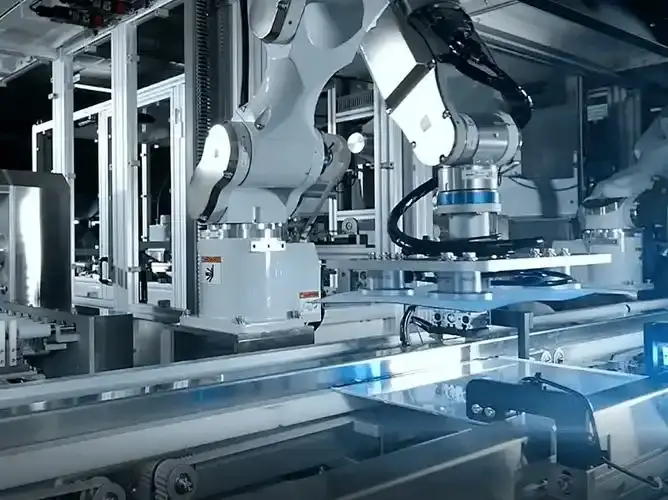
AI inspection depends on what the sensor captures. An optical surface image cannot reveal a defect hidden inside an opaque component. Keep electrical, leak, and internal-structure tests wherever the product specification requires them.
Less obvious failures involve acceptable variation. A reflection, a changed finish, or a different product orientation can alter the image without changing quality.
The MVTec AD 2 research published in March 2025 examines transparent and overlapping objects, very small defects, and lighting changes. Its relevance is practical: test difficult production conditions alongside the clean samples used for demonstrations.
Also distinguish coverage from detection. A system that photographs every unit still needs evidence that it recognizes each relevant defect.
Consider a hypothetical batch of 10,000 parts containing 10 defective units. A system that accepts everything achieves 99.9% overall accuracy while catching zero defects. This is an arithmetic example, not a factory performance statistic.
Require four separate measures for machine vision quality control:
Reserve later production batches for acceptance testing, separate from training images. Include different shifts, materials, and product variants. Agree beforehand who resolves disagreements between the model and the quality team.
The commercial test should also reflect defect severity. A cosmetic flaw and a safety-critical omission deserve different acceptance limits. Ask the supplier to document performance for each class, rather than pooling easy and difficult defects into one attractive average.
China’s inspection development includes technical standards alongside equipment announcements. GB/T 45575-2025, covering automatic surface defect inspection systems, took effect on November 1, 2025. SJ/T 12099-2026, covering industrial AI visual appearance inspection systems, followed on April 28, 2026.
Ask suppliers which technical references underpin their automated visual inspection acceptance tests and what evidence they can provide. A standard number in a presentation cannot substitute for results on your products.
The strategic lesson from these examples is to assess AI for quality control as an operating capability. Compare how suppliers define quality, handle ambiguous findings, connect inspection to corrective action, and maintain performance after a product change.
For a brand sourcing from China, turn cosmetic expectations into agreed reference samples before approving the system. For a manufacturer importing Chinese equipment, assign responsibility for calibration and local support before installation. These decisions determine how useful the technology becomes beyond the demonstration.
Study what makes industrial AI useful beyond a demo.

Chinese factories show why a reliable inspection decision involves more than an image. Camera placement, defect thresholds, response time and the process for handling rejected units all matter.
ChoZan’s China Innovation Tour brings together company visits, technology demonstrations and expert discussions covering AI, automation and smart manufacturing.
Explore the programme to understand its learning themes and consider which questions could be most useful for your organisation.
A small factory should assess a narrowly scoped station before considering plantwide investment. Request separate prices for hardware, integration, software, and support. Compare ownership costs with the losses associated with that specific inspection task.
There is no universal image count. Requirements depend on defect variety, imaging consistency, and the model. Some anomaly detection methods learn from defect-free images; acceptance testing still needs representative defective products.
They may work if their resolution, exposure control, image access, and triggering meet the inspection requirements. Ask the integrator to assess existing hardware using production samples before approving replacement cameras or promising a software-only installation.
Cloud connectivity is not essential for every design. Lenovo’s March 2025 reference architecture supports inference on edge equipment. Confirm separately where training, image storage, remote support, and updates occur, since those functions may involve external connections.
Set ownership and access terms in the contract. Specify rights to raw images, defect labels, inspection records, and model outputs. Require an export method and clarify what happens to stored data when the supplier relationship ends.
Treat transfer as a fresh validation exercise. Ask each site to provide representative samples and independent test results. Approve reuse only after the receiving factory demonstrates acceptable performance with its own equipment, materials, and product variants.
Yes, multimodal models can analyze product images. Treat that capability as a starting point. Require task-specific evidence for decision consistency, processing time, and acceptance criteria before assigning production responsibility.
Set the schedule after a site assessment. Ask for milestones covering image capture, equipment installation, system integration, acceptance testing, and operator training. Require the proposal to identify dependencies and the evidence needed to approve each milestone.
Assign inspectors to verify uncertain findings, label new defect examples, investigate recurring problems, and audit released products. Define their authority to override a result and record the reason, so disagreements become useful evidence for subsequent improvement.
Specify response times, spare parts, software maintenance, model update responsibilities, training, and escalation contacts. Ask who restores service after a hardware failure and how the factory retrieves inspection records if the supplier stops supporting the product.