CONTENT

XREAL is a Chinese augmented reality company building glasses that place digital displays within the wearer’s view of the physical world. Its products span portable screens and a new Android XR computing system. Google announced AURA’s launch on October 28, 2026, bringing apps, Gemini assistance, and spatial interfaces into wired glasses.
The company offers a useful case study in China’s technology capabilities. Optical engineering and proprietary processors give it a role in hardware development, while international partners supply essential software and computing components. The commercial question is how those capabilities translate into products people keep using.
The clearest way to assess that proposition starts with the engineering behind the experience.
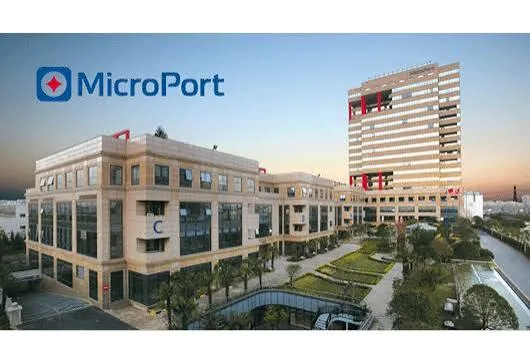
A December 2025 report from Wuxi’s Xinwu district government identifies local research and manufacturing as the source of Project Aura’s core optical system. It also describes the company’s proprietary X Prism optics and X1S spatial processor.
That connection matters because wearable displays require physical precision. An optical design must work consistently in manufactured units, alongside sensors, electronics, and a frame people can wear.
The strategic implication is that manufacturing knowledge can support a company’s product differentiation. Access to component suppliers alone offers a weaker explanation of its position.
The resulting system combines Chinese engineering with international technology. Google and XREAL extended their strategic partnership in January 2026, naming the glasses maker a lead hardware partner for Android XR.
This provides a concrete example of how a Chinese technology company can contribute specialized capabilities to a global platform. The partnership also introduces dependencies: platform access, software support, and partner priorities deserve attention alongside hardware ownership.
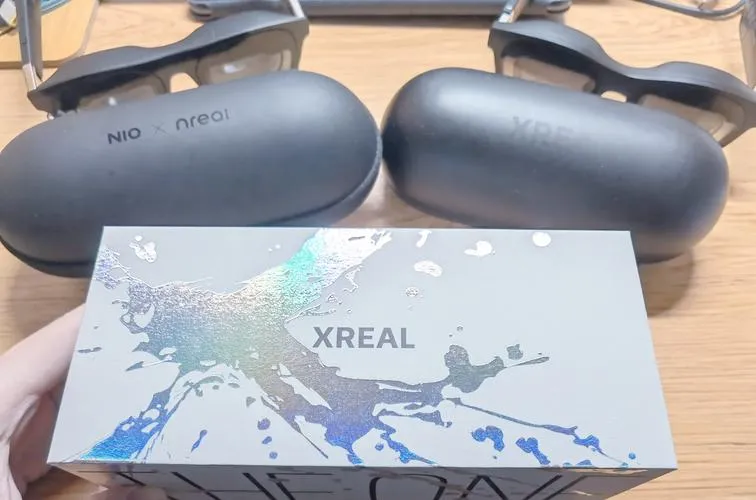
The wearable display range addresses an understandable need: a larger personal screen connected to devices customers already own.
The following models illustrate different priorities in consumer AR. Specifications and launch prices come from official product documentation and announcements.
| Model | Documented hardware emphasis | Practical buying question |
| XREAL One Pro | 1920 × 1080 pixels per eye and a 57° field of view | Does the wider viewing area suit the intended content? |
| XREAL 1S | 1920 × 1200 pixels per eye, 52° field of view, and a January 2026 US launch price of $449 | Does the added vertical resolution help with the chosen applications? |
| XREAL 1 Pro+ | October 2026 update with up to 1,200 nits peak brightness, AI HDR, and a $599 US launch price | Do brightness and comfort improvements justify the purchase? |
The comparison shows why resolution alone gives an incomplete buying signal. More pixels, a wider view, and brighter imagery address different requirements. A purchase specification should follow the task.
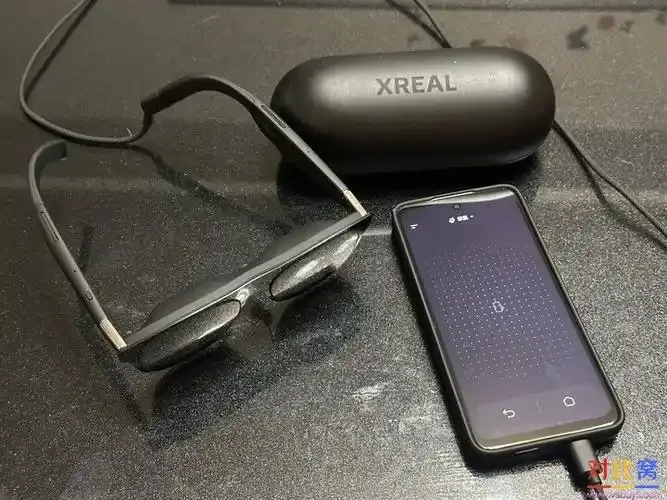
The technical proposition combines display technology with processing that controls how imagery responds to movement.
The 2025 One Pro announcement describes flat prism lenses that the company says are 44% thinner than its previous triangular birdbath lenses.
Here, AR optics perform a practical job: they direct light from miniature displays toward the eyes while allowing a view of the surroundings.
A wider field of view can make more of a virtual screen visible at once. However, advertised screen size also depends on its simulated viewing distance. Buyers should compare the visible area and readable detail under consistent conditions.
The same announcement documents native three degrees of freedom, or 3DoF, through the proprietary X1 chip. This tracks head rotation. The optional Eye module adds 6DoF spatial anchoring, which also accounts for position changes.
That distinction affects the experience. A screen held in a chosen direction and an object anchored to a physical location require different tracking capabilities.
The company reports 3ms motion-to-photon latency for its spatial display processing. Treat that as a manufacturer specification. A game’s complete response also depends on the source device, rendering, and connection.
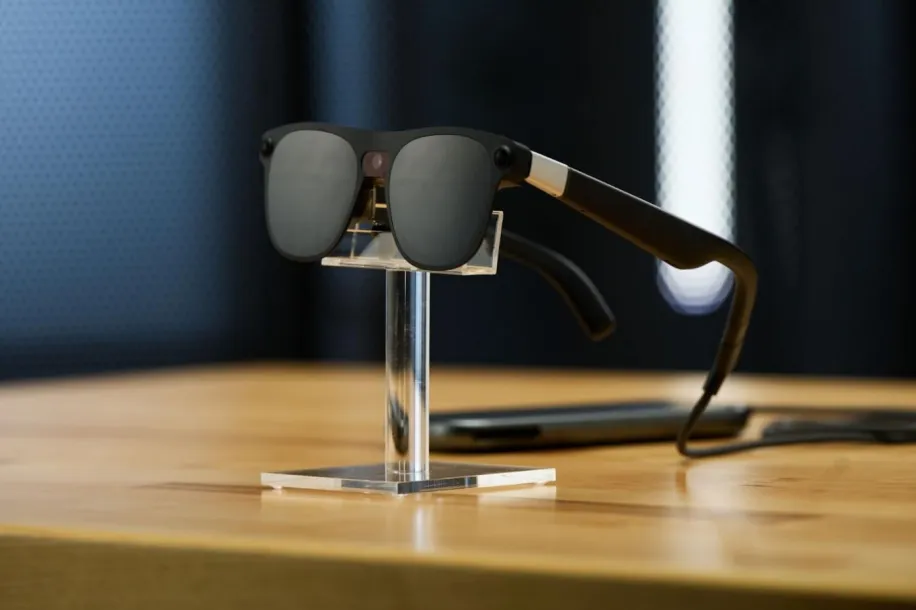
AURA introduces a different product architecture. Its glasses connect to a dedicated computing puck. The corrected October launch release lists Qualcomm’s Snapdragon Reality Elite platform, an X1S chip, a 70° optical see-through field of view, and glasses weighing under 95 grams.
The split design moves substantial computing hardware away from the face. It also leaves users with a cable and a second device to carry.
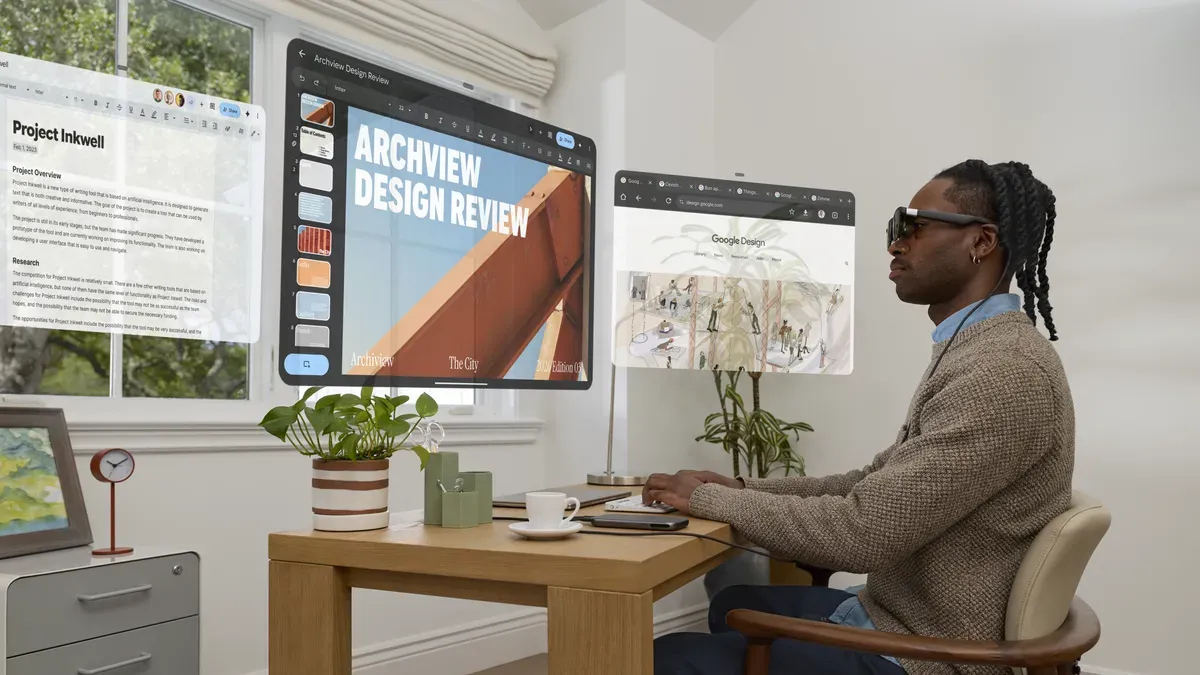
Google describes multiple Android apps arranged around the user, alongside a laptop window through wired mirroring. This extends the proposition from displaying an existing device’s output to operating a spatial workspace.
The launch offer starts at $1,099 in the United States through December 2026, with shipments expected in mid-November. Those dates establish an important boundary: launch announcements precede evidence of sustained customer use.
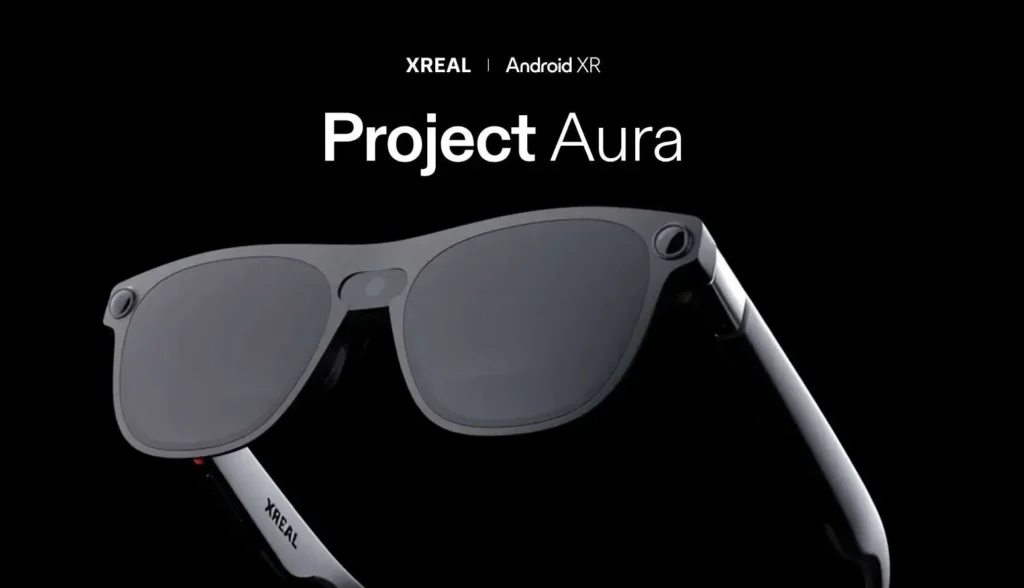
Software distribution changes the economics of a new device. Existing development tools can reduce the work required to reach it.
Google’s May 2026 Developer Catalyst announcement offered eligible developers hardware access, technical support, and potential grants. It identified Kotlin, Unity, Unreal Engine, and Godot as development routes.
At AURA’s launch, Unity presented seven titles coming to the device. Godot documented native development support and work on a spatial version of DOGWALK.
These examples show activity beyond a hardware demonstration. They also leave a commercial test: developers need discovery, repeat engagement, and a workable return on their effort.
Google reports access to more than 150 apps made for XR across its platform. That figure should remain separate from the number of applications purpose-built for AURA or evidence of their commercial success.
Godot’s announcement also highlights OpenXR Spatial Containers, system-managed volumes that display 3D content. A team could investigate adapting an existing product model into a tabletop demonstration. This illustrates a potential use case for the tooling.
Before funding a commercial version, request the AURA-specific addressable audience, distribution terms, payment availability, and maintenance obligations. Those inputs determine how much development work an eventual return can support.
The developer ecosystem also influences differentiation. Common tools help recruit studios, while hardware makers still need clear reasons for customers to choose their particular devices. The benefit is easier participation; the competitive pressure is that other Android XR devices can draw on related skills.
A useful trial should begin with one recurring task, such as reviewing a 3D design or comparing documents while traveling. Set a baseline with the equipment people currently use.
Google’s enterprise launch guidance describes managed app distribution, zero-touch enrollment, and device policy controls. These capabilities make deployment administration part of the assessment.
Track task completion time, setup failures, support requests, and voluntary use after the initial demonstration. Include accessories, training, and software maintenance in the cost calculation.
For content projects, test the full journey from installation to repeat use. A technically impressive experience can still lose users through awkward controls or an unclear reason to return.
The investment decision should depend on a measured improvement in a recurring activity. That gives spatial computing a business test that a launch presentation cannot supply.
XREAL’s questions can guide a broader assessment of Chinese innovation. ChoZan offers China research, expert dialogues, learning expeditions, and tailored workshops to connect technology developments with business decisions.
Explore our China reports for context, or book a consultation to investigate a specific market, partnership, or learning objective.
A USB-C connector alone doesn’t guarantee compatibility. The phone must support DisplayPort video output and supply power. Check the exact handset specification before buying, since phones with similar ports can support different functions.
A direct DisplayPort connection can display locally available content without Wi-Fi. Your source device and chosen application determine any internet requirement. Check downloaded films, account authentication, and offline playback permissions before relying on the glasses during travel.
The 1S uses the same prescription insert design as the One. Inserts from the earlier Air series are incompatible. Confirm the precise glasses model when ordering lenses, and ask your optical provider to check the required fitting.
Measure your interpupillary distance, which is the distance between your pupils. The One Pro offers 57 to 66 mm and 66 to 75 mm options. Choose the matching optical range before adjusting the nose pads or temples.
One Series glasses receive power from the connected phone, tablet, or computer. They switch off when you disconnect the cable. Plan around the source device’s battery, and check compatible charging accessories for longer viewing sessions.
The optional XREAL Eye camera accessory supports first-person photographs and video recording on compatible One Series glasses without Beam Pro. Recording mixed-reality footage that combines real-world scenes with virtual AR content requires Beam Pro.
Check the complete hardware combination before assuming that a tracking accessory also provides standalone recording.
For Switch and Switch OLED, the official connection guide specifies a powered Hub connection to the 1S. Supply power first, connect the console, then attach the glasses after TV mode starts. Detach the Joy-Con controllers for play.
The manufacturer provides computer-based firmware update instructions for Windows and Mac. Beam Pro can also prompt updates when connected glasses require them. Follow the procedure for your model and keep the connection intact until the update finishes.
Compatible One Series glasses can receive console output through an HDMI-to-USB-C adapter. Confirm that the adapter supports this signal direction and supplies the required power. Check the complete console connection before purchasing accessories or planning a demonstration.
REAL 3D adds perceived depth to standard 2D content through on-device depth estimation and conversion. Treat it as a viewing feature. Engineering measurement and dimensional inspection require a separate, validated workflow suited to those tasks.