CONTENT
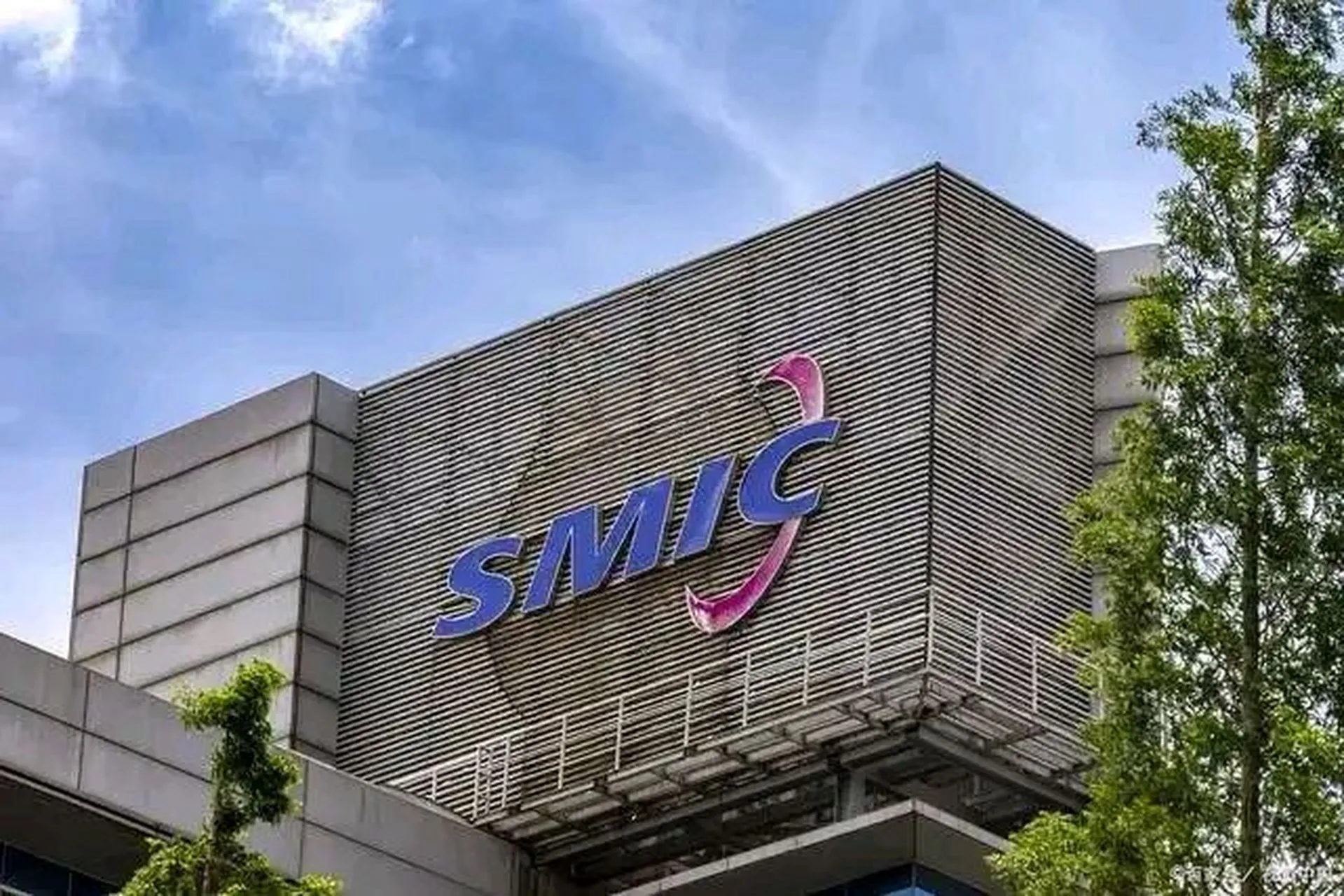
SMIC, Semiconductor Manufacturing International Corporation, supports China’s technology development through contract chip manufacturing. Its role spans advanced logic and the power, analog, and connectivity chips that help complete electronic systems. Its importance to AI therefore extends across several parts of the supply chain.
The strategic question is how much dependable manufacturing capability China can offer across specific products. That requires a closer look at capacity, technical evidence, and the steps between process development and customer deliveries.
SMIC fabricates integrated circuits for customers that supply chip designs. Its 2025 annual disclosure describes manufacturing on 8-inch and 12-inch wafers, alongside design support, intellectual property support, and photomask services.
These capabilities help customers move designs toward physical products and coordinate with downstream manufacturing partners.
Its disclosed technology portfolio includes logic, power and analog, embedded memory, radio-frequency technology, and image sensors. This breadth matters because electronic products combine chips with different electrical requirements.
An SMIC semiconductor sourcing decision should therefore start with the component’s function. A power-management device and a high-performance processor present different manufacturing requirements, even when both support the same system.
Consider a company planning an industrial AI device. Its processor, power circuitry, connectivity, and sensors need compatible performance and delivery plans. The product team should map each component to an appropriate manufacturing platform before selecting suppliers.
The resulting assessment can identify components suitable for domestic sourcing and others that require additional validation or alternative suppliers. China offers a practical learning opportunity here: examine how manufacturing platforms support a complete product, then test the commercial case for each sourcing choice.
The company’s second-quarter 2026 disclosure shows the scale of its manufacturing operations. Its August 13 results release reports capacity, shipments, utilization, and capital spending. These measures help assess supply conditions, although they do not identify production available for an individual customer or reveal the output of any single technology platform.
| Operating measure | Second quarter 2026 |
| Revenue | US$3.006 billion |
| Monthly capacity | 1,096,500 8-inch-equivalent wafers |
| Quarterly wafer shipments | 2,869,495 8-inch-equivalent wafers |
| Capacity utilization | 93.7% |
| Capital expenditure | US$1.836 billion |
These measures describe different things. Capacity represents manufacturing capability, while shipments record output delivered during the quarter. Utilization describes production intensity across the reported operations.
The sourcing implication is straightforward: companywide capacity cannot establish availability on a particular process. Ask which qualified production line will handle the product, what allocation exists, and when deliveries can begin.
A large expansion budget deserves attention, but a purchasing commitment requires product-specific evidence.
AI-related demand extends beyond the processor doing the calculations. Foundries also supply supporting components for power delivery and communications. Second-quarter 2026 research identified rising demand for AI peripheral integrated circuits and server networking products as contributors to the company’s growth.

The same research linked AI expansion to demand for power-management integrated circuits and power devices across the foundry industry. These components create opportunities outside the most advanced logic processes.
The practical insight is to examine the complete system’s component list. A sourcing strategy focused entirely on accelerator availability can overlook supporting devices with their own supply constraints.
That distinction also changes competitive research. Relevant comparisons should include power, analog, and networking suppliers, alongside advanced processor manufacturers.
An August 2026 report attributed stronger shipments mainly to AI-driven demand beyond CPUs and GPUs, plus earlier customer orders.
SMIC’s second-quarter results also benefited from non-operating investment gains. Its filing reported a substantial increase in gains associated with investments in associates and a joint venture, meaning headline net profit does not fully reflect recurring chip-manufacturing performance.

Independent physical analysis confirms progress, with clear limits. An August 2026 process-flow analysis examined the Kirin 9030 Pro fabricated on N+3 technology. It described N+3 as an evolution of 7nm-class manufacturing, with improvements beyond N+2.
The analysis also stated that N+3 remained significantly less scaled than commercial 5nm processes from TSMC and Samsung.
That comparison makes process nodes a starting point for investigation. Relevant evidence includes transistor dimensions, interconnect dimensions, patterning complexity, and the finished chip’s requirements.
A smartphone processor also provides limited evidence about a much larger AI accelerator. In its March 2026 assessment, TechInsights argued that DUV limitations and process maturity would create yield difficulties for large data-center AI chips.
That assessment expresses the firm’s technical judgment. It does not provide a publicly verified yield percentage for a particular accelerator.
Any commercial comparison should therefore request measured performance, power consumption, working-chip output, and delivery commitments for the proposed product.
The most useful insight may sit in the R&D tables. Its 2026 interim disclosure described several platforms at different stages:
The company reported these as separate development milestones, rather than equivalent stages of commercial readiness.
These stages carry different commercial meanings. A process can make technical progress before customers can depend on it for volume deliveries.
For semiconductor fabrication, the commercially useful question is how development translates into repeatable customer output. Compare the platform’s reported stage with the supplier’s proposed launch schedule.
This reading reveals progress across several technology families. It also prevents a development milestone from becoming an unsupported promise of immediate availability.
Equipment access, production economics, and downstream readiness can constrain expansion. New production lines also need sustained demand to support their investment costs. A sensible assessment should examine ramp timing, operating expenses, and customer commitments together. Technical progress and financial returns follow different timetables, so neither provides a complete assessment on its own.
Export controls add another consideration. In February 2026, the U.S. Bureau of Industry and Security announced a US$252 million settlement with Applied Materials over illegal semiconductor-equipment exports.
That enforcement action underlines the importance of equipment access and transaction requirements when assessing supply continuity. It does not establish that every commercial interaction faces the same restrictions.
Treat China’s foundry development as a portfolio question. A business may find potential suppliers, new competitors, or customers for its own products and services. Each possibility needs a different commercial test:
Set clear evidence thresholds before committing resources. A promising capability may justify a technical discussion, while a commercial launch needs a validated business case. This approach lets a company learn from China’s development while choosing the opportunities that fit its own strengths.
SMIC raises practical questions about China’s industrial capabilities and their relevance to your business. ChoZan, founded by China digital-economy expert Ashley Dudarenok, offers China research, expert calls, and learning expeditions. Our Top 25 Chinese Tech Innovators report provides a starting point for broader research. Contact ChoZan to discuss the China-related questions your team needs to answer.
The company’s office is at 18 Zhangjiang Road in Shanghai’s Pudong New Area. Its legal registration is in the Cayman Islands. The 2026 interim report lists these separately, which helps distinguish operating location from corporate domicile.
The company lists shares on Hong Kong’s main board under stock code 00981 and Shanghai’s STAR Market under 688981. Check the exchange and share class when reading market information, since quotations refer to different trading venues.
Yes. The second-quarter 2026 results attributed 8.2% of revenue to America and 1.6% to Eurasia. These regional figures show overseas business, but they do not confirm acceptance of a particular customer, product, or transaction.
It normalizes different wafer sizes for reporting. The 2026 interim disclosure counts each standard logic 12-inch wafer as 2.25 standard logic 8-inch-equivalent wafers. The resulting figure is a capacity measure, rather than a count of finished chips.
The 2025 annual disclosure describes small-batch trial production based on customer requirements, followed by further production stages. Ask which trial route suits your design, what validation it includes, and which conditions govern progression toward larger orders.
Confirm the agreed scope. The annual disclosure says manufactured products can go to customers or their designated downstream packaging and testing providers. Ask who manages each handoff, accepts the output, and resolves defects before placing an order.
Request separate costs for design support, masks, wafer processing, packaging, testing, and any required qualification work. Ask which charges recur, what minimum quantities apply, and how engineering changes affect the quote. Compare suppliers using the same scope.
Request documentation connecting the quoted product to the specified foundry, process variant, and manufacturing lot. Ask what evidence the supplier can share under confidentiality terms. A company logo or general technology statement cannot establish product-level traceability.
The number depends on chip area, usable wafer area, manufacturing yield, and test acceptance. Ask for product-specific assumptions rather than converting published wafer capacity into a chip forecast without accounting for design differences.
The second-quarter 2026 results state figures in U.S. dollars unless otherwise indicated. Check each document’s currency and reporting units before comparing amounts, since some financial tables present values in thousands rather than millions or billions.