CONTENT

Pharmaron is a China-based provider of drug research, development, and manufacturing services. It combines a contract research organization (CRO) with a contract development and manufacturing organization (CDMO), supporting pharmaceutical and biotechnology clients through discovery, preclinical testing, and clinical development. Its service portfolio covers small molecules, biologics, and cell and gene therapies.
Its importance lies in the connections between those activities. A promising molecule needs reproducible experiments, a workable production process, and evidence that supports human testing. The company provides infrastructure for that progression.
For businesses assessing China’s role in drug innovation, this offers a concrete question: how much value comes from connecting specialized capabilities across a development program?
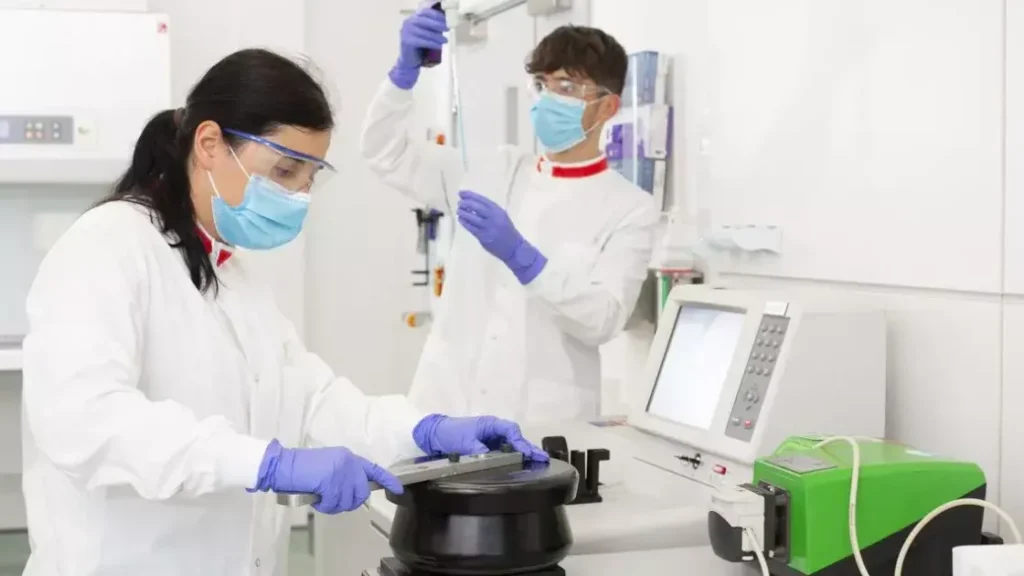
The company earns revenue through pharmaceutical services that address different development problems. Its laboratory offering includes chemistry, biology, drug metabolism, safety assessment, and bioanalysis. Its CMC platform covers chemistry, manufacturing, and controls.
| Development stage | Work the company offers | Decision the work supports |
| Drug discovery | Compound synthesis, biological assays, and candidate selection. | Which molecule deserves further investment? |
| Preclinical development | Drug metabolism studies, toxicology, and sample analysis. | Is the evidence sufficient to support a proposed human study? |
| Process and product development | Production methods, formulation, analytical testing, and clinical supply. | Can the team produce material with the required quality? |
| Clinical development | Trial operations, clinical analysis, and regulatory support. | What do human data show about the candidate? |
The 2026 interim filing introduced three reporting segments from the second quarter: laboratory services, CDMO services, and clinical research services. Earlier four-segment profiles need updating.
For the first half of 2026, the company reported that existing discovery customers generated over 85% of CDMO revenue. Customers using multiple business segments accounted for 73.61% of total revenue.
These figures support a commercial interpretation: relationships established in research can generate work across additional services. They measure customer overlap, however, and cannot establish how many individual molecules reached approval.
In October 2025, the company announced an agreement to acquire 82.54% of Biortus. Its 2026 subsidiary disclosures subsequently list Biortus at that ownership level.
Biortus contributes complex protein production, X-ray crystallography, and cryogenic electron microscopy. These methods help researchers investigate molecular structures and support structure-based drug design.
The announcement also describes Biortus’s AI and machine learning platform, which connects computational design with experimental verification.
The useful connection is between a prediction and an experiment that can challenge it. For a discovery team, structural evidence can guide the next compound design or clarify why a candidate interacts with a target.
That pairing puts experimental data at the center of AI-assisted discovery. A useful project brief should specify the protein system, the structural information needed, and how results will inform the next design cycle. The value depends on the quality of that feedback.
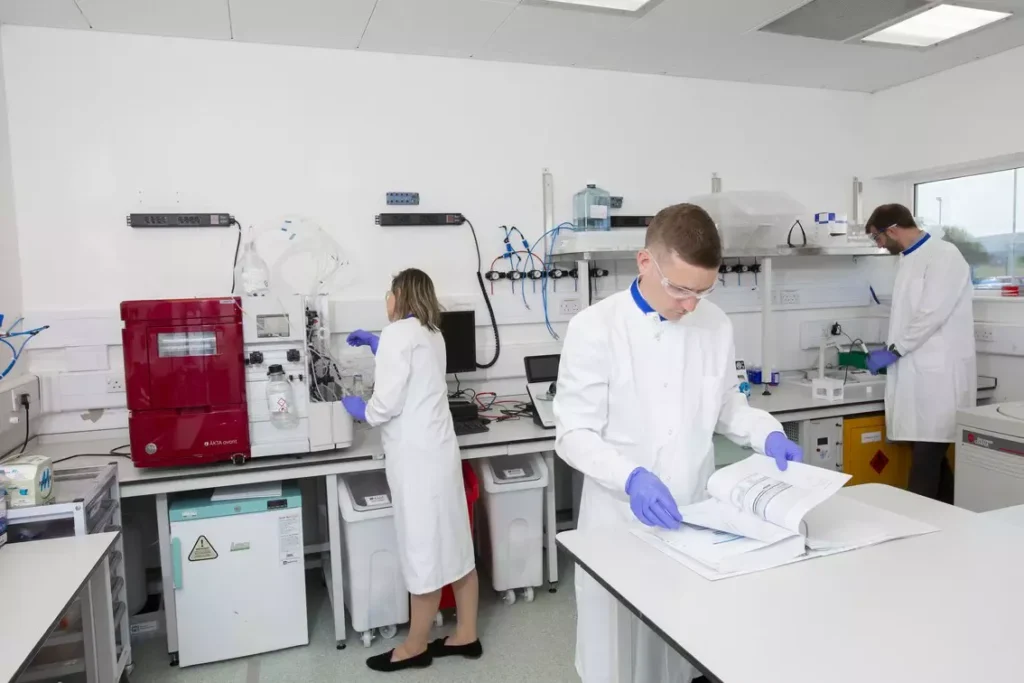
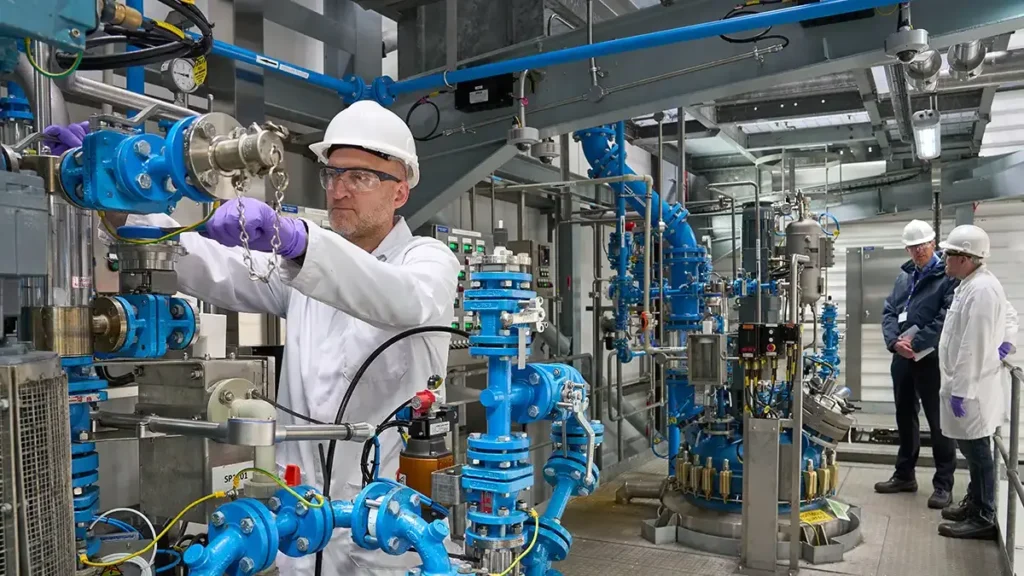
Process engineering determines how a laboratory reaction translates into a workable production method.
A November 2025 research summary describes collaboration with the University of Manchester on light-driven chemistry. The company reports that its Hoddesdon team replaced column chromatography with crystallization when preparing a starting material and adjusted temperatures to avoid cryogenic conditions.
The team also moved the photochemical reaction from batch processing to flow processing. The company reported a 64% yield over 3.5 hours for its kilogram-scale demonstration.
These choices address concrete production questions: how to purify material, control temperature, and consistently expose a reaction to light.
The business implication is that a route’s economics depend on the operations surrounding the reaction. Purification, cooling, and reactor design all belong in a supplier discussion about cost and capacity. A yield percentage provides only part of that assessment.
This example demonstrates a particular chemical process. A buyer should request equivalent evidence for its own molecule before applying the result to a production plan.
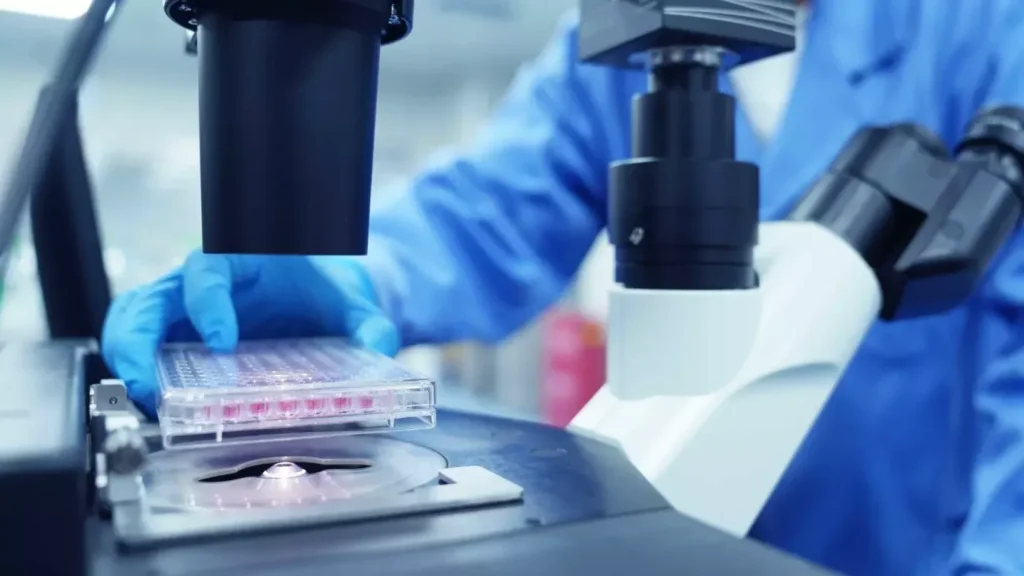
Its biologics services include cell line development, cell culture, purification, formulation, and analytical testing. The gene therapy business provides a specific example of why formulation expertise matters.
A 2025 study involving its Liverpool team, University College London, and the University of Nottingham examined adeno-associated virus type 2, or AAV2. These viral vectors can carry genetic material for gene therapy.
The researchers screened 20 formulation ingredients across six categories. The published study reported more than 90% recovery after ultrafiltration and diafiltration, processing steps used to concentrate material and exchange its surrounding solution.
The research examined how formulation choices affected recovery and stability. This matters because material lost during processing reduces usable output. The surrounding solution becomes part of the development problem: its ingredients must help preserve the vector through processing and storage.
The evidence concerns a defined vector and experimental formulation. It does not establish patient benefit or a general result across all gene therapies.
For supplier assessment, the stronger question concerns product behavior: what happens to recovery, potency, and stability as the process changes? A capacity figure alone cannot answer that.
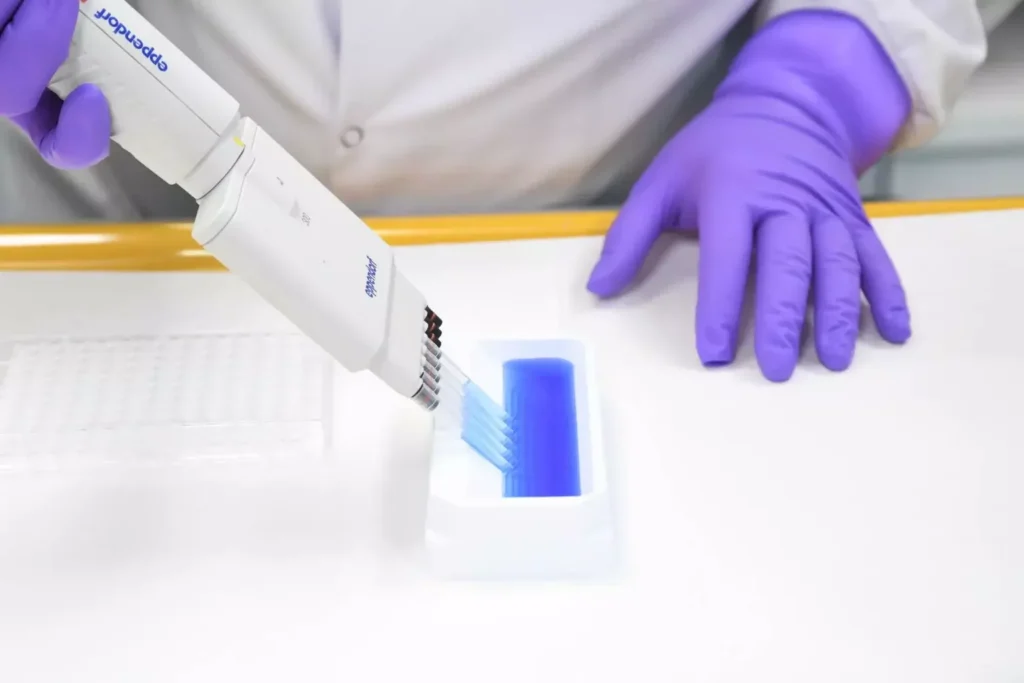
Clinical development requires methods that explain what happens after someone receives a candidate drug.
The company’s radiolabeled science services connect labeled compound production with studies of absorption, metabolism, and excretion. A radioactive label allows researchers to track drug-related material. Specialized analysis can distinguish the parent drug from substances formed as the body processes it.
Its accelerator mass spectrometry platform detects carbon-14 at very low concentrations. Combined with chromatographic separation, the system can quantify selected drug-related compounds. This adds a specialized measurement capability to the company’s clinical research offering.
This work connects chemistry with clinical pharmacology. The label’s position, study design, sample collection, and analytical methods must answer the same scientific question.
A sponsor should establish those requirements before commissioning separate work packages. Otherwise, a technically successful experiment may leave an important development question unresolved.
The practical value of integration therefore needs evidence at the project level. Ask who coordinates the labeled material, clinical samples, and final interpretation, and how the teams handle an unexpected finding.
The 2026 filing reports that North American customers contributed 61.55% of first-half revenue, while mainland Chinese customers contributed 18.18%. Overseas subsidiaries delivered 10.36% of revenue.
Customer location and delivery location therefore describe different things. A North American customer does not imply that the work occurred in North America.
That distinction should shape supplier discussions. Ask for the proposed sites, the work assigned to each, and the responsibilities for transferring samples, methods, and records. A global corporate presence leaves those project arrangements to be specified.
The broader China lesson concerns the organization of technical expertise. Drug R&D infrastructure can serve international demand through specialized facilities and coordinated scientific work. Its value becomes visible when a sponsor can trace an experiment, a production decision, and the supporting evidence across the program.
Pharmaron raises useful questions about how Chinese companies assemble expertise and serve global customers. ChoZan offers China research, expert calls, workshops, and learning expeditions to examine such business models. Explore our China insights, or bring a specific market or capability question to an expert dialogue.
Yes. Its official company profile lists stock codes 300759.SZ and 3759.HK, corresponding to Shenzhen and Hong Kong. When reviewing financial information, match the reporting period and share listing before comparing figures or valuation measures.
No. The company’s website notice states that it does not offer treatments, therapies, or drugs to the public. Its customers are life science organizations purchasing research, development, regulatory collaboration, and commercial production services.
Yes. The laboratory services explicitly offer integrated and standalone services. A client can discuss a defined assignment without committing to a complete development program. Specify the required outputs, sample requirements, and reporting format.
Use the official scientific contact form, which asks about the service area and therapeutic modality. Prepare a brief covering the scientific objective, available material, development stage, intended deliverables, and timing to support an initial discussion.
Compare the study design, included analyses, reporting requirements, assumptions, and change-order terms. Ask each bidder to identify exclusions and sponsor responsibilities. A common scope makes price differences easier to interpret and reduces ambiguity during delivery.
Ask the proposed contract to distinguish existing intellectual property from discoveries and methods created during the project. Clarify ownership, permitted reuse, confidentiality, publication rights, and access to underlying data before committing confidential material or funding.
Yes. Eligibility, visit schedules, and study requirements vary. Contact the recruitment team for current openings and screening information before making travel or scheduling commitments.
Yes. Its laboratory portfolio includes medical device testing, and its clinical offering includes device study experience. Request details relevant to the specific device, intended use, study design, and evidence package your team needs to prepare.