Table of contents

Electric truck charging in China works best when energy supply matches the freight schedule: depot charging for predictable parking windows, corridor charging for longer routes, and battery swapping for compatible trucks that need rapid turnaround. The investment decision starts with route energy, usable dwell time, and reliable power access.
China offers useful evidence, from an operating port corridor to megawatt hubs. Yet deployment remains uneven. A fleet can buy a powerful charger and still miss dispatch if trucks arrive together, bays are blocked, or the grid connection cannot support the schedule.
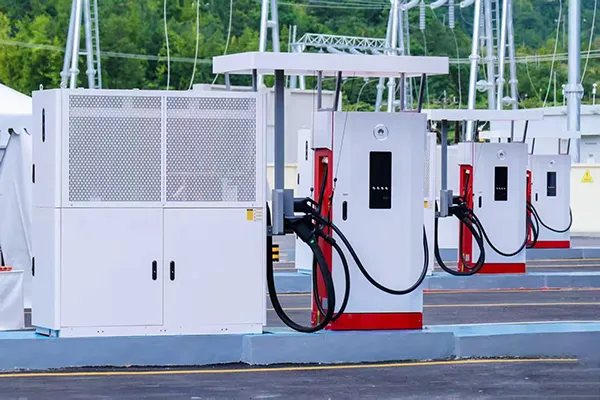
The IEA’s 2026 review cites research covering 2,700 Chinese truck stations: most chargers had power ratings of 300 to 400 kW, while roughly 1% were megawatt-scale. Treat this as a research sample, rather than a complete national inventory.
Evaluate heavy vehicle charging infrastructure at the route level. National EV totals cannot establish that a particular location accepts tractor-trailers, delivers the required power, or has an available bay during your delivery window.
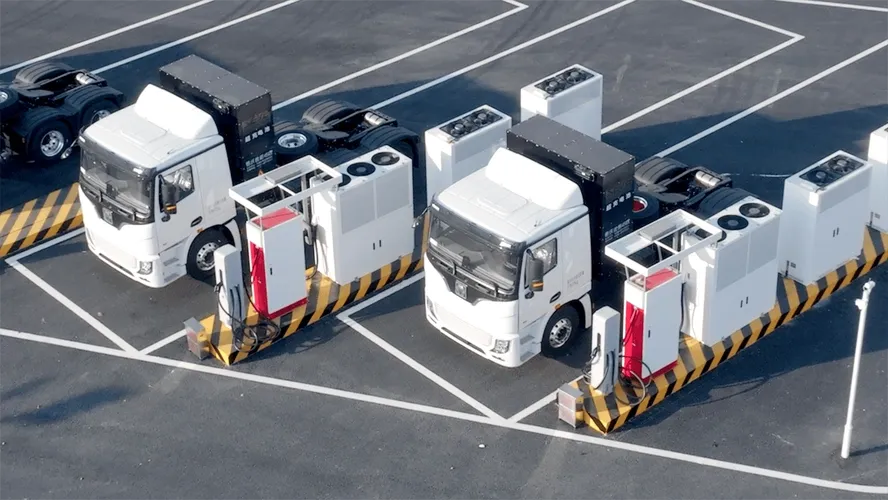
Huawei’s April 2026 case study describes a 100 MW design with eighteen 1.44 MW charging positions and 108 positions rated at 600 kW. It reports daily charging delivery above 300,000 kWh and solar generation of about 3,000 kWh.
Those figures put on-site solar generation at roughly 1% of reported throughput. This calculation uses supplier disclosures; it does not establish the site’s complete electricity mix. The grid connection and electricity procurement arrangements remain central to assessing energy supply.
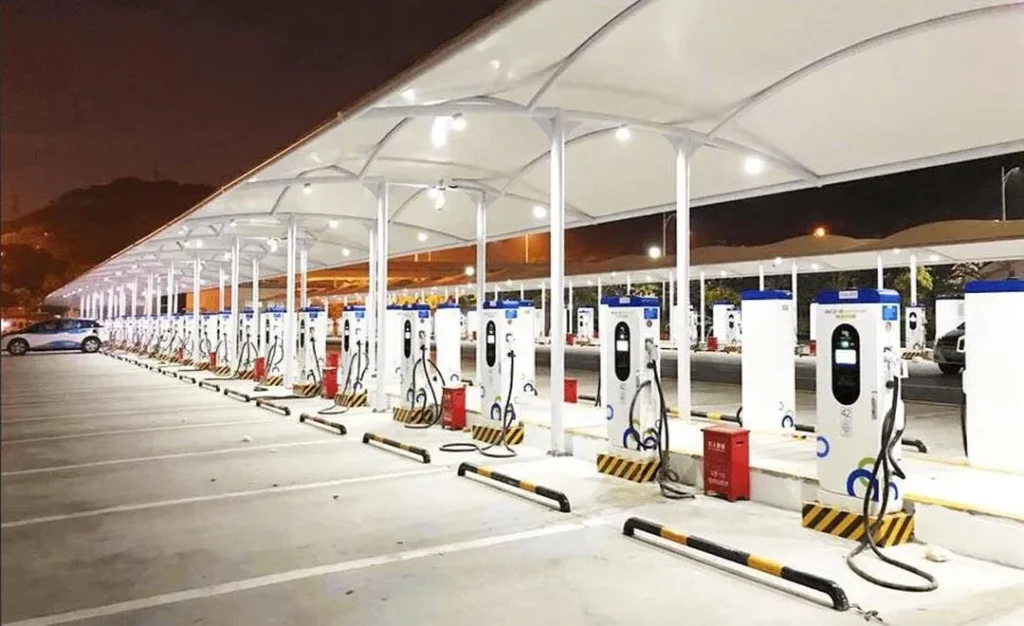
Effective fleet charging infrastructure starts with actual return times, departure deadlines, energy consumption while loaded, and parking availability. Collect outlier days alongside averages.
Consider an illustrative fleet of 12 trucks, each needing 240 kWh during a six-hour parking window. The batteries need 2,880 kWh altogether, requiring average battery-side power of 480 kW.
Assume 90% grid-to-battery efficiency. At that efficiency, the chargers require about 533 kW of average grid power, before warehouse loads.
That average is a planning floor. Test the schedule against late arrivals, shortened parking windows, and charger outages before choosing connection capacity. Allocate power against each departure deadline.
Stationary batteries can supply part of a depot’s power during charging peaks, potentially easing grid connection requirements. Assess discharge power, usable storage capacity, and recharge windows against the truck schedule.
For off-peak charging, compare expected tariff savings with storage losses, financing, and replacement costs. Ask suppliers to model these factors alongside the proposed grid connection.
A depot charging electric trucks needs space for vehicles to wait without obstructing dispatch. Test turning paths, bay length, cable reach, and connector access with the full tractor-trailer combination.
Where the site allows, assess separate entrances and exits and a one-way, straight-through layout. Check whether trucks can enter, connect, and leave while adjacent bays remain occupied. Include cable handling in that assessment so drivers can reach connectors without obstructing the aisle.
Access terms also matter across China electric truck depots: establish who can charge, when bays open, and who receives priority during dispatch peaks. Reserve electrical space and cable routes for expansion.
Ask bidders for a diagram showing which charging bays share power cabinets, communications, and electrical protection. Require a failure scenario for each shared component. This exposes the difference between having several connectors and maintaining service when equipment fails. Commission the system with multiple trucks connected, and verify how it allocates power under the site limit.
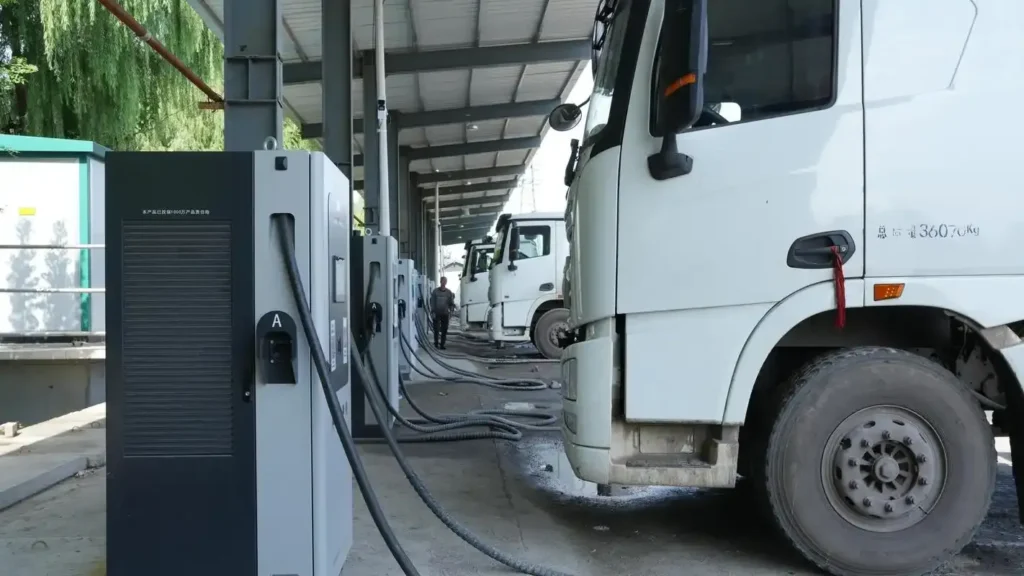
A charging session’s duration equals energy added divided by average power reaching the battery. A 500 kWh pack moving from 20% to 80% needs 300 kWh.
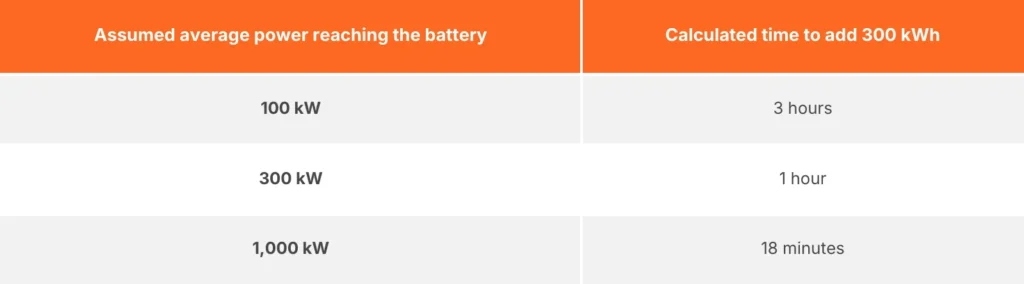
These are illustrative session calculations. The average must reflect the charging curve, temperature, vehicle limits, and any shared-power restrictions. A charger’s advertised maximum cannot establish that average.
For road evidence, CEVA’s 5,000-kilometer China trial, reported in June 2025, required nine charging stops averaging three hours each.
That trial’s electric semi-truck charge time illustrates why route plans need measured sessions. It reflects one trial under specific conditions, not a nationwide charging benchmark.
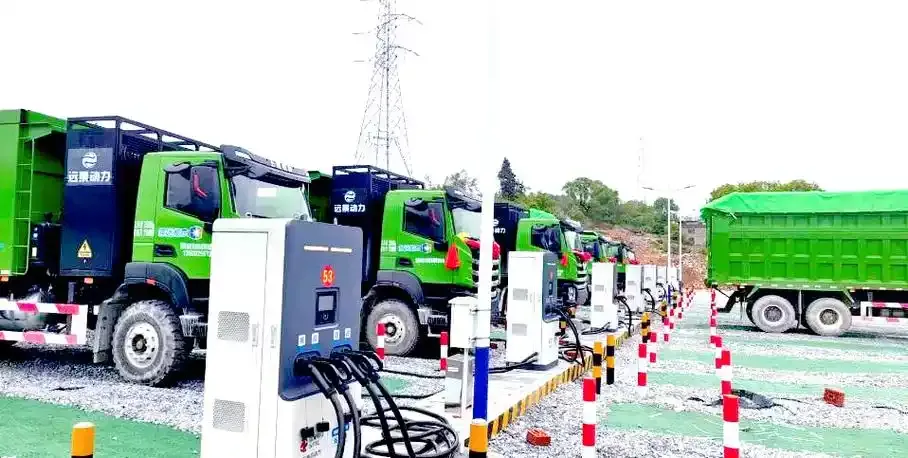
Charging infrastructure for electric trucks gains commercial value when energy access develops around identifiable freight demand.
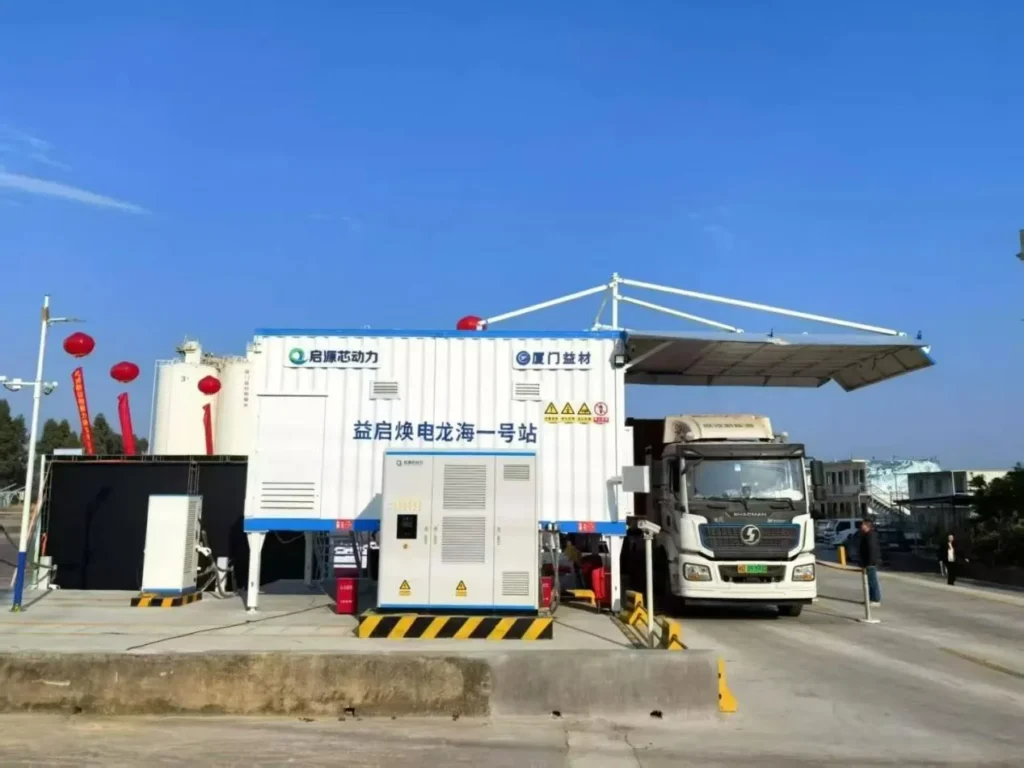
In its January 2026 operating update, Zhejiang Seaport Group reported that phase one of the Ningbo-Yiwu corridor entered full operation in June 2025. The roughly 250-kilometer corridor included ten charging and swapping stations.
The operator recorded 35,000 charging and swapping services and 6.941 million kWh through the end of 2025. That operating record provides a firmer starting point for due diligence than a proposed station count.
Some regional operations can also avoid roadside charging. In September 2026, ICCT reported on 50 battery-electric trucks operating express routes in China’s Yangtze River Delta. Under the studied conditions, trucks with 600 kWh batteries could complete one-way trips of 300–500 kilometers without en-route charging.
This offers a useful starting point for assessing an endpoint-charging strategy against your own payload, parking windows, and departure deadlines.
For another route, map primary and backup electric truck charging stations against loaded energy use, gradients, return cargo, and arrival time. Check station opening hours and access restrictions directly.
An electric semi truck charging station should fit the vehicle’s entire journey plan. Test the consequences of one unavailable location before committing trucks to a delivery contract.
A customer-site charger can replace a roadside visit if the customer guarantees access during the unloading window. Secure that agreement before assigning the energy stop to the route or purchasing additional battery capacity.

The cost to charge electric truck fleets includes energy purchases and infrastructure cost recovery.
An illustrative 300 kWh battery refill at 90% charging efficiency requires about 333 kWh from the grid. At an assumed electricity price of US$ 0.15 per kWh, the energy costs US$ 50. This is a calculation, rather than a quoted Chinese tariff.
Add service fees, applicable capacity charges, maintenance, connection costs, financing, and battery rental. Check what a public charging tariff already includes to avoid double counting.
Test utilization separately. For a hypothetical site, US$120,000 in annual fixed costs spread over two million kWh adds US$0.06 per kWh. At one million kWh, that becomes US$0.12. Contracted freight demand therefore matters to station pricing and financing, even when electricity prices remain stable.
Zhejiang Seaport Group reported approximately 10% lower lifecycle operating costs than diesel under its battery-leasing and off-peak electricity model.
That percentage is a project-specific operator claim. Payload, annual distance, financing terms, and energy contracts determine the result for another fleet. Compare offers using total cost per loaded ton-kilometer, with consistent boundaries for metered energy and battery-delivered energy.
Manage charging as a departure service. Track queues, connection failures, required energy delivered, and departure punctuality separately. Record overlap with planned parking or loading so you can identify additional time lost to charging.
For a hypothetical visit, ten minutes to enter and connect, twenty minutes queuing, and forty minutes charging total seventy minutes. If thirty minutes coincide with an unavoidable break, the incremental vehicle delay is forty minutes. Deduct overlap only when the activities can happen together and the stop leaves downstream work on schedule.
Request 95th-percentile arrival-to-ready time, repair response commitments, and fallback access. Define failed sessions and require operators to report power reductions.
Battery swapping can suit compatible trucks on repeated routes around ports or industrial hubs. Predictable arrivals can help operators plan battery charging around dispatch. Compare the full stop time, including any detour, with the time available for depot charging. CATL’s October 20, 2026 announcement targeted 900 stations by year-end and 2,000 in 2027. These figures describe expansion targets.
Specify ready-battery availability alongside swap duration. The station must still recharge its battery inventory and serve peak arrivals.
China’s practical lesson is to connect vehicle procurement, energy supply, and freight commitments. Stage truck deliveries against confirmed depot energization dates, and assign responsibility for temporary charging costs before vehicles arrive.

Do not assume compatibility. Match the truck’s connector, voltage range, communication protocol, and permitted current to the station specifications. Ask the vehicle and charger suppliers to demonstrate interoperability with the exact equipment configuration before purchase.
Assess the export configuration separately from Chinese installations. Confirm local certification, electrical requirements, connector support, installation documentation, and service coverage. Request evidence for the destination market before treating a domestic reference site as proof of suitability.
Ask the manufacturer for written warranty conditions covering charging power, temperature, energy throughput, and retained capacity. Check that your planned daily charging pattern falls within those terms, and identify who pays for battery diagnostics or replacement.
Request charging curves for the intended temperature range and confirm battery preconditioning requirements. Test representative loaded routes in cold conditions, including auxiliary energy demand, before fixing winter schedules, reserve margins, or commitments to customers and transport partners.
CATL’s October 2026 announcement describes flexible leasing linked to seasonal freight demand. Ask about minimum terms, battery return procedures, availability during peak months, and additional charges before assuming the arrangement will suit your fleet.
Treat compatibility as a contractual specification. CATL’s announced QIJI system uses standardized battery blocks within its network. Confirm approved vehicle models, mounting interfaces, software support, and battery availability, rather than assuming every swapping station serves every truck.
Align the property lease with the charging investment period. Obtain clear terms for landlord consent, equipment ownership, access, reinstatement obligations, and relocation costs. Include what happens if the lease ends before the charging assets recover their cost.
Require exportable session timestamps, meter readings, vehicle identifiers, fault records, tariffs, and power histories. Agree on formats, access rights, and migration support before signing, so a software change preserves the records needed to reconcile bills and assess performance.
Treat outside access as a separate commercial decision. Confirm applicable local operating requirements, billing arrangements, insurance, and access controls. Protect your own departure windows through reservations or priority rules before assuming spare charging capacity creates dependable revenue.
Depot charging serves fixed fleets at origin or destination sites with scheduled sessions. Corridor charging serves long-haul routes at spaced highway stations and must handle variable arrival times.