CONTENT
China’s Space Station, Tiangong, is a permanently inhabited orbital laboratory that supports scientific experiments, technology testing, and long-duration crewed spaceflight. Its three connected modules give China a research platform that requires sustained access to microgravity.
The Chinese Tiangong space station matters beyond aerospace. Recent semiconductor and battery studies address questions relevant to electronics and energy storage. The evidence offers a useful way to assess China’s technical capabilities through specific experiments and the systems that support them.
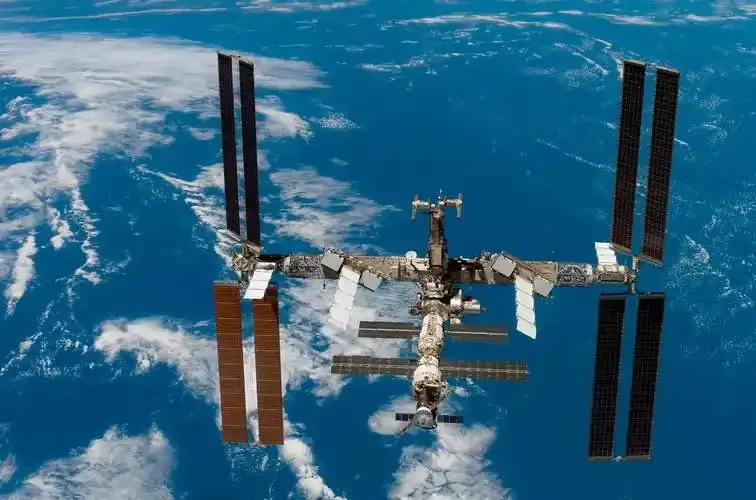
Tiangong has a T-shaped configuration comprising the Tianhe core module and two laboratories, Wentian and Mengtian. Together, they provide the station’s living, management, and experimental facilities.
The core module measures 16.6 meters long, with a maximum diameter of 4.2 meters, according to China’s April 2026 module profile. These are module dimensions, so they should not be presented as the length and width of the entire station.
The station operates roughly 400 kilometers above Earth. Its altitude changes, so precise orbital positions need a timestamp. China’s space agency publishes orbital data, including a release dated October 23, 2026, for readers who need current trajectory information.
The interior combines a workplace with the facilities needed for extended residence. China’s April 2026 description identifies six areas in the core module: work, sleep, hygiene, dining, medical monitoring, and exercise.
Astronauts have individual sleeping spaces, while the dining area includes a microwave, refrigerator, water dispenser, and folding table.
Scientific equipment extends beyond the cabin. The 2026 project call describes internal experiment racks alongside external exposure platforms and standardized payload interfaces. An experiment’s requirements determine which facilities it needs.
As of October 24, 2026, the resident mission is Shenzhou-23, with commander Zhu Yangzhu, pilot Zhang Zhiyuan, and payload specialist Lai Ka-ying. Those roles combine flight operations, engineering, and research responsibilities.
The Shenzhou spacecraft transports crews, while Tianzhou vehicles deliver cargo. This distinction matters when assessing an experiment’s route to orbit and its potential return arrangements.
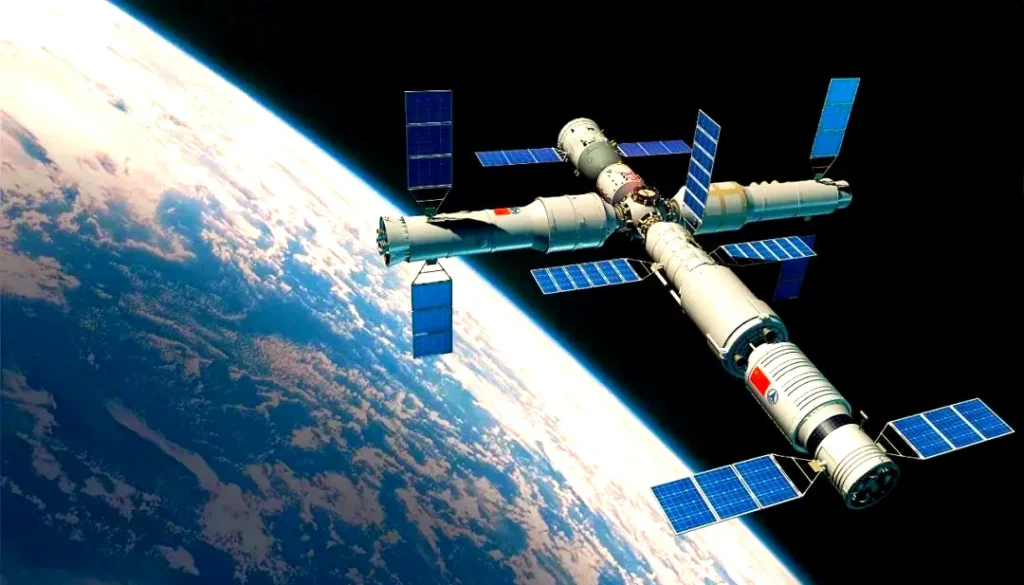
Tiangong is substantially smaller than the International Space Station. A June 2026 expansion briefing put its current mass at about 90 metric tons. NASA’s May 2025 description puts the ISS at almost one million pounds, roughly 450 metric tons.
| Comparison | Tiangong | International Space Station |
| Reported scale | About 90 metric tons in June 2026 reporting | Almost one million pounds in NASA’s 2025 description |
| Regular resident crew | Three | Seven, plus visitors |
| Organization | China operates the station | An international partnership operates the station |
These figures describe different station configurations and should serve as broad context.
An ISS vs Tiangong comparison needs consistent definitions. Docked spacecraft change a complex’s mass, and external dimensions do not describe usable laboratory space. A useful Tiangong vs ISS size assessment should connect scale to the experiment capacity a project actually requires.
Neither mass nor crew numbers establish research quality or cost efficiency. Those judgments require evidence about completed studies, access conditions, and results.
China’s January 2026 progress announcement reports 267 scientific and application projects deployed or implemented on China’s Space Station through December 2025. It identifies 86 additions during 2025 and more than 150 terabytes of scientific data collected that year.
These are agency-reported measures of activity. They do not mean 267 finished products or commercially validated technologies.
The same announcement reports more than 230 scientific papers in 2025, giving readers a way to assess scientific output beyond launch announcements.
A 2026 Nature Communications study examined indium selenide, or InSe, grown aboard the station. Researchers reported fewer stacking defects, improved electronic behavior, and properties relevant to devices combining memory and sensing.
That finding gives microgravity research a specific industrial question: can a different growth environment produce useful material properties that conventional processing struggles to achieve?
The commercial assessment starts after that result. Teams would need to establish repeatability, usable yield, transport requirements, and performance against competing materials. The study supports further investigation into advanced electronics; it does not establish an economical orbital chip factory.
A ground-based research team could also use the findings to explore ways to reproduce desirable structures without sending production into orbit. The space experiment can therefore create knowledge value even before an orbital manufacturing business becomes feasible.
The Chinese Academy of Sciences reported a lithium-ion battery experiment in January 2026. Researchers used the station’s microgravity environment to investigate internal processes that gravity and electric fields influence together on Earth.
The immediate purpose was understanding battery behavior, with potential applications in future space battery systems. The announcement did not demonstrate a consumer battery launch or a quantified improvement in electric-vehicle range.
For energy-storage teams, the useful question is which findings could inform models, materials selection, or terrestrial experiments. That requires engagement with the experimental method and subsequent publications.
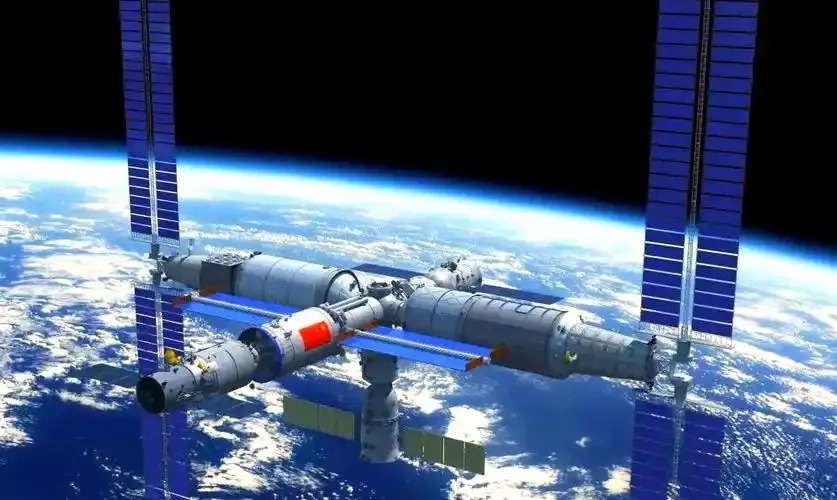
June 2026 reporting described an initial expansion using a new multifunctional module in the 20-metric-ton class. It would add docking capacity, an additional spacewalk hatch, storage, and an experimental room. A longer-term plan would take the station to six modules. These remain announced development plans.
The operational rationale deserves attention. More frequent crew and cargo arrivals compete for docking ports, while additional research needs equipment space and supplies. Expansion would address these constraints and increase physical size.
A project forecast should therefore track module delivery, commissioning, and payload acceptance separately. An announced expansion alone does not establish when additional research capacity becomes available.
China’s July 2026 call invited research proposals in life sciences and biotechnology, microgravity physics, and new space technologies and applications. It required proposals involving international cooperation to explain those arrangements. The application window closed on August 20, 2026.
For potential commercial experiments, the practical starting point is the relevant project guide and its technical contact. A credible proposal needs a clear scientific objective, compatible equipment, and an explanation of why the space environment matters.
Before committing resources, establish:
These are due-diligence questions, rather than a claim that Tiangong sells a standard experiment package. Public research calls do not establish universal eligibility, prices, or guaranteed flight slots.
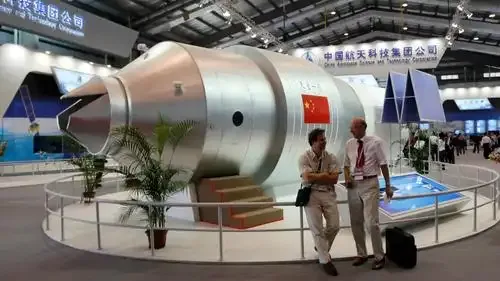
China’s Tiangong space station connects transport, human operations, experimental facilities, and research institutions within one continuing program. Its significance lies in maintaining that chain long enough to generate and examine results.
The strongest lesson is institutional: research infrastructure needs reliable logistics, technical interfaces, and a path from experiment to analysis. China’s recent space science work offers concrete examples of that process.
That suggests a practical approach to partnership research: map the organizations behind a result. A laboratory, equipment supplier, and mission operator each controls a different part of the process. Identify who owns the technical problem, who manages integration, and who can authorize access before approaching a potential partner.
China’s Space Station raises a broader business question: which developments in China deserve a place in your technology strategy? ChoZan offers China Tech Trends research, tailored briefings, expert calls, and learning expeditions that connect market intelligence with direct exposure to China’s innovation activity.
Start with ChoZan free China reports, then discuss a research brief or learning expedition built around your sector, questions, and priorities.
I could not verify an independently audited, station-wide cost total in the recent official sources reviewed. Any estimate should specify whether it includes spacecraft development, launches, cargo deliveries, research equipment, and continuing operations.
Mission duration depends on the assignment. China announced a one-year stay for one member of the 2026 mission, extending its human research program. That planned duration should not be confused with an already completed record.
Selected samples return in crew spacecraft for laboratory analysis. China’s official report records approximately 105 kilograms of scientific samples returned during 2025. Experiment teams must plan preservation, transport conditions, and analysis around available return opportunities.
The station’s menu includes dishes such as Kung Pao chicken, mapo tofu, and fried rice. An October 2026 report describes food-heating and baking appliances that let astronauts prepare hot meals within the station’s controlled environment.
China has begun training Pakistani astronauts for a planned short mission. Its May 2026 briefing described a payload-specialist role and Chinese-language training. The announcement establishes preparation for international participation; it does not establish a completed flight.
Xuntian is planned to operate separately in a similar orbit and dock when servicing is needed. This arrangement would limit vibration from station activities during observations. June 2026 reporting placed its launch in 2027.
Yes. China’s space agency identifies astronaut experience, technology validation, and transport-system development as contributions to lunar exploration. Tiangong remains an Earth-orbiting station, while lunar landings require separate spacecraft, launch systems, and mission preparations.
The crew installs external debris-protection equipment and conducts emergency training. An August 2026 spacewalk included installing protective devices and repairing the solar array. These measures support resilience, while orbital debris remains an operating risk that protection cannot eliminate.
Yes, you can see suitable passes from the ground. Use a Tiangong-specific pass predictor for your location and date. NASA’s ISS predictions track a different station, so their times don’t work as Tiangong viewing forecasts.
China’s May 2026 mission briefing described a newly delivered payload developed by Hong Kong universities to monitor carbon dioxide and methane at major emission sources. Its stated coverage focuses on low- and mid-latitudes.