CONTENT

Chinese biotech companies have shifted from fast followers to global licensing partners. In 2025, Chinese firms signed 127 out-licensing deals with total transaction value reaching $144 billion, while upfront payments reached $8 billion.
Commercialization is scaling alongside licensing, with several Chinese drugmakers now generating multibillion-yuan revenue from innovative medicines.
The companies driving this shift combine platform technology with clinical execution at speed. Understanding who they are and how they operate is increasingly important for anyone tracking global drug development.
China approved 76 innovative drugs for market entry in 2025, according to a March 2026 government update. The figure measures approvals for the Chinese market.
China’s Ministry of Industry and Information Technology also reported more than $100 billion in overseas licensing deal value in the first half of 2026, according to a September government announcement.
Commercial revenue provides another measure of the sector’s development. Hengrui Pharma generated RMB 16.34 billion from innovative drug sales during 2025, accounting for 58.34% of its drug sales. Innovent Biologics reported RMB 11.9 billion in product revenue and RMB 13 billion in total revenue for the year.
Announced licensing values can include conditional future payments, so they measure contractual potential rather than cash already received.
A comparison of Chinese biotechnology companies should begin with their business models. These categories overlap, but they help explain what a customer or partner actually receives.
| Business model | What it provides | What to evaluate |
| Drug developer | Proprietary treatment candidates or marketed medicines | Clinical evidence, product rights, and development responsibilities |
| Manufacturing partner | Research, process development, and production services | Quality systems, capacity, and transfer requirements |
| Discovery platform | Tools and experiments that generate or improve candidates | Reproducibility, ownership of outputs, and customer adoption |
The selection below covers China-based companies and global businesses with Chinese research or operating ties. Selection reflects documented commercial activity and different technical capabilities; the order does not imply a ranking.
Out-licensing gives Chinese drug developers access to global development and commercialization networks while allowing them to receive upfront payments, milestones, royalties, or combinations of these.
Several 2025 transactions show how these agreements are being structured:
| Chinese company | Partner | Asset | Key financial terms |
| Innovent Biologics | Roche | IBI3009, DLL3-targeted ADC | $80 million upfront and up to $1 billion in milestones |
| Hansoh Pharma | Roche | HS-20110, CDH17-targeted ADC | $80 million upfront and up to $1.45 billion in milestones |
| Yao Pharma, Fosun Pharma subsidiary | Pfizer | YP05002, oral small-molecule GLP-1 receptor agonist | $150 million upfront and up to $1.935 billion in milestones |
Innovent granted Roche global rights to develop, manufacture, and commercialize IBI3009, with Innovent participating in early-stage development before Roche takes responsibility for later development.
Hansoh’s October 2025 agreement covers HS-20110 outside mainland China, Hong Kong, Macau, and Taiwan. The $80 million upfront payment sits alongside up to $1.45 billion in development, regulatory, and commercial milestones, giving the agreement a potential value of about $1.53 billion before royalties.
In December 2025, Yao Pharma granted Pfizer worldwide rights to YP05002. Pfizer agreed to pay $150 million upfront and up to $1.935 billion in milestones, plus tiered royalties if the drug reaches commercial sales.
The composition of the deals also matters. Antibody drugs, including bispecific and trispecific antibodies and ADCs, accounted for 62% of upfront licensing payments tracked in 2025. Phase II and Phase III assets attracted the most upfront funding. Twenty transactions with upfront payments above $100 million contributed $6 billion, equal to 72% of annual upfront payments in the dataset.
These biopharma companies illustrate different routes from research to a commercial business, from direct medicine sales to shared development programs.
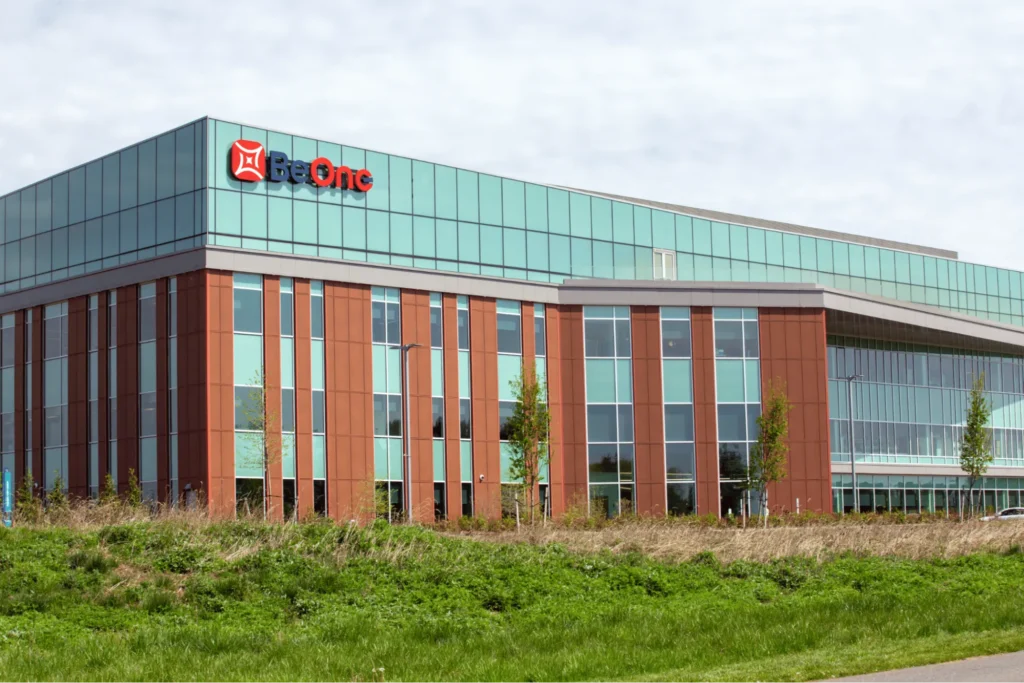
BeOne, formerly BeiGene, adopted its current name and Swiss domicile in May 2025. A partner assessment should identify the relevant legal entity within its international structure.
In its August financial announcement, BeOne reported approximately $1.7 billion in global revenue for the second quarter of 2026, including $1.2 billion from the blood cancer drug BRUKINSA.
BeOne offers evidence of commercialization at scale. Its sales figures also highlight a practical question for any portfolio review: how much revenue depends on one leading medicine, and what can sustain the business beyond it?
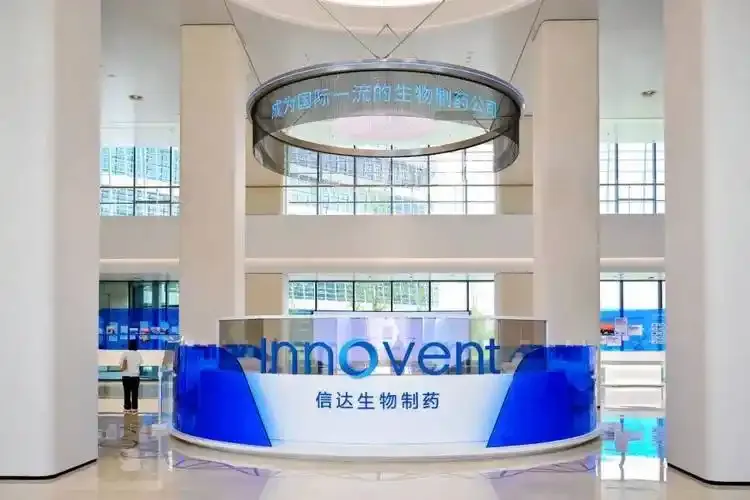
Innovent’s February 2026 agreement with Lilly sets out a clear division of work in oncology and immunology. Innovent leads programs through completion of Phase 2 trials in China. Lilly receives development and commercial rights outside Greater China, while Innovent retains rights within that territory.
The agreement provides $350 million upfront, plus up to approximately $8.5 billion in conditional milestones and potential royalties.
This structure lets Innovent retain its domestic opportunity while assigning overseas execution to Lilly. Any similar agreement needs an explicit handover point for clinical data, budgets, and decision-making.
Hengrui illustrates how established Chinese pharma companies can contribute across several disease areas. Its July 2025 agreements with GSK cover a respiratory drug candidate and options for up to 11 additional programs in respiratory disease, immunology, inflammation, and oncology.
GSK agreed to $500 million in upfront fees. Hengrui could receive approximately $12 billion in additional milestone payments if GSK exercises every option and the programs achieve all milestones.
The breadth matters for partner selection. A company seeking several complementary candidates needs to assess a research organization’s depth, including its capacity to advance multiple programs simultaneously.
Akeso focuses attention on bispecific antibodies, which engage two biological targets. Its ivonescimab targets PD-1 and VEGF.
In August 2026, China’s National Medical Products Administration approved ivonescimab with chemotherapy for first-line treatment of advanced squamous non-small cell lung cancer.
The defined treatment setting is essential to understanding this milestone. Evidence for one patient group cannot establish performance across every cancer. Akeso’s approach offers a case study in expanding the uses of an engineered antibody through additional, disease-specific clinical programs.
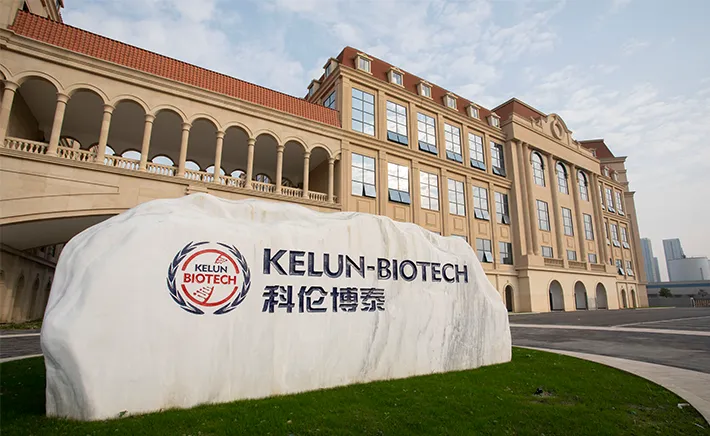
Kelun-Biotech develops antibody-drug conjugates, or ADCs, which connect an antibody to a drug payload. Its sacituzumab tirumotecan, also called sac-TMT, targets TROP2.
The company’s August 2026 results reported four approved indications in China for sac-TMT. The same update described 17 ongoing global Phase 3 studies initiated by partner MSD.
This mix of domestic approvals and international studies makes Kelun relevant to teams assessing a drug program’s expansion potential. For ADC partnerships, the antibody, linker, payload, and manufacturing process all deserve technical scrutiny.
Legend has U.S. headquarters and research operations in Nanjing. It develops and markets CARVYKTI, a cell therapy for multiple myeloma, with Johnson & Johnson.
In its second-quarter 2026 business review, Legend reported CARVYKTI availability at 348 treatment sites across 19 markets.
Those figures introduce a different commercial question. A cell therapy business needs the operational capacity to connect treatment centers, patient scheduling, and manufacturing. The number of places that can actually deliver treatment becomes an important measure alongside clinical results and regulatory progress.
These platform companies provide capabilities that other drugmakers can access through service agreements or research partnerships.
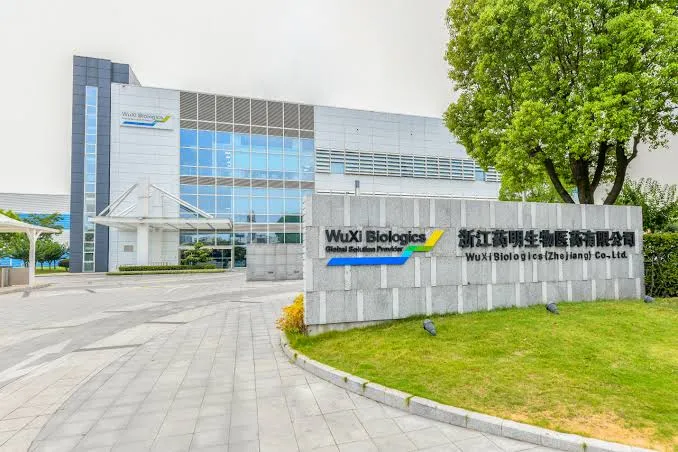
WuXi Biologics provides integrated biologics services, including discovery, process development, and production. Its first-half 2026 results reported 123 new organically added integrated projects. An acquisition contributed another 46, bringing the total to 1,064.
That distinction helps readers assess demand without confusing acquired projects with new customer work.
For a prospective customer, the key questions concern the specific facility and process. A large project portfolio should lead to detailed discussions about production slots, technical transfer, and the support available as a medicine advances toward launch.
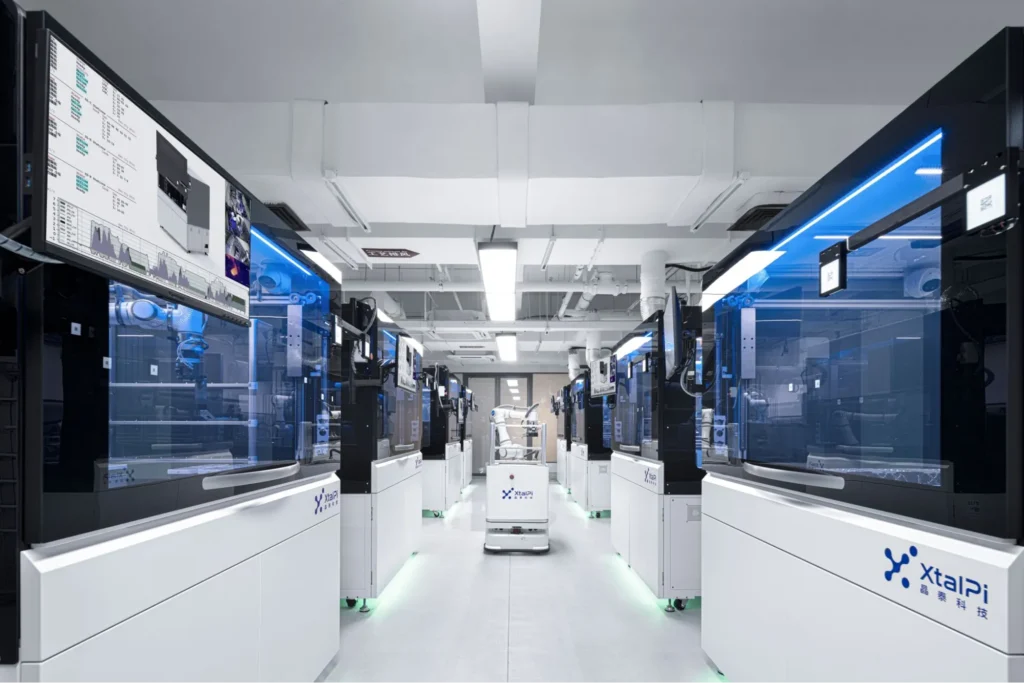
XtalPi combines AI with automated experimental work. Its June 2026 research partnership covers a small molecule program against an undisclosed metabolic target.
The unnamed international partner agreed to fund early research and development. XtalPi also described potential milestones and royalties.
This illustrates a commercial route for discovery technology: a partner pays for work intended to produce useful drug candidates. The evaluation should examine how computational predictions translate into reproducible laboratory results, and how the parties define success before committing to a larger program.
Insilico Medicine combines generative AI with drug discovery and development. The company listed on the Hong Kong Stock Exchange in December 2025 and raised HKD 2.277 billion, which the company described as Hong Kong’s largest biotech IPO of the year by funds raised.
Its Pharma.AI platform spans target identification, molecular generation, clinical development analysis, and scientific research. The platform includes Biology42, Chemistry42, Medicine42, and Science42. Insilico currently reports more than 40 internal drug programs, including candidates that have progressed into clinical development.
The relevant question for potential partners is how AI output connects to experimental validation and drug development. Software capabilities become more commercially meaningful when computational predictions generate candidates that can be tested and advanced through conventional development processes.
Biocytogen provides antibody discovery technologies and genetically engineered research models. Its RenMice platforms support discovery of fully human monoclonal, bispecific, and multispecific antibodies, ADCs, VHH antibodies, and TCR-mimic antibodies across more than 1,000 targets.
The company completed its Shanghai STAR Market listing in December 2025 after previously listing in Hong Kong. As of the end of 2025, Biocytogen reported more than 350 agreements involving therapeutic antibodies and clinical assets worldwide. Its platform also provides access to more than one million fully human antibody sequences.
For partners, the value proposition differs from buying rights to a finished drug candidate. Depending on the collaboration structure, companies can access discovery tools, antibody libraries, models, or existing assets.
The disclosures above suggest a practical approach to comparing biotechnology companies in China. Start with the decision the partnership must enable.
The growth of Chinese biotech companies raises broader questions about China’s innovation systems, research partnerships, and business models. ChoZan offers China-focused research, consulting, expert calls, executive keynotes and workshops, and tailored learning expeditions.
Our reports and resources provide a starting point for understanding wider technology trends.
Book a consultation to discuss the questions your team wants to investigate and the scope of a suitable engagement.
Yes. BeOne lists on Nasdaq, Hong Kong, and Shanghai, while Legend trades on Nasdaq. Confirm the legal issuer, ticker, and share class in current exchange filings before comparing publicly traded businesses.
Use ClinicalTrials.gov and China’s trial registration platform to cross-check sponsor names, trial identifiers, study status, endpoints, and locations. Search the drug’s development code and its generic name, since programs can have multiple identifiers.
IND approval authorizes a clinical trial, subject to applicable requirements; it does not authorize commercial sales. China’s 2025 pathway offers review within 30 working days for eligible applications, with extensions possible for complex cases.
No. A biosimilar must closely match an approved reference biologic, with no clinically meaningful differences in safety or effectiveness. A novel drug follows a different development strategy, so compare companies’ portfolios at the product level.
The contract determines the territory. In GSK’s agreement with Hengrui, the excluded markets are mainland China, Hong Kong, Macau, and Taiwan. Always read the geographic definition before assuming which markets a partner controls.
An exclusive option gives a partner a defined opportunity to obtain specified rights later. Hengrui’s GSK agreement links options to development progress. Check the exercise deadline, payment, and evidence required before treating an option as committed development.
Insurance coverage can influence affordability and patient access. In September 2026, Chinese authorities announced plans to expand basic and commercial health insurance coverage for innovative drugs. Coverage terms still require examination for each medicine.
Innovent is one example. Mazdutide received Chinese approval in June 2025 for chronic weight management in eligible adults. Innovent’s announcement identifies a Lilly license, illustrating why development responsibility and original drug ownership deserve separate checks.
A NewCo is a newly established business built around selected assets and dedicated funding. Windward Bio’s January 2025 launch combined financing with rights to a drug from Kelun-Biotech and Harbour BioMed, illustrating this structure.
Access is regulated and depends on the proposed activity. The NIH’s 2026 China overview distinguishes research cooperation, material exports, and information sharing. Confirm the applicable approvals, filings, reporting, and consent requirements before any transfer.