CONTENT
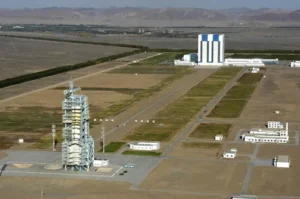
China Aerospace Science and Industry Corporation (CASIC) has moved from missile maker to commercial space power. In 2025, China’s commercial space sector conducted 50 launch missions, with 311 commercial satellites placed into orbit. CASIC, through subsidiaries like ExPace and CAS Space, sits at the center of this shift.
The company’s Kuaizhou rockets now perform regular commercial flights, its Guowang constellation is deploying at scale, and Beijing’s new policy framework positions CASIC as a primary beneficiary of state-backed commercialization.
For global investors and technology leaders, understanding CASIC means understanding where China’s space economy is heading.
China Aerospace Science and Industry Corporation (CASIC) is a state-owned enterprise established in 1999, employing over 146,000 people with revenue exceeding $37 billion. It ranks among Fortune Global 500 companies. While its defense portfolio includes missile systems and drones, its commercial space division has become strategically important.
The Chinese government’s 15th Five-Year Plan (2026-2030) formally designates aerospace as a core driver of “new productive forces,” targeting trillions of yuan in economic value.
This is the first time “aerospace power” has been written into a national five-year plan alongside manufacturing and quality power. CASIC is a primary vehicle for this ambition.
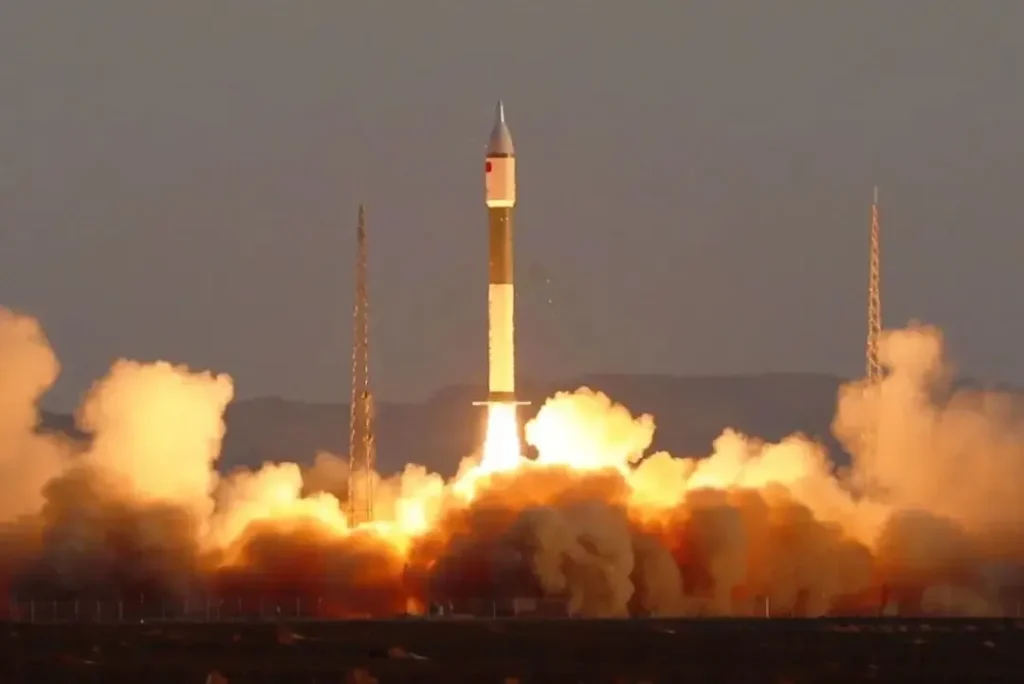
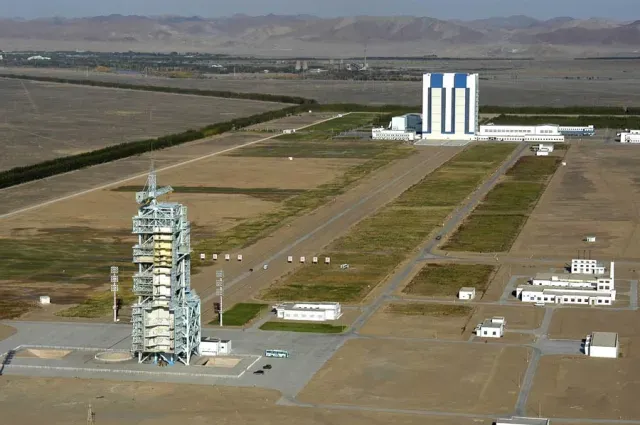
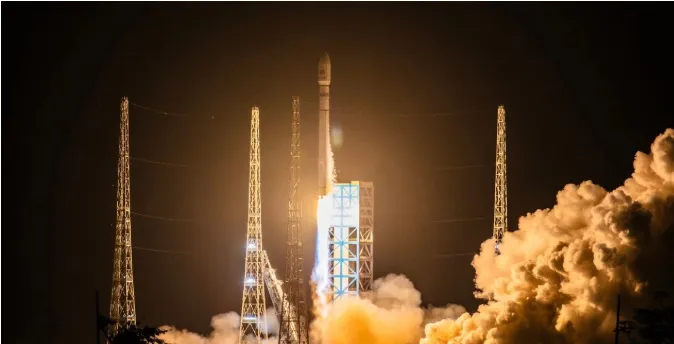
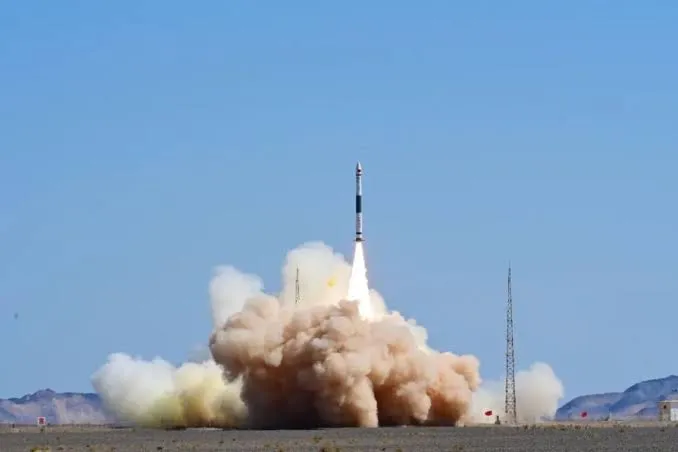
ExPace, CASIC’s commercial launch arm, develops the Kuaizhou series of solid-propellant rockets. The Kuaizhou-11 completed its fifth commercial flight in March 2026, placing eight satellites into orbit from Jiuquan.
The rocket carries one ton to a 700-kilometer sun-synchronous orbit and has a 2.65-meter fairing diameter. Its short preparation cycle supports rapid-response missions for disaster monitoring and emergency communications.
In June 2026, Kuaizhou-11 conducted its sixth launch, deploying CentiSpace satellites. The pace shows ExPace is moving from demonstration flights to operational cadence.
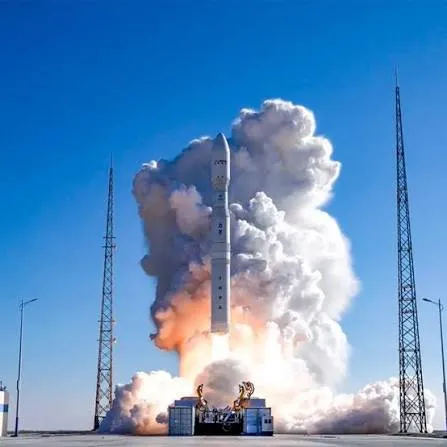
CAS Space, another CASIC subsidiary, operates the Kinetica 1 (Lijian-1) rocket. By late 2025, Kinetica 1 had deployed 75 satellites with a combined payload exceeding 10 metric tons, making it the only Chinese private commercial rocket to surpass that milestone.
CAS Space is also developing the Lijian-2 (Kinetica-2) rocket with liquid oxygen-kerosene engines for reusable first and second stages. A 110-tonne engine, Liqing-2, completed long-range testing in March 2026.
On March 26, 2025, China’s State-owned Assets Supervision and Administration Commission reported that Chutian-1 001 had conducted high-resolution Earth imaging and space-environment experiments in very low Earth orbit. The satellite came from the space engineering organization within the group’s Second Academy
.A separate milestone followed on November 9, 2025. CAS Space launched Chutian 2A and 2B aboard a Kinetica-1 rocket. CASIC Space Engineering Development developed the satellites, which were tasked with testing Earth observation and image-processing capabilities. The mission coverage identifies intended applications in water infrastructure, marine environmental monitoring, and disaster assessment.
The division of responsibilities matters: CAS Space supplied the launch, while a separate organization supplied the satellites. A shared mission does not make those companies interchangeable.
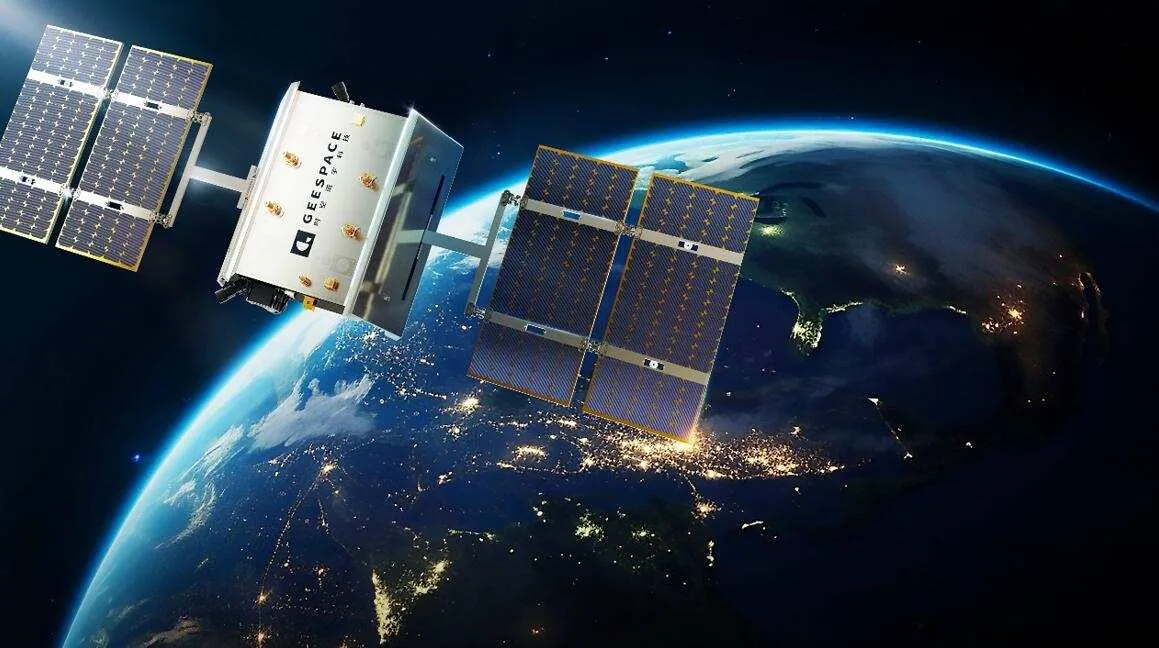
The Guowang (Satellite Internet Series) constellation is CASIC’s answer to SpaceX’s Starlink. Created in 2022, the project plans to deploy over 13,000 satellites, with approximately 6,000 in orbits between 500 and 600 kilometers. As of October 2025, the program had launched 27 experimental satellites, three high-Earth-orbit satellites, and 168 low-Earth-orbit satellites.
The near-term target is 400 satellites by 2027, according to Yuan Juangang, chief designer of China’s internet satellite program. Another 800 are expected before 2029 to avoid regulatory penalties. The constellation supports both civilian broadband and strategic communications.
CASIC manages Guowang through China SatNet, a state-backed operator. The dual-use nature means commercial opportunities coexist with national security priorities, a pattern foreign partners should factor into engagement strategies.

In November 2025, Beijing announced a 156-satellite space situational awareness constellation called Space-Eye. While developed by Geovis, a CASIC-affiliated entity, the project reflects CASIC’s broader push into space infrastructure services.
Space-Eye will monitor more than 50,000 debris objects larger than 10 centimeters, providing collision-risk prediction and space traffic management for satellites and space stations.
The constellation deploys in two phases: 12 high-performance satellites for rapid orbit determination, followed by 144 low-cost enhancement satellites. The first test satellite launch is planned for the first half of 2026. For satellite insurers and launch operators, this adds a new layer of risk-assessment capability.
A less visible development connects aerospace engineering with terrestrial manufacturing.
On March 7, 2025, a State Administration for Market Regulation nondestructive testing innovation center opened in Beijing. Xi’an Jiaotong University’s announcement identifies CASIC Institute 201 as the main supporting institution and the university as a joint participant.
Science and Technology Daily’s report describes an alliance of 46 organizations and intended applications across aerospace equipment, nuclear power, rail transportation, and wind power. Its agenda includes research, testing improvements, and industrial services.
The strategic relevance lies in the route to customers. Advanced inspection expertise can reach companies through laboratory services, equipment, technical support, or manufacturing partnerships. The opening announcement does not quantify revenue from these possible pathways.
A manufacturer assessing this opportunity should ask how a proposed inspection method performs on its actual materials and production process. Defect detection, repeatability, inspection time, and integration costs provide a more useful evaluation than the prestige of the participating institutions.
These developments support a specific inference: China is building conditions that could support leadership in selected aerospace and industrial applications. The evidence combines in-orbit experiments, organized research capability, and capital directed toward commercialization. It does not justify a blanket claim that China leads every space technology category.
For a market assessment, separate three questions:
| Decision | Evidence to request |
| Does the technology solve the intended problem? | Representative test results against a clearly defined operational requirement. |
| Can the service sustain delivery? | Documented capacity, delivery responsibilities, and performance under realistic conditions. |
| Can the business earn repeat demand? | Customer references, renewal evidence, and economics that include support and integration. |
This approach turns space infrastructure into a business question with observable answers. It also creates a fair basis for comparing Chinese suppliers with international alternatives: the same application, service requirements, and cost boundaries.
For international companies, CASIC’s development creates several areas worth evaluating rather than assuming opportunity across the entire group.
Commercial launch services are one. Companies planning satellite missions can compare Chinese providers on total mission cost, launch availability, payload integration, reliability, and regulatory requirements. International payloads on Chinese commercial rockets show that this is already a cross-border service market.
Satellite infrastructure creates a different set of possibilities. Ground equipment, terminals, systems integration, connectivity services, and space-data applications may become relevant as Chinese constellations expand. Companies should assess where their own software, hardware, distribution, or technical support adds value to the wider ecosystem.
Regulatory diligence remains critical. Foreign businesses working with CASIC affiliates or related suppliers need to examine technology-transfer rules, data governance, cybersecurity requirements, export controls, and the exact legal entity involved in a proposed agreement.
CASIC’s commercial significance therefore lies less in any single program and more in the range of supply, service, and partnership models emerging around China’s expanding space industry.
The developments around CASIC show why company structure and commercial context matter when interpreting Chinese innovation. Companies evaluating launch partnerships, satellite supply chains, or Guowang ground terminals need to understand how state directives shape commercial behavior. Chozan fills that gap.
ChoZan offers China research, technology trend analysis, and a library of China reports.
Explore these resources to sharpen your market questions, then book a consultation to discuss a research brief focused on your business priorities.
CASIC stands for China Aerospace Science and Industry Corporation. It is a state-owned enterprise established in 1999, headquartered in Beijing, with operations spanning defense, aerospace systems, and commercial space.
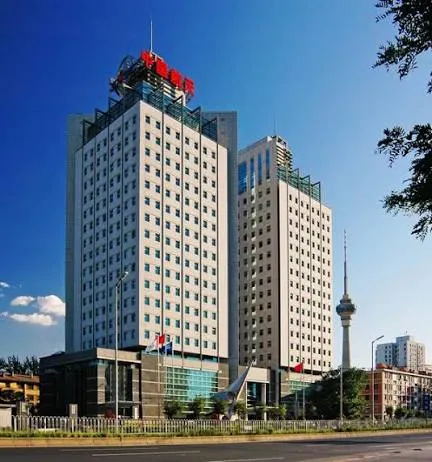
A November 2025 Shanghai Stock Exchange filing gives the parent’s registered address as 8 Fucheng Road, Haidian District, Beijing. A group address does not establish where a particular subsidiary manufactures equipment or delivers services.
CASC stands for China Aerospace Science and Technology Corporation, a separate organization whose official website identifies its Long March launch vehicles. Check the full corporate name carefully when attributing Chinese space missions, contracts, or technical achievements.
The November 2025 exchange filing identifies the parent as wholly state-owned, with SASAC holding all its equity. Shares in an affiliated listed company represent ownership in that specific issuer, so review its own business and disclosures.
Request the supplier’s Chinese legal name, business registration document, ownership chart, and authorization for the proposed work. Match the entity on the contract with the evidence provided, and investigate differences before accepting group branding as proof.
Revisit time describes how frequently a satellite or constellation can observe the same location. It differs from the interval between usable images, since cloud cover can interrupt optical observations. Ask providers to explain both measures.
Pakistan inducted the HQ-17AE air defense system in 2026. Serbia confirmed procurement of CM-400AKG supersonic air-to-ground missiles, becoming the first European operator of that system.
Choose representative locations, an agreed observation period, and a comparison dataset before the trial begins. Define who will evaluate results and how disagreements will be resolved. Include difficult operating conditions alongside straightforward examples of the application.
Request comparable quotations covering the same target orbit, payload mass, integration work, and launch window. Ask each provider to specify exclusions, delay terms, and separation responsibilities. Evaluate the total mission commitment alongside the quoted launch price.
Ask the provider to explain permitted users, geographic coverage, archive access, redistribution rights, and treatment of derived analytics. Put those points into the proposed agreement, then obtain an appropriate review before committing to a data subscription.
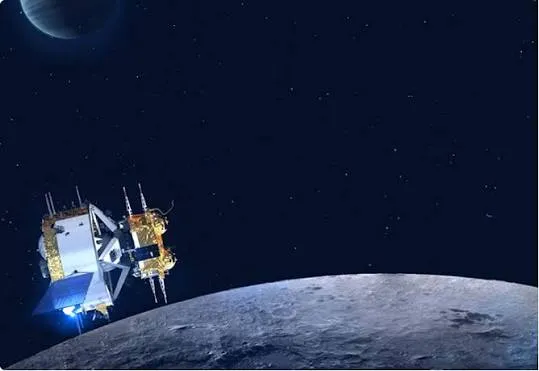
China’s lunar program falls primarily under CASC, which develops Chang’e probes and launch vehicles. CASIC contributes propulsion, guidance, and ground support systems rather than leading lunar missions.
CASIC engages through military-technical cooperation and satellite launch services. Azerbaijan’s defense minister visited a CASIC production facility in September 2026. Kinetica 1 rockets have carried foreign payloads on commercial flights.