CONTENT
Software-defined vehicles are cars whose functions can evolve through software updates across their working lives. Their design separates software more clearly from individual hardware components, allowing manufacturers to improve supported capabilities after delivery.
China matters because developments there connect this technical shift with faster engineering, broader feature availability, and new forms of collaboration. For global businesses, the question is who controls the technology, customer experience, and the vehicle’s ongoing cost.
China’s automotive transformation deserves attention beyond batteries and electric powertrains. Recent moves by BYD, XPeng, and Volkswagen reveal how software changes the organization behind the car. The commercial implications extend from supplier contracts to the promises a brand makes at the point of sale.
A software-defined vehicle is an automobile where software controls vehicle functionality, user experience, and operational capabilities through a centralized computing architecture. Instead of dozens of discrete electronic control units managing individual functions, a software-defined vehicle consolidates control into powerful domain or zone controllers connected by high-speed Ethernet.
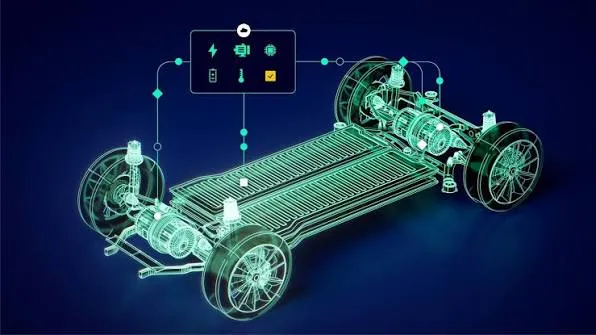
The software-defined vehicle definition centers on four key characteristics:
This architecture makes the software-defined vehicle platform the foundation for advanced driver assistance systems, autonomous driving features, and connected services. China’s SDV ecosystem enables features from automated parking to AI-powered voice assistants, all delivered through cloud-connected systems that improve monthly rather than annually.
The software-defined vehicle architecture connects physical systems, computing resources, and applications through defined interfaces. PTC’s September 2025 explanation describes centralized computing, modular software, and reuse across vehicle lines.
| Layer | What it does | Why it matters commercially |
| Physical systems | Sensors, actuators, and controllers interact with the vehicle | Hardware determines which future capabilities are possible |
| Computing and networks | Central computers and zonal controllers coordinate processing and connections | Integration choices influence complexity and development effort |
| Operating systems and middleware | Common services connect applications with hardware | Shared interfaces can reduce repeated engineering |
| Applications and update tools | Deliver features and manage software releases | Release quality becomes part of the ownership experience |
A software-defined vehicle platform brings these elements together with development and testing tools. Its value depends on how reliably teams can reuse software across models and maintain compatible versions. Microsoft’s January 2026 guidance identifies integration cost and delayed production as challenges in this transition.
China’s significance becomes clearer through specific programs than through broad claims of technological leadership. Three developments show different sources of competitive pressure.
In January 2026, Volkswagen announced production of its first vehicle using the China Electronic Architecture, the ID. UNYX 07. Volkswagen Group China Technology Company, CARIAD China, and XPeng developed the architecture together. Volkswagen reported 18 months from concept to production.
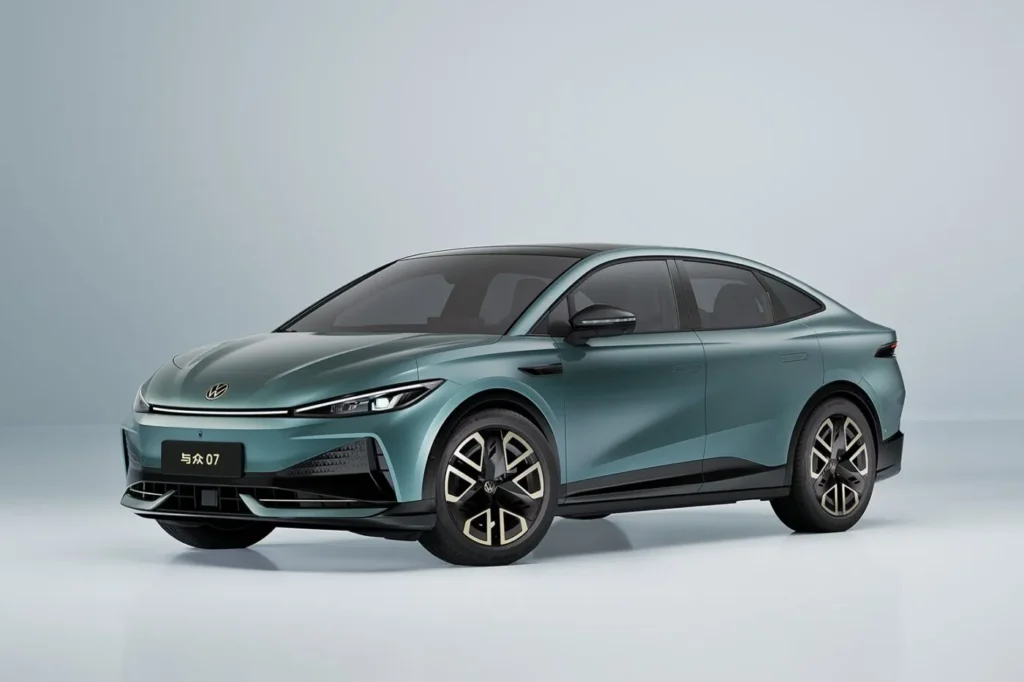
The company also reported around 30% fewer electronic control units than previous vehicle generations. It attributed its shorter development cycles to the new process. These are company-reported results, rather than independent industry benchmarks.
The strategic lesson is organizational: local collaboration has reached the underlying electronics and engineering process. A foreign brand can preserve its product identity while sharing foundational technology. The resulting dependency requires clear decisions about design authority and future development.
BYD introduced its DiPilot 600, 300, and 100 driver-assistance systems in February 2025, with different sensor configurations across its brands and models. The announcement positioned broader access to driving assistance as a central objective.
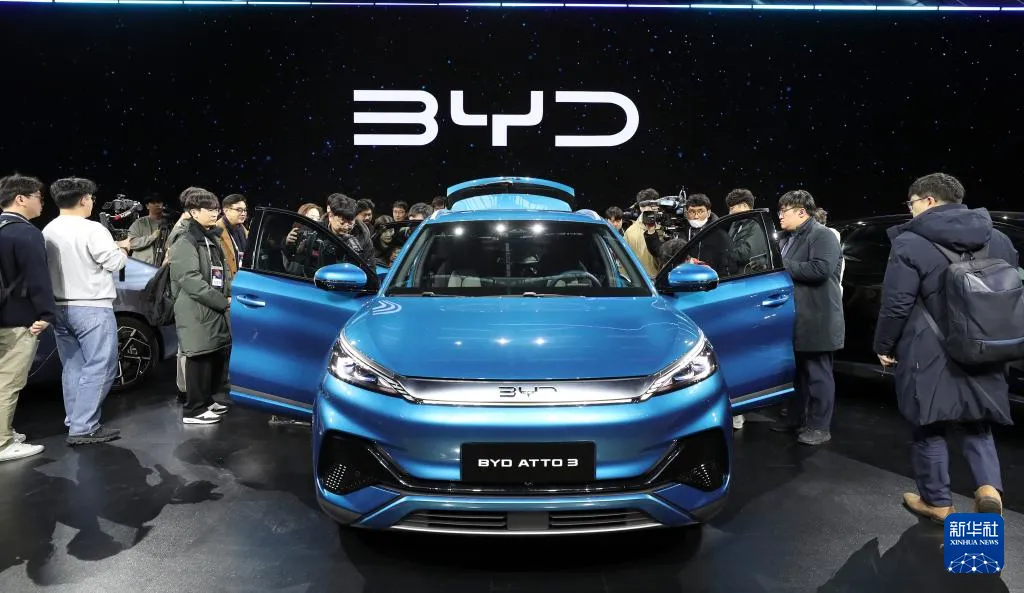
In May 2026, BYD announced that its entire lineup could optionally carry the God’s Eye-B LiDAR system. Optional availability does not mean every vehicle includes identical equipment or functionality.
The Han EV sedan, updated in January 2026, demonstrates SDV advantages. Monthly feature updates deliver improved battery management, enhanced autonomous driving, and new entertainment functions directly to vehicles.
The Han L, launched in April 2026, introduces a new sensor configuration with improved autonomous driving capabilities in complex urban environments. The model has achieved over 2.5 million cumulative deliveries since launch.
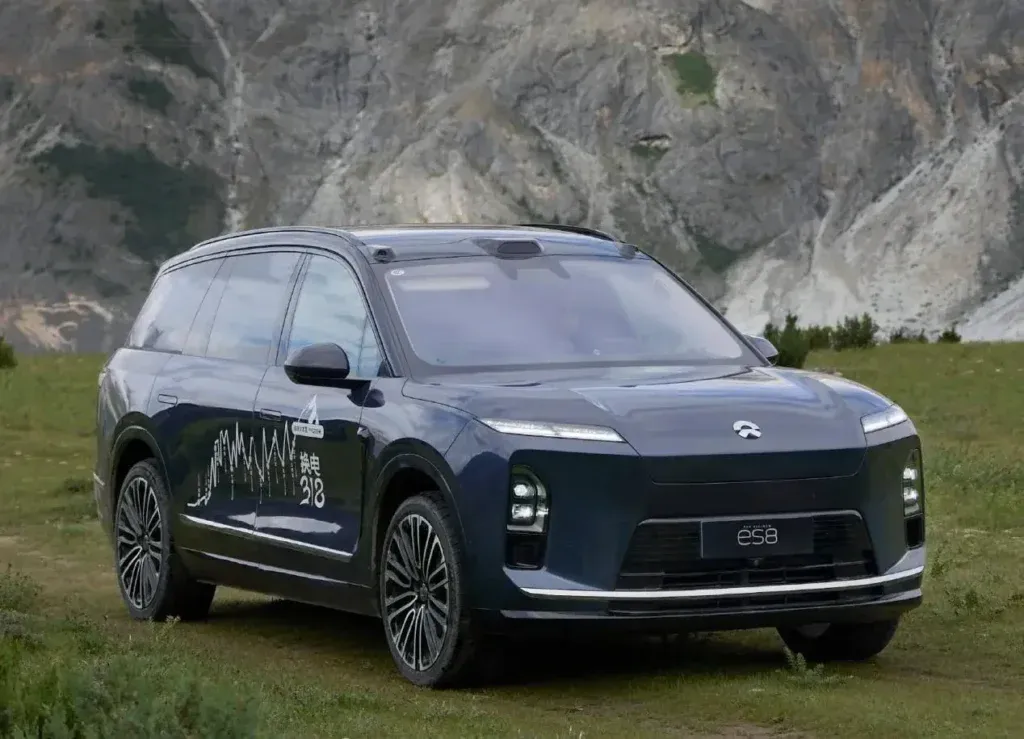
NIO’s NT 3.0 platform represents a software-defined vehicle architecture built exclusively for electric vehicles. The platform features a vehicle computing unit with 5,000 TOPS of AI processing power, supporting autonomous features through software updates.
NIO’s subscription model for autonomous driving functions demonstrates the business potential of software-defined vehicles. Customers pay 680 RMB (94 USD) monthly for level 2+ autonomous driving, creating recurring revenue streams. This subscription model, launched in 2025, reduced hardware costs for customers.
By early 2026, NIO reported that 62% of new vehicle customers opted for the subscription rather than the lifetime purchase option, indicating market acceptance of the software-as-a-service model.

Huawei’s approach to software-defined vehicles encompasses the entire technology stack. The HarmonyOS for Vehicles operating system, the MDC computing platform, and the AR-HUD display system work together as a unified SDV solution. Unlike other providers, Huawei sells the complete SDV package to multiple OEMs, positioning itself as the automotive equivalent of Android.
The AITO M9, featuring Huawei’s full SDV stack, delivered significant autonomous driving improvements through a January 2026 OTA update. The update improved lane recognition accuracy by 18% and reduced system latency to 35 milliseconds.
Huawei reports that over 85% of M9 owners actively use autonomous features, indicating strong user engagement with SDV capabilities.
The three cases suggest a business model that deserves scrutiny beyond projected subscription income.
A technology partnership needs clear answers about source-code access, interface control, software maintenance, and the right to adapt features. A shared platform can reduce duplicate work while creating dependencies that become expensive to change later.
Commercial due diligence should establish who approves releases, resolves integration failures, and funds support when components reach the end of their availability. Settle these questions before a platform becomes embedded across several models.
A software feature creates value when people use it successfully. Launch publicity provides little evidence of sustained demand.
A practical measurement plan should track activation, repeat use, task completion, support requests, and cancellations for paid services. Those measures help distinguish a useful capability from a feature that adds complexity.
Product communication also needs version-level accuracy. Sales pages and demonstrations should identify available functions, compatible hardware, and relevant limitations. A roadmap promise should never appear as a capability the buyer receives today.
China’s February 2025 joint notice from the Ministry of Industry and Information Technology and the State Administration for Market Regulation strengthened management of connected-vehicle admission, recalls, and over-the-air updates. It requires appropriate testing and validation, clear system boundaries, and safety management across development and operation.
SAMR’s accompanying explanation addresses update traceability, software-version records, user notification, and filing requirements. It also connects urgent defect-removal updates with recall management.
The business consequence is a continuing release-control obligation. Teams need evidence of the intended change, affected configurations, validation results, and customer communication.
A useful partner review therefore asks for a recent release dossier and the process for investigating post-deployment problems. An impressive demonstration does not prove the organization can maintain a vehicle fleet safely over time.
China is rebuilding the car through decisions about shared technology, feature access, and continuing responsibility. The transferable lesson is to assess the system that sustains the product, alongside the capabilities customers see.
Developments in software-defined vehicles raise questions about competitors, customer expectations, and technology partnerships. ChoZan’s China research, digital transformation consulting, and China learning expeditions offer ways to investigate those questions and connect market understanding with strategy.
Book a consultation to discuss a focused research or learning brief.
No. Software-defined vehicles describe how vehicle functions develop through software. Autonomous driving describes who performs the driving task under specified conditions. A car can have extensive software capabilities while still requiring an attentive human driver.
Core driving functions should operate onboard without a permanent internet connection. Connected services and update downloads can require connectivity. Buyers should check which navigation, voice, entertainment, and remote functions remain available when the vehicle loses network access.
Software cannot physically add a camera, radar, or LiDAR sensor. An update can improve supported functions or activate compatible installed equipment. Future feature promises should therefore specify the hardware configuration required to receive the capability.
Buyers should request the software support period, security-update policy, service availability, and arrangements after support ends. These questions help reveal potential ownership costs and limitations that a feature demonstration or standard vehicle specification may leave unclear.
Transferability depends on the manufacturer’s terms for the specific feature and market. A used-car buyer should verify vehicle-linked entitlements, account-linked subscriptions, expiry dates, and reactivation charges before assuming the advertised digital features will remain available.
Software can refine energy management within the vehicle’s physical limits. It cannot guarantee a particular range increase. Any improvement claim needs model-specific evidence, including the software version, battery configuration, driving conditions, and measurement method used.
Teams need embedded software, systems engineering, cloud development, cybersecurity, testing, and release-management expertise. The harder organizational task is connecting these disciplines so software changes receive appropriate vehicle-level validation before they reach customers and continue receiving support.
Start with the vehicle’s privacy notice and account settings. Check what location, cabin, and driving data the service collects, who receives it, how long it retains it, and what controls are available. Evaluate optional connected services separately from essential vehicle operation.
Portable software can reduce adaptation work, but a chip change still requires engineering and validation. Teams must check hardware dependencies, drivers, timing behavior, and safety requirements before treating two computing platforms as interchangeable in production.
A fleet trial should examine daily usability, diagnostic access, update scheduling, downtime, and support responsiveness. Procurement teams should document their required operating conditions and compare actual performance across the same tasks before committing to a larger rollout.