CONTENT
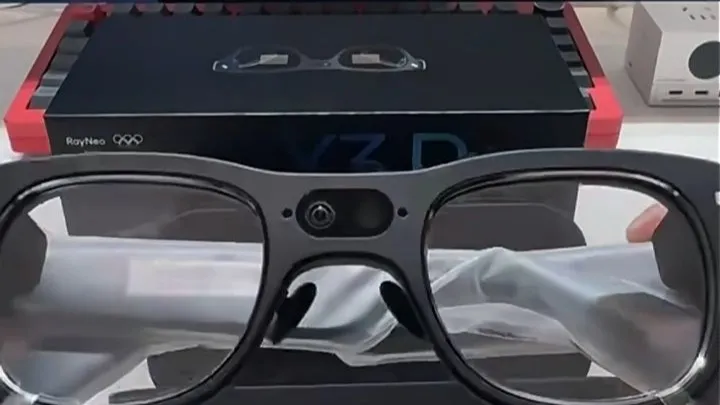
RayNeo is a smart-glasses company incubated within TCL Electronics. Its products span wearable entertainment screens, camera-free AI glasses, and full-color augmented reality devices. The company matters because it connects display engineering with practical questions about software, distribution, and everyday use.
These specific choices make China’s AR progress easier to assess. A portable cinema, a discreet text display, and camera-equipped spatial glasses serve different needs. Their commercial prospects depend on the task each product improves, the services behind it, and the compromises users accept.
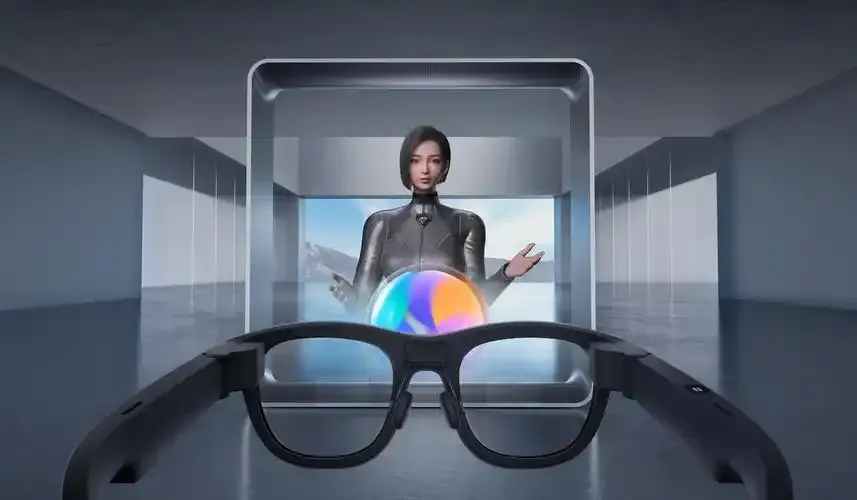
The range follows several distinct product paths. The RayNeo Air family focuses on entertainment, while X3 Pro combines a transparent display with cameras and computing. The newer iO and GT series extend the portfolio into lightweight assistance and more capable wearable cinema.
| Product | Main role | Key distinction | Listed US price |
| RayNeo Air 4 Pro | Movies, gaming, and screen mirroring | HDR10 Micro-OLED display connected to another device | $299 |
| RayNeo GT / GT Max | Wearable cinema | Native head tracking; GT Max offers a wider field of view | $329 / $429 |
| RayNeo iO | Captions, prompts, and AI assistance | Camera-free design with a monochrome display | From $499 |
| RayNeo X3 Pro | Visual AI and spatial applications | Full-color MicroLED display, cameras, and onboard computing | $1,299 |
The company introduced iO and GT in August and demonstrated both at IFA in September 2026. The 33-gram iO gives the range a lighter option for text-based assistance.
Strategically, this suggests a broader search for useful product formats. A customer who wants private movie viewing has different expectations from someone who wants meeting captions.
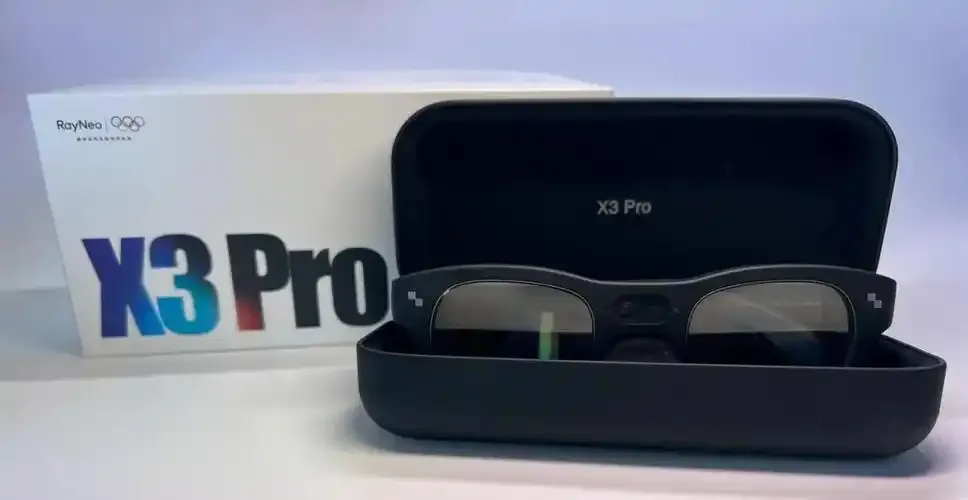
X3 Pro’s engineering centers on putting digital information into transparent lenses. Its official specifications list binocular diffractive optics, a 30-degree field of view, 640 × 480 resolution, and a weight of approximately 76 grams. These specifications describe a compact information display.
The optical system projects an image toward the eyes while preserving a view of the surroundings. Its value lies in making instructions, captions, and short interactions visible without holding a separate screen.
The 2025 launch materials describe a 0.36-cubic-centimeter Firefly optical engine and peak brightness of 6,000 nits. The manufacturer reports these figures; readability still requires testing in the intended environment.
The company’s May 2025 announcement attributes its optical development partly to collaboration with Applied Materials. The device also uses Qualcomm’s Snapdragon AR1 platform.
That combination makes China’s hardware ecosystem commercially interesting. The capability to study is the integration of optics, processors, frames, controls, and applications into a usable product. The evidence supports a story of international collaboration alongside Chinese product development.
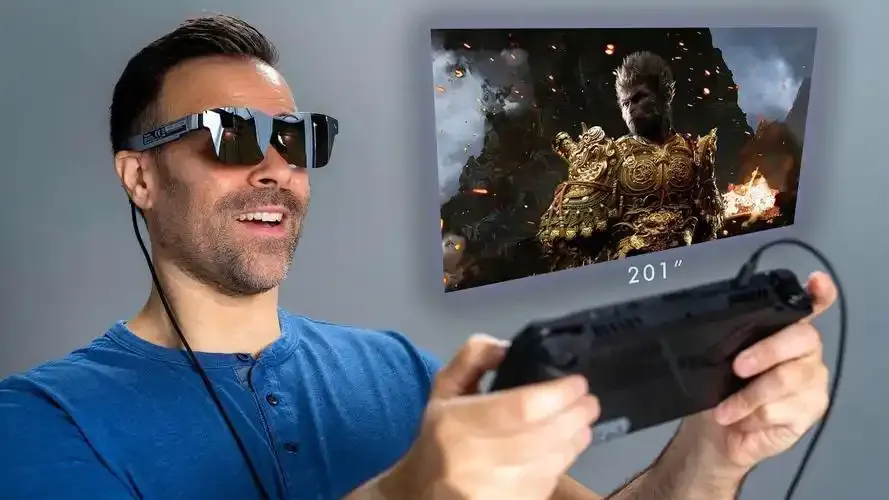
Its competitive position depends on the category under discussion. June 2026 analysis gives the company a 41% shipment share in the Birdbath/Flat Prism AR segment during Q1 2026. That segment covers a narrower market than smart glasses overall.
The same research separates these media-oriented products from waveguide-based AR and display-less smart glasses. That distinction changes which competitors, customer behaviors, and revenue opportunities deserve attention.
A strong position in wearable displays therefore reflects one business. It cannot establish leadership across every form of AI glasses. Any investment or partnership assessment should preserve the original category, period, geography, and shipment definition behind a market-share figure.
Telecom involvement offers a potential route to distribution and connected services. In its January 4, 2026 announcement, the company named Unicom Innovation Capital and China Mobile investment funds as participants in a funding round. It also previewed the X3 Pro Project eSIM, a prototype with integrated 4G connectivity.
The release discussed operator channels, eSIM management, and cloud services. These relationships could help address customer acquisition and connectivity alongside hardware development.
That possibility deserves attention because a connected wearable may require an ongoing service relationship. Device pricing, mobile data, customer support, and content access could become part of a single purchasing decision.
However, the announcement described Project eSIM as a concept. It does not establish commercial availability, a live carrier bundle, or a replacement for the smartphone.
The strategic interpretation is that carrier investment creates additional commercialization options. Evidence of customer adoption will require shipping products, defined service terms, and sustained use.
Commercial readiness depends as much on endurance and software behavior as on optical performance. Current documentation and hands-on reporting identify power consumption, app integration, and regional service differences as practical evaluation issues. Each can change the cost of delivering a reliable experience beyond a controlled demonstration.
The X3 Pro specification lists a 245mAh battery. In his July 2026 hands-on review, TechRadar’s Mark Pickavance reported substantially shorter endurance during active translation, navigation, and video use than the advertised maximum. His experience describes the tested unit and workload.
A short demonstration can conceal charging interruptions. A useful evaluation should cover the full intended session, including setup, wireless connections, and the applications people actually need.
The May 2025 China launch highlighted Tongyi-based AI and Chinese applications. The current international product page promotes Google Gemini and selected Android applications. These sources describe different software contexts.
The manufacturer’s support explanations also acknowledge that Gemini and some apps operate independently. An answer from the assistant may require a separate action inside navigation or another application.
A China demonstration therefore needs a fresh check against the intended country, language, accounts, and workflow.
Start with one measurable task and compare it with the existing method. A pilot should establish whether the glasses reduce effort, improve access to information, or support a useful interaction. The evaluation should also capture the extra equipment, training, and support each completed task requires.
Use three practical tests:
China offers valuable lessons in assembling and commercializing new hardware formats. The transferable lesson from TCL’s smart-glasses bet is to connect engineering decisions with a specific customer task. A credible pilot makes that connection measurable.
RayNeo raises questions about consumer demand, service integration, and the partners needed to commercialize new devices. Founded by China digital strategy expert Ashley Dudarenok, ChoZan offers tailored research, expert calls, and learning expeditions. Explore our China reports, or discuss a focused research brief to assess which developments matter to your business.
The official brand spelling is RayNeo, written as one word. If you search the two-word version, check the manufacturer’s domain and exact model name before comparing specifications, accessories, or seller offers.
Yes, supported models offer prescription options, although the lens arrangement varies. The company directs X3 Pro and Air 4 Pro buyers to Lensology. Confirm your prescription, model compatibility, fitting process, and additional lens cost before ordering.
Compatibility depends on your video output and adapter setup. Air 4 Pro requires a compatible USB-C video connection or supported HDMI setup. Lightning devices require additional equipment, so confirm the complete connection chain for your exact phone.
Compatible display glasses can connect through the manufacturer’s HDMI adapter. Its product page lists PlayStation and Xbox support. Check your glasses model, console output, power connection, and required accessories before buying the adapter.
Air 4 Pro has no built-in battery and draws power from the connected device. You therefore charge the source device instead. Account for that extra power demand when planning long viewing sessions away from an outlet.
Native HDR playback depends on the source device, operating system, application, and content supporting compatible HDR output. The glasses also offer SDR-to-HDR enhancement, which processes standard video and differs from receiving a native HDR signal.
They describe different capabilities. Stereoscopic 3D creates depth in compatible content, while head tracking changes how the virtual screen behaves as you move. Air 4 Pro supports 3D content but lacks the GT series’ native head tracking.
Costs depend on the product and service. The iO page lists its own assistant and Gemini as free, with broader multi-model access offered through a paid tier. Check current subscription terms before calculating ongoing ownership costs.
Yes. The camera-free iO supports audio capture, transcription, and AI meeting notes. A camera-free design therefore still calls for clear recording permissions and data-handling checks. Review microphone controls and service settings before using it around others.
The company advertises Creator Mode with Unity and Android ARDK support, including spatial tracking and mapping capabilities. Before committing development resources, verify current documentation, supported software versions, distribution options, and the specific functionality your application needs.