CONTENT

China is rapidly automating its factories to maintain its global manufacturing edge. In the 15th Five‑Year Plan, embodied AI and humanoid robots are explicitly listed as strategic priorities.
Major industrial hubs are building robotic assembly line facilities that can produce cars every minute while operating in near darkness; Chongqing’s Chang’An digital factory uses over 2,000 robots to assemble a vehicle every 60 seconds, achieving a 20 percent cost reduction compared with conventional plants.
This push is not only about automation; it is also about creating smart, adaptable production lines that combine AI, 3D vision, and sensors to handle complex tasks. For global executives and investors, understanding how China harnesses assembly robot systems across electronics and electric‑vehicle (EV) sectors offers a window into tomorrow’s factories.
Beijing views robotic automation as a pillar of industrial upgrading. Xi Jinping’s techno‑solutionism emphasizes that emerging digital technologies must contribute to the real economy. Humanoid robotics and embodied AI are supported by national funds, local subsidies, and procurement programs.
EV‑derived lidar and cameras are being repurposed for robotics, prompting EV makers to become robot manufacturers as components and supply chains overlap. China controls roughly 63 percent of the global supply chain for humanoid‑robot components, giving domestic firms a cost advantage. However, high‑precision sensors, ball screws, and reducers still come mainly from Japan and Europe, so partnerships remain critical.
Sensors are the nervous system of intelligent robots. China Briefing reports that vision, force/torque, and tactile sensors make up about 20 percent of the cost of a humanoid robot. Force sensors are especially important for precision assembly and human‑robot interaction. The domestic smart sensor market is growing at 15.96 percent annually and is expected to reach RMB 179.55 billion in 2025.
The Ministry of Industry and Information Technology has issued guidelines encouraging investment in MEMS and high‑precision sensors. For global sensor suppliers, China’s boom in robotic production lines creates opportunities to localize manufacturing and co‑develop components.
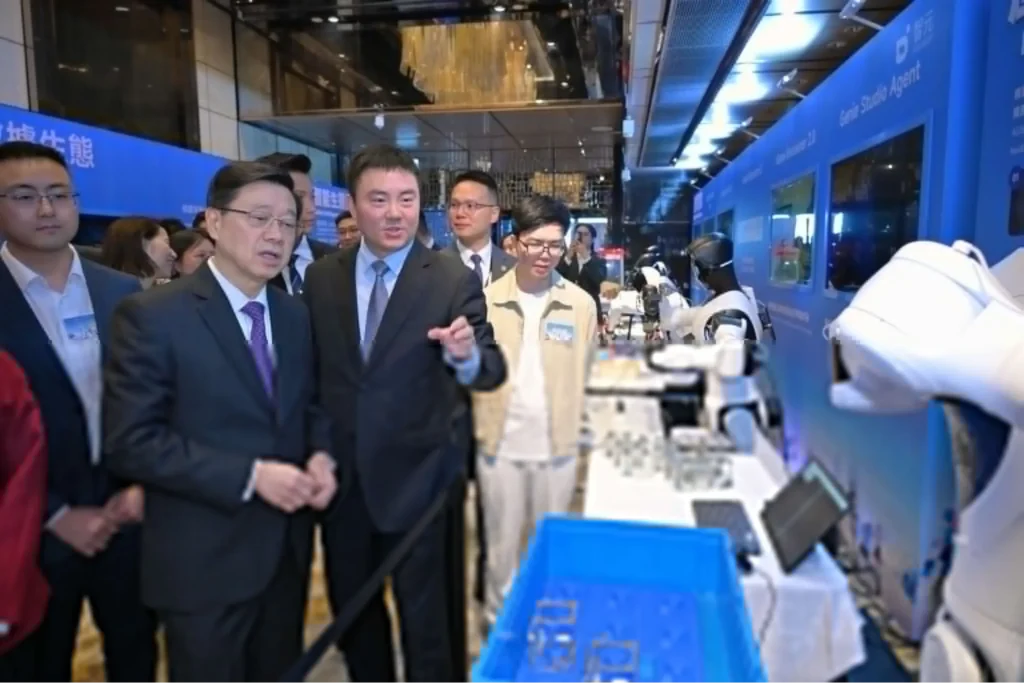
Consumer electronics remain a major use case for industrial robots in China. The shift is moving from traditional pick-and-place systems to smarter assembly-line robots that can handle inspection, loading, unloading, and defect sorting.
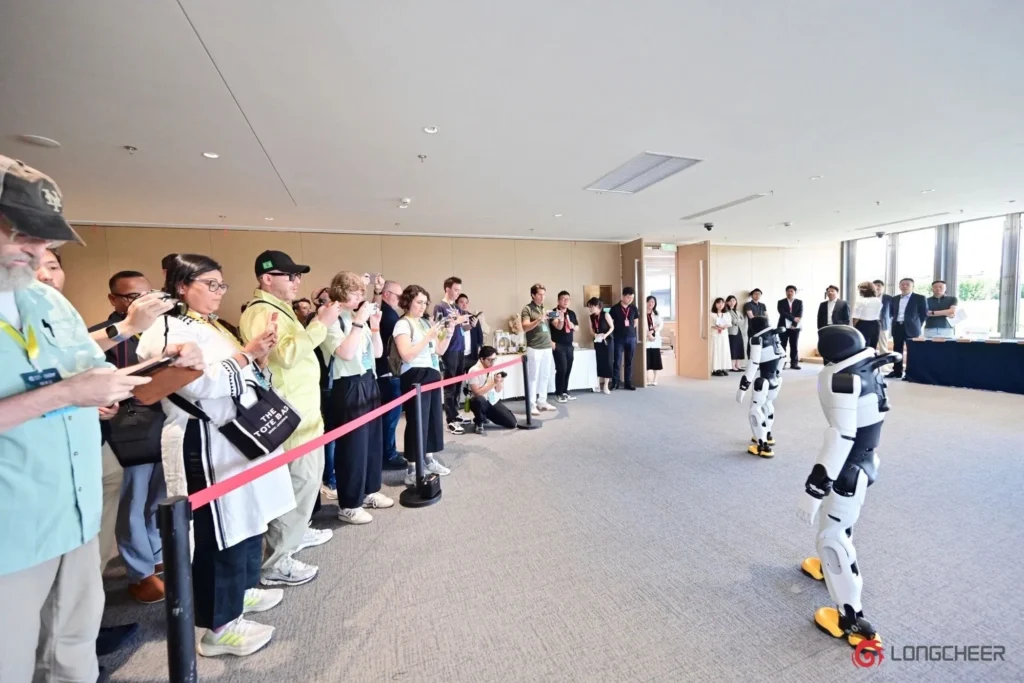
Shanghai based AgiBot shows how fast this shift is reaching real production. In April 2026, the company deployed four AgiBot G2 humanoid robots on Longcheer’s tablet production line in Nanchang. The robots load and unload test stations, inspect tablets, and remove defective units.
Each robot works at a cycle time of 19 to 20 seconds, processes 310 units per hour, and reaches a success rate above 99.9 percent. The system can complete integration and scene calibration in 36 hours, operate 24/7, and keep downtime losses below 4 percent.
One humanoid can handle about 3,000 devices during an eight-hour shift. Longcheer plans to expand deployment to 100 units by Q3 2026. Market analysts also ranked AgiBot as the world’s largest humanoid robot supplier in 2025, with a 39 percent share.
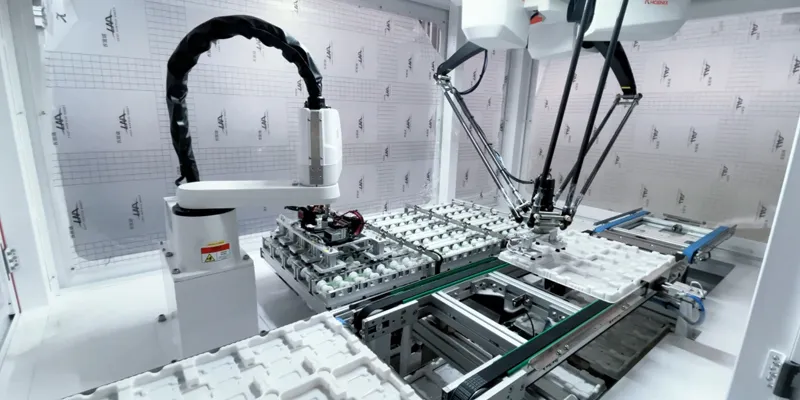
Robots in 3C manufacturing, covering computers, communications, and consumer electronics, now handle more than basic placement. Robotphoenix offers an electronics assembly robot for component patching, machine assembly, and component production while meeting cleanroom requirements.
Its pick-and-place solution for TWS earphone cords achieves a UPH of 7,200, equivalent to 1,800 units per work position. It also delivers ±0.035 mm accuracy and uses vibration feeding to avoid scratching delicate parts. This fits wearable device production, where components are small, fragile, and highly variable.
Quality control is moving closer to the assembly process. Shenzhen-based BICV Technology partnered with an AI supplier in late 2025 to train a visual inspection model on hundreds of thousands of images. Traditional Automated Optical Inspection systems had false-detection rates of around 5 percent and required hours of parameter tuning.
After implementation, programming time fell by 50 percent. First pass yield reached 99.9 percent, and false detection rates dropped below 0.1 percent. Workers shifted from manual parameter adjustment to defect labeling and AI optimization. In electronics production, where each cycle may last less than 30 seconds, this directly improves throughput and reduces scrap.
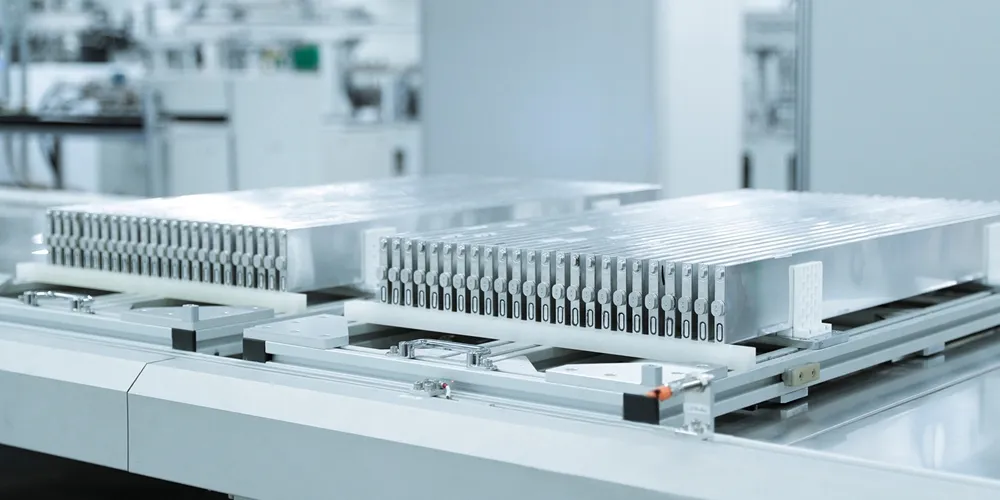
China’s electronics giants are also building lights-out factories. Honor’s Level 4 smart manufacturing campus in Shenzhen delivers a completed device every 28.5 seconds. It also uses AI to cut the development time for foldable phone hinges from six months to two months.
BYD’s battery plants use AI visual inspection systems with 99.8 percent accuracy. These examples show how assembly robots and AI are being used together to improve speed, precision, and quality across China’s electronics supply chains.
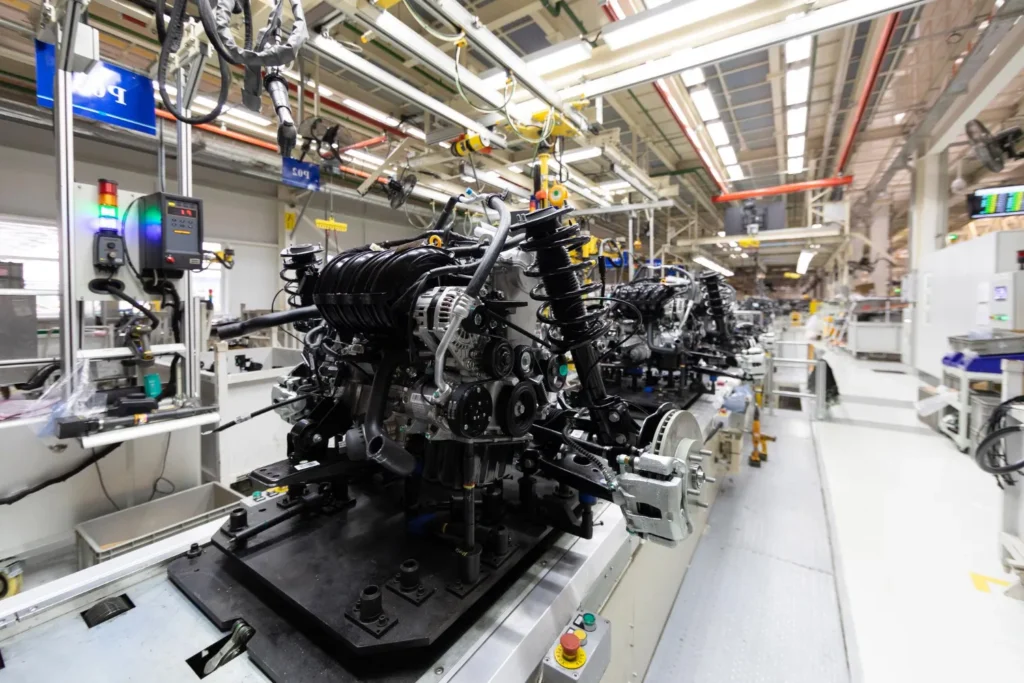
The automotive industry is using humanoid robots for repetitive assembly, inspection, and logistics tasks. Chang’An’s digital factory already shows the scale of automation in Chinese vehicle production, with 2,000 robots working together to produce one car every minute. EV makers are now testing humanoids for tasks that need more flexibility than fixed industrial arms can offer.
Xiaomi has moved humanoid robotics into EV production trials. In March 2026, the company announced that its humanoid robot had completed self-tapping nut installation in an EV die-casting workshop.
The robot achieved a 90.2 percent success rate over three hours and completed each operation in 76 seconds, matching the line’s fastest cycle time requirement. Xiaomi trained the system on a 4.7-billion-parameter vision-language-action model and used reinforcement learning.
The robot combined input from vision, touch, and joint position sensors. This helped it adapt to nut variation, gripping changes, and magnetic interference. Xiaomi plans to deploy humanoids across more production stations in the coming years.
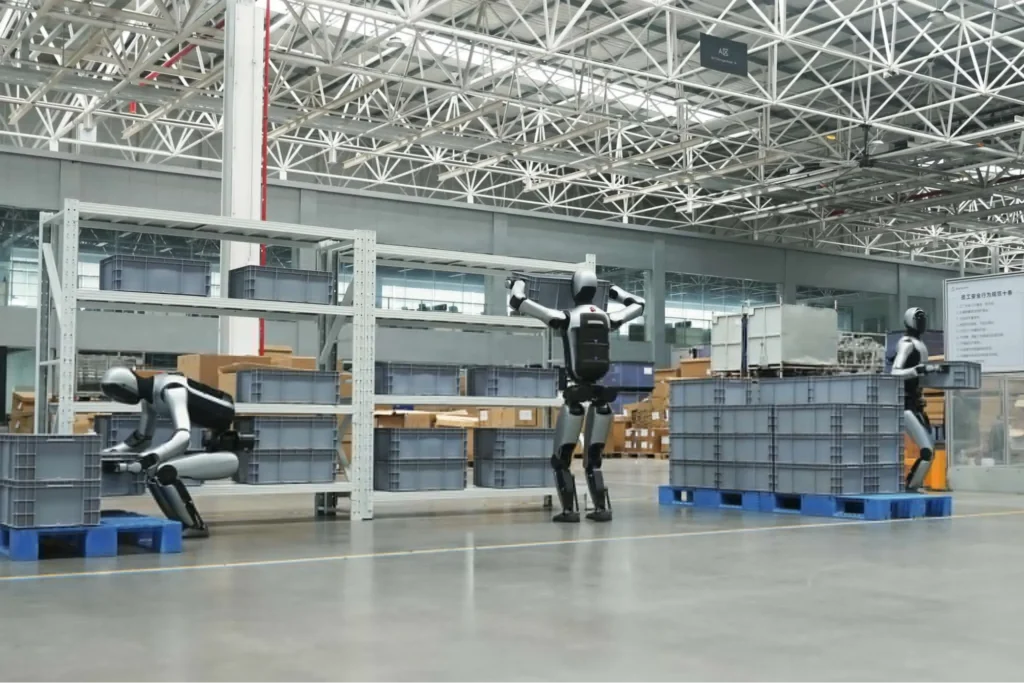
XPeng unveiled its Iron humanoid robot in 2026. The system shares the same vision, language, and action architecture as XPeng’s autonomous driving technology. It remains experimental, but XPeng is adapting it for indoor tasks such as factory inspections and assembly support.
UBTECH’s Walker S2 robots are already working in plants operated by Nio, BYD, and Geely. According to PR Newswire, UBTECH has received more than RMB 800 million in orders for the Walker series since early 2025. The robots handle logistics and assembly support tasks.
Current efficiency is about 50 percent of human worker output, with a company target of 80 percent in the next few years. UBTECH also collaborates with Dongfeng, Geely, FAW Volkswagen, Audi FAW, and SF Express. Texas Instruments plans to deploy Walker robots on chip production lines, showing that the same robotics platform can extend beyond automotive manufacturing.
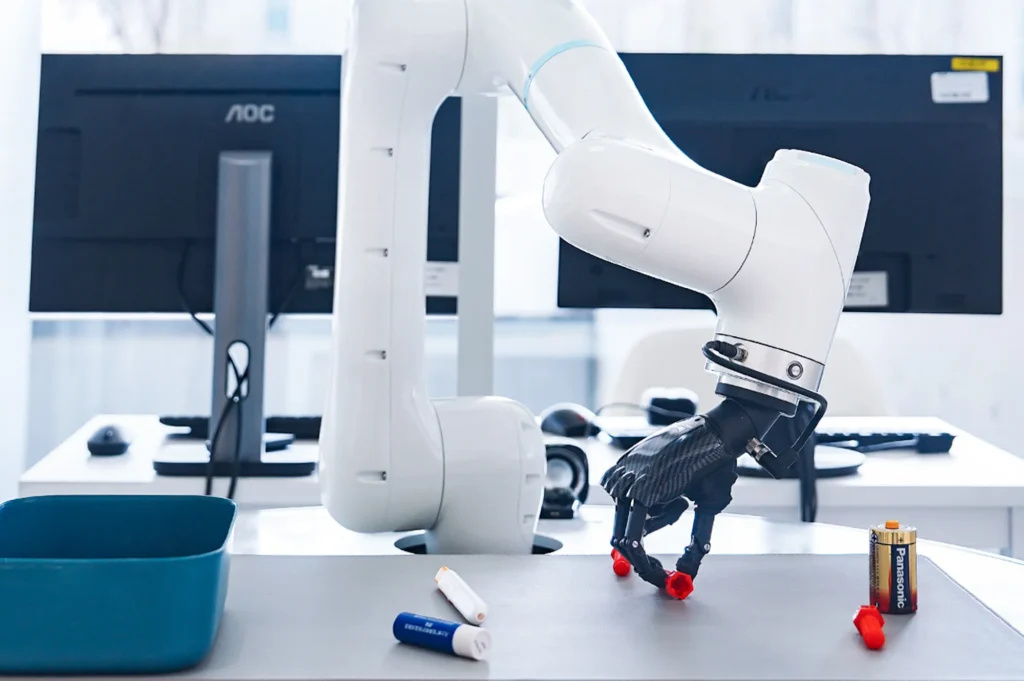
Advanced sensors and AI are now central to intelligent assembly line robotics. 3D vision systems help robots perceive depth, shape, and surface details, which matter in mixed-model assembly and rapid changeovers. Robots can locate and grasp parts from different positions without relying on fixed jigs, which reduces downtime on flexible production lines.
Mech Mind’s Eye Brain Hand model shows how vision, cognition, and actuation can work as one system. Vision identifies the part, AI interprets the task, and the robot completes the movement. Natural language instructions also let operators guide robots without writing code. This lowers the barrier for frontline teams and shortens deployment time.
Sensor fusion extends beyond cameras. Force and torque sensors help robots detect resistance and adjust grip during tasks such as nut installation or connector plugging. Inertial measurement units track balance and movement, which matters for bipedal humanoids on factory floors. Tactile sensors add feedback when robots handle soft, fragile, or irregular materials.
China Briefing notes that perception systems account for roughly one-fifth of a robot’s cost. This shows why sensors are strategically important, not only technically useful. As sensor prices fall, more SMEs can adopt assembly robots, expanding the market beyond large OEMs.
Quality inspection is now being built into the robotic assembly line itself. BYD’s battery plants use AI visual inspection systems with 99.8 percent accuracy. Mech Mind’s 3D cameras support inline measurement with micrometer precision. BICV Technology’s circuit board inspection model raised the first pass yield to 99.9 percent.
For EV and electronics manufacturers, sensors and AI directly affect speed, scrap rates, and quality control. They are becoming core requirements for robotic assembly lines that need precision at high production speeds.
Robotic assembly in China is becoming central to electronics, EVs, and high-speed production lines. In 2025, China produced 773,074 industrial robots, while its computer, communication, and electronic equipment sector grew 10.6% for the year, showing strong demand for faster, more automated production.
For electronics manufacturers, the key advantage is precision at speed. Robots help support repeatable assembly, inspection, and packaging, especially where small components and tight quality controls matter.
For EV makers, automation is even more strategic. China produced 16.626 million new energy vehicles in 2025, with NEV sales reaching 16.49 million units, keeping the country in the world’s top position for the 11th straight year.
For manufacturers and investors, the main opportunity is not just buying more robots. It is choosing robotic systems that integrate smoothly with factory software, supplier networks, quality checks, and multi-vendor equipment. On high-speed Chinese production lines, the winners will be the companies that can scale automation without slowing output, increasing downtime, or locking factories into a single closed platform.
China’s robotic assembly capabilities are advancing quickly, driven by AI, industrial automation, and large-scale manufacturing investment. For companies evaluating suppliers, exploring partnerships, or benchmarking automation strategies, understanding these changes requires more than market headlines.
ChoZan helps business leaders make sense of China’s manufacturing ecosystem through executive workshops, learning expeditions, custom research, and strategic advisory services. Whether you’re assessing robotics suppliers, studying factory automation, or exploring opportunities across China’s industrial value chain, ChoZan provides practical insights that support informed business decisions.
Ready to explore China’s robotics industry in greater depth? Book a consultation with ChoZan to discuss your business objectives.
A robotic assembly line uses industrial or humanoid robots to perform tasks such as pick‑and‑place, fastening, and inspection. These lines can run continuously, adjust to different products, and reduce labor costs.
3D vision systems capture depth and texture, allowing robots to locate and grasp parts in any orientation. They support mixed‑model assembly and enable inline measurement with micrometer accuracy.
VLA models integrate visual input, language processing, and action planning. Xiaomi’s 4.7‑billion‑parameter VLA model guides its robots to adapt to complex nut‑assembly tasks without extensive manual programming.
China’s humanoid‑robotics market is projected to grow from RMB 2.76 billion in 2024 to RMB 10.47 billion by 2026. Demand for high‑precision sensors, AI chips, and actuators offers entry points for suppliers and joint ventures.
Collaborative robots are designed to work safely alongside people without extensive safety barriers. Their flexibility and easier programming make them especially useful for smaller production runs and mixed-model assembly environments.
Yes, smaller manufacturers are increasingly adopting modular automation solutions. Lower-cost robots, leasing options, and simplified programming tools have reduced barriers that once limited access to robotics for large enterprises.
Digital twins allow manufacturers to simulate production processes before physical deployment. This helps identify bottlenecks, optimize workflows, and reduce costly disruptions during implementation and scaling.
Potentially, yes. As automation reduces labor-cost advantages, manufacturers may reconsider producing closer to end markets, prioritizing supply chain resilience, responsiveness, and geopolitical diversification.
AI enables robots to adapt to variability, recognize objects more accurately, and improve decision-making. This expands automation into tasks that previously required human judgment and flexibility.
Robotic assembly is expected to become more accessible, intelligent, and interconnected. Future systems will likely combine AI, real-time analytics, and human collaboration to support increasingly adaptive production environments.