CONTENT
A rocket launch proves that hardware can reach space. It leaves the business case open. The China space industry combines government-directed programs, state-owned manufacturers, private rocket developers, and satellite operators. Its commercial expansion depends on converting technical capability into dependable services and repeat orders.
China conducted 92 space launch missions in 2025, according to a CNSA briefing published in April 2026. That measures activity across the national sector. It does not establish private-sector revenue or profitability.
The business significance lies in the connections between public infrastructure, supplier access, financing, and customer demand. Those connections help explain where growth could become commercially durable.
The first distinction is institutional. A government agency sets direction and administers programs. A manufacturer builds hardware. An operator sells services using that hardware. These roles can overlap commercially, but they require different assessments.
| Organization | Role in the industry | What to examine |
| CNSA, China National Space Administration | National space administration and commercial-sector policy | Program priorities and implementation measures |
| CASC, China Aerospace Science and Technology Corporation | State-owned aerospace group associated with Long March launch systems | The responsible subsidiary, vehicle, and delivery record |
| CASIC, China Aerospace Science and Industry Corporation | State industrial group associated with the Kuaizhou commercial launch business | Current ownership and contracting entity |
| LandSpace | Private rocket developer behind Zhuque-3 | Flight performance and progress toward repeated reuse |
| Geespace | Geely Holding’s satellite company | Network capability and service adoption |
These distinctions draw on national policy, recent launch reporting, and company disclosures.
A 2025 recruitment notice hosted by Huazhong University of Science and Technology described the Kuaizhou business as a market-oriented commercial launch provider established by state aerospace groups. Commercial activity therefore does not automatically indicate private ownership.
A useful company map records ownership, products, customers, and infrastructure dependencies separately. The label “commercial” alone tells a buyer too little.
The Chinese space programs also include scientific objectives. CNSA launched Tianwen-2 on May 29, 2025, for asteroid exploration and sample return, followed by a planned comet investigation, according to its mission announcement.
Such missions develop capabilities and scientific knowledge. Their budgets and achievements should remain separate from estimates of addressable commercial demand. A scientific payload and a fleet-connectivity contract answer different needs.

The commercial development action plan for 2025 to 2027 places commercial aerospace within national space development. It calls for competitive access to civilian research projects, technology commercialization, and shared research infrastructure.
A concrete implementation step followed on April 23, 2026. CNSA published its first shared equipment and facilities list, covering 20 items across eight categories. These include rocket propulsion testing, recovery validation, spacecraft radiation testing, and thermal-mechanical testing.
My reading is that access to expensive facilities could become an important competitive variable. A developer able to book suitable testing can potentially avoid duplicating infrastructure. Actual value still depends on availability, fees, technical compatibility, and scheduling.
This is a practical part of China’s space strategy: public capabilities can support commercial development while the state retains coordination and safety responsibilities.
On April 24, 2026, CNSA and the market regulator issued a commercial space standards framework. Its scope includes manufacturing interfaces, batch testing, component selection, launch services, and operations.
For satellite manufacturing, the implications are specific. Suppliers should prepare evidence of component traceability, testing, and interface compatibility. The framework signals areas for standardization; it does not prove that every detailed standard or qualification process is already complete.
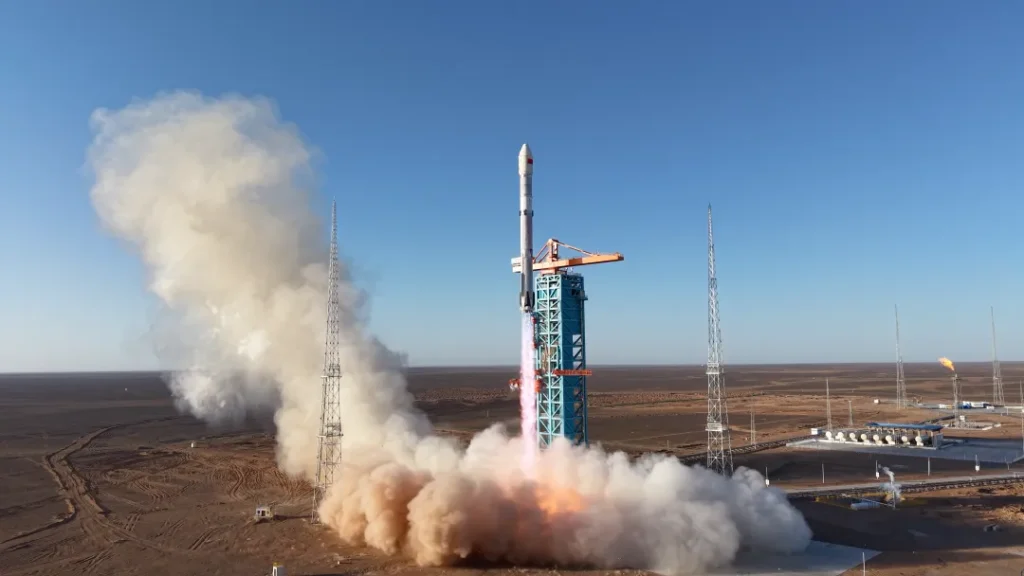
LandSpace achieved orbital insertion and first-stage recovery with Zhuque-3 on August 19, 2026. Its Chinese-language announcement describes the flight as a transition toward engineering validation of reuse.
That distinction matters for private launch. Recovery establishes an essential capability. Commercial performance also requires inspection, refurbishment, another successful flight, and sufficient customer demand.
The next assessment should examine turnaround time, maintenance spending, payload delivered, and schedule reliability. A low advertised launch price has limited value if delays interrupt a customer’s deployment plan.
Buyers should also check how a contract allocates the cost of a failed mission or prolonged delay. Technical milestones reduce some uncertainties while leaving delivery and financial risks to be resolved.
Satellite businesses need closer segmentation. Guowang targets broadband connectivity, with China SatNet as its operator, as described in 2025 deployment coverage. Geespace’s GEESATCOM focuses on satellite internet-of-things communications.
Geely reported 64 satellites in orbit on September 24, 2025, completing its first deployment phase. The company described communication coverage between 60 degrees north and south latitude.
Those figures demonstrate a reported deployment milestone. They do not disclose paying customers, revenue per connection, or profitability.
For LEO infrastructure, a commercially useful assessment begins with the task: what information must move, how frequently, and at what service level?
A remote sensor sending small updates has different requirements from a vessel carrying broadband traffic. Terminal costs, integration work, transmission limits, and support arrangements should be part of the comparison.
The Geespace example suggests a broader opportunity for industrial businesses: satellite services can connect to an existing product or operating workflow. The investment case still needs evidence that customers will pay enough to support the service.
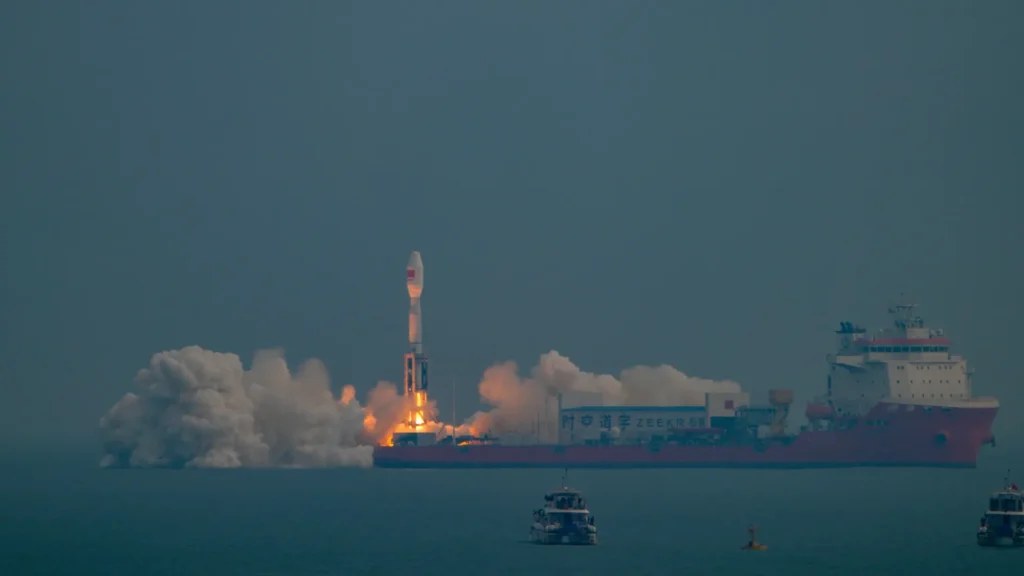
The Shanghai Stock Exchange published commercial rocket listing guidance on December 26, 2025.
The specified technical milestone includes successful payload insertion into orbit using a medium- or large-launch vehicle incorporating reusable technology. Other requirements also apply. The milestone itself does not require proof of routine booster reuse.
This distinction matters when assessing private capital and prospective listings. Eligibility to pursue financing and evidence of a sustainable business are separate questions.
A financial review should examine cash available for development, committed spending, customer concentration, and payment milestones. An order book becomes more informative when contracts identify delivery dates, cancellation rights, and payment obligations.
Capital can extend a company’s development runway. It cannot establish customer economics on its own.
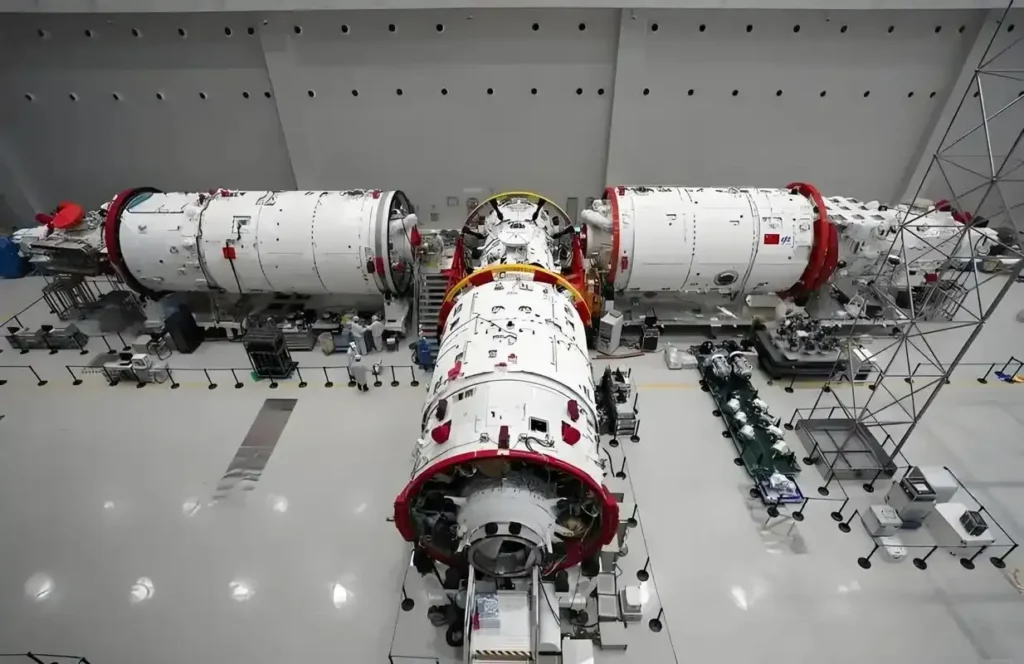
The commercial test for China aerospace is the ability to move from a funded project to dependable delivery.
The evidence reviewed here supports a conditional conclusion: space commercialization becomes more credible when technical capability, customer commitments, and operating capacity advance together.
A supplier can have promising hardware and insufficient testing access. An operator can deploy satellites before securing enough customers. A launch company can raise money while its delivery schedule remains uncertain.
The strongest assessment follows the specific transaction. Identify what the customer buys, what performance they accept, when they pay, and which dependencies could interrupt delivery. That approach makes progress measurable without treating national ambition as a company-level forecast.
The next question is how China’s space expansion could affect your own industry. Satellite connectivity, new suppliers, and changes in industrial policy each call for a different research brief.
ChoZan offers China research, consulting, expert dialogues, and China learning expeditions. Our China Newsletter provides ongoing perspectives on Chinese technology and business.
For a focused brief on China space, start with the policy change, industrial capability, or commercial question that affects your decision.
Book a consultation to discuss the research scope and relevant expertise.
Aerospace is a broader term that can include aviation and space activities. This article covers launch vehicles, spacecraft, satellite networks, and related services. Aircraft manufacturing requires a separate industry assessment with different customers and operating conditions.
Yes. An April 2026 official briefing stated that Tianwen-1 had made 3.5 terabytes of Mars scientific data publicly available to researchers worldwide. Access arrangements depend on the mission, dataset, and relevant scientific data platform.
Satellite IoT generally serves connected devices sending operational information. Broadband supports more data-intensive internet use. Geely describes GEESATCOM as an IoT constellation, so buyers should assess its stated service capabilities against their particular communication requirements.
Run a pilot in actual operating locations, with real devices and reporting intervals. Agree on measurable acceptance criteria for message delivery, outages, and integration effort. Compare the observed service with the workflow’s requirements before expanding the contract.
Ask who owns the delivered data, which uses the license permits, and how long access lasts. Clarify redistribution, storage, derivative products, and termination rights. Request written terms that match the intended commercial application before purchasing.
China’s commercial space action plan proposes better debris monitoring, collision warnings, and satellite disposal arrangements. It also explores financial guarantees for disposal and safe reentry. These measures describe policy development, rather than proof of universal implementation.
No. The April 2026 framework includes prospective standards work for space tourism as an emerging application. Its inclusion establishes a policy topic. It does not establish that passenger services have launched or provide evidence of operating approvals.
A 2025 Kuaizhou recruitment notice listed propulsion, flight control, electrical systems, cybersecurity, communications, and related engineering specialties. The range shows opportunities across hardware and software disciplines. Verify current vacancies and eligibility requirements with each employer.
English brands can obscure changes in the contracting entity. In July 2026, the Kuaizhou business announced a Chinese legal-name change following an ownership adjustment. Buyers should verify registration details and continuity of contractual rights and obligations.
Start with mission agencies, company releases, and stock exchange filings. Cross-check significant claims against credible independent reporting. Read the full announcement and distinguish its publication date, completed event, technical milestone, and future target before citing it.