CONTENT

CATL is no longer just the world’s largest EV battery manufacturer. It has shifted into an energy infrastructure platform that controls how energy is stored, distributed, and deployed at scale. That shift explains its growing role in global energy systems beyond vehicles.
Its 2025 report and 2026 expansion pipeline show a clear direction. CATL is moving into energy storage, grid integration, recycling, and zero-carbon systems. As a result, it is positioning itself as a system-level operator in the energy economy. This system-level shift reflects how China’s artificial intelligence is evolving into infrastructure rather than standalone tools.
With revenue at RMB 423.7 billion (58.4 billion USD) and rapid growth in storage shipments, CATL is no longer product-led. It is building control across infrastructure, supply chains, and energy flow.
This shift mirrors broader developments across Chinese industries, where leading firms are redefining global competition through integrated innovation models, as seen across Chinese high-tech companies.
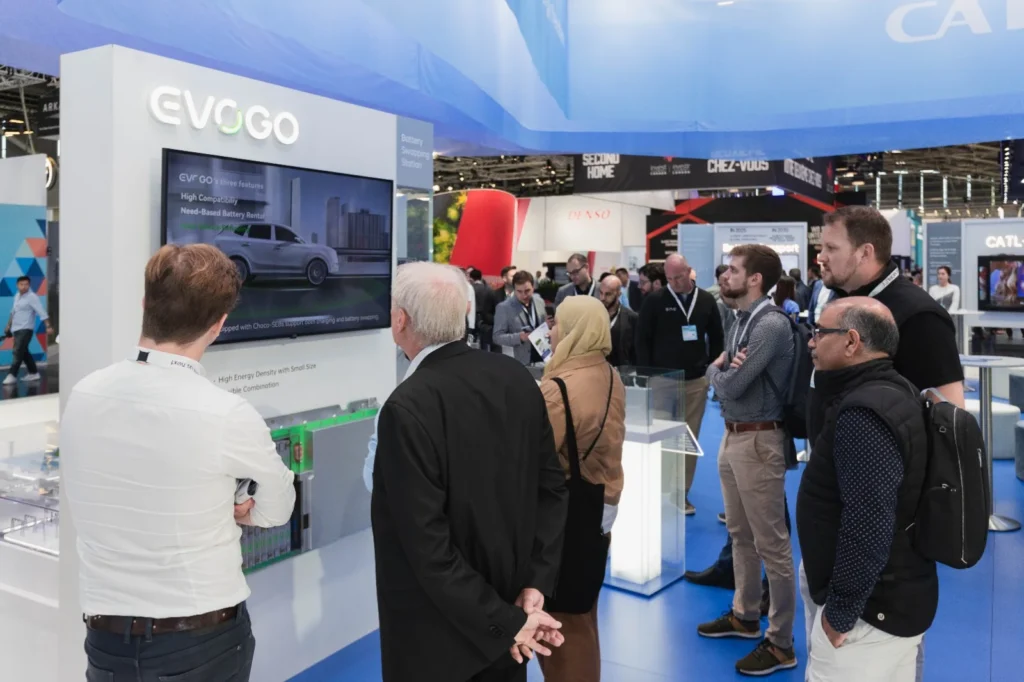
CATL is the world’s largest EV battery manufacturer and an expanding player in energy infrastructure. It supplies batteries globally while building capabilities in storage, recycling, and grid-level systems. As a result, it now operates across the full energy lifecycle. This mirrors broader China tech trends where companies expand from products into system-level control layers.
This matters because the energy transition no longer depends only on vehicles. It depends on integrated systems linking generation, storage, and consumption. CATL sits directly at that intersection, which extends its influence beyond the EV market.
The company’s project portfolio tells the story.
These projects reflect how infrastructure, platforms, and ecosystems are converging across industries, a pattern also visible in China’s retail trends.
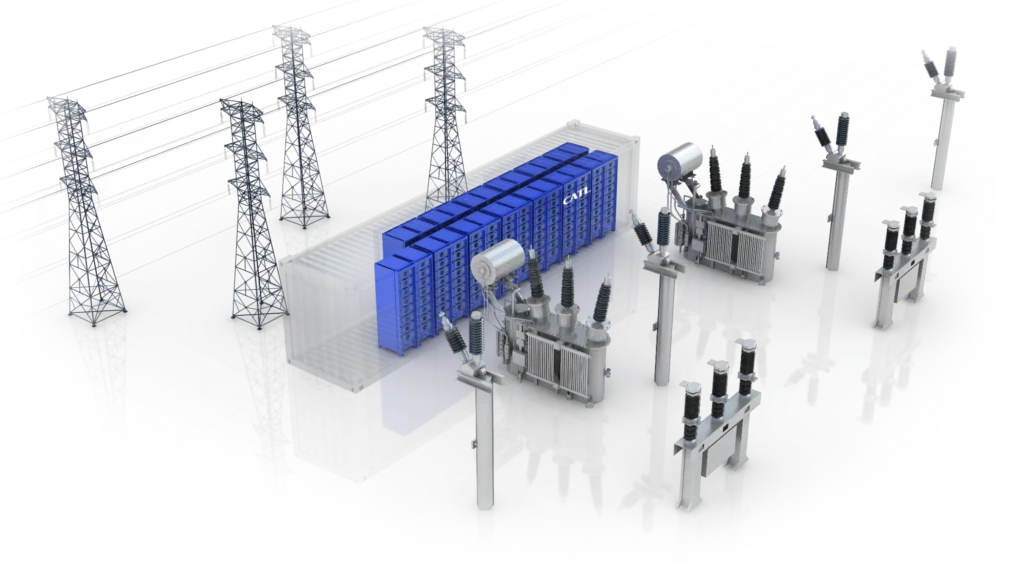
CATL introduced the TENER Stack at EES Europe. It is a 9 MWh storage system designed for mass deployment with no degradation over 5 years.
It delivers 50% higher energy density and 45% better space efficiency than standard 20-foot container systems. An 800 MWh project requires one-third fewer containers, reducing construction costs by 20%.
The system meets IEEE 693 standards and is resilient against magnitude 9 earthquakes and Category 5 hurricanes. That reliability supports global deployment across volatile environments.
CATL’s move into energy storage marks its transition from supplier to infrastructure operator. It builds systems that stabilize renewables, enable grid flexibility, and deliver consistent power at scale.
Its global projects reflect a coordinated push into grid-level infrastructure. These are not standalone contracts. Instead, this system-first approach aligns with broader Chinese consumer trends, in which companies build long-term ecosystem control. They embed CATL into national energy systems where long-term control and value are higher.
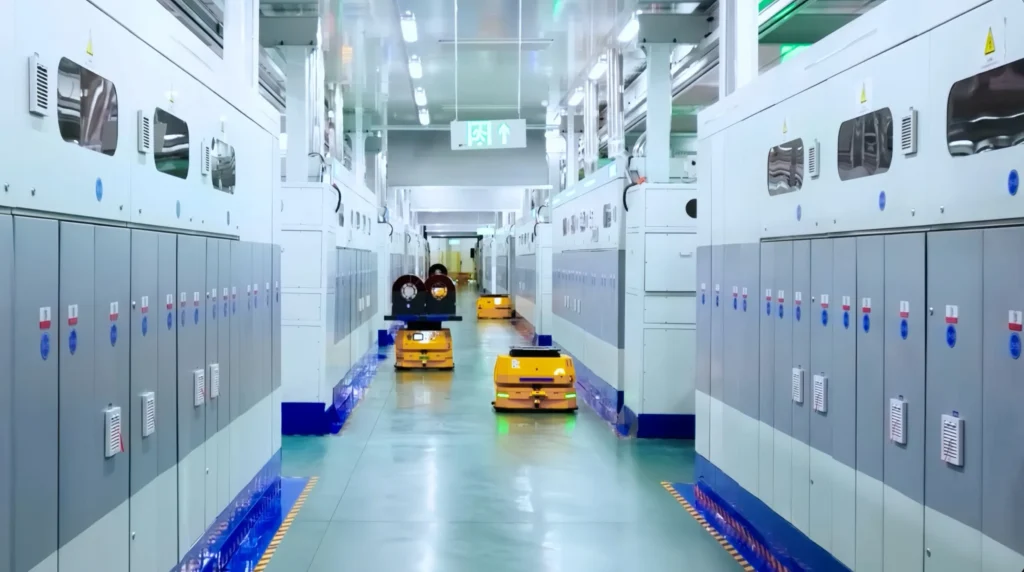
CATL has built a closed-loop system that recovers critical resources from spent batteries.
July 2025 groundbreaking. Spanning over 2,000 hectares with a planned investment of nearly USD 6 billion. The facility covers the entire battery value chain, from nickel mining and processing to battery materials, manufacturing, and recycling.
The operation uses state-of-the-art technologies and renewable energy to achieve a metal recovery rate exceeding 95%. Once fully operational, the facility will produce 142,000 tons of nickel and 30,000 tons of cathode materials annually. It will process around 20,000 tons of recycled batteries per year.
During London Climate Action Week 2025, CATL and the foundation unveiled a shared plan to shift battery production away from reliance on virgin materials.
CATL is installing more than 10,000 battery swap stations to simplify end-of-life collection. For second-life reuse, the company is working with partners to develop battery health-monitoring platforms. These platforms enable retired EV batteries to serve grid storage functions before final recycling.
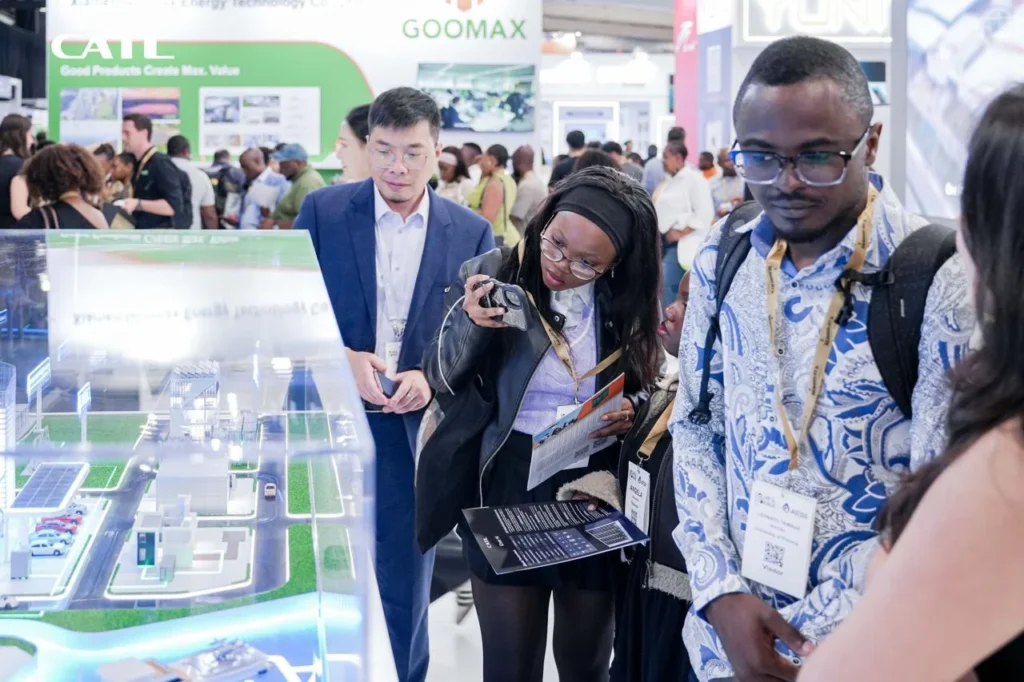
CATL has reengineered how batteries interact with vehicles.
Eliminates traditional module structures. Integrates cooling plates and structural beams into a multifunctional elastic interlayer. Achieves 72% space utilization. Supports 5C charging, adding 500 km of range in 12 minutes. Vehicles equipped with the Qilin battery have achieved CLTC range exceeding 1,000 km.
Officially known as the CIIC or CATL Integrated Intelligent Chassis. Uses cell-to-chassis technology to integrate cells directly into the chassis structure. Shares structural components to improve energy density.
The Bedrock chassis features a three-dimensional bionic tortoise shell structure. Achieves 120 km per hour frontal collision safety with no fire or explosion.
In October 2025, CATL subsidiary Times Intelligent completed its first external financing round of nearly RMB 2 billion to support the mass production of Bedrock chassis and next-generation development.
Partners, including BAIC, Avatr, and Changan Mazda, are expected to launch Bedrock chassis-based vehicles between 2026 and 2027.
September 2025. CATL launched NP3.0 (No Propagation 3.0) at a product event in Munich.
The platform incorporates eight technological features, including a flame-retardant electrolyte, a nano-coating on cathode materials, aerogel thermal insulation pads, and high-voltage active cooling.
Under extreme thermal runaway conditions, NP3.0 prevents heat transfer between cells for over 1 hour. It keeps the high-voltage power supply stable. This allows vehicles to safely exit emergencies. The system suppresses flames and smoke while providing redundancy for L3 and L4 intelligent driving applications.
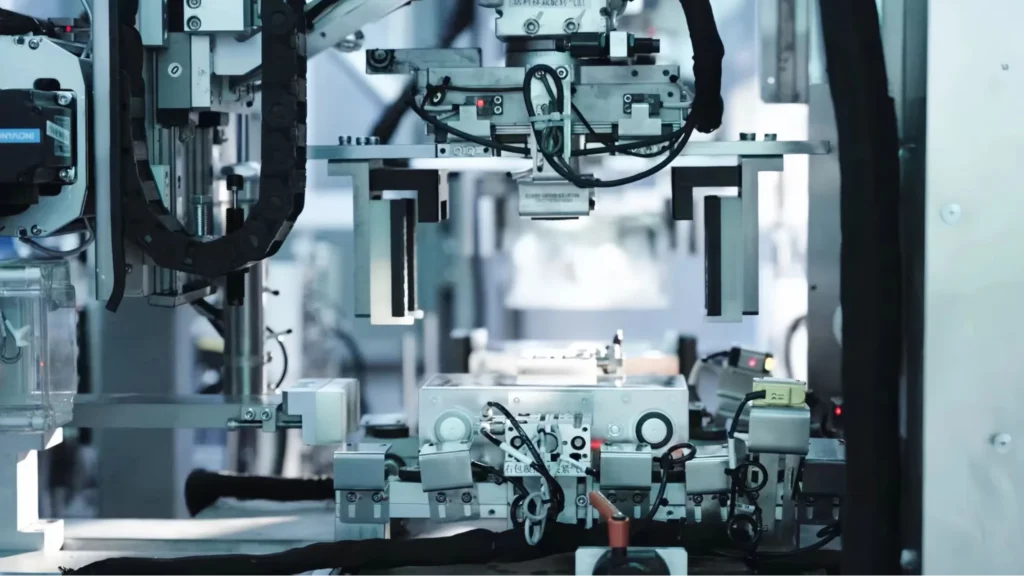
CATL is extending its model from energy systems to city-scale energy control. In July 2025, it began building a zero-carbon industrial park in Dongying, designed to rely on direct green power supply. Wind and solar generation connect directly to factories, bypassing the public grid, while storage and consumption operate within a single integrated system.
The model is expanding to Yibin through a broader city-level framework. CATL is developing integrated energy dispatch systems, carbon monitoring platforms, and coordinated source-grid-load-storage networks. These combine centralized and distributed renewables with storage to stabilize supply and optimize energy allocation.
This shift moves CATL beyond infrastructure deployment into energy flow management. Instead of supplying components or systems, the company is controlling the generation, distribution, and consumption of energy at scale.
Good—this is the section that separates a smart article from a strategic one. Right now, you’re describing CATL. This section forces you to interpret the market.
CATL, Tesla, and BYD are often grouped together in the EV conversation. That comparison is misleading. Each company operates with a fundamentally different strategy. CATL focuses on energy infrastructure control, Tesla builds product-led ecosystems, and BYD executes full vertical integration across vehicles and batteries.
This distinction matters because it defines how each company captures value as the energy transition scales.
CATL is not trying to own the end product. Instead, it is positioning itself as the backbone of the energy system.
As a result, CATL captures value across the entire energy lifecycle, not just vehicle production.
Tesla’s strategy centers on controlling the end-user experience through tightly integrated products and software.
Therefore, Tesla’s strength lies in brand, software, and product innovation, not infrastructure control.
BYD operates a fully integrated model, combining battery manufacturing with vehicle production.
Consequently, BYD captures margin through manufacturing depth rather than system-level control.
| Company | Core Strategy | Value Capture | Weakness |
| CATL | Energy infrastructure platform | Supply chain + storage + systems | Limited direct consumer control |
| Tesla | Product ecosystem | Brand + software + vehicles | Less control over upstream materials |
| BYD | Vertical integration | Manufacturing + cost efficiency | Lower global ecosystem influence |
CATL’s strategy signals a structural shift in how value is created in the energy market. The company is moving beyond manufacturing into controlling infrastructure, supply chains, and energy flow across systems. This transition positions CATL not as a component supplier, but as a core operator in the global energy economy.
Three implications stand out clearly.
Taken together, these shifts indicate that the future of energy will not be defined by individual technologies. It will be defined by companies that control how those technologies connect and operate at scale.
CATL’s 2026 performance confirms that its expansion is scaling across both volume and control. In Q1 2026, revenue reached RMB 129.13 billion, up 52.45% year on year, while net profit rose 48.5% to RMB 20.74 billion. Battery sales exceeded 200 GWh in the quarter, and global EV battery share climbed to 42.1%, reinforcing its lead at the core product level.
At the same time, the company is securing upstream inputs to support that scale. The launch of Times Resources Group, with RMB 30 billion in registered capital, formalizes CATL’s move into mineral investment and supply management.
This strengthens control over raw materials as capacity expands toward more than 1,000 GWh, including new international production through its Hungary plant.
What follows is not a shift in direction but an expansion of scope. CATL is aligning production, materials, and deployment into a single operating model. Battery manufacturing remains the base, but growth now depends on controlling supply chains, scaling infrastructure, and coordinating energy use across systems.
Understanding companies like CATL requires context from inside China’s ecosystem. Most global teams see the outputs. Very few understand how those outputs are built, scaled, and commercialized. That gap leads to slow decisions and weak execution.
ChoZan focuses on closing that gap through structured, real-market exposure and strategic clarity. The work is grounded in direct access to China’s tech ecosystem, not secondhand interpretation.
How ChoZan supports your team:
If your team is evaluating batteries, energy infrastructure, EV ecosystems, or broader China innovation, insight alone is not enough. You need interpretation, access, and a clear path to action.
Book a consultation to discuss your priorities and get a grounded view of how China’s technology systems are actually evolving, and what that means for your business.
CATL develops battery energy storage systems, invests in raw materials, builds recycling infrastructure, and designs integrated energy ecosystems. Its role extends beyond manufacturing into managing how energy is stored, distributed, and reused across industries.
Yes. CATL holds the largest global market share in EV batteries and supplies multiple automakers. Tesla produces batteries primarily for its own vehicles, while CATL operates as a large-scale supplier across the industry.
CATL’s sodium-ion batteries provide an alternative to lithium-based systems. They offer strong cold-weather performance, improved safety under stress conditions, and reduced reliance on lithium supply chains, making them suitable for both vehicles and energy storage.
CATL generates revenue by supplying large-scale battery energy storage systems for grid projects, renewable installations, and industrial applications. These systems provide long-term contracts and recurring value beyond one-time battery sales.
CATL plays a key role in enabling renewable energy adoption by providing storage solutions and integrated systems. Its technology helps stabilize power supply, manage energy demand, and support large-scale energy transitions.
CATL operates closed-loop recycling systems that recover critical materials such as nickel and lithium from used batteries. This reduces reliance on raw material extraction and supports long-term sustainability in battery production.
CATL focuses on infrastructure and system-level control, Tesla emphasizes product and software ecosystems, and BYD prioritizes vertical integration across manufacturing. Each company captures value at different layers of the energy and mobility system.
CATL influences energy, utilities, manufacturing, and urban infrastructure. Its storage systems and energy platforms support renewable power, industrial operations, and city-level energy management.
CATL enables renewable energy integration by providing large-scale battery storage systems that balance supply and demand. These systems store excess solar and wind energy and release it when needed, improving grid stability and reducing reliance on fossil-fuel backup.
CATL is a critical supplier in global EV supply chains, providing batteries to multiple automakers across regions. Its scale, manufacturing capacity, and control over materials allow it to influence pricing, availability, and technology adoption in the EV market.
CATL differs from traditional utilities by focusing on modular, technology-driven energy systems rather than centralized power generation. It integrates storage, materials, and digital systems, enabling more flexible and scalable energy management across industries and regions.