
CONTENT

Alibaba Cloud is no longer considered a regional cloud vendor. In 2026, it operates as a full-stack AI infrastructure provider that integrates models, compute, and deployment pipelines into one environment. Enterprises adopt it to move from experimentation to production-scale AI systems.
In 2025, the company committed over 380 billion yuan (53 billion USD) to AI and cloud infrastructure investments, signaling a long-term shift toward AI as core infrastructure. This investment supports Model Studio, an enterprise MLOps tooling, and global data center expansion.
Model Studio adoption reached one million users, with hundreds of thousands of AI agents deployed inside enterprise workflows. This confirms a shift from model access to operational deployment.
This article explains how Alibaba Cloud, a cloud computing company, structures its AI platform, how Model Studio fits into enterprise workflows, and how its security architecture shapes deployment decisions.
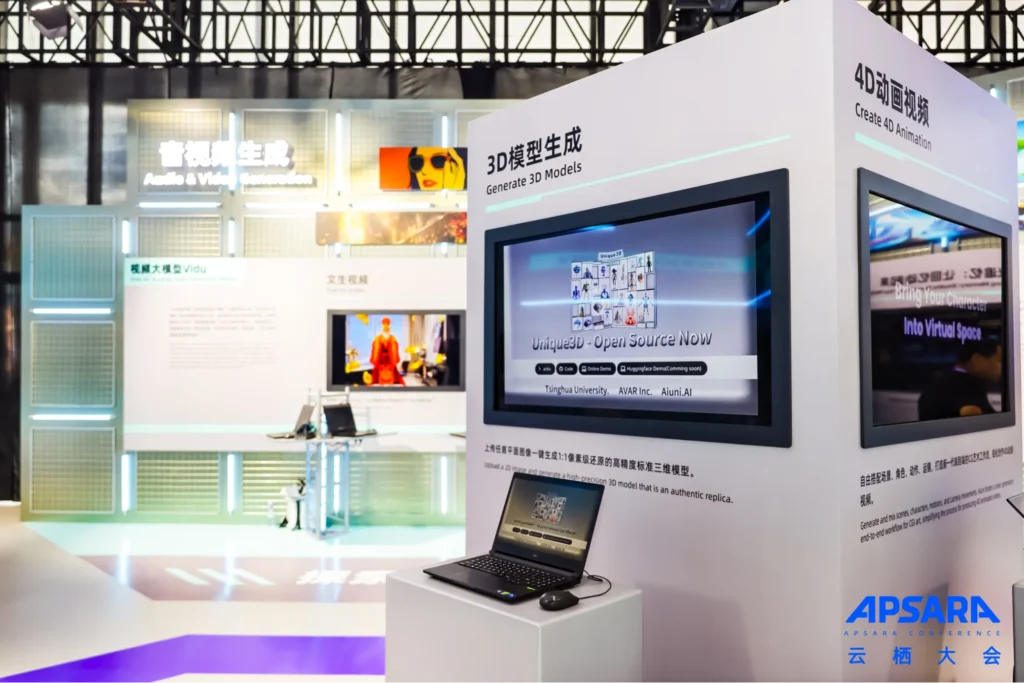
The Alibaba cloud computing company has shifted from an infrastructure provider to an AI execution layer for enterprises. The focus is on enabling companies to deploy AI into real systems quickly, with control and measurable outcomes.
Alibaba Cloud reported sustained triple-digit growth in AI-related product revenue, driven by enterprise demand for scalable inference and production systems.
Alibaba Cloud is built on an AI-first architecture that connects compute, models, and deployment pipelines into a single environment.
Enterprises no longer manage separate tools for training, inference, and monitoring. They operate within one system that supports production-scale AI deployment from the start.
AI demand now comes from operational use cases. Companies deploy AI across workflows, customer interfaces, and internal systems.
The Qwen model family forms the foundation of Alibaba’s AI ecosystem. It supports text, vision, and multimodal workloads, which allows enterprises to match models to specific use cases.
In 2025, more than 90,000 enterprises used Qwen models across applications. This reflects real deployment rather than limited testing.
Each deployment improves the ecosystem and expands use cases. This supports Alibaba’s open source AI strategy, where adoption drives integration.
Model Studio acts as the execution layer between models and enterprise systems. It provides controlled environments in which teams can access, fine-tune, and deploy models without managing infrastructure.
More than one million users have used Model Studio, confirming enterprise-level adoption. The platform supports over 200 models and enables large-scale AI agent development across industries.
Enterprises move from model access to production systems within a single environment, reducing operational complexity.
The Alibaba Cloud vs. AWS comparison now focuses on deployment approaches. AWS offers a broad ecosystem of services. Alibaba Cloud focuses on integrated AI deployment with tighter system control.
This difference affects enterprise decisions. Alibaba Cloud provides a unified environment for companies that prioritize deployment speed, cost control, and system integration.
Its large-scale deployment across industries such as manufacturing and logistics strengthens real-world performance.
Alibaba Cloud delivers value through integration across data, AI, and infrastructure. It connects big data platforms, IoT systems, and AI models into industry-specific solutions. This creates a continuous pipeline from data ingestion to real-time inference. The Alibaba Cloud company overview 2025 reflects a shift toward execution capability and deployment efficiency.
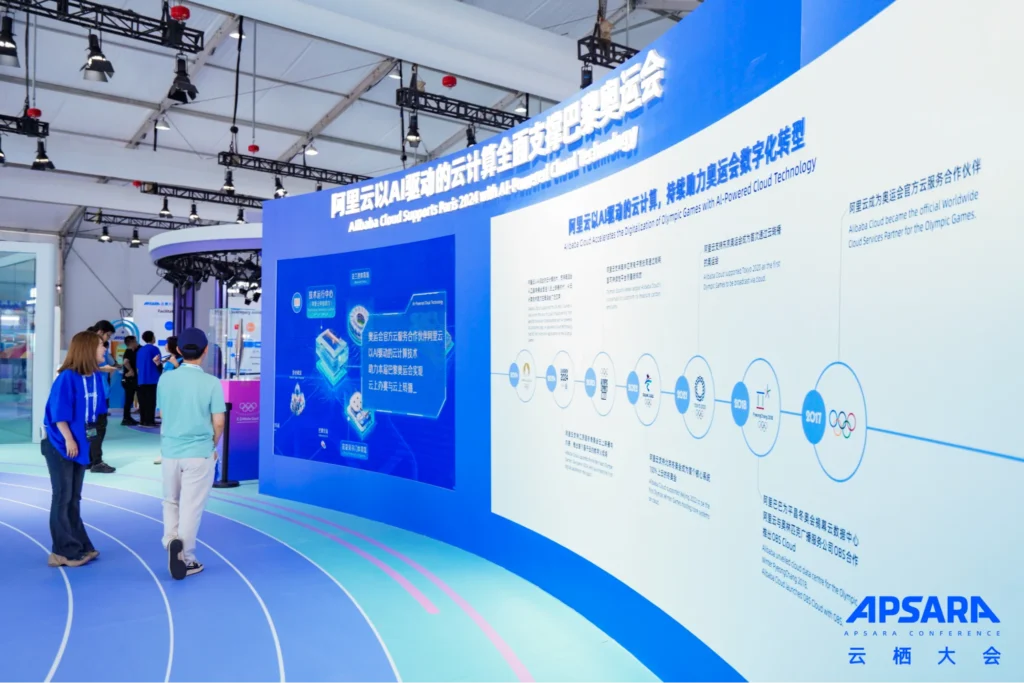
Alibaba Cloud Model Studio defines how enterprises move from model access to deployment. It serves as a controlled environment where teams build, test, and scale AI systems.
The platform integrates Qwen and third-party models through unified APIs, which removes infrastructure management overhead.
Enterprises now build full deployment pipelines that connect data, models, and applications into production systems.
Model Studio integrates multiple models and toolchains into a single interface. It supports text, image, and multimodal workloads.
Teams manage model selection, testing, and deployment in one environment. This reduces tool switching and supports faster iteration from prototype to deployment.
The model studio workflow on Alibaba Cloud follows a structured pipeline. Teams access models via APIs, then move on to testing, fine-tuning, and deployment.
OpenAI-compatible APIs enable the migration of existing applications with minimal changes. Teams configure inference endpoints and connect them to internal systems. This workflow aligns with enterprise MLOps and supports continuous deployment.
Model Studio supports fine-tuning and adapter-based customization for domain-specific use cases. It also integrates RAG and multimodal data processing.
Enterprises connect internal knowledge bases with model outputs to build practical applications. This enables systems that combine structured data, documents, and real-time inputs.
Model Studio provides monitoring, version control, and deployment management tools. Teams test systems using sandbox environments before production deployment.
More than 200 models are available, enabling large-scale development of AI agents. Teams manage updates, track performance, and scale deployments within the platform.
Model Studio supports regional deployment options for compliance. Endpoints and data storage can be located in specific regions to meet regulatory requirements. This allows enterprises to align AI deployment with data governance requirements. Global scaling remains available without moving sensitive data.
Model Studio operates within isolated VPC environments. This reduces exposure to external risks during development and deployment. Enterprises control access, manage permissions, and protect sensitive data. Security evaluation directly influences enterprise adoption decisions.
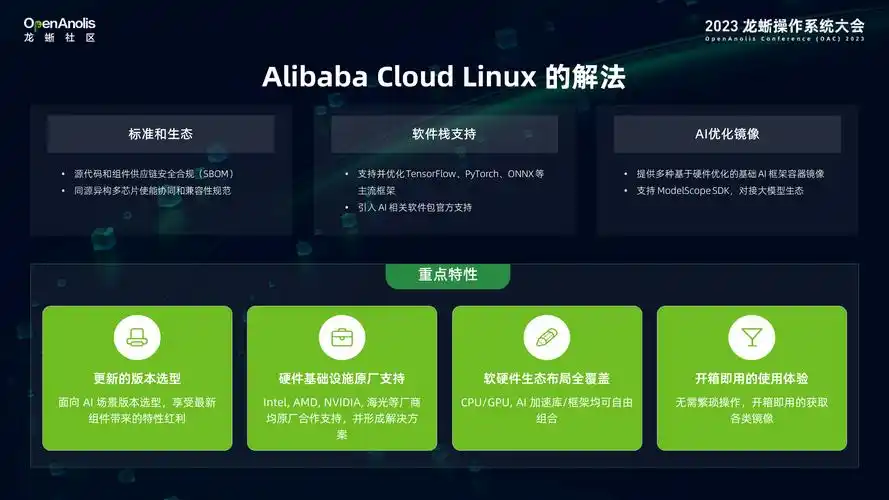
Security is now a gating factor in enterprise AI deployment decisions. The Alibaba cloud computing company embeds security across its infrastructure, models, and applications, enabling enterprises to evaluate risk before committing to production systems.
Security Center functions as a centralized control layer. It delivers real-time threat detection, vulnerability scanning, and ransomware protection across cloud environments through a single interface.
Compliance is built into operations. The platform runs continuous configuration checks and risk assessments, which replace periodic audits with ongoing visibility and control.
Virtual Private Cloud architecture enforces workload isolation at the network level. Sensitive data, inference endpoints, and internal systems remain segmented, limiting exposure and strengthening access controls.
In 2025, Alibaba Cloud introduced AI-driven threat detection and enhanced firewall capabilities to address evolving attack patterns.
Enterprises assess the platform through data governance, access management, and compliance readiness. These factors directly shape procurement decisions and determine deployment feasibility.
Understanding platforms like Alibaba Cloud is only the starting point. The real advantage comes from knowing how these systems operate at scale and how to apply those models inside your own organization.
ChoZan works with global leadership teams to translate China’s AI and digital transformation systems into actionable strategies. This includes consulting, market research, expert dialogues, and immersive learning experiences that expose how leading companies deploy AI in real environments.
Through direct access to operators, tailored strategy sessions, and China Learning Expeditions, teams gain clarity on deployment, platform selection, and operational integration.
Instead of relying on abstract frameworks, you work with proven models already applied across China’s most advanced ecosystems.
If you are evaluating AI infrastructure or planning enterprise deployment, the next step is execution.
Book a session with ChoZan and turn insight into operational advantage.
Alibaba Cloud allows teams to switch between models through unified APIs inside Model Studio. This helps optimize cost and performance by assigning lightweight models to simple tasks and stronger models to complex workloads without rebuilding systems.
Model Studio includes agent development frameworks that support orchestration, memory, and tool integration. This allows enterprises to build autonomous systems that execute tasks rather than generate responses, changing how AI is used within operations.
Qwen models support over 100 languages and dialects, which allows enterprises to deploy AI systems across global markets without building separate language pipelines. This reduces localization effort and improves consistency across regions.
Alibaba Cloud integrates with hybrid environments through APIs and security tools that monitor configurations across systems. This allows companies to run AI workloads while maintaining their existing infrastructure rather than fully migrating to a single provider.
Model Studio uses usage-based pricing tied to compute, storage, and model inference. This allows enterprises to start small, test workloads, and scale gradually without committing to fixed infrastructure costs upfront.
Alibaba Cloud integrates vector storage with standard data systems, which allows real-time retrieval and search across large datasets. This is critical for applications that rely on contextual responses rather than static outputs.
The platform uses high-throughput networking and optimized inference scheduling to support real-time applications such as recommendation engines and customer interaction systems. This reduces latency and maintains consistent performance under load.
Some enterprises report a learning curve during initial setup, especially around configuration and documentation. Teams often need internal alignment and technical planning before scaling deployment across business units.
Enterprises can fine-tune Qwen models using internal data or external sources. This allows companies to adapt AI systems to industry-specific workflows such as finance, manufacturing, or logistics without building models from scratch.
Alibaba Cloud reduces the need to manage infrastructure, model training, and deployment pipelines internally. This allows companies to focus on application logic and business outcomes rather than engineering complexity and system maintenance.