CONTENT

The conversation around humanoid robots has shifted. In earlier years, most attention focused on prototypes and controlled demonstrations. In 2026, the focus has moved toward deployment, cost, and practical use.
Unitree has become one of the most closely watched companies in the Chinese humanoid robot space because it approaches robotics with a clear commercial mindset. It builds machines that are not only technically capable but also affordable and scalable.
This approach reflects a broader shift in China’s robotics landscape, where the goal is no longer to prove what is possible, but to bring robotics into everyday environments.
The company is often grouped among Hangzhou’s most important innovation players, underscoring its role in China’s push for embodied intelligence. The story here is not about a single robot model. It is about how fast advanced robotics is moving from niche labs into wider use.
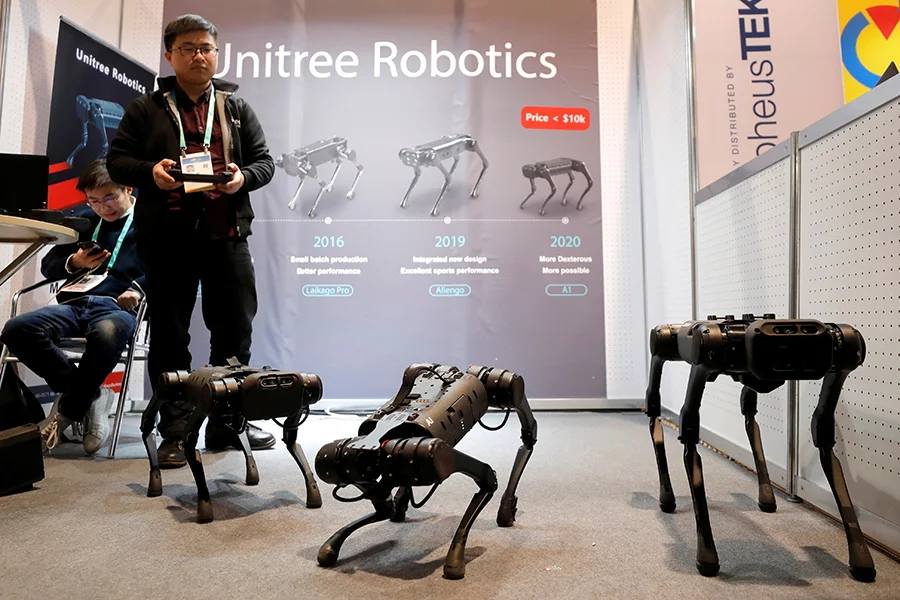
To understand Unitree humanoid robots, it helps to start with the company’s foundation. Unitree first gained global attention through its quadruped robots.
Products such as the Unitree Go2 and other versions of the Unitree dog became widely used in research, inspection, and developer communities. These machines offered strong locomotion and balance control at a price point well below that of many Western alternatives.
Unitree then expanded into humanoid systems. Models such as the Unitree H1, Unitree G1 robot, and newer humanoid platforms reflect a shift toward more complex interaction and mobility. These robots aim to replicate human movement patterns, including walking, running, and coordinated tasks that require balance and adaptability.
The key point is continuity. The humanoid line builds on the same strengths that defined the quadrupeds. Motion control, mechanical efficiency, and cost discipline remain central to the design philosophy.
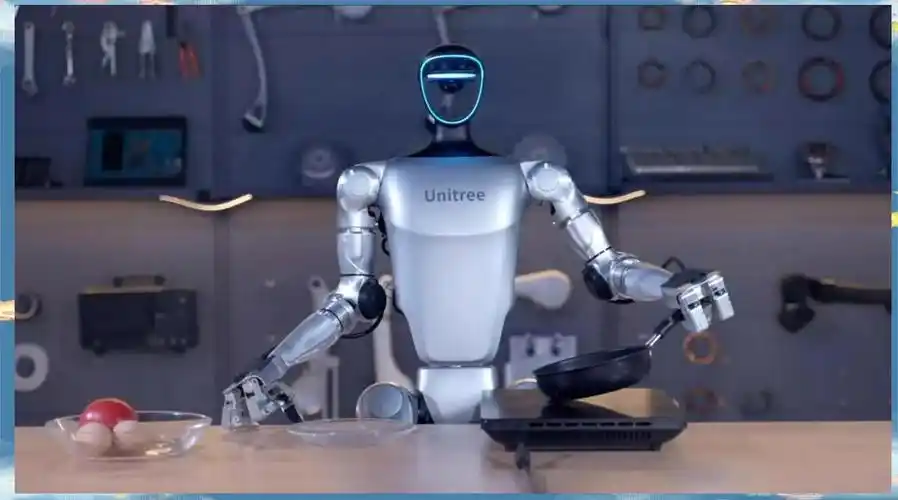
Many robotics companies focus on high-performance systems that are difficult to access. Unitree follows a different path.
The company’s advantage begins with cost. Unitree robots are priced to reach a wider audience, including developers, universities, and early-stage enterprise teams. This expands the user base and accelerates experimentation across industries.
Speed of iteration also plays a critical role. Unitree releases new models and updates at a pace that reflects China’s broader hardware ecosystem. Tight integration with manufacturing supply chains allows rapid refinement of components, sensors, and control systems.
Another defining feature is its strength in locomotion and balance. Stable movement across varied terrain remains one of the most difficult challenges in robotics. Unitree has built a strong reputation in this area through continuous improvements in motion algorithms and mechanical design.
Finally, the company benefits from its positioning within China’s robotics ecosystem. Access to components, engineering talent, and applied research environments supports faster development cycles and broader deployment opportunities.
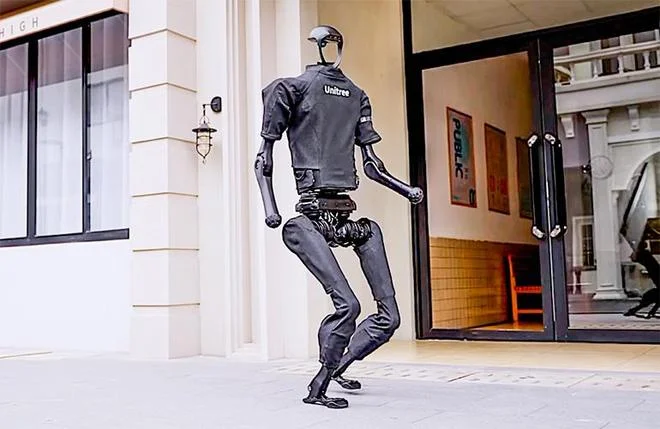
The current use cases for Unitree robots span research, early deployment, and public visibility.
In research and education, these robots serve as platforms for developing embodied intelligence. Universities and labs use them to test perception systems, control algorithms, and human-robot interaction.
In inspection and security contexts, quadruped models are already being tested in environments that are difficult or risky for human workers. These include industrial sites, infrastructure monitoring, and controlled security applications.
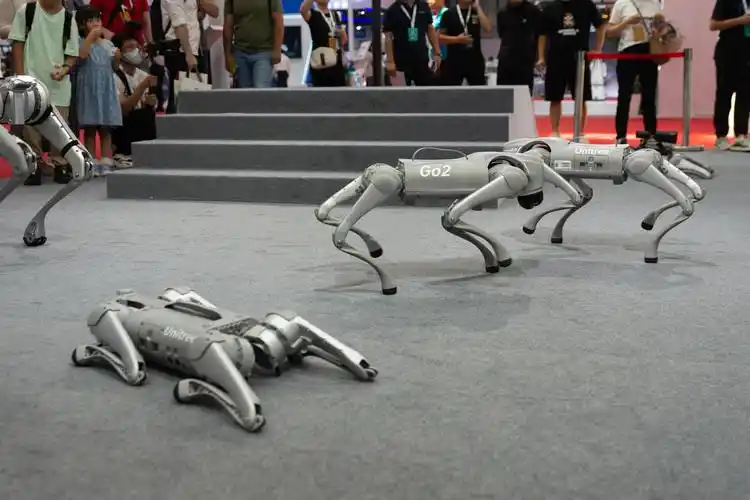
In public environments, Unitree robots appear at events and demonstrations showcasing mobility and coordination. These moments increase awareness and build familiarity with robotic systems.
Humanoid deployment remains at an earlier stage. Most current applications involve controlled environments where teams can evaluate performance, safety, and task execution. This reflects the current maturity level of the technology.
Interest in Unitree humanoid robot systems is growing, yet practical evaluation requires a structured approach.
Embodied intelligence is the starting point. Teams need to assess how the robot integrates perception, decision making, and physical action. A robust perception stack enables the robot to interpret its environment using sensors and vision systems.
Locomotion and balance control remain critical. Stable movement across different surfaces determines where a humanoid robot can operate safely. This includes walking on uneven terrain and maintaining posture during dynamic tasks.
SLAM and navigation capabilities determine how the robot maps and navigates unfamiliar environments. Reliable navigation is essential for any deployment outside controlled spaces.
Autonomy versus teleoperation must be clearly defined. Fully autonomous systems reduce human intervention, yet many current deployments still rely on some level of remote control. Understanding this balance is key to setting realistic expectations.
Safety and compliance cannot be overlooked. Robots operating near people must meet strict safety standards and include fail-safe mechanisms.
Fleet operations and maintenance shape long-term viability. Organizations need to plan for software updates, hardware servicing, and system monitoring across multiple units.
Payload and runtime determine practical usefulness. A robot must carry relevant tools or sensors and operate for a sufficient duration to complete tasks.
Deployment environments should be selected carefully. Early pilots often succeed in structured settings where variables can be controlled.
A clear ROI model helps guide decision-making. This includes evaluating cost savings, efficiency gains, and long-term value compared to existing processes.
The rise of Unitree’s humanoid robots reflects a broader trend in China’s technology landscape.
China’s approach focuses on rapidly scaling innovation. Companies move from prototype to product with strong support from manufacturing ecosystems and supply chains. This reduces costs and shortens development cycles.
Unitree demonstrates how this model applies to robotics. By combining performance with accessibility, the company expands the potential user base and accelerates real-world testing.
As more Chinese humanoid robots enter the market, the competitive landscape will shift. Price, availability, and iteration speed will become as important as technical performance.
For enterprise teams, the key takeaway is clear. The opportunity lies in early engagement and structured evaluation. The goal is to understand where humanoid robots can deliver value as the technology continues to mature.
If your team is exploring Unitree humanoid robots, Chinese humanoid robots, or the wider embodied AI landscape, reading headlines is not enough. ChoZan helps business leaders understand which robotics signals matter, which use cases are real, and what global companies can actually learn from China’s fast-moving deployment cycle.
Through custom China insights, expert dialogues, and innovation tours, we help teams assess robotics companies, compare deployment models, and turn market intelligence into practical strategy.
Below are the most important questions readers ask when they want to understand Unitree humanoid robots, compare the models, and evaluate real-world use cases.
SLAM and navigation are essential because a robot must understand space before it can move safely. In weak mapping conditions, performance often drops faster than buyers expect.
Partly. Many deployments of Unitree humanoid robots still involve remote oversight or guided control. The key question is how much autonomy is reliable in your specific environment.
Start with one narrow workflow. Test payload and runtime, navigation stability, safety behavior, and maintenance effort before expanding scope. Early discipline usually prevents expensive disappointment later.
A useful ROI model looks beyond labor savings alone. It should include uptime, risk reduction, inspection frequency, maintenance load, and the cost of human supervision.
Safety depends on task design and environmental control. Strong safety and compliance planning is important because humanoid movement near people poses very different risks from those in lab demonstrations.
Unitree humanoid robots matter in China because they reflect a larger push toward affordable embodied systems. That combination of cost, speed, and supply chain depth is strategic.
Yes, Chinese humanoid robots are improving fast in motion, pricing, and iteration speed. The bigger question now is deployment quality, not just demo quality.
For many teams, yes. Unitree robots are attractive for experimentation because their lower prices expand access. Still, serious developers should check software tools, documentation quality, and support.
The best deployment environments are structured sites with repeatable tasks, clear pathways, and manageable safety variables. That gives teams cleaner data before moving into harder conditions.
Compare China-based humanoid robot vendors based on task fit, support model, software maturity, and operating economics. The strongest choice depends on your use case, not headline performance.