CONTENT

China’s electric vehicle race has entered a more demanding phase. Range, battery cost, and pricing still matter. The next layer of competition is intelligence. Drivers now compare vehicles based on assisted-driving quality, parking support, cockpit software, safety systems, and confidence in handling complex traffic.
This is why BYD God’s Eye matters. It signals BYD’s ambition to move intelligent driving from a premium position to mass adoption. In the ChoZan report, BYD is described as an EV leader with a vertically integrated model across batteries, EVs, semiconductors, and renewable solutions. It also highlights God’s Eye and DiPilot as part of BYD’s push to equip its lineup with advanced driver-assistance systems.
For global business leaders, the deeper question is how BYD can leverage scale, manufacturing control, and software ambition to reshape expectations in the electric vehicle market.
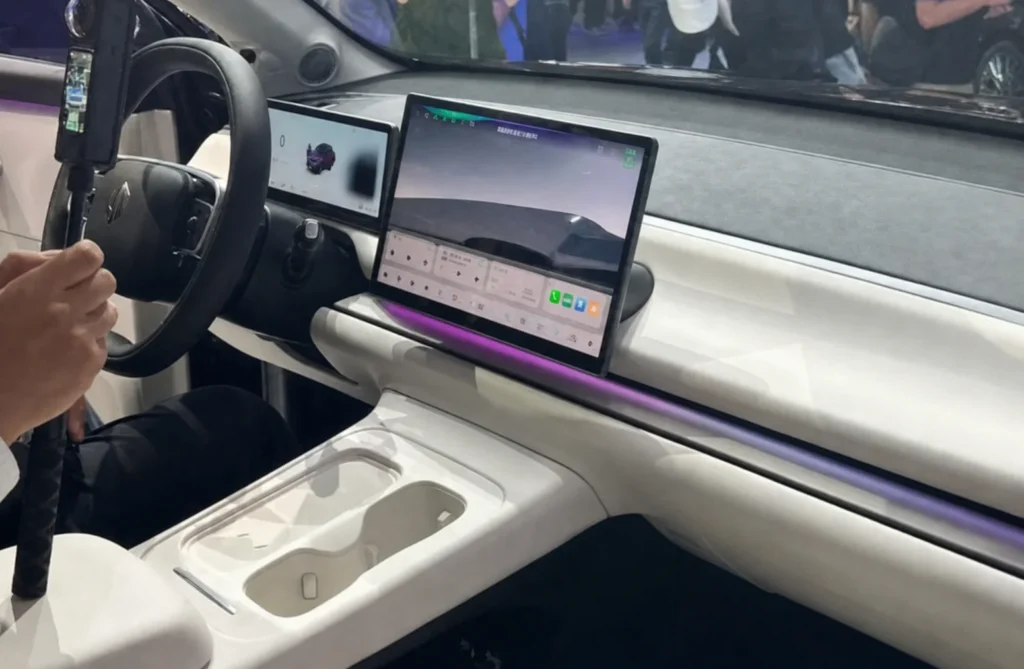
BYD God’s Eye is BYD’s intelligent driving assistance system, positioned under the wider DiPilot strategy. It combines cameras, radar, ultrasonic sensors, LiDAR in higher versions, computing platforms, and vehicle control software to support assisted driving functions.
BYD has introduced DiPilot across different tiers. DiPilot 600, also known as God’s Eye A, is designed for Yangwang models and features a higher-sensor, higher-compute configuration. DiPilot 300, also called God’s Eye B, targets Denza and selected BYD models with LiDAR support.
DiPilot 100, also called God’s Eye C, is designed for a broader range of BYD-branded vehicles and uses a camera- and radar-based setup. BYD describes functions such as Highway Navigation On Autopilot, Automated Valet Parking, and Memory Navigation On Autopilot as part of the system’s capability set.
This structure reveals the business logic behind BYD’s autonomous driving technology. BYD is creating a tiered architecture that spans several price bands. That is consistent with how BYD competes in batteries and electric vehicles, where cost discipline and platform scale matter as much as technical capability.
Many searchers ask whether BYD has self-driving cars, because the language around intelligent cars can be confusing. The practical answer is that BYD offers advanced driver assistance for consumer vehicles. It does not allow ordinary passenger cars to drive autonomously.
BYD self-driving should be understood through the lens of ADAS. ADAS stands for Advanced Driver Assistance Systems, which support drivers with lane-keeping, adaptive cruise control, assisted lane changes, obstacle avoidance, remote parking, and navigation-based driving in supported scenarios. Reuters reported that BYD’s God’s Eye premium versions feature more powerful computing and LiDAR to handle more complex driving environments.
This distinction protects against overclaiming. A consumer vehicle with strong ADAS still requires human attention. The driver remains responsible. The value lies in safer, more convenient, and more consistent driving assistance.
The phrase BYD autonomous driving level needs careful explanation. Most consumer-grade intelligent driving systems in China operate at L2 or L2+ levels of assistance. This means the vehicle can support steering, acceleration, braking, and navigation tasks under defined conditions, while the human driver remains in charge.
BYD’s roadmap points toward higher capability over time. The ChoZan report notes that BYD is steadily integrating DiPilot and developing higher-level autonomous capabilities, while maintaining a conservative public roadmap. It also identifies LiDAR-based ADAS in flagship models such as the Yangwang U8, in collaboration with Baidu Apollo, as part of BYD’s innovative edge.
That conservative positioning matters. Some companies build market excitement by making bold claims about autonomy. BYD’s stronger strategic advantage may come from another direction. It can embed useful assistive functions into millions of vehicles, learn from large deployments, reduce costs through supply chain control, and improve the system through continuous iteration.
| Company | Smart driving strategy | Main advantage | Strategic limitation |
| BYD God’s Eye | Scale ADAS across mass EV segments | Manufacturing scale and cost control | Must prove software leadership |
| Tesla FSD | Software first, vision-led autonomy push | Global data and brand recognition | Regulatory and safety scrutiny |
| Huawei ADS | High-capability smart driving stack | Strong sensors, chips, and a software ecosystem | Depends on partner automakers |
| XPeng XNGP | Smart EV native ADAS system | Strong city driving positioning | Smaller scale than BYD |
BYD’s intelligent driving strategy sits inside its broader industrial system. The company began as a battery manufacturer and later became one of the world’s most important electric vehicle companies. It controls large parts of the value chain, including batteries, power electronics, drivetrains, and semiconductors.
ADAS depends on software, sensors, compute, wiring, energy management, vehicle architecture, manufacturing quality, and cost control. A company that controls a larger share of the vehicle stack has more room to standardize, integrate, and reduce costs.
BYD’s position as a major automaker that produces batteries, power electronics, and drivetrains in-house gives it supply chain reliability and cost competitiveness, which are essential for the mass deployment of intelligent driving features.
This is the real strategic meaning of BYD God’s Eye. It shows how an EV company can turn intelligent driving from an expensive add-on into a scaled product capability. Once buyers begin to expect ADAS in lower-priced vehicles, the competitive landscape shifts across the entire market.
BYD’s portfolio now covers a broad spread of the market. It includes mass-market Dynasty and Ocean models, the premium Denza brand, the off-road FangChengBao brand, and the ultra-luxury Yangwang lineup. The DiPilot tier structure enables BYD to align intelligent driving capabilities with vehicle positioning.
At the top, Yangwang vehicles can carry more expensive sensor configurations and advanced body control technologies. The Yangwang U8 is a useful example because it connects premium electric mobility with DiSus Intelligent Body Control, high-end perception, and advanced vehicle stability functions.
In the middle, Denza can use higher capability ADAS to compete with premium smart EV brands. In the mass market, BYD can use camera and radar-based systems to make driver assistance more accessible.
This layered approach avoids a common trap in automotive technology. Many automakers introduce advanced features at the top and struggle to scale them down. BYD is building the opposite muscle. It starts with its manufacturing and cost base, then adapts capability across vehicle tiers.
BYD’s passenger-car ADAS strategy should be kept separate from its work on autonomous public transport. In Singapore, BYD won the country’s first Level 4 autonomous bus pilot.
Singapore’s Land Transport Authority stated that BYD Singapore will supply the electric buses for the pilot, while Zhidao Network Technology will provide the autonomous vehicle software, hardware kit, fleet management, and remote operations systems.
This tells us two things. BYD’s role in autonomy extends beyond passenger cars. Level 4 deployment is currently best suited to controlled routes, public transport corridors, and defined operating zones. That is a very different context from a private car driving anywhere a consumer chooses.
For executives studying China mobility, this distinction is essential. The market is moving toward autonomy through multiple paths. Passenger vehicles are scaling ADAS. Public transport and logistics are testing higher autonomy in controlled environments. Both tracks matter, and they should not be confused.
The most important lesson from BYD God’s Eye is that intelligent driving will become a game of scale. The winners will be defined by their ability to integrate sensors, software, data, manufacturing, and service networks at a price the market can absorb.
This is where BYD deserves attention. It competes with a manufacturing mindset, a platform mindset, and a cost discipline that many legacy automakers struggle to match. Its push into BYD’s autonomous-driving capabilities is part of a wider shift in China.
For global companies, the implication is clear. China’s EV market is setting benchmarks for battery costs, charging speeds, model refresh cycles, and intelligent driving adoption. Features once reserved for premium models are moving toward mainstream expectations.
BYD God’s Eye is one signal in a much larger shift. China’s mobility leaders are combining batteries, software, sensors, manufacturing scale, and data to create new competitive standards for the global automotive industry.
ChoZan helps leadership teams decode these shifts through tailored research on China, executive briefings, expert calls, and innovation learning expeditions. We help you understand what China’s EV ecosystem means for your industry, your strategy, and your future product roadmap.
Contact ChoZan to commission a China smart mobility briefing or plan a tailored innovation session for your team.
BYD God’s Eye safety depends on driver attention, road conditions, software maturity, and sensor performance. It should support safer driving, not replace judgment.
BYD God’s Eye may face limits in heavy rain, fog, glare, or unclear lane markings. Drivers should treat assisted driving as support, not certainty.
BYD’s intelligent driving software can improve through updates, depending on the model and market. Updates help refine features, but hardware still shapes capability.
BYD city driving assistance can help in complex traffic, parking, and lane support. Real performance depends on local roads, regulations, and vehicle configuration.
BYD’s autonomous driving technology matters because it pushes intelligent driving into mainstream EV segments. This changes what customers expect from affordable smart cars.
The Yangwang U8 demonstrates how BYD integrates premium EV engineering with intelligent body control, advanced perception, and high-end assisted driving capabilities.
Executives should study BYD God’s Eye as a scale strategy. It shows how China is turning vehicle intelligence into a mass-market capability.
BYD driver assistance can reduce fatigue during supported highway or parking scenarios. The driver still needs attention, patience, and active readiness.
BYD smart driving data may support system improvement through vehicle usage insights. Data rules vary by market, so privacy policies deserve careful review.
BYD God’s Eye availability can differ by country, model, software approval, and regulation. Buyers should check local specifications before comparing features.