CONTENT
Tesla Optimus matters because Tesla is testing humanoid labor inside the operating system it understands best: its own factories. That choice gives the project a practical path from prototype demos toward repeatable industrial validation.
The 2026 humanoid robotics landscape is shifting from public demos to operational validation, and the ChoZan report places Tesla Optimus at the center of that transition. It describes Optimus as a general-purpose humanoid tied to Tesla’s AI, manufacturing scale, camera-based perception, and internal factory learning, prior to broad commercialization.
The company also links the robot to the same broader autonomy philosophy that underpins vision, planning, inference hardware, and physical-world interaction. That wider shift connects with China artificial intelligence, where enterprise value increasingly comes from deployment, integration, and cost performance.
The strongest early use case for Tesla Optimus is not a dramatic public demonstration. It is controlled industrial work within Tesla’s own factories, where the company can test repetitive tasks, monitor failures, and improve the robot without relying on external customer sites.
That choice matters because factory work gives Tesla a cleaner learning environment. Engineers can observe how Optimus handles parts movement, sorting, carrying, positioning, and other production support tasks. Then, they can connect those failures directly to hardware design, software updates, and safety procedures.
Tesla also controls the surrounding system. It owns the production workflows, floor layouts, equipment access, worker supervision, and internal feedback loop. As a result, the factory becomes a practical development environment, not just a place where Optimus may eventually work.
This approach also fits Tesla’s stated goal for Optimus. Tesla describes the robot as a general-purpose, bipedal humanoid designed for unsafe, repetitive, or boring tasks. It also says Optimus requires software for balance, navigation, perception, and physical-world interaction.
So, Tesla’s factory-first strategy is logical. Before Optimus can become a broader labor platform, it must prove it can reliably perform narrow physical tasks in a setting that Tesla can measure, supervise, and improve.
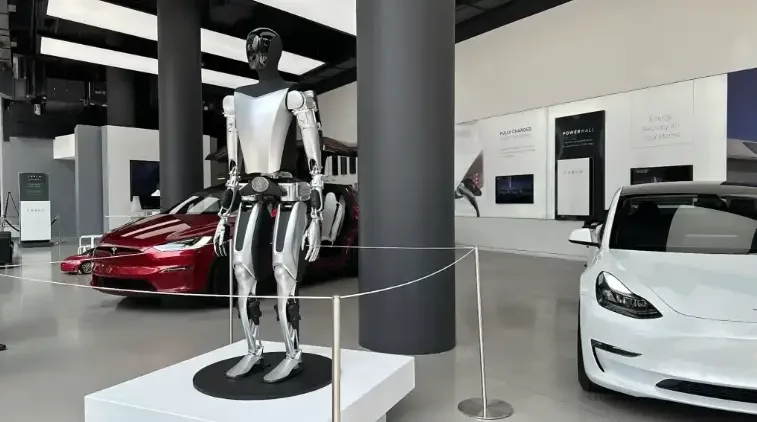
The core idea behind Optimus AI is physical intelligence. Tesla wants a robot that can see, plan, move, balance, manipulate objects, and interact with human-built spaces. That is why the project aligns closely with Tesla’s work in vision-based autonomy.
Tesla says its AI approach relies on advanced vision and planning capabilities, supported by efficient inference hardware. The company applies that philosophy across vehicles, robots, and other autonomous problems. For Optimus, this means cameras, neural networks, motion planning, and local computing matter more than theatrical robot behavior.
That connection explains why Tesla’s humanoid robots attract so much attention from investors and enterprises. Tesla is not entering robotics as a classic robot maker. It is trying to extend its vehicle autonomy stack into the physical workplace.
Still, that strategy remains difficult. Roads, factories, and homes all create different edge cases. A humanoid robot also needs reliable hands, balance, safe force control, battery endurance, and repairable hardware. That makes Tesla Optimus robot development as much a manufacturing challenge as an AI challenge.
A similar infrastructure logic appears in Huawei’s technology stack, where AI value depends on compute, networks, cloud, and enterprise systems working together.
A humanoid robot can look impressive on stage, only to fail in everyday work. Factory validation exposes those gaps quickly. It tests uptime, repeatability, error recovery, grip reliability, and safe movement around people. This is also visible in service robots in China, where robots gain credibility by solving repetitive operational problems inside real commercial environments.
This is where automotive robots become a useful bridge. Car factories already rely on automation, but most existing systems perform fixed tasks. A humanoid robot promises flexibility inside spaces designed for people. The commercial question is simple. Can it work reliably enough to justify deployment?
Tesla’s data collection approach also shows why factory learning matters. Tesla’s current Optimus data collection role focuses on data collection, supporting engineering operations, and reporting on equipment feedback. That turns human movement, task repetition, and operational feedback into model improvement.
This creates a new job category around robot training. The robot trainer job category is important because humanoids still need human examples, supervised testing, and careful evaluation. In other words, the early robot workforce will still depend heavily on human teachers.
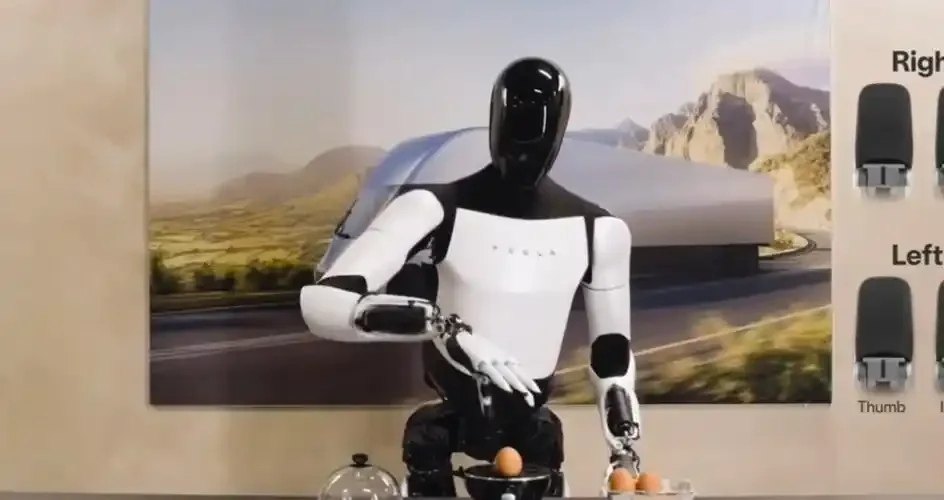
Enterprise buyers will not judge Tesla Optimus by videos alone. They will ask practical questions.
Can it complete a defined task every shift?
Can it recover from small errors?
Can it work around people safely?
Can it justify its cost against existing automation?
Tesla’s Q1 2026 update says first-generation production lines for Optimus are being installed in anticipation of volume production. The same update frames the company’s product roadmap around AI software, capacity use, and new production lines.
Tesla also said preparations for its first large-scale Optimus factory would begin in Q2. The first-generation line is designed to produce 1 million robots per year and will replace the Model S and Model X lines in Fremont. Gigafactory Texas is being prepared for a second-generation line designed for a long-term annual capacity of 10 million robots.
Search demand for the Tesla robot price is high because people want a simple number. The market does not have one yet.
Tesla has not opened standard public sales for Optimus. As of the current public materials, Tesla’s AI page directs users to engineering and software opportunities rather than to a purchase page.
Reuters reported in 2025 that Musk had discussed a potential price range of $20,000 to $30,000. That figure should be treated as a target linked to scale, not a confirmed retail price.
This distinction matters for enterprise procurement. A robot’s purchase price is only one part of the cost. Buyers will also calculate the costs of uptime, maintenance, software support, operator training, safety certification, insurance, integration work, and replacement parts.
For now, the honest answer is direct. The Tesla robot price remains an estimate, while the cost in real deployment will depend on the service model, support structure, task success rate, and uptime.
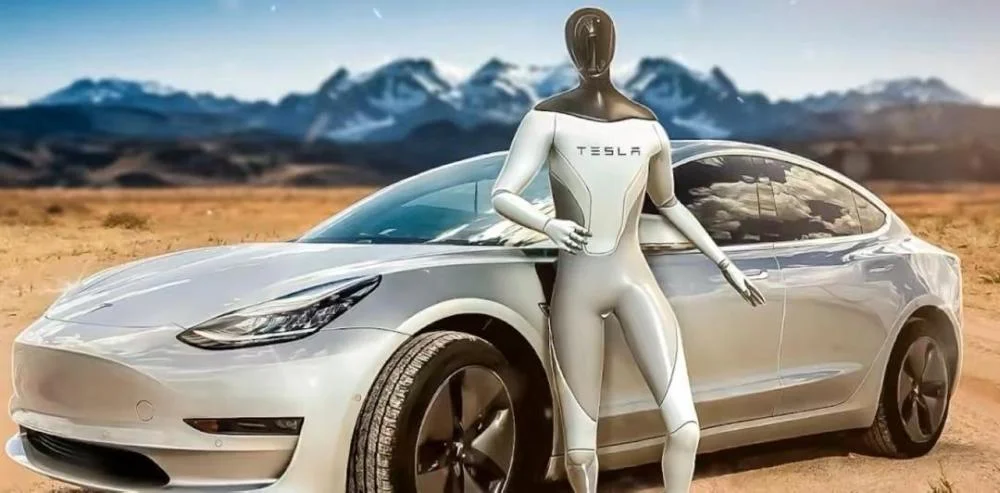
Search interest around Tesla Optimus Gen 3 and Optimus Gen 3 reflects a bigger question. Is Tesla moving from prototype iteration into a manufacturable platform?
Tesla’s Q1 2026 filing focuses on production preparations rather than a broad consumer launch. Reuters also reported that Musk expected early Cybercab and Optimus output to start very slowly because both products involve many new parts and manufacturing steps.
That caution is important. A humanoid robot is not a car with legs. It adds hands, joints, balance systems, perception, local intelligence, and human safety concerns. Each part must survive repetitive physical work.
This is why actuator technology and hand design matter so much. Hands determine what tasks Optimus can perform. Actuators determine movement quality, force control, and durability. Batteries determine shift length. Software determines adaptation. Manufacturing determines price. That is why China’s battery infrastructure matters for robotics, since energy storage affects uptime, operating cost, and deployment economics.
Gen 3 should be evaluated through those lenses. The question is not simply how advanced the robot looks. The real question is how much of the design can survive repeatable factory work at scale.
Tesla is not building Optimus in isolation. China’s humanoid ecosystem is accelerating rapidly through dense supply chains, real-world workplace pilots, and rapid hardware iteration. This broader pressure comes from Chinese high tech companies that combine AI, robotics, EVs, batteries, and advanced manufacturing into connected industrial systems.
The ChoZan report highlights China’s strength in industrial supply chains, AI, and hardware proximity, and real-world feedback loops. It also frames 2026 as a year when humanoids move from demos into factories, logistics spaces, service environments, and industrial pilots.
This changes the benchmark for Tesla humanoid robots. Tesla has manufacturing discipline, AI talent, battery knowledge, and brand visibility. Chinese humanoid companies often have faster access to local suppliers, lower hardware costs, and more varied pilot environments.
That does not make one side the automatic winner. It makes the market more demanding. Tesla must prove Optimus can scale reliably. Chinese alternatives must prove they can move beyond fast iteration into durable enterprise trust.
For global executives, this comparison matters more than online fandom. The humanoid market will reward companies that connect AI, hardware, manufacturing, safety, service models, and buyer economics.
The next phase of Tesla Optimus will depend on five practical signals.
Until those details arrive, searches for Tesla Optimus pre-orders will remain ahead of the actual market.
Tesla Optimus shows why humanoid robotics can no longer be relegated to the future-tech folder. For leadership teams, the real question is how physical AI will affect labor models, factory design, supply chains, automation budgets, and competitive strategy.
ChoZan helps global executives understand these shifts through direct exposure to China’s innovation ecosystem, where robotics, AI, EVs, smart retail, and enterprise deployment move fast.
ChoZan can support your team through:
For companies tracking Tesla Optimus, China humanoid alternatives, and the next phase of industrial automation, ChoZan helps separate headlines from operating reality. Book a consultation with ChoZan to understand what robotics deployment means for your market, your competitors, and your next strategic decisions.
Yes. Tesla Bot was the earlier name for Tesla’s humanoid robot project. Today, Tesla uses “Optimus” as the primary name for its general-purpose bipedal robot program.
Not yet. Tesla presents Optimus as a future general-purpose robot, but current development remains focused on controlled testing, factory learning, and robotics engineering rather than normal home availability.
Traditional industrial robots usually perform fixed tasks in designed cells. Optimus aims to move through human spaces, balance, navigate, perceive objects, and interact with the physical world.
Tesla is hiring across deep learning, computer vision, motion planning, controls, mechanical engineering, software engineering, and data collection roles for Optimus development.
Yes. Tesla’s data collection roles involve object manipulation, fixed walking routes, testing protocols, and engineering feedback. This helps Tesla improve robot movement, perception, and task behavior.
Tesla has not presented Optimus as a broadly certified workplace product. Its safety case depends on balance, perception, navigation, controls, and physical interaction software reaching reliable operational standards.
In the near term, Optimus is more likely to support repetitive physical work than fully replace workers. Human supervision, training, maintenance, and safety oversight remain critical during early deployment.
Tesla’s China leadership has said Shanghai factory operations could help solve challenges in mass-producing humanoid robots. That matters because Shanghai already anchors Tesla’s global manufacturing and supply chain strength.
Investors watch Optimus because it could expand Tesla beyond vehicles into AI, robotics, and physical automation. Still, large-scale production remains difficult, and early output may ramp slowly.
Tesla’s public AI materials focus more on perception, planning, navigation, balance, and physical interaction than conversational features. Command understanding may matter later, but factory utility comes first.