
CONTENT

China’s 2026 technology story is about deployment. It also presents 2025 as the year core capabilities matured and 2026 as the year those capabilities began moving into real systems, products, and industry use.
BrainCo fits that shift well. This presents it as one of Hangzhou’s Six Little Dragons and as a company that has already moved beyond concept-stage discussion into production, rehabilitation use, and broader system development.
That is why non-invasive BCI is the right lens here. It lets us examine a category that now has practical commercial signals, not only scientific interest.
Non-invasive BCI refers to systems that measure brain activity externally, often through EEG sensors worn on the head. Because these systems do not require implants, the main challenges lie in signal capture, decoding, and user training.
The first layer is signal collection. The device must read neural activity clearly enough to generate usable data. If the signal is weak or inconsistent, the user experience will suffer.
The second layer is interpretation. Software must translate neural signals into actions that feel reliable and usable. In non-invasive BCI, the challenge is not only detecting activity but converting it into consistent control.
The third layer is adaptation. Users often need training before a system becomes effective. That matters in rehabilitation settings, prosthetic control, and broader assistive use cases. The value of the category depends on how well this full loop performs in real conditions.
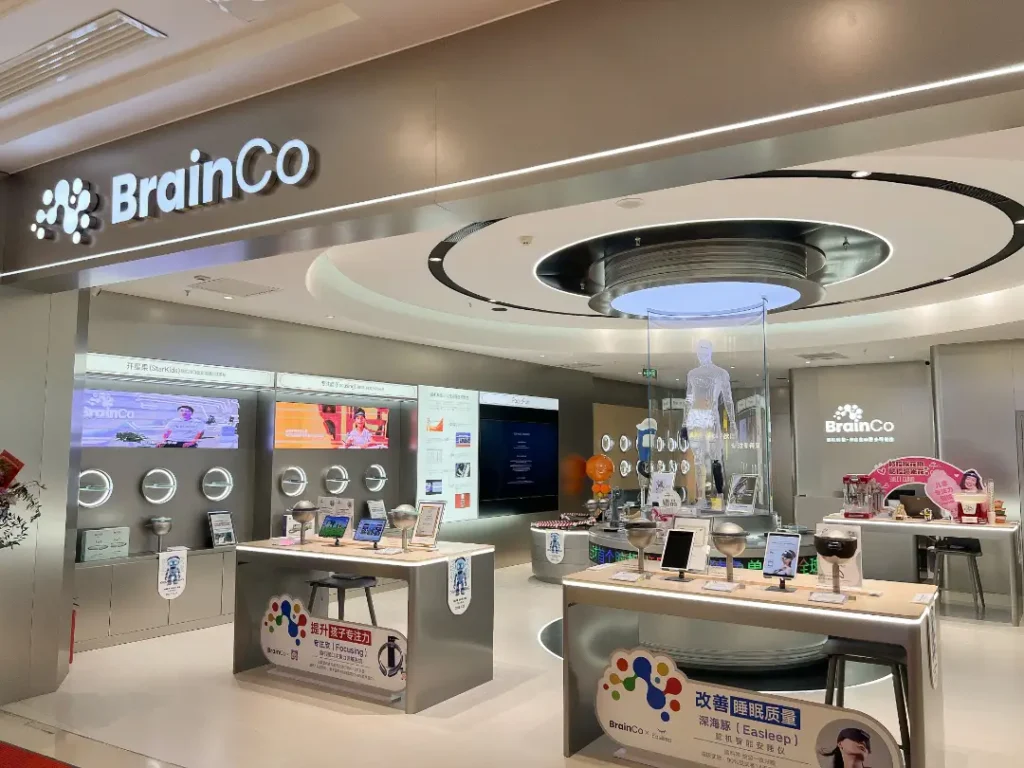
The Brainco company has taken a path that makes strategic sense. It started with accessible EEG headbands and attention-related applications. That gave it a base in signal collection and user familiarity.
It also shows the company moving into brain-controlled prosthetic systems, rehabilitation software, and hospital collaborations, which puts it in a much stronger position than a one-off gadget story.

BrainCo did not begin with the most complex possible use case. It built capabilities through wearables first. That matters because it suggests a gradual path from consumer-friendly devices toward more demanding applications.
The prosthetics category is where BrainCo’s commercial relevance becomes clearer. It shows the company entering full production of smart bionic hands and legs in 2025, while combining EEG-based neural decoding with AI for real-time control at a lower cost than many imported alternatives. The strongest proof points are practical ones, including writing, typing, walking, and athletic activity.
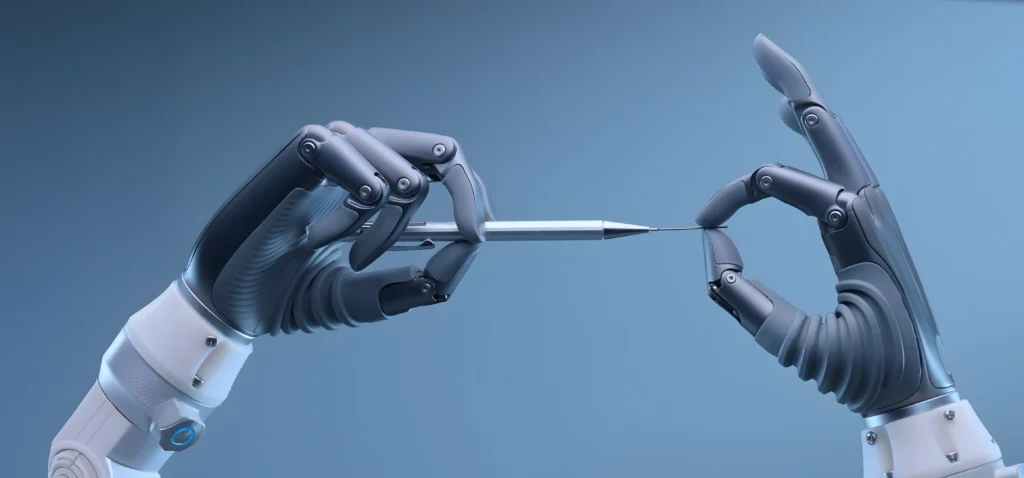
This is also why the BrainCo prosthetic hand deserves more attention than the headline language about mind control suggests. A strong bionic hand prosthetic product does not need to promise miracles.
It needs to help users perform daily tasks with less friction and greater dignity. This highlights writing, typing, walking, and athletic activity as practical proof points that demonstrate clear real-world value.
There is another important commercial lesson here. A bionic prosthetic hand only succeeds when hardware, signal interpretation, user training, and rehabilitation support work together. That is why BrainCo’s wider suite matters. The company is building toward a repeatable care-and-control system.
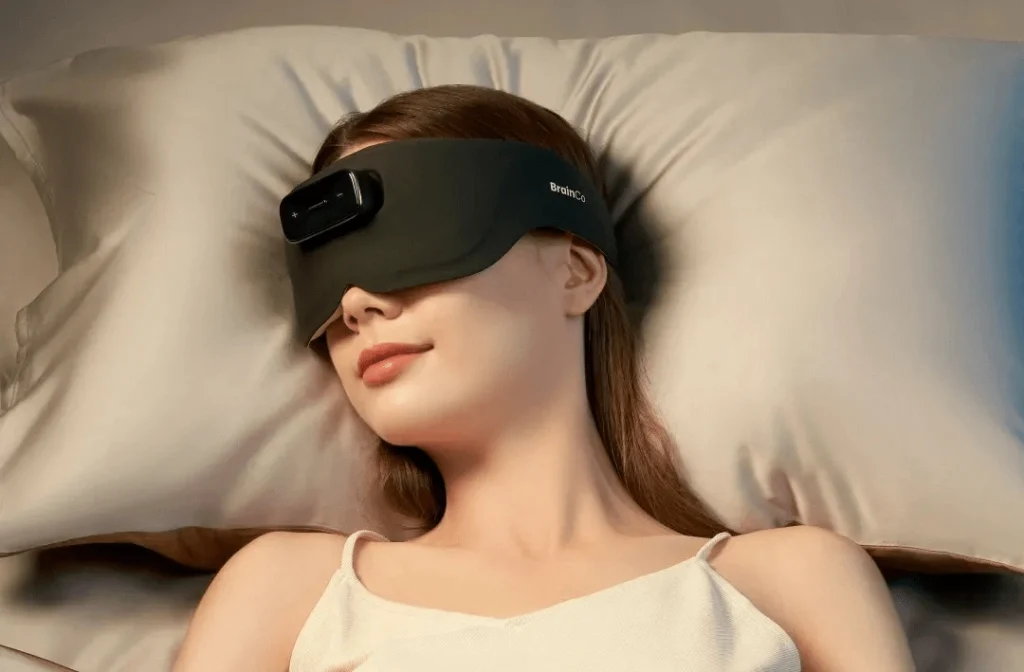
Among non-invasive BCI companies, BrainCo stands out for its hospital and rehabilitation partnerships. It holds a strong intellectual property base in signal interpretation. It has regulatory clearance in multiple markets, including 510(k) clearance from the FDA.
It also shows clear progress in production. The company has demonstrated fine motor tasks such as handwriting and musical performance. It continues to improve neural decoding using EEG, EMG, and AI. It is also expanding clinical use and building full rehabilitation systems.
Hospital and rehabilitation center collaboration matters because it suggests practical integration into care pathways. That is a stronger signal than consumer attention alone.
Production progress matters because it indicates movement beyond prototype status. In categories like this, production is one of the clearest markers of seriousness.
The 2026 focus areas matter because they show where BrainCo aims to deepen its position. Better decoding, broader clinical deployment, and complete rehabilitation suites all point to a systems strategy.
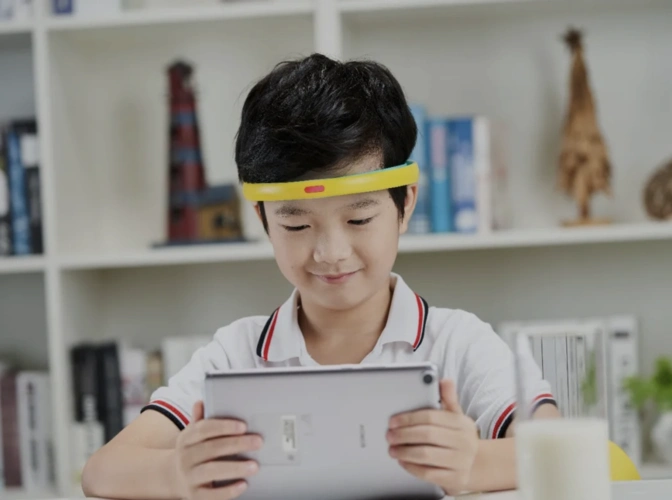
The right way to evaluate non-invasive BCI is practical. Start with signal quality. Ask how stable the readings remain across different users, different sessions, and longer periods of use.
A system may look promising in a controlled setting and still struggle in routine use. Stability across repeated sessions matters far more than a single polished demonstration.
Then look at calibration. A system that requires long setup times or heavy user adaptation may struggle outside controlled environments. In rehabilitation contexts, that burden may be acceptable. In broader commercial settings, it may become a barrier.
Control accuracy and response time also matter greatly for non-invasive BCI devices linked to prosthetic movement. Small delays or inconsistent outputs can make a product far less usable, even when the core idea looks strong.
Medical and operational fit should follow. Can the system slot into hospital workflows? Is there clinician support? Is there evidence of repeated use across rehabilitation programs? Is there a credible path for compliance and reimbursement? In this category, a product can be technically exciting and commercially weak at the same time.
Privacy also belongs in the evaluation conversation. Neural data feels deeply personal to users, even when the captured signal is limited. Any company that wants long-term trust in this space needs a serious answer on data storage, access, consent, and governance.
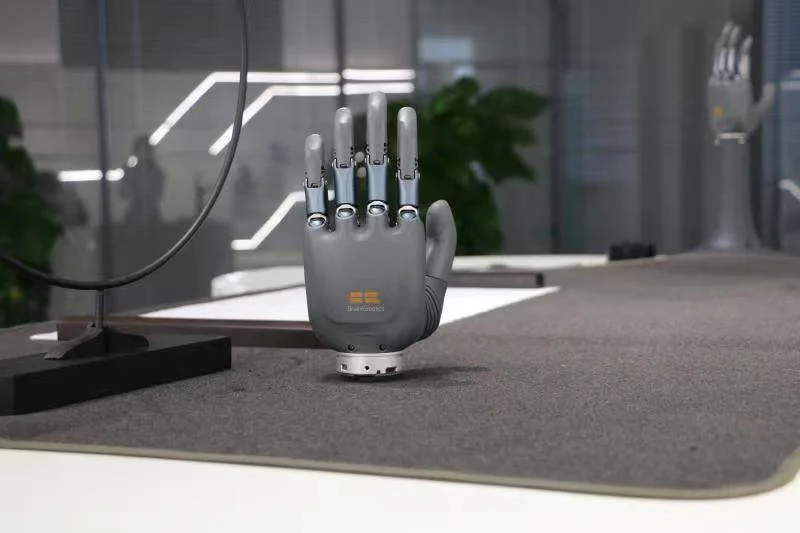
BrainCo tells us something important about the broader China brain-computer interface space. China’s advantage does not come only from research ambition. It comes from the ability to push products through a faster application cycle. Categories mature when firms can connect engineering, cost discipline, manufacturing, clinical partnerships, and user training. BrainCo’s trajectory fits that logic.
The next phase of non-invasive BCI in China will depend on four questions: can the device perform reliably, can the workflow scale, can pricing support adoption, and can the system hold up in daily use?
China’s brain-computer interface space is moving beyond headlines into real products, clinical pathways, and deployment signals. If your team wants to understand which companies matter, which use cases look credible, and where non-invasive BCI may create real strategic value, ChoZan can help you read the market with more clarity.
Ashley Dudarenok and the ChoZan team help global leaders decode fast-moving shifts in China’s technology landscape through tailored research, executive briefings, and expert dialogues. Get in touch to discuss a custom China tech briefing or consultation focused on neurotechnology, rehabilitation innovation, and the next wave of human-machine interfaces.
EEG-based BCI systems need training because brain signals vary across people and sessions. Calibration helps the device learn a user’s patterns, so control becomes steadier and more usable.
Hospitals should assess signal stability, clinical workflow fit, training time, patient suitability, data privacy, and support needs. Strong non-invasive BCI devices must work reliably beyond controlled demonstrations.
The Chinese brain-computer interface industry is advancing steadily, with faster progress in rehabilitation and prosthetics than in broader consumer use. Deployment is becoming more credible, though maturity still varies.
EEG captures brain activity, while EMG tracks muscle signals. In non-invasive BCI systems, combining both can improve control accuracy, response quality, and practical performance in prosthetic use.
Brain-computer interface data can reveal sensitive patterns about attention, intent, or health-related states. The main risks involve storage, access, consent, and unclear rules regarding the use of secondary data.
BrainCo stands out through its focus on rehabilitation, prosthetic control, and practical deployment. Among brain-computer interface companies, it shows stronger system thinking across hardware, software, training, and care pathways.
Non-invasive BCI in China is closer to wider adoption in rehabilitation and prosthetics than in mass consumer markets. The strongest opportunities still depend on reliability, workflow fit, and cost.
Non-invasive BCI reads brain activity from outside the body, usually through wearable sensors. Invasive brain-computer interface systems use implants, which can provide stronger signals but are more complex.
BrainCo’s prosthetic work shows practical progress through tasks such as writing, typing, walking, and athletic activity. Wider adoption still depends on reliability, training, cost, and daily usability.
Buyers should check signal stability, response time, calibration burden, workflow fit, and support needs. They should also evaluate privacy, compliance, pricing, and real-world performance.