CONTENT
The story of the XPeng flying car is larger than one futuristic product. It sits inside two bigger shifts that matter in 2025 and 2026. One is China’s move from prototypes to deployable systems within China’s broader digital transformation model. The other is XPeng’s move from a smart EV maker to a broader physical-AI mobility company.
ChoZan’s report places XPeng and AeroHT within that deployment era, in which low-altitude mobility begins to matter for infrastructure, capabilities, and commercial scale.
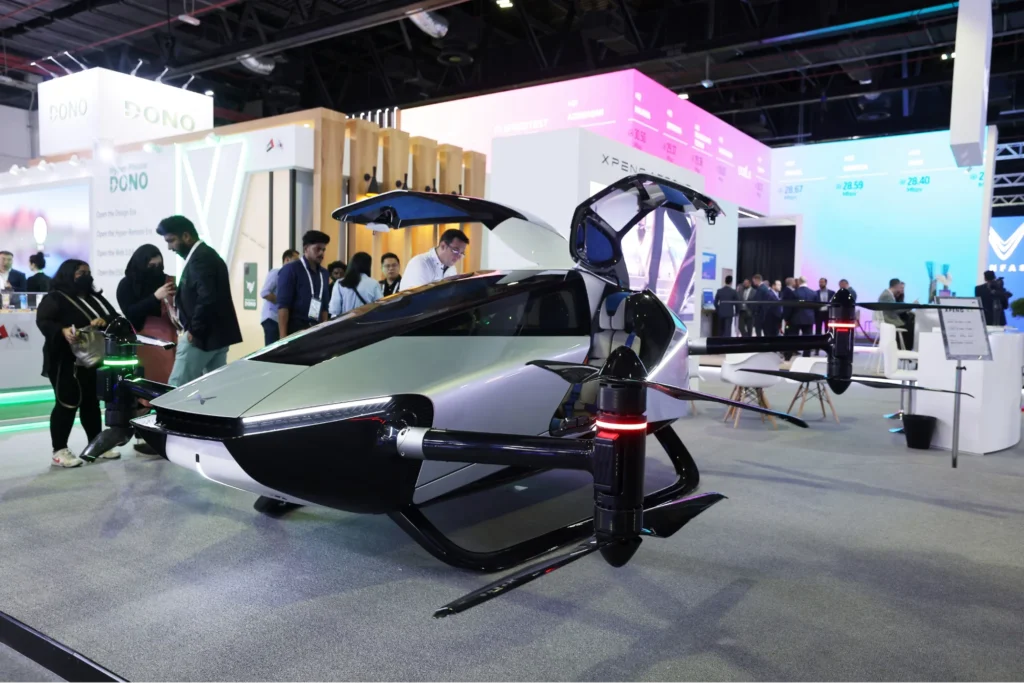
The XPeng flying car is a modular mobility system built by XPeng Aeroht that combines a road vehicle with a detachable XPeng EVTOL aircraft. It operates as a dual-mode platform designed for ground driving and low-altitude flight within China’s emerging low-altitude economy.
XPeng AeroHT introduced the concept through its XPeng AeroHT flying car program, with the flagship design often described as the land aircraft carrier. This system carries a compact electric vertical takeoff and landing aircraft inside a ground vehicle. The road unit transports the aircraft to a launch point, after which the flight module deploys for short-range urban air mobility missions.
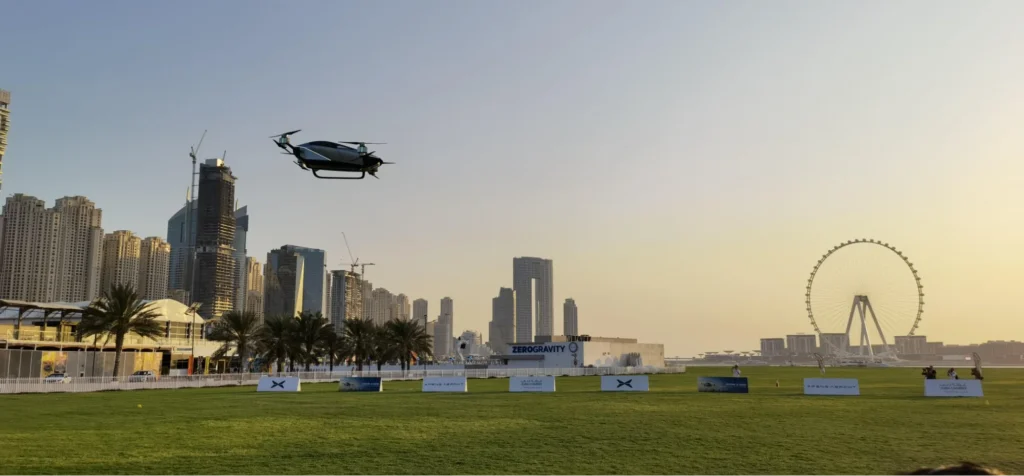
In October 2025, XPeng’s aviation subsidiary, then known as AeroHT and now called XPeng AeroHT, performed a public piloted overseas flight in Dubai, where a pod‑shaped aircraft separated from its six‑wheel carrier and circled above the Persian Gulf.
The Land Aircraft Carrier marks a shift from concept to deployable system. Instead of combining driving and flying into one machine, XPeng separates them into a modular architecture. This improves usability, regulatory fit, and real-world viability.
The system pairs a road-legal six-wheel “mothership” with a detachable electric vertical takeoff and landing aircraft. The vehicle is operated on public roads with a standard license, while the rear compartment houses a two-seat aircraft with foldable rotors.
This separation removes core design trade-offs. Each system operates independently, without compromising performance.
The aircraft supports short-range travel, with a 130 km range and 120 km/h top speed. It enables automated takeoff, landing, and route planning, with manual control available. After the flight, it docks back into the vehicle.
The system removes infrastructure dependency. The ground unit recharges the aircraft from 30% to 80% in 18 minutes and delivers over 1,000 km of road range.
In daily use, the vehicle seats four passengers. When needed, the rear bay deploys the aircraft using robotic arms.
XPeng reduces user complexity through automated deployment, one-touch controls, and simplified interfaces. Autonomous navigation and redundant systems address safety.
This approach enables deployment within current constraints. The result is a scalable model that extends existing mobility systems rather than replacing them.
Alongside the Land Aircraft Carrier, XPeng introduced the A868 tiltrotor aircraft at AI Day 2025. The A868 uses tiltable rotors to combine vertical takeoff with efficient forward flight. It seats six passengers, with a projected range of over 500 km and a top speed of about 360 km/h.
Unlike the modular system, the A868 requires dedicated takeoff infrastructure and targets air-taxi operators rather than private users. XPeng integrates it into the same AI ecosystem, using Turing chips and the VLA 2.0 model for flight control.
The company also updated the Land Aircraft Carrier. The ground unit seats four passengers, while the flight module runs for about 30 minutes and recharges to 80% in roughly 30 minutes when docked.
By November 2025, XPeng had delivered its first production module and secured over 7,000 orders.
Pilots will require a dedicated flying license, which is achievable after about 30 hours of training, although XPeng claims that basic operation can be learned quickly.
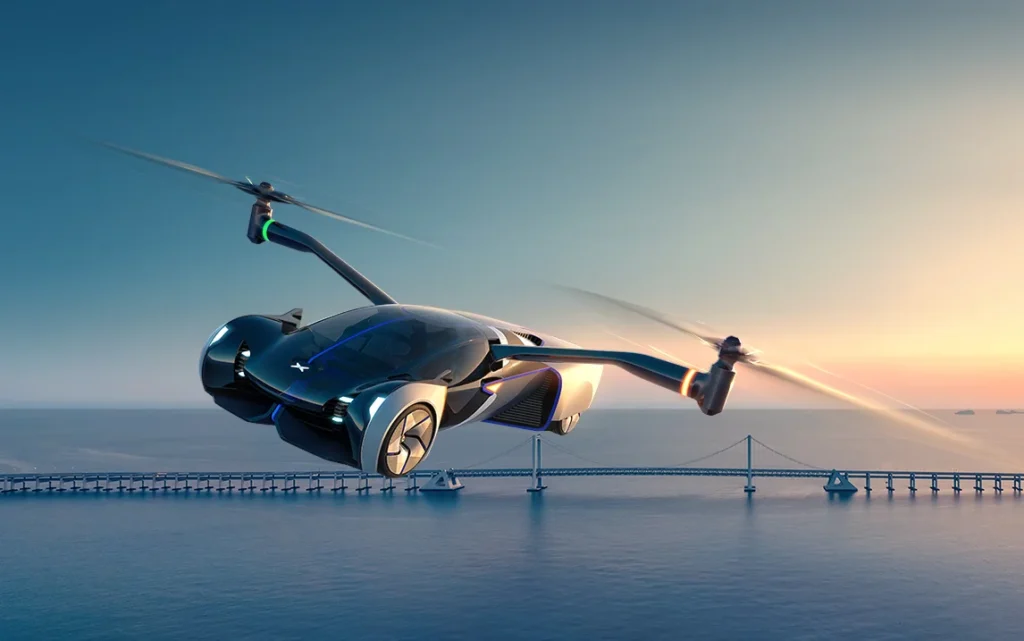
China is positioning the low-altitude economy as a strategic industry from 2026 onward. This includes drone delivery, air taxis, and personal flying vehicles. Cities such as Guangzhou, Shanghai, and Shenzhen are already building takeoff and landing infrastructure, moving urban air mobility into early deployment.
The Land Aircraft Carrier aligns with this shift by solving last-mile integration. Instead of relying on dense vertiport networks, the ground module handles local travel after landing.
A typical journey becomes seamless. Users can fly between nodes, then switch to road travel for the final stretch. This road-air integration addresses a key limitation of pure electric vertical takeoff and landing systems, which depend heavily on fixed infrastructure.
XPeng AeroHT is building the ecosystem around this model. It has partnered with Amap for navigation and ride-hailing integration, while working with local governments to define flight corridors and landing zones.
Trial operations begin in 2026 in selected Chinese cities, with early expansion into international markets such as the UAE.
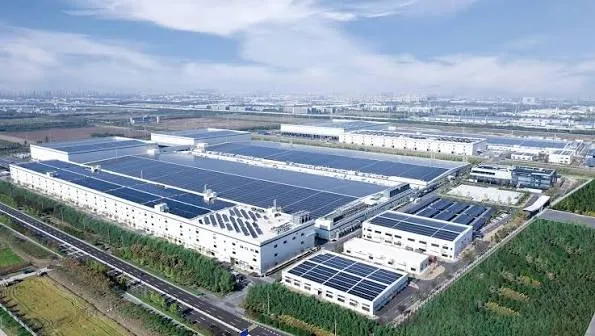
To support large‑scale delivery, XPeng built the world’s first dedicated flying‑car factory in Guangzhou. The 120,000-square-meter plant rolled out its first detachable eVTOL module in November 2025 and began trial production. It is designed to produce 10,000 aircraft modules per year, with an initial capacity of 5,000 units and the ability to assemble one aircraft every 30 minutes.
This facility represents a huge step toward industrializing personal aviation within China’s innovation and manufacturing ecosystem. The factory’s location in the Huangpu District also anchors XPeng’s broader embodied‑intelligence ecosystem; the company operates a data factory for robotics and autonomous driving nearby.
Trial production units are being used for test flights and certification, while regulatory bodies in China work on low‑altitude flight corridors and licensing.
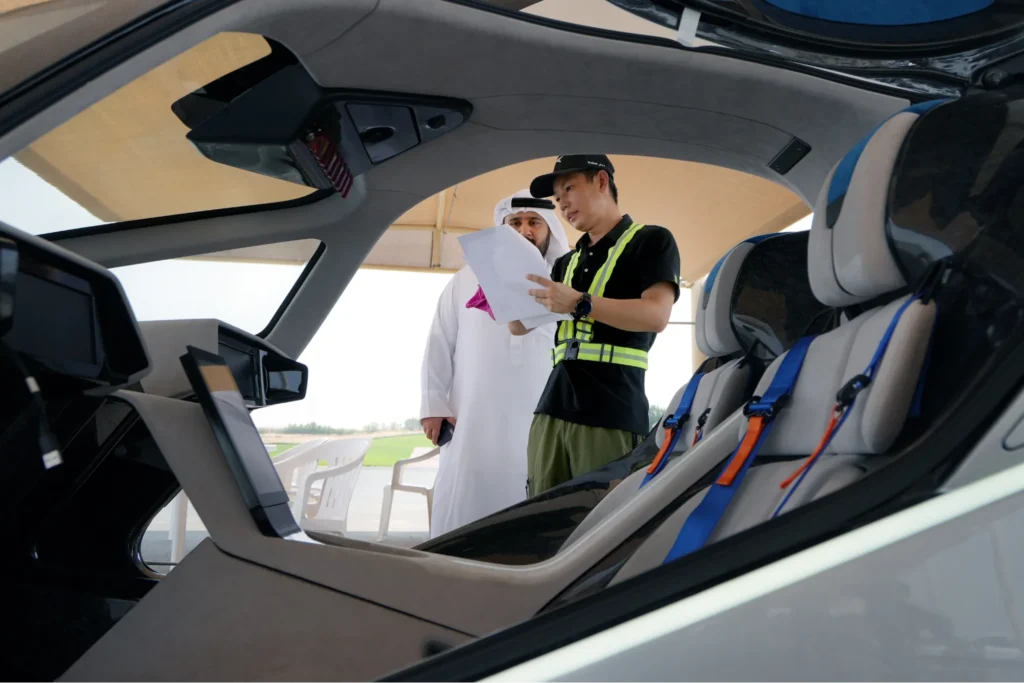
The market response to XPeng’s flying‑car program demonstrates both domestic enthusiasm and growing international interest. At the Dubai demonstration in October 2025, customers from the Middle East ordered 600 units of the Land Aircraft Carrier, representing contracts worth more than 1.2 billion yuan. These buyers are thought to include tourism operators and wealthy individuals keen to pioneer aerial commuting in the Gulf.
In China, the first public flight spurred thousands of deposits. Reports from February 2026 note that the company has recorded 7,000 orders and expects to begin customer deliveries later in the year. XPeng’s European marketing chief even remarked that the factory is ready and that the management team must personally fly the vehicle before deliveries start.
Pricing is set at around two million yuan (roughly $280,000), placing the flying car in the supercar bracket but still competitive with the combined cost of a high‑end SUV and a light aircraft. Although this price limits the initial customer base to affluent pioneers, the scale of orders suggests that early adopters view it as a practical alternative to helicopter ownership or chartered flights.
While the Land Aircraft Carrier shows hardware innovation, XPeng builds its strategy on AI. At its 2025 AI Day, He Xiaopeng introduced “physical AI” and the VLA 2.0 model.
VLA 2.0 functions as a unified operating system across cars, robots, and flying vehicles. It converts visual input directly into motor actions, removing the need for language-based processing.
Trained on 100 million video clips, the model handles real-world perception and decision-making. XPeng deploys it on proprietary Turing chips through a custom compiler, aligning software with hardware.
The first application, Narrow Road NGP, increases takeover mileage on complex roads by 13×. This signals a shift toward system-level autonomy.
The same stack extends to the flight module. It enables autonomous navigation, including one-touch takeoff and route planning, without building a separate aviation system.
XPeng plans to open-source VLA 2.0 with select partners, including Volkswagen. Trials began in December 2025, with full rollout across Ultra models expected in early 2026.
XPeng builds a single AI system that operates across cars, robots, and aerial platforms. Its P7, G6, and X9 models serve as the main deployment layer for this stack.
In 2025, updated P7 and X9 models introduced city-level navigation without high-definition maps in supported Chinese cities. This reduces reliance on mapped environments and improves scalability.
XPeng targets mass-produced Level 4 autonomy by 2026. At its 2025 AI Day, it introduced the VLA 2.0 physical AI model, designed to convert perception into action across vehicles, robots, and flying systems. Deployment begins in late 2025 and early 2026.
The same foundation extends into humanoid robots under the IRON model and upcoming robotaxis built on proprietary Turing chips with dual-redundant hardware.
This matters for the flying car program. The same AI stack that powers urban driving can manage takeoff, landing, and obstacle avoidance in three-dimensional space, reducing development complexity and accelerating deployment.
Understanding innovations like the XPeng flying car requires more than tracking product launches. It requires seeing how systems such as low-altitude mobility, physical AI, and road-air integration actually come together in real-world operating environments.
ChoZan works with senior executives, strategy leaders, and transformation teams to decode these systems at a practical, execution level. This includes in-depth research on China innovation, executive briefings, and curated learning expeditions that provide direct exposure to companies, infrastructure, and real-world deployments shaping the next phase of mobility and AI.
If your goal is to understand how integrated AI mobility ecosystems can translate into strategic advantage for your organization, ChoZan helps you move from surface-level awareness to applied insight.
Book a consultation to explore how your team can engage directly with China’s innovation ecosystem and turn these developments into actionable business outcomes.
FAQs
No, the XPeng flying car is not yet approved for use outside China. Most countries still lack regulations governing personal eVTOL vehicles, although regions like the UAE are testing pilot programs to support early adoption.
XPeng uses a modular road-air system, unlike competitors that focus only on air taxis. This approach allows users to drive and fly in one system, reducing reliance on fixed infrastructure and improving real-world usability.
XPeng reduces infrastructure needs by enabling road-air transitions, but large-scale use still requires regulated air corridors, designated landing zones, and city-level coordination to ensure safe and efficient low-altitude operations.
XPeng’s flying car aims to improve safety through automation and redundant systems. AI-assisted navigation reduces pilot error, which is a major cause of helicopter accidents, although full safety validation depends on real-world deployment.
Maintenance costs are expected to be lower than those of helicopters due to electric systems and modular design. However, dual maintenance for both vehicle and aircraft components will still require specialized servicing and certification.
XPeng flying cars will likely face limitations in harsh weather conditions. Like other eVTOL systems, factors such as strong winds, heavy rain, and low visibility can affect flight safety and operational reliability.
XPeng initially targets high-net-worth individuals, tourism operators, and mobility services. Over time, as production scales and costs decrease, the company aims to expand access to a broader consumer market.
Charging is relatively fast compared to traditional aviation systems. The flight module can recharge to around 80 percent in roughly 30 minutes, enabling quick turnaround for short-distance urban air mobility use cases.
XPeng plans to expand internationally, starting with regions that support low-altitude mobility. Markets like the Middle East are early targets, while expansion into Europe or the US depends on regulatory approval timelines.
Flying cars like XPeng’s enable multi-layer transport systems by combining road and air mobility. This reduces congestion and improves connectivity, making them a key component of future smart city infrastructure.