CONTENT
LONGi is a Xi’an-headquartered Chinese solar technology company with major positions in monocrystalline wafers, cells, modules, and energy solutions. Its importance comes from the combination of production scale and a concentrated bet on back-contact technology. In 2025, the company shipped 111.56 GW of wafers and 86.58 GW of modules, including 22.87 GW of BC modules.
Those figures make LONGi central to any serious assessment of Chinese photovoltaic manufacturing. However, scale alone does not explain its competitive position. Technology conversion, financial discipline, and supply chain compliance now matter just as much.
LONGi Green Energy Technology grew around monocrystalline silicon and now operates across ingots, wafers, solar cells, PV modules, energy storage, and hydrogen equipment. The LONGi Green Energy model connects material science with product design and large-scale manufacturing.
2025 shipment ranking placed LONGi and JinkoSolar jointly first among the suppliers it tracked, with both companies in the 80 to 90 GW shipment range. The four largest manufacturers accounted for almost 58% of the 536 GW shipped by ranked suppliers. Wood Mackenzie separately ranked LONGi first in its 2026 manufacturer assessment. The first ranking measures shipment volume, while the second evaluates broader manufacturer strength.
Chinese manufacturers posted heavy losses as global oversupply compressed prices. Supplier strength now depends on the ability to fund technology transitions while protecting cash, service coverage, and warranty support.
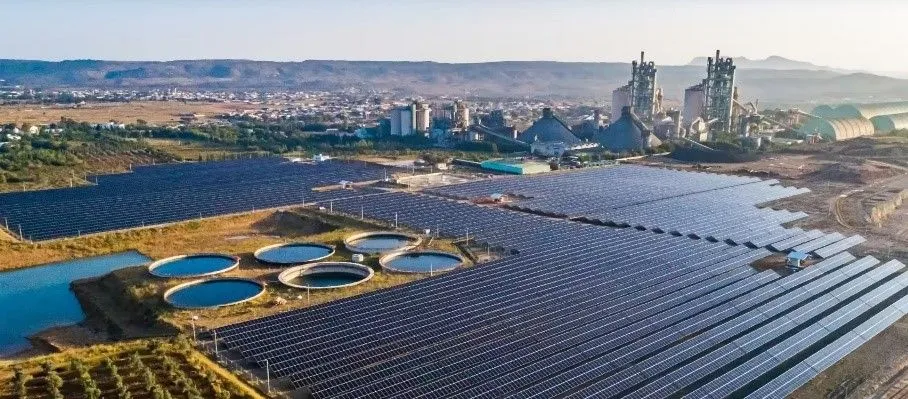
The company’s vertical integration spans monocrystalline ingots and silicon wafers, cells, modules, and downstream solutions. It still procures polysilicon and other inputs. Integration provides process control, but raw material and trade exposure remain.
| Value chain stage | 2025 evidence | Strategic relevance |
| Silicon wafers | 111.56 GW shipped, including 48.57 GW sold externally | Internal supply and external sales create two revenue routes. |
| Solar cells | 4.31 GW sold externally | Cell development connects wafer quality with module performance. |
| HPBC 2.0 cells | 46 GW in-house plus 11 GW of collaborative capacity | Commercial scale supports the shift toward back-contact products. |
| PV modules | 86.58 GW shipped, including 22.87 GW of BC modules | Module volume turns research into bankable project supply. |
This model explains why LONGi Solar competes beyond finished panel assembly. The firm can coordinate TaiRay wafer design, cell architecture, metallization, and module layout. The same structure raises transition risk when a chosen technology requires factory conversion.
The current portfolio uses Hi-MO branding across utility, commercial, industrial, and residential applications. Exact model specifications matter because wattage, bifaciality, dimensions, and warranties vary.
At Intersolar Europe 2026, LONGi also expanded the Hi-MO 9 family with four application-specific variants. Ice-shield targets hail and extreme wind. Sea-shield addresses coastal corrosion. Edge supports high wind, snow, and sand conditions.
HydroClear reduces dust and snow accumulation. The expanded portfolio shows how LONGi solar panels are moving beyond standardized wattage competition toward modules designed around operating conditions.
Back-contact solar cells place electrical contacts on the rear, leaving the front free from conventional metal gridlines. This can reduce optical obstruction and support higher power density. HPBC technology adds passivation and proprietary process changes.
The commercial signal is more important than a single record. LONGi ended 2025 with 46 GW of internal HPBC 2.0 capacity, while BC module sales reached 22.87 GW. Its mainstream HPBC 2.0 module achieved average mass-production power of 650 W to 660 W. Peak power reached 670 W, with maximum mass-production efficiency of 24.8%.
Wood Mackenzie reported that TOPCon represented more than 80% of shipments among the ten largest manufacturers in 2025. LONGi is pursuing differentiation from the industry’s dominant cell route. Its result will depend on yield, cost, reliability, and project economics at scale.
At the product level, LONGi reports that Hi-MO 9 Prime can reduce power loss by more than 70% compared with conventional non BC modules when a single cell is shaded. Its Pmax temperature coefficient is negative 0.260% per degree Celsius.
These characteristics strengthen its case for dense utility layouts, but project models should still use local conditions and independently reviewed performance assumptions.
In July 2026, a LONGi crystalline silicon perovskite tandem cell reached 35.5% efficiency, certified by the European Solar Test Installation. The company also reported 34.3% on a 261-square-centimeter cell. Certified tandem module results reached 31.4% and 29.4%.
These results should not be compared directly with the 24.8% efficiency of commercial Hi-MO modules. Laboratory records prove technical potential. Commercial products must also meet cost, throughput, durability, certification, warranty, and field performance requirements.
The gap shows a staged pipeline: HPBC 2.0 at scale, higher-efficiency HIBC development, and perovskite tandem cells as a longer-term route.
One of the most commercially relevant 2026 moves is the start of a 21 GW back-contact cell line at Xixian. The line uses LONGi’s Alloy Contact Matrix process. This substitutes a copper-based alloy system for silver paste.
The process targets lower silver exposure and better BC economics. Certified ACM cells reached 27.6%, while modules reached 672 W in tests. Public yield data and long-duration outdoor results were not disclosed, so lifetime performance still requires evidence.
LONGi recorded CNY 70.347 billion in 2025 revenue, down 14.82%, and a CNY 6.42 billion net loss attributable to shareholders. The annual report linked the decline to low module and wafer prices, excess industry capacity, and weak margins. Operating cash flow improved to positive CNY 4.36 billion.
Pressure was visible at the product level. The combined cells and modules category recorded a gross margin of only 0.19% in 2025. Selling expenses fell 29.96%, administrative expenses declined 23.67%, and inventory turnover improved by ten days. These measures helped operating cash flow turn positive at RMB 4.36 billion. However, the annual report still shows that lower product prices and excess capacity were eroding profitability.
Shipment growth should therefore sit beside cash generation, manufacturing capacity use, debt, warranty reserves, and research conversion. Large orders support scale, while weak pricing can still erode returns.
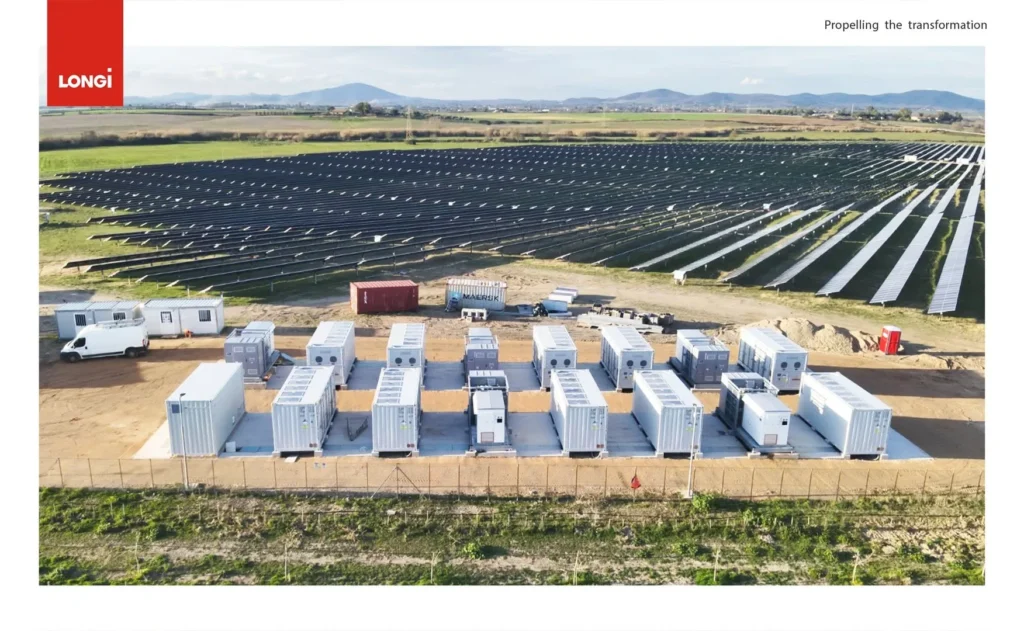
The company’s current global operations page lists manufacturing in China, Malaysia, and Vietnam. It also reports sales and service activity across more than 150 countries and regions. This footprint supports regional delivery, yet trade treatment depends on production origin, component sourcing, and destination rules.
The 2025 annual report says the company adjusted its US structure, reduced its stake in a local module joint venture, and developed compliant supply routes. A global brand name does not determine tariff treatment. Buyers need batch-level origin records and market-specific legal review.
The company reports 100% raw material traceability coverage for 2025. Procurement teams should still request chain-of-custody records, audit evidence, factory identity, bills of materials, and contract remedies. Corporate reporting starts due diligence; it does not replace verification.
A sound assessment should connect technology, supply, and commercial protection.
LONGi’s strategic significance comes from its attempt to industrialize back-contact technology across a huge manufacturing base. Its progress shows how China’s solar sector is shifting from pure scale toward technology, cost control, and compliant global delivery.
LONGi offers a sharp view of how Chinese companies connect manufacturing scale, applied research, and global market execution. Chozan helps leadership teams study these shifts through China research, expert dialogue, and learning expeditions. Book a consultation to examine what China’s solar and advanced manufacturing strategies mean for your business.
Enter the barcode printed on the front or back of the module into the official module authenticity tool. Also match the serial number, invoice, model code, distributor details, and warranty documentation before accepting delivery.
Use the company’s official download center and select the exact regional model. Confirm the revision date because electrical ratings, dimensions, certificates, and warranty documents can differ across product variants and sales markets.
Sales routes differ by country. The company maintains an authorized distribution network, while local installers commonly handle design, permitting, installation, and after-sales service. Confirm authorization and responsibility for warranty claims before purchase.
The term longisolar usually refers to solar products and former business branding associated with LONGi Green Energy Technology. For current corporate filings, specifications, warranties, and distributor checks, use the official LONGi website and exact legal entity name.
No. Product availability varies by country, application, and inventory cycle. Check the cell technology and model code on the current datasheet rather than assuming every panel under the Hi-MO name uses the same architecture.
Yes, when the complete system is engineered correctly. Compatibility depends mainly on the inverter, battery, voltage window, string configuration, controls, and local electrical rules. The module brand alone does not establish storage compatibility.
A bifacial module can collect light from its rear surface. Actual gain depends on ground reflectance, row spacing, mounting height, tracker design, shading, and rear obstruction. Energy modeling should use site-specific assumptions.
Compare exact models under the same test basis. Review module efficiency, power density, temperature coefficient, degradation, mechanical ratings, warranty terms, factory origin, local service, price, and expected energy yield for the specific site.
No. Tier and bankability classifications usually assess supplier or project finance criteria, not every module leaving a factory. Pair any rating with model certificates, factory audits, quality records, warranty review, and independent technical due diligence.
Check the product warranty, power warranty, first-year degradation, annual degradation, labor coverage, transfer rules, exclusions, claim location, and responsible legal entity. Use the warranty document for the exact model and destination market.
LONGi has secured projects in Europe, Australia, Latin America, the Middle East, and Africa, with U.S. manufacturing through Illuminate USA and partnerships in Saudi Arabia and Greece.