
CONTENT

China–Australia relations have entered a steady, productive phase. The days of patching over diplomatic tensions are largely behind us, and the focus now is on building genuine, long-term cooperation. High-level visits, policy alignment, and business deals demonstrate that both sides view this partnership as crucial to regional stability and shared economic growth.
Trade no longer revolves solely around resources. The relationship now spans clean energy, education, digital commerce, healthcare, and advanced manufacturing. Australian companies are carving out a niche in China’s tech-driven and consumer markets, while Chinese investors are backing a range of projects in Australia, from renewable energy to biotechnology.
These stronger ties aren’t just economic—they’re also improving public perception. With growing academic, cultural, and business links, people on both sides are seeing the benefits. Shared priorities, such as cutting emissions, managing data responsibly, and boosting regional resilience, are giving the relationship a new kind of purpose—focused less on headlines and more on real results.
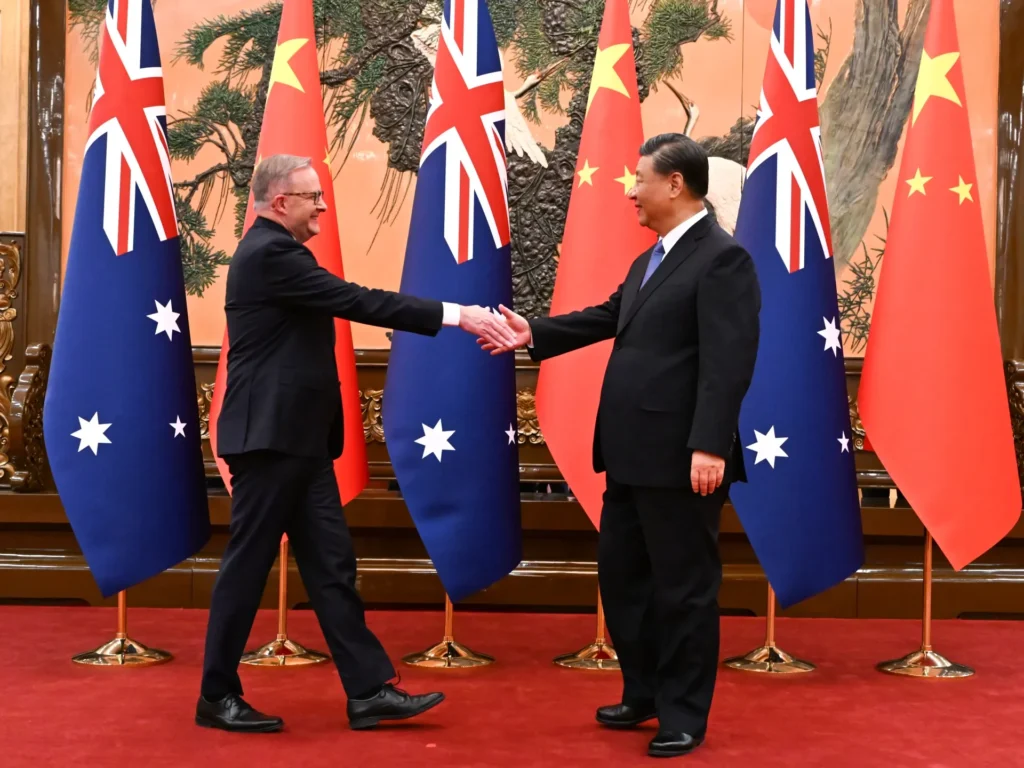
China and Australia have restored diplomatic stability through consistent dialogue and political restraint. After several years of strained communication, both governments now treat engagement as a strategic priority rather than a reactive necessity. The diplomatic thaw gained momentum through reciprocal visits, policy dialogues, and renewed ministerial contact.
Prime Minister Anthony Albanese’s 2025 visit to Beijing marked a turning point. His meetings with Premier Li Qiang reaffirmed that both sides intend to manage differences while expanding cooperation in areas such as agriculture, digital trade, and low-carbon innovation.
Li emphasized the complementarity of the two economies and urged continued collaboration in technology, education, and clean energy. Albanese echoed this sentiment, committing to transparent market practices and stable investment conditions for both Chinese and Australian businesses.
Earlier in the year, the China–Australia High-Level Dialogue underscored a shared commitment to rules-based trade, climate action, and digital economy governance. Officials agreed to explore joint research programs, expand customs and quarantine cooperation, and improve cross-border e-commerce frameworks. These developments have replaced earlier friction with structured engagement aimed at preventing escalation and sustaining economic recovery.
The revival of relations is not merely diplomatic symbolism—it reflects a recalibration of national interests. Australia recognizes China’s central role in Asia’s supply chains and its growing influence in global green technology.
Beijing, meanwhile, values Australia’s resource security, advanced research capacity, and regulatory credibility. Both sides recognize that pragmatic cooperation provides greater economic stability than political distance.
The 2025 reset also has multilateral implications. Canberra has reaffirmed its support for regional institutions such as APEC and RCEP, positioning itself as a bridge between Western partners and Asia’s manufacturing economies.
For China, improved ties with Australia help offset the perception of strategic isolation and strengthen its position in the Indo-Pacific.
Public sentiment in both countries has improved noticeably. Surveys by the Australia–China Relations Institute show growing support for constructive engagement and recognition of the trade benefits achieved under ChAFTA. Universities, industry associations, and local governments have resumed partnerships paused during earlier tensions.
This renewed climate of trust is setting the stage for a more balanced and diversified relationship—one anchored in economic interdependence, technological cooperation, and sustained dialogue rather than political convenience.
Another sign of warming relations came from the record participation of Australian companies at the 2025 China International Fair for Trade in Services (CIFTIS), where nearly 60 exhibitors showcased products, and the national pavilion size tripled from the previous year.
The presence of major brands such as Treasury Wine Estates and emerging health‑food producers signaled renewed confidence in the Chinese market.
Two-way trade between China and Australia reached approximately AU$312 billion in 2024, a strong recovery after pandemic-era disruptions. Australia exported AU$218.8 billion in goods to China in 2023—an 18.2% increase from the year before.
Commodities remain dominant. Iron ore, coal, natural gas, gold, and copper still account for over 85% of Australia’s merchandise exports. Agricultural exports, including beef, barley, wine, and dairy, also rebounded following the removal of trade barriers in 2023. Meanwhile, horticultural products—including citrus and macadamia nuts—have gained new traction as quarantine processes improved.
China’s exports to Australia totaled US$73.81 billion in 2023, led by electronics, vehicles, machinery, furniture, and plastics. Chinese electric vehicle (EV) makers such as BYD, Geely, and Zeekr have rapidly gained market share. Their growth aligns with Australia’s EV policy, which aims for EVs to make up 50% of new car sales by 2030. BYD’s local distributor projects its sales will double in the near term.
Services have become an increasingly valuable part of the relationship. Education exports surged as Chinese students returned to Australian universities in large numbers. Tourism also rebounded strongly, with nearly 950,000 Chinese travelers visiting Australia between June 2024 and May 2025—a 21% year-on-year increase.
These visitors are exploring beyond the typical hotspots, boosting regional tourism in places like Tasmania and Uluru. This trend supports not just economic recovery, but also people-to-people engagement through cultural tourism and educational exchange.
Investment ties are deep and growing. China remains a major source of foreign direct investment (FDI) in Australia, with a total stock of about US$58.5 billion. Key sectors include:
Meanwhile, Australian investment in China stands at approximately US$74.8 billion, with a primary focus on banking, wealth management, and professional services.
Several new investment deals were announced in 2025. China’s leading green energy firms partnered with Australian miners and renewable energy companies to develop hydrogen projects and low‑carbon metals, while Australian superannuation funds explored opportunities in China’s rapidly expanding healthcare and aged‑care sectors.
Chinese venture capital also targeted Australian AI start-ups, digital health platforms, and logistics technologies, signaling an appetite for high-growth, knowledge-intensive sectors.
Digital trade is now one of the most dynamic areas in China–Australia relations. According to the Department of Foreign Affairs and Trade (DFAT), digital trade contributed AU$43 billion to Australia’s economy in 2018 and is projected to grow to AU$192 billion by 2030.
Recognizing this potential, both countries are actively shaping rules for cross-border data flows and digital services through forums like the WTO’s Joint Statement Initiative on E-Commerce.
China’s e-commerce platforms have made a significant impact on the Australian market. As of 2024:
These platforms offer ultra-low prices and fast logistics, appealing to price-sensitive consumers. Their rise has also influenced macroeconomic trends—analysts at the Reserve Bank of Australia estimate that cheaper imports from Chinese e-commerce platforms could reduce inflation by 20–50 basis points.
It’s not a one-way street. Australian businesses are utilizing Chinese platforms to connect with millions of consumers in China. Cross-border payment systems, warehousing solutions, and simplified customs processes support them.
The city of Yiwu, often referred to as the “world’s supermarket,” plays a central role in this ecosystem. In 2023 alone, its Christmas-related exports reached 4.67 billion yuan (approximately US$650 million), a 17.6% year-over-year increase.
Yiwu is now gearing up to launch a Global Digital Trade Center in late 2025. The center will integrate AI and smart logistics tools to streamline international trade, making digital exports more accessible for small and medium-sized enterprises.
Australian states are getting involved too. The state of Victoria established a cross-border e-commerce hub in Chengdu, Sichuan Province. In 2023, Sichuan’s retail sales reached approximately AU$550 billion (or 3.1 trillion yuan), with a year-on-year growth rate of 9.2%.
The Chengdu hub aims to drive cross-border sales to over AU$29 billion in 2025, while offering regulatory support, logistics coordination, and market access for Victorian companies.
Iron ore still anchors Australia’s exports to China, but the global push toward net-zero emissions is transforming the sector. A 2025 think tank report warned Australia could lose up to half its iron ore revenue if it doesn’t invest in decarbonized steel solutions.
Responding to this, Fortescue Metals Group (FMG) partnered with China’s Baowu Resources to develop a green iron supply chain. Powered by renewable electricity and green hydrogen, the initiative aims to produce 1,500 metric tons of green iron annually from a pilot plant at Christmas Creek, with full-scale, carbon-free output planned for 2030.
FMG also signed deals with Chinese manufacturers, including BYD, LONGi, XCMG, and Envision Energy, to supply:
These partnerships demonstrate how China’s technological and manufacturing strengths are supporting Australia’s transition to greener mining operations.
Following the removal of tariffs and trade barriers, Australian agricultural exports have experienced a surge. Key developments:
Education and tourism are again major drivers of economic and social exchange.
Innovation is flourishing at the intersection of health, AI, and cross-border collaboration.
Healthcare has become a particularly active sector. Chinese companies are investing in Australian biotech ventures focused on gene therapy, regenerative medicine, and diagnostics. At the same time, Australian doctors are offering services via telemedicine platforms to Chinese patients.
Traditional Chinese Medicine (TCM) is also gaining traction in Australia. Hospitals are integrating TCM practices like acupuncture and herbal therapies into chronic pain and rehab programs. At the same time, Australian universities offer training for Chinese health professionals in aged care and hospital management.

Public sentiment between Australia and China has significantly improved. According to the Australia–China Relations Institute, there’s been a clear rise in support for constructive engagement, with many Australians recognizing the economic value of the bilateral relationship.
This growing trust is being shaped not just by trade, but by direct human connection—through education, cultural exchange, tourism, and media. Youth-focused initiatives and social campaigns like “Ni Hao Albanese” have made diplomatic ties more relatable by highlighting everyday stories of cooperation and shared experiences.
Student exchanges are one of the strongest bridges between the two countries. Chinese enrollments in Australian universities rebounded quickly once border restrictions were lifted, with institutions offering joint degrees and pathway programs in collaboration with their Chinese counterparts.
Meanwhile, an increasing number of Australian students are choosing to study in China, drawn by the opportunity to engage directly with Asia’s technology, society, and language. These students are being supported by scholarship programs and expanded Mandarin education in Australian schools and universities.
Chinese universities have also expanded their presence in Australia, establishing campuses in Sydney and Melbourne to offer bilingual and internationally recognized programs.
Cultural engagement is growing in both scale and depth. Joint events—featuring music, film, culinary arts, and exhibitions—are helping audiences gain a deeper understanding of each other’s cultures. These initiatives aren’t just symbolic; they foster long-term familiarity, challenge stereotypes, and lay the groundwork for resilient diplomacy.
Governments are supporting this momentum through:
By prioritizing people-to-people connections, both sides are investing in a more stable and empathetic relationship that can weather political or economic fluctuations.

With trust being rebuilt and new sectors flourishing, China and Australia are entering a stage where deeper, diversified collaboration is not only possible but necessary. Key areas poised for growth include:
You’ve seen how China–Australia ties are evolving in trade, digital, innovation, and culture. But understanding the macro trends is only half the game. To act with clarity, you need China fluency—not just data, but lived insight. That’s where ChoZan steps in.
Ready to move from insight to action? Book a consultation with ChoZan now to get tailored, on-the-ground guidance for your China strategy—no guesswork, just clarity.
Australia and China have a Double Taxation Agreement (DTA) that specifies which country taxes which income. This prevents businesses and individuals operating across borders from being taxed twice on the same income.
The agreement covers dividends, interest, royalties, and capital gains. Entities can apply for relief or credits under this treaty to reduce their tax burden when they earn income in the country with which they are counterparties.
Investor protections are built into treaties such as the Bilateral Investment Treaty (BIT) and the investment chapter of ChAFTA. These include clauses for fair and equitable treatment, non-discrimination, and mechanisms for dispute resolution (often via international arbitration). Even if regulatory changes occur, affected investors can still use these routes to seek compensation or mediation under agreed-upon frameworks.
Most bilateral trade contracts are denominated in USD or AUD, not the domestic currencies. But exchange rate volatility between the AUD, CNY, and USD can influence profit margins, import costs, and competitiveness. Businesses often use hedging instruments (forwards, options) to manage currency risk. It’s critical to build in buffers or clauses for extreme movements in foreign exchange contracts.
Yes, Australia maintains Foreign Investment Review Board (FIRB) oversight on Chinese (and other foreign) investments in sensitive sectors. These include defense, telecommunications, critical infrastructure, mining of essential minerals, and media. Proposals in these sectors must meet national interest tests, and thresholds and scrutiny levels vary by sector.
Companies operate under Chinese IP law, which has undergone significant improvements in recent decades to better protect patents, trademarks, trade secrets, and copyrights. However, to mitigate risk, firms often register trademarks and patents locally in China, monitor enforcement courts, and negotiate clear licensing and dispute resolution clauses in contracts. Legal counsel with experience in China is often essential.
China has strict laws on data storage, content licensing, and cybersecurity. Foreign digital platforms must often store local data onshore, comply with content review rules, accept Chinese censorship standards, and partner with local firms. Non-compliance can result in blocking, fines, or forced withdrawal. Many platforms mitigate this by forming joint ventures or licensing relationships with Chinese companies.
Repatriation is allowed under Chinese foreign exchange regulations, subject to approvals and documentation. Firms must show a legitimate source of income, pay required taxes, and, in some cases, prove equivalent investment performance. Delays can happen in processing large repatriation requests, so firms often plan cash flow and timing well in advance.
Sub-national governments in China and Australia often establish sister province/state partnerships, trade offices, and pilot zones. These local links can streamline logistics, regulatory access, and investment incentives. For example, Victoria’s e-commerce hub in Chengdu enables state-level facilitation for businesses, eliminating the need to wait for national bureaucratic steps.
Many cross-border contracts refer to internationally recognized arbitration institutions (e.g., ICC, HKIAC) or bilateral treaty arbitration under BIT/ChAFTA frameworks. Parties specify governing law, arbitration seat, language, and procedural rules in contracts. These mechanisms provide neutral forums for resolving disputes without resorting to courts in either country.
SMEs often start via Chinese e-commerce aggregators, cross-border platforms, or partnerships with local distributors to bypass full establishment costs. They can also use regional hubs (like Victoria’s Chengdu hub) for shared logistics, regulatory guidance, warehousing, compliance services, and marketplace access. Incremental entry helps mitigate risk.
Australia must satisfy Chinese quarantine, health, safety, and residue standards via certification by Australian authorities. Chinese inspection agencies often audit or test batches of products. Exporters may register facilities with Chinese agencies, submit traceability data, and engage in pre-shipment inspections. Delays or non‑compliance trigger rejections, which is why tight quality control is essential.
Building trust means localizing the consumer experience: using Chinese language packaging, maintaining a presence on WeChat and Weibo, leveraging influencer marketing (KOLs), providing after-sales support in Mandarin, and conducting transparent quality tests. Brands often open social media accounts on Chinese platforms, leverage local logistics, and showcase independent third‑party certifications (e.g., Australian standards) to differentiate themselves.