CONTENT

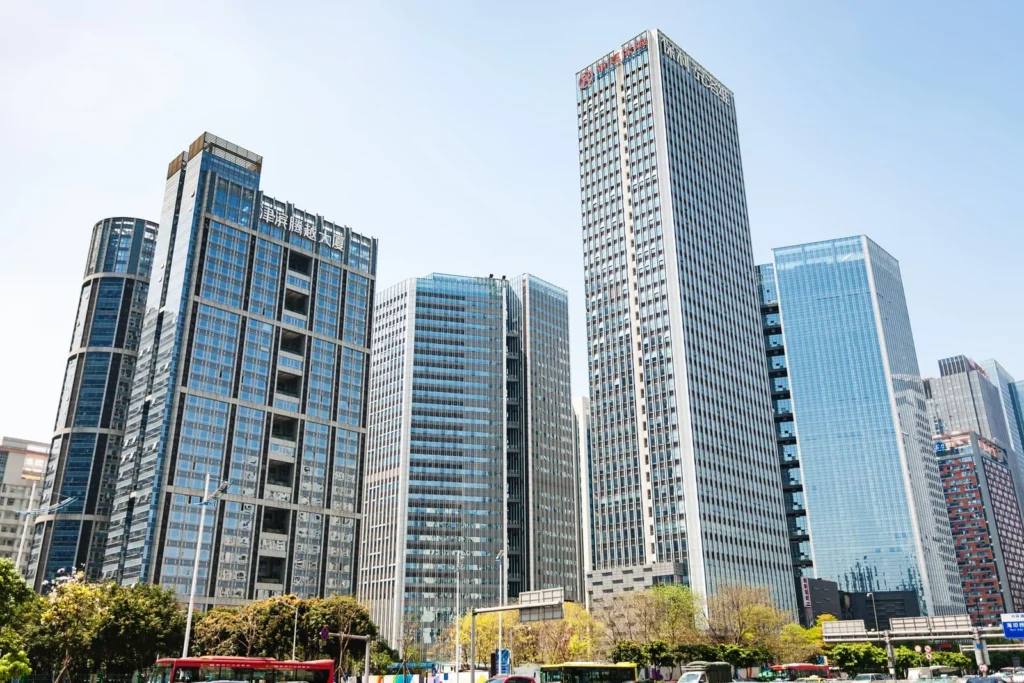
Guangzhou, the capital of Guangdong Province, with approximately 15 million permanent residents and an area of around 3,842 square kilometers in southern China, serves as the political and economic hub of the Pearl River Delta (PRD) and the heart of the Guangdong-Hong Kong-Macao Greater Bay Area (GBA). Nearly 60% of the world’s top 500 companies have invested in the city, and approximately 120 have regional or national headquarters here.
Steeped in over two millennia of history as the starting point of the Maritime Silk Road and the gateway to China for traders from across Asia and Europe, the city has evolved into one of the world’s most dynamic trade and innovation centers.
This article examines the key factors that make Guangzhou, China’s southern economic powerhouse in 2025, including its industrial landscape, trade dynamics, digital and high-tech innovation, logistics networks, regional integration, and vibrant cultural heritage.
Guangzhou sits astride the Pearl River, some 120 kilometers north‑northwest of Hong Kong. Historically known as Canton, the city has been a major seaport since the Qin dynasty.
It prospered during the Tang and Song dynasties as China’s only legal port for maritime trade, and the city retained this pivotal status into the Ming and Qing eras through the “Canton System.” Its long exposure to foreign merchants created a cosmopolitan culture that remains visible in Guangzhou’s architecture, cuisine, and dialects.
Today, the city comprises eleven administrative districts and serves as the core of the GBA, a 56,000-square-kilometer metropolitan area. Guangzhou’s role within the GBA leverages its harbor, airport, rail networks, and digital platforms to integrate with neighboring Hong Kong, Macao, Shenzhen, and Foshan.
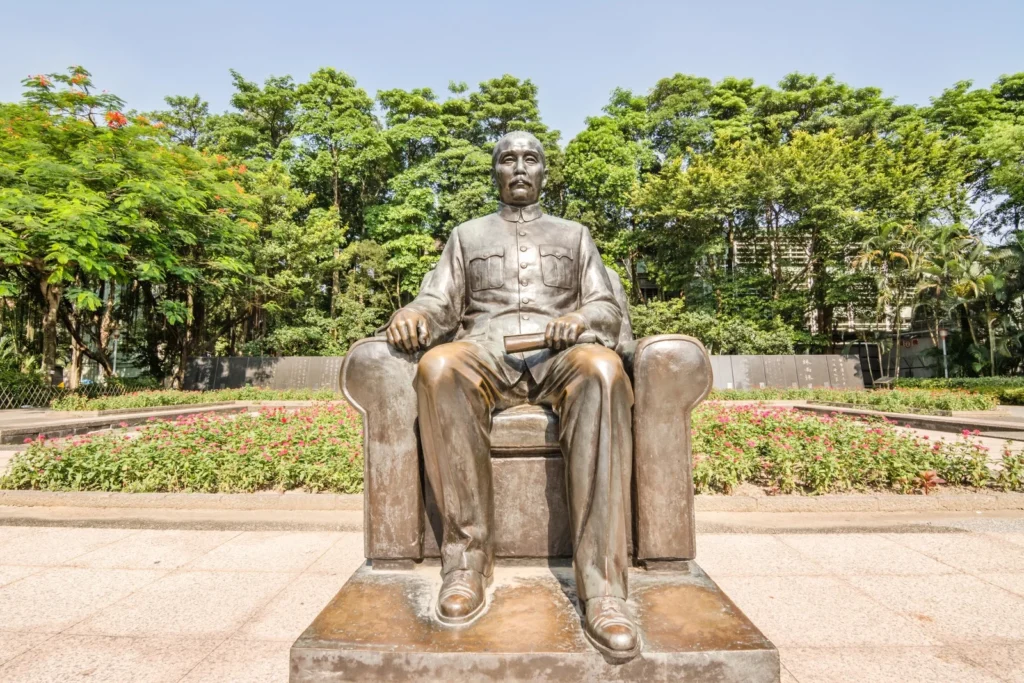
The city is also a popular destination for domestic and international tourists. Beyond its gleaming skyscrapers, visitors flock to cultural landmarks such as the Museum of the Western Han Dynasty, the Mausoleum of the Nanyue King, Guangxiao Temple, the Chen Clan Academy, and the Sun Yat-sen Memorial Hall.
The Canton Fair, China’s largest trade exhibition, held annually in both spring and autumn since 1957, continues to draw hundreds of thousands of buyers and exhibitors to Guangzhou, underscoring its status as a global trade gateway.
Guangzhou’s economy benefits from its location within Guangdong Province, China’s largest provincial economy. Guangdong’s GDP surpassed 14 trillion yuan in 2024 (US$1.94 trillion) and has led the nation for thirty‑six consecutive years.
The province has established a robust innovation system, comprising approximately 77,000 high-tech enterprises that support industrial clusters in electronic information, automobiles, green petrochemicals, modern light industry, and advanced materials. These clusters accounted for approximately 40% provincial GDP in 2024.
Guangzhou contributes significantly to this output; in 2024, the city recorded retail sales of consumer goods totaling 1,105.577 billion yuan (US$153.6 billion), making it one of only 7 Chinese cities with sales exceeding 1 trillion yuan.
Guangdong’s provincial planners have identified nine industrial clusters expected to generate at least one trillion yuan each: electronic information, modern light industry and textiles, advanced materials, green petrochemicals, modern agriculture and food, smart home appliances, software and information services, automobiles and new energy. Guangzhou plays a leading role in several of these clusters:
Guangdong’s innovation capacity has ranked first in the nation for eight consecutive years. The province hosts more than 150 academicians from the Chinese Academy of Sciences and Engineering, as well as 1.35 million R&D personnel. Above‑scale industrial enterprises posted operating revenue of 19.4 trillion yuan ($2.69 trillion) in 2024.
Within Guangzhou, the Guangzhou High‑Tech Zone ranked 11th in China in the 2024 national high‑tech zone evaluation. It ranked 5th in industrial output, 8th in high-tech industrial operating income, 9th in enterprise R&D intensity, and 5th in per-capita technology contract turnover.
The zone integrates strategic platforms, including Sino-Singapore Guangzhou Knowledge City, Guangzhou Science City, Maritime Silk Road City, and Bio-Island. Its cluster focuses on automobile manufacturing, new display technologies, green energy, new materials, and beauty & health industries.
The zone also nurtures emerging sectors, such as artificial intelligence (AI), new-energy storage, aerospace, and the low-altitude economy, positioning Guangzhou for next-generation industrial growth.
Guangzhou’s long-standing commercial culture is evident in its trade statistics. In 2024, the city’s total foreign trade volume reached a record 1.12 trillion yuan (US$155.5 billion), marking the fourth consecutive year above one trillion yuan.
Exports accounted for 700.55 billion yuan ($97.3 billion), up 7.8% year-over-year, while imports totaled approximately 420 billion yuan ($58.3 billion). The city’s trade partners span roughly 95% of the countries tracked by the United Nations, and exports to the United States and the European Union have grown significantly.
Private enterprises power this trade boom. In 2024, they generated more than 85% of Guangzhou’s imports and exports, totaling 642.24 billion yuan ($89.2 billion). Foreign‑invested enterprises contributed 332.6 billion yuan ($46.2 billion) and accounted for roughly 3,000 companies engaged in trade.
High‑tech products continued to shine: exports of electric vehicles and lithium batteries increased 19.2 % and 30 %, respectively, and cross‑border e‑commerce retail exports rose almost 20 %. Guangzhou’s status as a major e‑commerce hub will be discussed further below.
Guangdong Province’s leading position underscores Guangzhou’s role in national trade. The province recorded 9.11 trillion yuan ($1.27 trillion) in foreign trade in 2024 (exports: 5.89 trillion yuan ($818 billion); imports: 3.22 trillion yuan ($447 billion) and remained the largest trading province in China.
By the first half of 2024, Guangdong’s cross‑border e‑commerce imports and exports reached 427.34 billion yuan ($59.4 billion), accounting for over one‑third of China’s total. The province’s openness fosters ease of doing business.
The Guangdong-Hong Kong-Macao Greater Bay Area aims to align rules and systems to facilitate smoother cross-border flows of people, goods, and capital, which we will explore in the integration section.
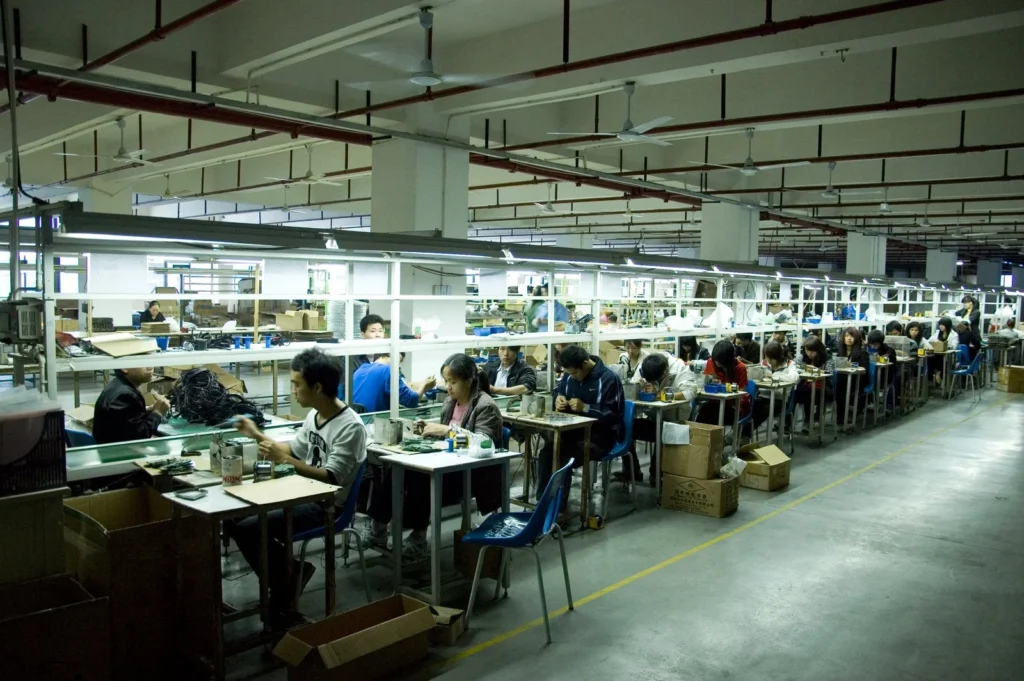
Guangzhou’s Panyu district epitomizes the cross‑border e‑commerce boom. The district hosts more than 1,000 cross‑border e‑commerce enterprises and 34,000 garment companies, forming one of the world’s most densely concentrated apparel and small-goods supply chains.
Three of the four major cross‑border e‑commerce platforms (including Temu and SHEIN) are headquartered here. Executives emphasize that Guangdong’s manufacturing depth and responsive supply chains underpin the success of these platforms, while advanced logistics networks enable efficient global delivery.
In addition to being a significant exporter, Guangzhou is also a major consumer city. Domestic consumption has surged since the pandemic; Guangdong’s total retail sales of consumer goods reached 4.787 trillion yuan ($665.5 billion) in 2024, surpassing those of all other provinces. Guangzhou and Shenzhen are two of only seven cities where retail sales exceed one trillion yuan.
This spending power reflects rising incomes and the growth of new shopping patterns, such as livestreaming, community group buying, and duty-free retail for returning travelers. The city’s dynamic trade and consumption environment continues to attract foreign investors and multinational retailers.
Guangzhou’s international reach relies on its modern transportation hubs. Guangzhou Baiyun International Airport ranked among the world’s top ten busiest airports in 2024. It handled 512,004 aircraft takeoffs and landings and processed 2.37 million metric tons of cargo, placing it 10th globally in aircraft movements and 9th in cargo throughput.
Passenger traffic rebounded strongly after the pandemic; by March 31, 2025, the airport had served more than 4 million passengers, representing a 24.5% year-over-year increase.
To strengthen Guangzhou’s status as an aviation hub, the airport is building a new Terminal 3 (T3) complex with a floor area of 380,000 square meters and 128 aircraft stands. Scheduled to open by the end of 2025, T3 will enable the airport to handle 120 million passengers and 3.8 million tons of cargo annually by 2030.
Expansion is accompanied by new international routes to destinations such as Surabaya (Indonesia), Osaka (Japan), and Bangkok (Thailand). Guangzhou has introduced a 240-hour visa-free transit policy, allowing passengers from 54 countries to stay in the city for up to 6 days, boosting inbound tourism and business travel.
Situated at the confluence of the Pearl River’s tributaries, Nansha Port serves as Guangzhou’s maritime gateway to the world. In 2024, the port’s container throughput exceeded 20 million TEUs, a milestone for the emerging deep‑water port.
Together with the broader Guangzhou Port Group, Nansha handled more than 23 million TEUs during the first eleven months of 2024. Foreign trade containers surpassed 10 million TEUs, with year-over-year growth of more than 13%.
Nansha Port operates 200 container liner routes, including 165 foreign trade routes that connect to Europe, North America, Asia, Africa, Latin America, and Oceania. Almost 150 of these routes serve Belt and Road markets, and nearly 100 connect to member countries of the Regional Comprehensive Economic Partnership (RCEP).
Expansion projects are underway, such as a fully automated terminal and additional port phases. Port executives note that the deep-water channel enables large vessels to dock directly, thereby reducing logistics costs. For example, home-appliance maker Homa Appliances increased exports by 110 times after shifting its shipments to Nansha, thanks to efficient services and lower fees.
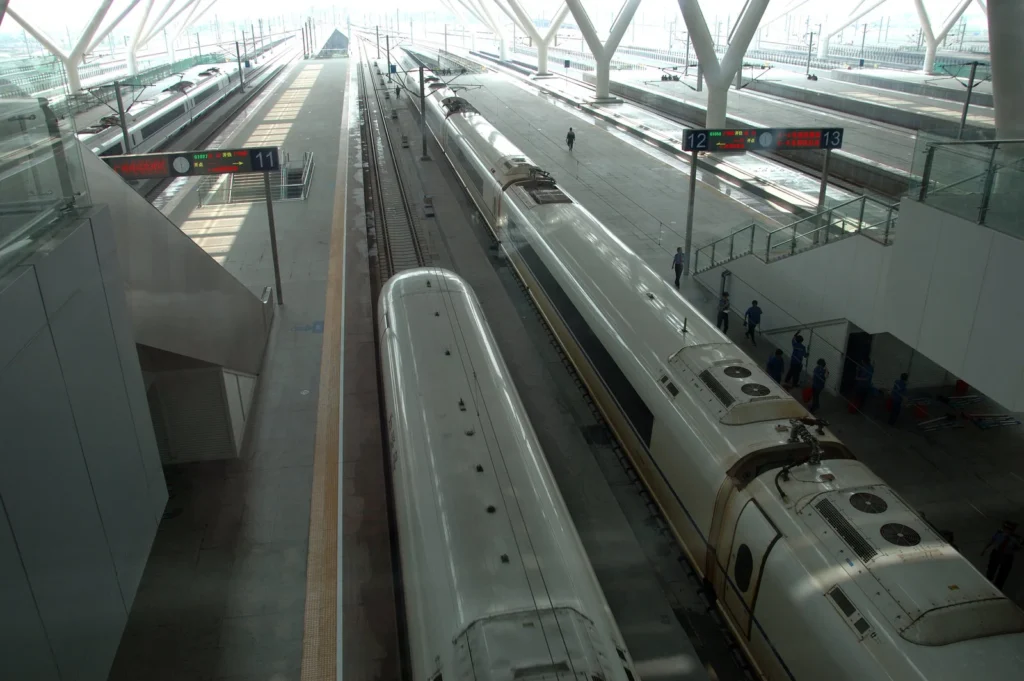
Guangzhou is a key node in China’s land and rail transportation networks. The city operates an extensive metro system with 15 lines covering 588 kilometers, connecting central districts to outlying areas and neighboring Foshan.
High-speed rail lines link Guangzhou to Beijing, Shanghai, Hong Kong, and other major Chinese cities, while the China-Europe Railway Express has become increasingly important for trade.
In 2024, 390 trains operated between Guangzhou and Europe, transporting goods such as home appliances, electronics, and automobiles. The integration of road, rail, and air logistics enables manufacturers to access global markets quickly and cost-effectively.
The digital transformation of Guangzhou’s economy is accelerating. Guangdong’s digital economy was valued at 6.9 trillion yuan ($958 billion) in 2023, the largest among China’s provinces.
By October 2024, the province had built 392,000 5G base stations, leading China in both the number of 5G users and the adoption of industry virtual private networks. Guangzhou leverages these networks to modernize manufacturing, enhance urban management, and improve public services.
The province has assisted 30,000 large enterprises and 750,000 small and medium‑sized enterprises (SMEs) in digital transformation over the past five years. An example is Midea’s Meiqing platform, developed in nearby Foshan but widely used in Guangzhou. The platform connects more than 4 million industrial devices and supports nearly 600,000 enterprises, enabling remote monitoring, predictive maintenance, and supply chain optimization.
Digital-industrial platforms also support data-driven product design, flexible manufacturing, and just-in-time delivery for Guangzhou’s apparel and electronics companies.
Digital governance initiatives enhance connectivity across the GBA. Guangdong launched the Yue Du Tong program, a digital library card that integrates public library resources across the province. Users can access a unified system for borrowing books, attending lectures, and sharing digital content.
The province is also pioneering cross-border data flows; real-time data from Hong Kong’s traffic cameras can now be transmitted to Guangzhou’s smart-traffic platform, enabling coordinated congestion management and emergency response.
The Guangzhou High-Tech Zone is a driving force for innovation. Ranking 11th among national high‑tech zones, it excels in industrial output and R&D intensity. The zone is home to more than 5,500 high-tech enterprises and emphasizes cross-industry collaboration. Its strategic platforms include:
Guangzhou is cultivating emerging industries such as AI, quantum computing, new‑energy storage, aerospace, and the low‑altitude economy. The low‑altitude economy refers to the use of uncrewed aerial vehicles (UAVs) for logistics, urban management, and passenger transport.
Several Guangzhou enterprises are developing heavy‑cargo drones and air‑taxi prototypes. The city plans to build dedicated take‑off and landing pads, air corridors, and a regulatory framework to support commercial UAV operations by 2030. These initiatives complement the city’s broader ambition to become a global hub for aviation and innovation.
Guangzhou’s future is closely tied to the Guangdong-Hong Kong-Macao Greater Bay Area, which aims to develop a world-class bay area comparable to San Francisco or Tokyo Bay. In 2024, Guangdong released 16 typical cases of mechanism and rule alignment to enhance cross‑border integration. The initiatives include:
These policies aim to create a “one‑hour living circle” where residents can commute easily for work and recreation. Cross‑border cycling races, marathons, and cultural festivals help foster a shared identity across the GBA. As the GBA continues to liberalize trade and capital flows, Guangzhou will play a central role in connecting the mainland’s manufacturing might with Hong Kong’s financial expertise and Macao’s tourism appeal.
The cross‑border e‑commerce industry is a microcosm of Guangzhou’s entrepreneurial spirit. The city leverages robust manufacturing, supportive policies, and digital platforms to ship products worldwide. Panyu District’s garment factories feed global fast‑fashion platforms like Temu and SHEIN. A typical cross‑border e‑commerce export chain involves the following steps:
Guangzhou’s cross‑border entrepreneurs benefit from supportive provincial policies, including tax incentives, simplified registration processes, and subsidies for logistics costs. The city has also established cross-border e-commerce industrial parks that offer training, financing, and digital marketing services.
Guangzhou blends modernity with centuries‑old traditions. The city’s intangible cultural heritage comprises 546 representative projects, including 2 items on the UNESCO Representative List, 21 national-level projects, 95 provincial-level listings, and 216 municipal-level listings.
During the 2024 Dragon Boat Festival, Guangzhou hosted more than 210 intangible cultural heritage activities, with 192 events taking place between June 1 and June 10. These included exhibitions, hands‑on classes, lectures, study tours, performances, and livestream sessions covering over 80 intangible heritage projects.
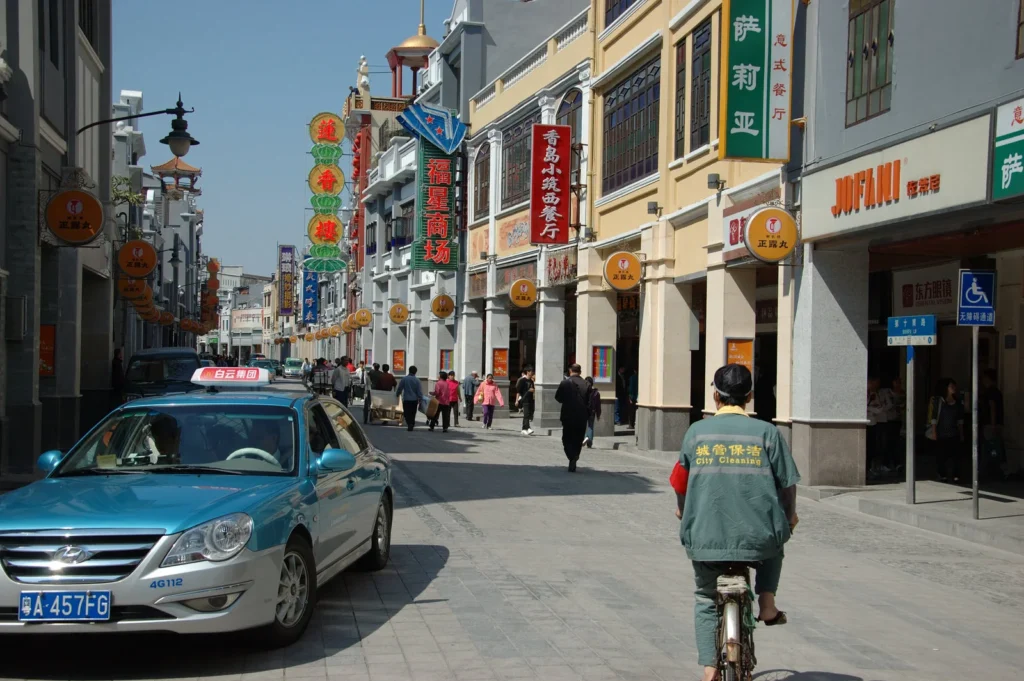
Venues such as Xiguan Yongqing Fang, Shawan Ancient Town, Beijing Road, and the Canton Tower combine heritage preservation with tourism and commerce, allowing visitors to experience traditional crafts like Cantonese embroidery, jade carving, woodblock printing, and paper cutting.
Key elements of Guangzhou’s cultural identity include:
The Yuexiu Temple Fair during the Lantern Festival exemplifies Guangzhou’s ability to stage large‑scale celebrations. In February 2024, the fair hosted 120 activities, including Cantonese folk culture parades, intangible heritage fairs, talent shows, street comedy, Hanfu‑fashion gatherings, and food stalls.
Craftspeople demonstrated skills such as Canton porcelain, jade carving, crochet flower making, and lacquer painting, while cross‑cultural collaboration with Malaysia’s Penang Miaohui festival added international flair. Such events not only preserve heritage but also boost tourism, retail sales, and local pride.
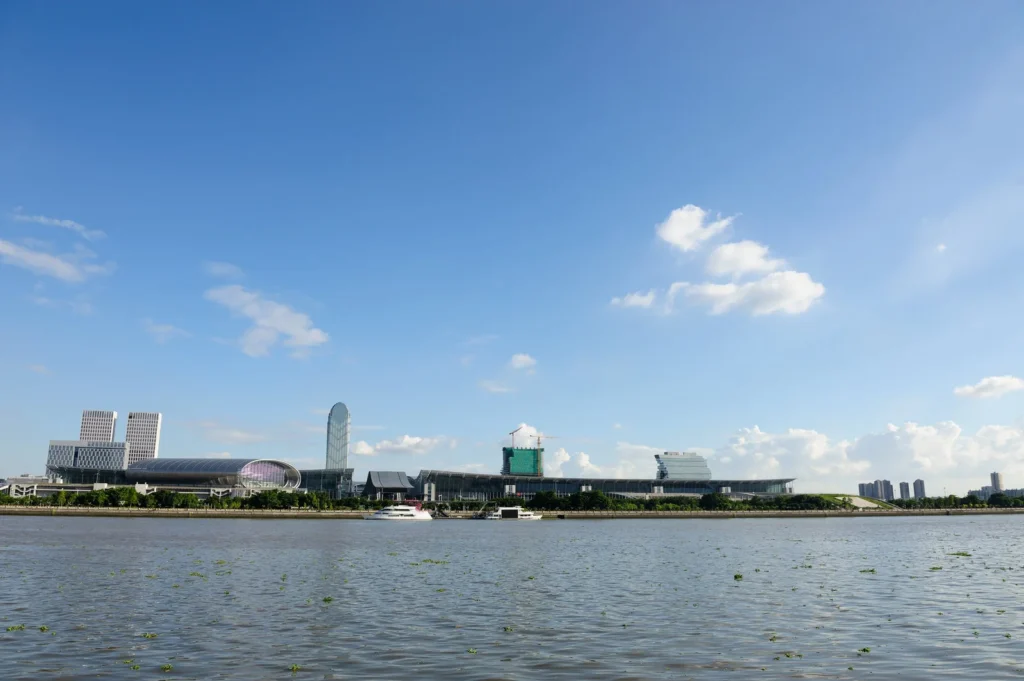
Guangzhou’s success is reflected in its living standards. The city’s GDP per capita exceeds US$25,000, and its service sector—particularly finance, real estate, and professional services—accounts for more than 60% of the city’s GDP. Guangzhou’s high‑tech parks and industrial clusters attract skilled workers from across China and abroad, driving demand for quality housing, education, and healthcare.
Guangzhou is home to renowned universities such as Sun Yat-sen University, South China University of Technology, and Jinan University, which contribute significantly to the local economy.
The city has launched initiatives to attract overseas Chinese scholars and foreign experts by offering housing subsidies, research funding, and streamlined visa procedures. These policies promote the development of high-tech industries and research institutions within the Guangzhou High-Tech Zone.
Urban development in Guangzhou emphasizes ecological sustainability. The city invests heavily in green transportation, including electric buses, metro expansion, and bike‑sharing systems. Ecological zones along the Pearl River have been restored into parks and wetlands, while strict regulations limit industrial pollution.
Nansha and Panyu districts incorporate smart-city technologies—such as digital twin platforms and AI-enabled waste management—into their operations to optimize resource utilization and reduce carbon emissions.
Despite its achievements, Guangzhou faces challenges in maintaining competitiveness. Global geopolitical tensions and slowing external demand could weigh on exports. The city must continue to upgrade its manufacturing to climb the value chain and reduce its reliance on low-end assembly.
Housing affordability and congestion remain significant concerns as the population continues to grow. However, Guangzhou’s integration with the GBA offers opportunities to diversify into services, finance, and innovation.
By embracing digital transformation, expanding high-tech clusters, and deepening cross-border cooperation, the city is well-positioned to sustain its role as a leading economic powerhouse in southern China.
Guangzhou’s rise as a global tech and manufacturing powerhouse isn’t just a case study—it’s a playbook for transformation. ChoZan’s China Learning Expeditions take you inside this city’s innovation engine, from smart factories in Huangpu to cross-border e-commerce hubs in Nansha and AI-driven logistics centers that power China’s southern economy.
Guided by Ashley Dudarenok and her team of China strategy experts, you’ll gain direct access to industry leaders, see how Guangzhou brands merge technology with consumer insight, and learn how to apply these lessons to your own market.
Every program is customized—combining company visits, cultural decoding, and strategic workshops—to help you understand how this region is redefining global business speed.
Guangzhou isn’t just building China’s future—it’s shaping the world’s next business model.
Explore ChoZan’s China Learning Expeditions or contact us to design your Guangzhou-focused journey.
Most delays are caused by incorrect HS code classification and CIQ inspection flags. Ensure wooden pallets have valid fumigation certificates. Align Incoterms with responsibility for customs clearance and terminal charges. Watch free storage windows, as demurrage accrues quickly during peak season. Collaborate with AEO-certified brokers to minimize inspection frequency and secure green lane handling for sensitive product categories.
Exporters often use CNH forwards or options via Hong Kong-linked banks while settling transactions in CNY onshore. A balanced policy ties pricing to the RMB while hedging net exposures on a monthly or quarterly basis. Some firms invoice in USD but convert receivables into RMB on a rolling schedule. Establish clear limits, counterparties, and regularly review hedge performance to avoid speculative positions masquerading as hedges.
Map your data and classify it. Determine whether China’s Standard Contractual Clauses are sufficient or if a security assessment is required due to the volume or sensitivity of the data. Implement MLPS 2.0 controls for core systems and keep audit trails. Encrypt exports, restrict access, and monitor vendors. Keep Chinese-language versions of DPIAs and processing records, as regulators will review those first during checks.
Expect IATF 16949, process FMEAs, PPAP documentation, and full traceability. OEMs now request ESG baselines and energy-use data. Prepare bilingual control plans and clear change-management gates. For electronics and battery components, add material compliance proofs and cell-level test reports. A pilot order will test your delivery reliability and the speed of your corrective actions before you receive frame agreements or VMI setups.
Choose Baiyun for time-critical cargo that benefits from same-day inbound clearance and bonded transfers into the GBA. Inspection windows and X-ray queues are efficient for high-value electronics, pharma, and samples. If your carrier network or rate card is stronger in Hong Kong, you can still truck via the GBA corridor. Compare security screening cut-off times and bonded storage terms.
Start with a pipeline view of all eligible programs across the city and district levels. Build a master dossier: business plan, audited financials, R&D proof, patents, payroll, and social insurance records. Submit early drafts for pre-review to avoid formal rejection. Avoid double-counting. Authorities favor measurable outputs, such as patents, pilot lines, or export growth. Keep Chinese versions precise and consistent.
Category-A work permits move fastest if your hire has top credentials, high salaries, or skills in short supply. Universities in Guangzhou partner on joint labs and adjunct roles that help with residence permits. For mid-career expats, maintaining clean social insurance and tax records is crucial to avoid renewal issues. Housing subsidies and GBA talent cards provide assistance with local services, banking, and transportation discounts.
Utilize bonded warehouse models to reduce delivery times while maintaining inventory in a customs-supervised area. Select codes such as 1210 or 9610/9710, depending on your workflow. Integrate with customs for real-time declaration and electronic order, payment, and logistics matching. Start with a small SKU set to validate demand, packaging, and return loops. Track clearance exceptions daily and adjust HS codes early.
Register your trademarks and key designs in China before the show. Bring evidence packets and notarized documents for on-site complaints. Photograph booth displays if you see infringements and file with the fair’s IPR desk. Record your IP with China Customs to block infringing exports. Use NDAs in Chinese and clearly mark the samples. Ship prototypes back quickly to avoid copying.
Leasing in mature industrial parks speeds your start and reduces upfront capital. Thoroughly check power capacity, wastewater permits, and fire codes. If you purchase land, expect environmental impact assessments, planning approvals, and milestone construction terms. M0 or industrial-upgrade zones may offer flexible use. Negotiate rent-free build-out periods, restoration clauses, and clear handover of existing EHS liabilities.
Expect monthly energy use, carbon intensity per unit, water withdrawal, and hazardous waste logs. Buyers request certificates for green electricity or REC usage. For packaging, provide material composition and recyclability documents. Some chains require third-party audits and corrective action plans with due dates. Keep raw data ready in Chinese and be prepared to show meter-level or line-level evidence.
Use confirmed letters of credit for new buyers and switch to factoring or forfaiting once invoices flow. Banks in the GBA offer RMB and USD invoice financing tied to export records. Combine credit insurance with bank lines to reduce margin requirements. Maintain a clean track record on customs declarations and tax rebates; banks heavily weigh that history in their approvals.
Cantonese culture and local media matter. Utilize Cantonese KOLs for retail launches and tailor outdoor placements to high-traffic malls, such as Taikoo Hui. Align with food, design, and trade themes rather than national memes. WeChat, Douyin, and RedNote are still effective, but offline pop-ups tied to trade events perform particularly well. Mobile payments are a given—optimize for WeChat Pay first.
Use bilingual contracts with a clause that specifies the governing language in the event of a conflict. Choose a reliable forum, such as a recognized arbitration commission with a state seat, and establish rules clearly. Specify evidence standards, e-sign validity, and notarization. Add a change-order workflow and service levels. Keep annexes for technical specs and acceptance tests to reduce room for dispute.