
CONTENT

Innovative food products are being born, tested, and scaled in China faster than almost anywhere else. Chinese companies are compressing R&D timelines, integrating AI into formulation, and launching functionally advanced products at speed. For global businesses, China is not just a market to enter. It is a model to study.
No other country combines China’s scale, policy support, consumer sophistication, and technological infrastructure for food innovation. The country is moving from imitator to originator across nearly every food category.
China’s food industry is not just growing. It is structurally evolving in ways that set global precedents.
China’s food processing market is one of the fastest-growing in the world. E-commerce platforms including Tmall, JD.com, and Douyin Shop account for over 60% of urban food purchases. This gives brands an unmatched test-and-scale infrastructure.
Products that gain traction on live-streaming commerce can go from niche launch to national distribution within weeks. This compression of the innovation-to-retail cycle has reshaped how Chinese food companies approach R&D entirely.
The Healthy China Initiative 2019–2030 has made health-oriented food development a national priority. The 14th Five-Year Plan backed plant proteins and green bio-manufacturing. Government investment reached approximately CNY 600 million (around USD 93 million) directed at plant-based and cultured meat R&D.
Regulatory timelines have also shortened dramatically:
More than half of Chinese consumers actively seek functional benefits from food and beverage purchases. Demand spans gut health, immunity, sleep support, mental clarity, and weight management.
The clean-label movement is accelerating alongside this shift. Consumers favor products free from artificial additives and rich in recognizable, natural ingredients. Botanical additions such as mulberry leaf extract, turmeric, and hericium erinaceus are now appearing across dairy, snacks, and beverages.
Key consumer data points:
China’s silver-haired generation (ages 50 and above) is among the fastest-growing consumer segments. Brands are responding with age-specific products that go far beyond “senior-friendly” labels.
Want Want Group showcased low-GI certified snacks at the 2025 AIFE. Nestlé China launched Wanning milk powder for middle-aged and senior consumers, formulated with tryptophan, magnesium, zinc, and mulberry leaf extract. Yili and Nongfu Spring have both introduced senior-specific lines in recent years.
Age-specific fortification is no longer niche. It is standard practice in Chinese food R&D.
1 in 3 Chinese consumers considers planetary health a top concern in food choices. Demand is growing for eco-friendly packaging, upcycled ingredients, and verifiable sustainability credentials, especially among Millennials and urban residents.
Yili’s Satine brand launched a carbon-neutral organic milk, with sustainability embedded as a product development standard backed by third-party verification. This is increasingly what Chinese consumers expect from premium brands.
China is not just responding to food trends. It is creating them. These companies represent the current frontier of innovative food product development.
Yili Group is Asia’s largest dairy company and has held Asia’s No.1 dairy position for eight consecutive years. In 2025, both Brand Finance (sixth consecutive year) and Kantar BrandZ recognized Yili as the world’s most valuable dairy brand. It is the sole Asian dairy brand in the Rabobank Global Dairy Top 20’s top five.
Key product innovations include:
Mengniu’s innovation is built around precision nutrition for specific life stages. Its Future Star children’s range incorporates HMOs developed by subsidiary Synaura Biotechnology. Synaura became the first Chinese HMO company to receive FDA GRAS certification in 2024.
Other notable products include:
Best known for bottled water, Nongfu Spring spent three years testing over 1,000 formulations before launching its non-GMO soy-based yogurt. It comes in almond, coconut, and walnut variants. This discipline reflects how seriously Chinese companies treat product-market fit.
In 2025, the brand rose to third place in Brand Finance’s global non-alcoholic drinks ranking. Its Brand Strength Index score was 91.1 out of 100.
HEYTEA (喜茶, Xǐ Chá) brought plant-based innovation to the mass market. It integrated plant proteins into existing tea culture formats, making them feel native to the category rather than “alternative.”
This drove strong adoption in Tier 1 and Tier 2 cities. HEYTEA is also a key foodservice partner for Starfield, deepening China’s plant-based ingredient ecosystem.
Want Want (旺旺, Wàngwàng) is pivoting from legacy mass-market snacks toward functional food. Its low-GI certified products were showcased at the 2025 AIFE. This shows heritage brands are now building clinical validation into development, a meaningful shift toward health and aging consumers.
Starfield (星期零, Xīngqī Líng) is China’s best-funded plant-based meat company. It raised over USD 100 million since its 2019 founding in Shenzhen. Its approach is distinctly local, engineering plant proteins for Chinese cuisine formats, including dumplings, stir-fry, and hotpot.
The company uses molecular sensory science to replicate animal meat flavor without artificial flavorings. It has generated over seven patents through university partnerships. Starfield works with more than 100 brands and is present in over 40,000 stores across China.
COFCO (中粮集团, Zhōngliáng Jítuán) is China’s state-backed food conglomerate. It operates across staples, snacks, dairy, and functional food categories. Its deep supply chain integration gives it scale advantages in bringing new products to market quickly. COFCO represents how policy alignment and commercial innovation can work together at speed.
Nearly half of Chinese consumers hold positive sentiment toward AI-enhanced F&B development. Academic-industry partnerships are accelerating this. The Science Center for Future Foods at Jiangnan University applies AI to ingredient modeling, sensory prediction, and nutritional optimization.
AI is cutting formulation timelines from months to weeks. Flavor compatibility analysis, regional consumer acceptance forecasting, and pre-lab compliance checks are now embedded in leading Chinese R&D processes.
China’s alternative protein sector is scaling fast:
Domestic players are closing the price gap with animal proteins by expanding processing capacity rapidly.
At the 2025 AIFE, robots producing ice cream in under 40 seconds illustrated how automation is entering even high-touch food production. Major players are adopting blockchain-based traceability to verify sourcing and meet consumer demand for transparency.
AI-powered quality control is replacing manual inspection on production lines. Eco-packaging innovation, including biodegradable films and mycelium-based materials, is being driven by both consumer expectations and regulatory direction.
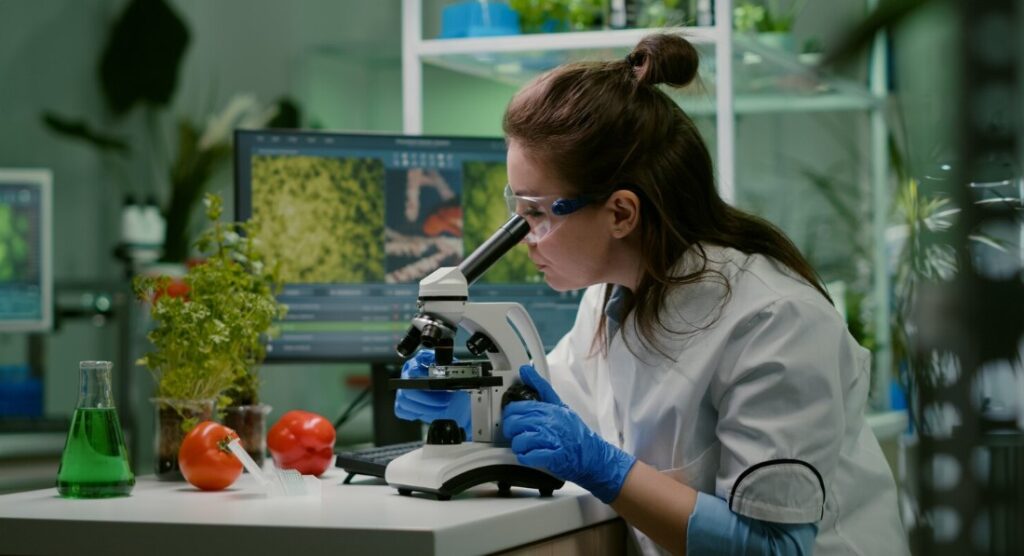
China’s food innovation ecosystem offers clear, transferable lessons:
Understanding China’s food innovation from the outside is difficult. Seeing it directly changes what you think is possible.
ChoZan’s China Innovation Tours bring teams into food tech hubs, factory floors, and consumer environments firsthand. China Consumer Research services cover functional food demand, demographic shifts, and platform purchase behavior. China Trend Watching keeps your team ahead of what Chinese companies are building next.
Innovative food products are no longer being defined by legacy food capitals. China’s scale, policy alignment, technology, and consumer demand have created an innovation ecosystem with no real parallel.
The shift global businesses need to make is perceptual, not just strategic. China is not a future market for innovative food products. It is the most advanced classroom for understanding where the industry is already heading.
Book a consultation with ChoZan and start learning from China’s food innovation frontier today.
China combines government R&D investment, fast regulatory reform, a health-conscious consumer base, and live commerce infrastructure. Products can reach national scale in weeks.
Yili, Mengniu, Nongfu Spring, HEYTEA, Want Want, Starfield, and COFCO are among the most active. They span functional dairy, plant-based proteins, and precision nutrition.
AI is used for ingredient modeling, flavor prediction, consumer acceptance forecasting, and compliance screening. It compresses formulation timelines from months to weeks.
Beyond Meat cited global cost-reduction in February 2025, with wind-down completing by mid-2025. It reflects a wider challenge for brands that enter China without adapting to local taste profiles and pricing.
ChoZan offers China Innovation Tours, consumer research, and trend-watching services.