
CONTENT

External links in WeChat require careful handling to avoid security prompts, blocked access, or user drop-off. In 2025–26, WeChat evaluates every external URL based on domain trust, redirect behavior, compliance signals, and user experience risk. With over a billion monthly active users and embedded in daily life from messaging and payments to mini-programs and content sharing WeChat is far more than a chat app.
For brands, creators, marketers, and savvy users alike, external links that is, web addresses, app-landing pages, or third-party platforms accessible outside the native WeChat ecosystem play a critical role. They drive conversions, redirect traffic, enable content cross-pollination, and bridge WeChat with other platforms. Yet for many, opening such links, either within or via WeChat, remains fraught with confusion, friction, or outright blockage.
The common user experience goes like this: you receive a URL in a chat or article, tap it, and instead of seamless navigation, you’re greeted with a prompt:
“Long-press the URL, copy it, then open it in your browser.”
What’s going on? Is the link broken? Worse, is your content strategy being sabotaged by invisible restrictions? The truth is neither. That prompt is a deliberate design and policy-mechanism built into WeChat’s governance of external links — not a glitch.
Whether you’re a brand leveraging WeChat Official Accounts, a creator driving traffic, or a marketer optimizing conversion funnels, mastering external link usage is now non-optional. Done right, it enables richer traffic flows and cross-platform synergy. Done wrong, it leads to blocked links, high bounce rates, and wasted effort.
Let’s begin by first unpacking the governance and mechanics behind WeChat’s external-link framework — so you’ll know exactly what you’re working with before we dive into tactics and strategies.
WeChat’s relationship with external links has always been complex — a mix of security, platform control, and regulatory alignment. To use links freely and effectively in 2025–26, you first need to understand why these restrictions exist and how the rules are applied.
WeChat is an ecosystem designed to keep users within its borders. Tencent’s business model centers on integrated services — messaging, payments, e-commerce, video, and mini-programs — all built to work seamlessly inside WeChat. Allowing unrestricted outbound traffic would weaken this ecosystem and expose users to risks.
The key drivers behind link restrictions include:
In short, these rules aren’t arbitrary — they balance business strategy and government expectations.
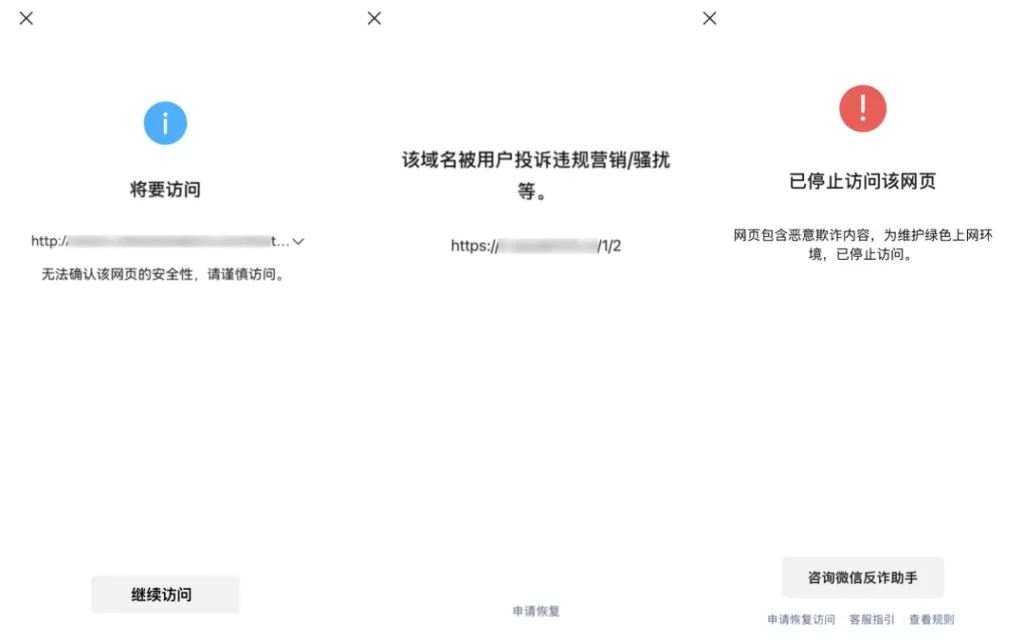
In 2025, WeChat’s filtering system used a combination of domain recognition, keyword scanning, and risk scoring to determine if a link can be opened in-app. Commonly restricted links include:
WeChat’s link policies have loosened slightly in recent years under regulatory pressure to promote interoperability between major Chinese platforms. Following MIIT’s 2024 push for “fair access and open data flows,” Tencent began allowing limited in-app viewing of some e-commerce and short-video links when verified through security APIs.
By mid-2025, WeChat had:
However, complete openness remains unlikely. Tencent still prioritizes data sovereignty and ecosystem retention. The takeaway for users and brands: freedom is expanding — but within structured boundaries.
Different prompts appear depending on the link type and security context:
Despite wording differences, the logic is identical: WeChat requires manual confirmation before leaving its controlled environment.
Understanding WeChat’s restrictions is one thing. Learning how to work around them effectively — without breaking rules — is what makes the difference between a blocked campaign and a high-performing one. Below are tested, legitimate strategies for both individual users and brands to access and share external links smoothly in 2025–26.
Most link restrictions in WeChat include an on-screen prompt, such as “Long-press to copy the link, then open it in your browser.” Here’s how to handle it appropriately:
Instead of tapping directly, long-press the URL or message containing the link. WeChat will display a menu with options such as “Copy,” “Forward,” or “Report.”
Tap “Copy” to copy the entire link to your clipboard. Avoid tapping on the link text — doing so may only copy part of the address.
Exit WeChat, open your phone’s main browser (e.g., Safari, Chrome, or Huawei Browser).
Long-press in the browser’s address bar, tap “Paste and Go,” and the webpage will open.
If the link doesn’t work, double-check for missing characters at the start or end — even one missing symbol can invalidate a URL.
For smoother use, set your phone’s default browser to one that handles Chinese pages well. On iPhones, Safari usually works best. On Android, QQ Browser or Huawei Browser often integrates seamlessly with WeChat’s copied URLs.
These steps might seem simple, but they’re essential for secure browsing — ensuring you open legitimate pages while staying protected from malicious links.
WeChat isn’t just about chatting — it’s the backbone of content distribution and conversion for millions of businesses. However, sharing external links inside Official Account posts, Moments ads, or group messages requires planning.
Here’s how brands can use external links strategically without triggering WeChat’s restrictions:
WeChat’s algorithm automatically flags domains from major competitors such as Douyin, Kuaishou, or Taobao. Instead, host landing pages on your own verified domain (linked to your WeChat Official Account).
Example: Instead of embedding https://www.taobao.com/brandpage, use https://brandname.cn/promo and redirect visitors internally.
Mini Programs act as WeChat’s internal websites. By hosting a lightweight page or campaign within a Mini Program, you can indirectly integrate external content.
For example, a brand can show product details in a Mini Program and add a “Visit Official Site” button that securely redirects users to an external store when they choose to leave WeChat.
WeChat allows users to scan QR codes freely, even when the destination is external. For campaigns, convert your link into a QR code using tools such as Tencent Cloud or WeChat’s QR code generator.
Best practices:
Some brands use a “jump” page hosted on their domain to reroute traffic externally. This can work, but only if it passes WeChat’s link verification. If the redirect is instant or includes hidden scripts, the link may be blocked.
To stay compliant:
WeChat’s content guidelines prohibit link-sharing models that encourage users to invite friends or share posts for rewards. These are flagged as spam behaviors and may lead to link bans.
Instead, use value-based CTAs: “Learn More,” “Access Guide,” or “View Details” work far better than “Invite Friends to Unlock Discount.”
Even when you play by the rules, friction still exists. Users don’t like extra steps. That’s why leading brands and creators in 2025 were adopting smarter workarounds.
Verified developers can now implement WeChat-compliant deep links that open directly in the app’s built-in browser (for eligible domains). Tencent introduced new APIs in 2024 to support this for authorized business accounts, reducing the need for manual copying.
Platforms like Tencent Analytics and GrowingIO allow you to monitor link clicks and browser drop-off rates. If you see significant loss at the “copy-and-open” stage, redesign your funnel — e.g., by placing the external link behind a stronger CTA within the Mini Program.
Instead of hiding QR codes at the bottom of articles, top-performing Official Accounts place scannable links midway through content — right after delivering value. This increases voluntary engagement and reduces bounce.
In essence, using external links freely in WeChat doesn’t mean bypassing its system. It means understanding the framework, adapting your approach, and designing experiences that feel seamless within WeChat’s structure.
WeChat’s restrictions on external links can seem limiting, but for those who understand the system, they open up a new layer of creative strategy. Whether you’re selling products, building communities, or running campaigns, there are ways to integrate external links without losing engagement or breaking policy.
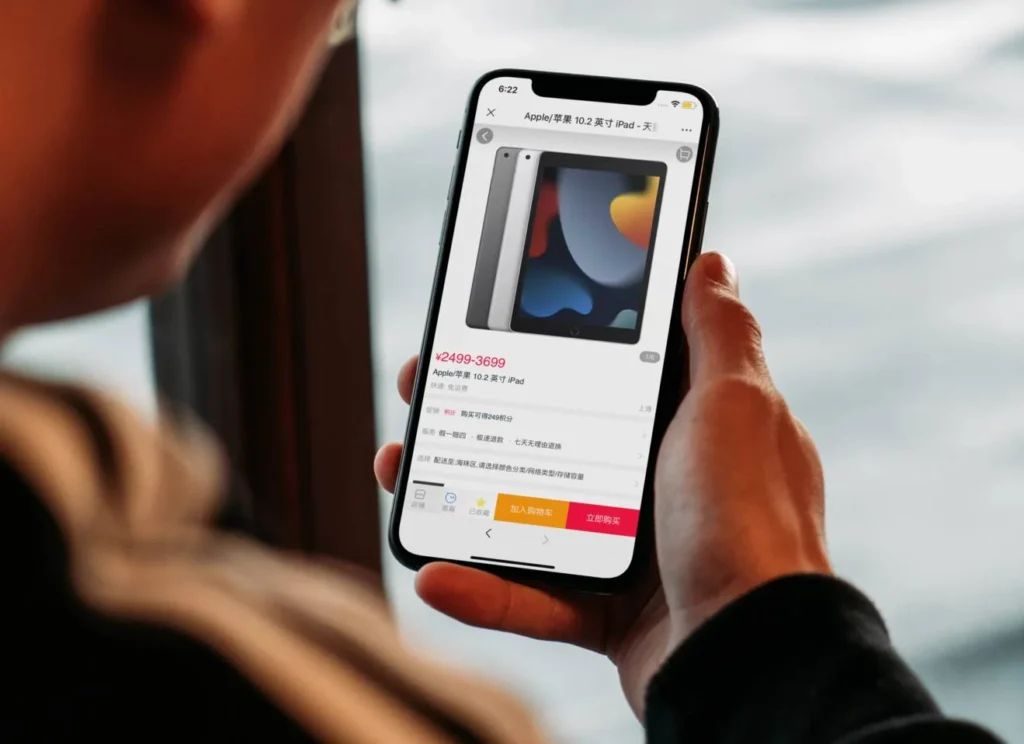
E-commerce remains one of the most affected sectors when it comes to link limitations. Platforms like Taobao, JD.com, and Pinduoduo compete directly with WeChat’s internal shopping ecosystem. Yet, in 2025, many Chinese brands had found effective ways to use WeChat to drive traffic outward legally.
Key strategies:
For influencers, vloggers, and educators, linking out to external platforms like Bilibili or Douyin is common — but often blocked in-app. The best creators now design multi-step flows that keep WeChat engagement strong while still moving followers to other ecosystems.
Practical methods:
This hybrid approach protects creators from algorithmic suppression while maintaining continuity across multiple platforms.
In 2024–25, China’s MIIT encouraged “mutual recognition between digital platforms.” This policy nudged Tencent to loosen certain restrictions on competitors’ links, especially between WeChat and Douyin or Xiaohongshu. Still, integration depends on how links are shared.
Example strategy:
For cross-platform marketing, transparency is key. When users understand they’re leaving WeChat, engagement actually improves because it feels intentional, not forced.
B2B marketers also rely on external links for registration forms, webinar pages, and white-paper downloads. Here’s how top Chinese SaaS companies handled this in 2025:
External link behavior differs between mainland Chinese users and those abroad using WeChat International.
If your business targets both audiences, always test links regionally. You may need to host a China-optimized version of your site on a .cn or localized CDN to ensure faster access.
As WeChat’s interoperability expands, it’s essential to align your campaigns with new link frameworks. ChoZan’s China Learning Expeditions and consulting services guide global teams in designing link journeys that meet Tencent’s standards.Learn more →

WeChat’s ecosystem rewards compliance, clarity, and creativity. Whether you’re sharing a single link or designing a multi-platform campaign, following these best practices ensures your content reaches users smoothly and safely in 2025–26.
Quick check: If your domain redirects to a competing platform (e.g., Taobao, Douyin), host a neutral landing page first and link outward from there.
Best practice: Add your brand logo in the QR code center and link it to a secure, verified domain.
Example: Educational accounts now often use mid-article CTAs like “Read Full Research (Open in Browser)” followed by a scannable QR.
Tip: Don’t rely solely on traditional Google Analytics; WeChat’s embedded webviews often block external scripts. Use local trackers.
Quick reminder: Ethical link behavior builds long-term visibility. WeChat’s AI moderation system rewards verified, consistent link performance with fewer warnings.
Example: Multinational brands like Haier and Li-Ning already use dual hosting to keep Chinese and overseas users on equal footing.
Before sharing any external link in WeChat, run through this list:
| Checkpoint | Why It Matters | Status |
|---|---|---|
| ✔ HTTPS secured | Prevents “unsafe site” warnings | ☐ |
| ✔ Domain verified with Tencent | Improves trust score | ☐ |
| ✔ No redirect to competitor platform | Avoids blocking | ☐ |
| ✔ Data privacy disclosure visible | PIPL compliance | ☐ |
| ✔ QR or CTA instruction provided | Improves user completion | ☐ |
| ✔ Load time under 3 seconds | Reduces bounce rate | ☐ |
Filling all fields gives your link the best chance of opening smoothly and retaining engagement.
WeChat link freedom is not about bypassing restrictions. It’s about designing your user journey within Tencent’s structure — creating experiences that feel intuitive, safe, and native.
When your strategy aligns with WeChat’s logic, every external link becomes frictionless — not forced.
WeChat’s evolving policies on external links are reshaping how brands operate inside China’s closed digital ecosystem. Understanding where Tencent draws the line — and how interoperability is expanding under new MIIT directives — requires both regulatory fluency and cultural context.
This is where ChoZan provides practical clarity.
Through its China Learning Expeditions, teams can observe firsthand how local brands and policymakers interpret and implement WeChat’s link frameworks.
ChoZan’s custom research projects unpack Tencent’s external link governance, Mini Program integration models, and domain verification mechanisms — offering clear, data-backed insight into how Chinese brands design compliant yet effective link strategies.
Meanwhile, consulting sessions and expert calls help global teams apply these insights directly — from refining H5 journeys and QR-based redirects to developing verified-domain approaches for smoother cross-platform connectivity.
Each service is designed to help teams build a practical understanding of WeChat’s policy logic and apply it confidently across campaigns and product ecosystems.
Book a session with ChoZan to explore how your organization can navigate WeChat’s external link framework and align with China’s 2025–26 interoperability landscape. Book now →
Smaller brands can use WeChat’s H5 microsites or Mini Programs to preview products and then direct users to an external checkout page. Avoid embedding affiliate or shortened URLs in messages — WeChat flags them as risky. Hosting your own branded domain or using Tencent Cloud for hosting drastically increases link acceptance and customer trust.
Yes, but they must follow WeChat’s URL safety guidelines. Use short, clean UTM tags — no symbols or long dynamic strings. For analytics, pair WeChat’s internal click data with tools like GrowingIO or Sensors Data, which handle browser-switch tracking better than Google Analytics. Excessive query strings or JavaScript-based redirects may cause WeChat to classify the link as “potentially unsafe.”
China’s Cybersecurity Law and Personal Information Protection Law (PIPL) require platforms to limit data transfers and third-party tracking. As a result, WeChat blocks links that request user permissions or collect personal data outside Tencent’s ecosystem. This is not censorship — it’s compliance. Businesses need locally hosted, PIPL-compliant landing pages to maintain stable link performance inside WeChat.
It depends on how the QR code is generated and where it points. QR codes leading to Mini Programs or WeChat-verified domains open internally. Those pointing to external, unverified domains open through the device’s browser. To control behavior, brands can use Tencent’s QR code generator and specify whether to open internally or externally through metadata tagging.
WeChat blocks most Western streaming embeds, but creators can host short previews or clips in WeChat Channels and use a text prompt or aQR code linking to the external video. Using a brand-verified site as a redirect hub also helps. The key is to keep outbound links clearly labeled and avoid automated redirects that appear as spam.
Yes. Enterprise accounts operate under distinct business permissions that often allow direct access to internal company URLs, CRM dashboards, or private cloud environments. However, external commercial or marketing links still follow the same review logic. IT administrators can whitelist approved domains within the WeChat Work backend to streamline link access for staff.
Global websites hosted outside China often load slowly or trigger extra verification steps. The best approach is to host a .cn mirror site on a China-based CDN or Tencent Cloud. Simplify the landing page structure, avoid embedded Western tracking scripts, and ensure all fonts and scripts are China-compatible to prevent link errors or latency inside WeChat.
Use an H5 page hosted within your verified domain that collects only essential data (name, phone, email). Avoid embedded chatbots or foreign analytics tools. Connect submissions to WeCom or Mini Program CRM systems for seamless follow-up. This keeps data flow within Tencent’s recognized ecosystem and prevents your lead form from being flagged or throttled.
Tencent is rolling out AI-based domain trust scoring. Links will be automatically ranked by safety, behavior consistency, and past user feedback. Domains that show irregular redirects, spam signals, or misleading content will be temporarily downgraded. Maintaining transparency, consistent SSL records, and clear branding will become key ranking factors for long-term accessibility within WeChat.