CONTENT
Artificial intelligence research is moving beyond a simple race for larger models.
The latest breakthroughs focus on models that can reason across vast amounts of information — reading whole books, processing research papers and codebases, and retaining context without losing the thread.
At the heart of this shift in China is Moonshot AI, the company behind the Kimi assistant and a pioneer of long context language models. Founded just a few years ago, Moonshot AI has quickly become a key player in the global AI race. Its focus on practical applications and real‑world workflows makes it a standout among Chinese AI startups.
This article profiles Moonshot AI, explains the technology behind its long context models, and examines how the company is shaping consumer and enterprise AI.
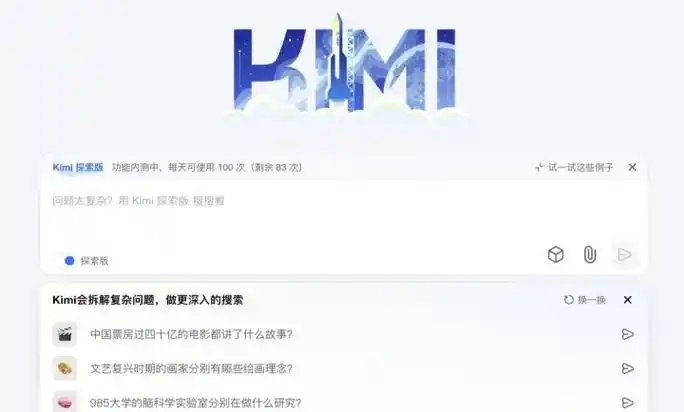
Moonshot AI was founded in early 2023 by Yang Zhilin and a team of researchers from leading Chinese universities and technology firms. The company is headquartered in Beijing and Shanghai and set out with a clear technical mission: to build large language models that excel at reasoning across long stretches of text and other data.
Early growth was driven by the launch of Kimi, an AI assistant with long context capabilities that resonated with students and professionals who needed help analyzing documents and research papers.
Moonshot positions itself as both a consumer product maker and a platform provider. Its product family includes mobile and web apps, a model platform with API access, and specialized tools for enterprises. The company is part of a new wave of Chinese AI startups that focus on utility rather than mere benchmarking.
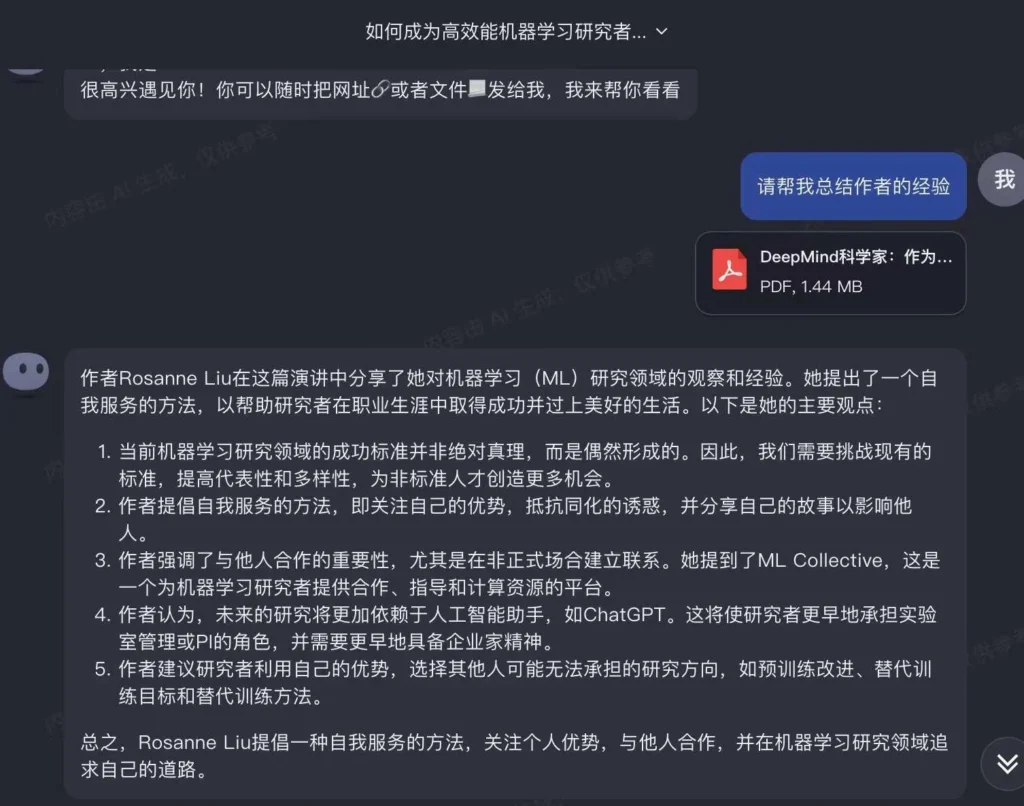
Users interact with Moonshot through chat interfaces to summarize legal documents, analyze code, or explore technical literature, and can also integrate the models into their own software via API calls.
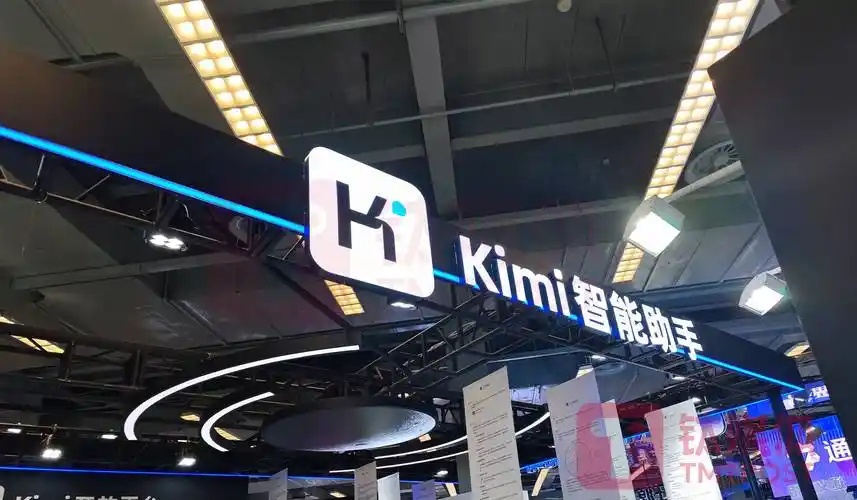
The Kimi assistant is the flagship consumer app that brought Moonshot AI into public view.
It launched in late 2023 and quickly gained traction for its ability to process extremely long documents without losing context.
While many chatbots at the time struggled with inputs longer than a few thousand tokens, Kimi’s models offered context windows in the tens of thousands of tokens and produced coherent answers across whole books.
By mid‑2024, the app had climbed to third place among China’s AI apps by monthly active users, showing strong product–market fit among students and professionals.
Kimi’s popularity rests on three pillars:
By late 2024 and early 2025, competition intensified. Rival models from DeepSeek and other Chinese firms prompted a shift in user preferences, and Kimi fell to seventh place in monthly active users.
Moonshot responded by open-sourcing parts of its model family, releasing Kimi K2 in July 2025, and quickly iterating on new versions that improved reasoning, code generation, and tool integration.
Kimi K2 introduced an open-source mixture-of-experts architecture with a trillion parameters that handles large inputs and performs well on reasoning and code tasks. This openness aligned with a broader trend in China toward open models and built a developer community around the brand.
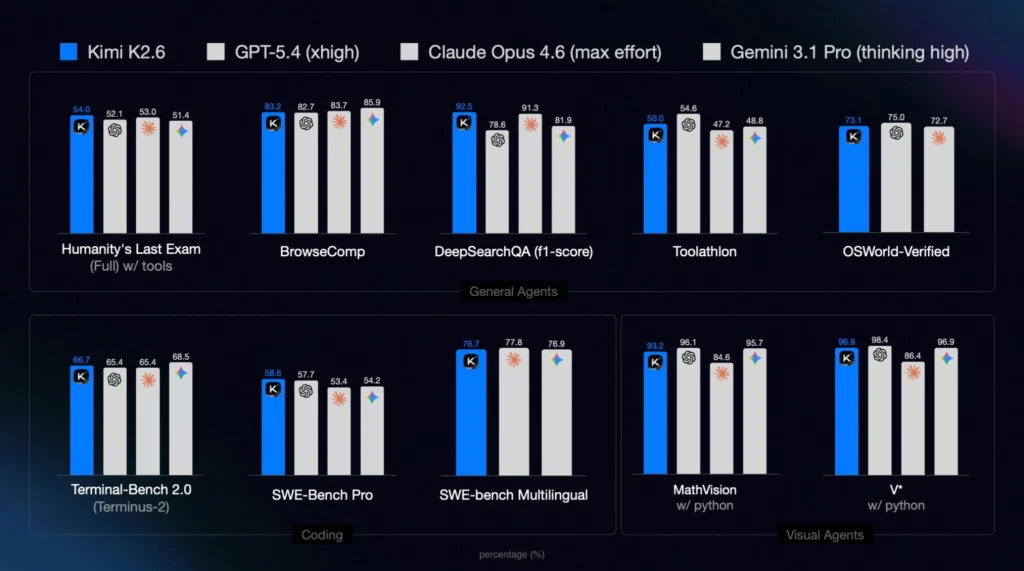
Moonshot’s ambition extends beyond its consumer app. The company operates a model platform that gives developers and enterprises direct access to its long context models via API. As of 2026, the platform offers several versions:
The platform also includes built‑in tools that developers can call without having to build them from scratch. These include web search, memory storage and retrieval, code execution, date and unit conversion, and even an Excel analysis tool.
Such tools allow developers to build agents that can browse the web for citations, store conversation history, run Python scripts or JavaScript, and perform other tasks within one API call. This ecosystem is designed for complex workflows such as deep research, pricing analysis, legal document review, psychological counseling analysis, and customer service.
Moonshot’s models emphasize agent programming, enabling users to create autonomous agents that handle debugging, refactoring, and multi‑step development tasks. For researchers and professionals, Kimi’s deep research and reasoning capabilities enable multi‑step tool calling across hundreds of steps.
In legal and intellectual property scenarios, the model is tuned for attention to detail and consistent terminology. For conversation intelligence, Kimi helps extract insights from unstructured dialogues, detect customer intent, and monitor public sentiment.
Moonshot’s product success attracted significant investment. In early 2026, the company secured over $700 million in a funding round led by Alibaba and Tencent, boosting its valuation to between $10 billion and $12 billion.
The funding came just months after the open source K2.5 model began generating revenue at scale. According to a report from February 24, 2026, Kimi K2.5 generated more revenue in 20 days than Moonshot earned in all of 2025, driven by a surge in paying users and API adoption.
The same report noted that overseas revenue overtook domestic income for the first time, signaling strong international demand. Co‑leaders of the round included Alibaba Group, Tencent Holdings, Wuyuan Capital, and Ji’an Investment.
Bloomberg and PYMNTS reports published in March 2026 indicate that Moonshot began talks to raise $1 billion at a valuation of around $18 billion. These sources highlight how quickly the company’s valuation climbed.
Analysts attribute the investment momentum to Moonshot’s open-source strategy, robust revenue growth, and the growing global interest in long-context AI models. Investors see the company as a serious challenger to Western leaders like OpenAI and Anthropic.
Moonshot operates in a highly competitive environment. Chinese AI startups like DeepSeek have released strong models, prompting Moonshot to innovate rapidly. The company responded by open-sourcing its K2 series and expanding its context windows to tens of thousands of tokens.
It leverages efficient transformer architectures, retrieval systems, and multimodality to manage long inputs and integrate tool use. Partnerships with Alibaba Cloud provide the compute infrastructure needed to train large models, helping Moonshot to compete despite having fewer hardware resources than some rivals.
The long context strength remains Moonshot’s distinctive feature. By focusing on models that can reason across large documents, maintain coherence, and perform multi-step reasoning, the company has built a technical reputation that sets it apart.
Its models are often benchmarked against DeepSeek V3 and even Western models like GPT‑5, with K2 positioned as a competitive alternative. Open-sourcing K2 encouraged community contributions and accelerated improvements, demonstrating a collaborative approach that appeals to developers.
The company aims to position Kimi as an agent-enabled long-context leader. Future releases like Kimi K3 or K4 will likely push context windows into the million token range. Stronger reasoning capabilities and unified multimodal processing are expected. The company will push deeper consumer integration through long context research assistants and productivity tools.
Moonshot AI must also navigate hardware constraints. The company currently leverages Alibaba Cloud for training, which provides reliable compute infrastructure despite lower hardware scale compared to DeepSeek. Going forward, optimization for domestic AI accelerators such as Huawei Ascend and Cambricon will be necessary. The US chip restrictions affect all Chinese AI labs, including Moonshot AI.
The freemium access model may expand. Low-cost inference options could help the company address pricing pressure stemming from DeepSeek’s market disruption. An initial public offering or a major strategic financing remains likely as the company continues to sustain computationally intensive training cycles.
Moonshot AI and Kimi show how fast China’s AI market is moving from model launches to real deployment, long-context workflows, and enterprise use cases. That shift matters well beyond China, especially for leaders tracking AI strategy, product development, and digital transformation.
ChoZan helps global teams make sense of those shifts through China research, executive briefings, workshops, consulting, and immersive learning expeditions designed around what is actually happening on the ground in China’s innovation ecosystem.
If your team wants a sharper perspective on where China AI is heading next, and what that means for your market, growth strategy, or transformation roadmap, book a consultation with ChoZan. We help turn fast-moving signals into clear business insight.
Moonshot AI processes large documents by using an advanced long-context architecture that retains coherence across extended inputs. This allows users to analyze entire research papers, contracts, or datasets in a single session without sacrificing accuracy or structure.
Long-context AI models matter because enterprises deal with large, complex datasets. These models allow deeper analysis, better decision support, and improved workflow automation by maintaining continuity across long documents, conversations, and multi-step reasoning tasks.
Developers can integrate Moonshot AI through its API platform, which provides access to models, tools, and memory systems. This setup enables the development of custom applications, such as research tools, automation workflows, and intelligent assistants, tailored to specific business needs.
Kimi stands out due to its ability to process long inputs while maintaining context accuracy. It supports deeper document understanding, structured reasoning, and iterative questioning, which improves research workflows compared to standard short-context AI assistants.
Yes, Moonshot AI offers a user-friendly interface through its Kimi app, allowing non-technical users to upload documents, ask questions, and receive structured insights. The design focuses on accessibility while still delivering advanced analytical capabilities.
Moonshot AI supports multilingual tasks by enabling cross-language document analysis and reasoning. This capability helps global teams process diverse datasets, conduct research across regions, and maintain consistent insights without needing separate tools.
Industries such as legal, finance, research, education, and software development benefit the most. These sectors rely on large-scale document analysis and complex reasoning, which align well with Moonshot AI’s strengths in long-context processing.
Moonshot AI improves productivity by reducing manual reading and analysis time. It quickly extracts insights, summarizes content, and supports multi-step reasoning, allowing professionals to focus on decision-making rather than data processing.
Long-context AI models may require higher computational resources and careful prompt design. While they handle large inputs effectively, performance can vary depending on task complexity, data quality, and the quality of workflows.
Future developments will likely focus on larger context windows, stronger reasoning capabilities, and deeper integration with enterprise systems. These advancements aim to support more complex workflows and expand real-world applications across industries.