CONTENT

In China’s 2025 foundation year and 2026 deployment era, Tencent AI matters because Tencent can move model capability into products people already use every day.
rThe Chozan report places Tencent among the companies turning AI from a lab story into an operating infrastructure, and Tencent’s own 2025 annual materials show that AI has already improved ad targeting, lifted game engagement, and helped cloud growth reach a more profitable stage.
For executives still asking what Tencent is, the clearest answer for 2025 is practical. Tencent spans messaging, payments, cloud, enterprise software, content, and games, so it has more distribution points for AI than most rivals.
That is why the better strategic question is not what Tencent owns. The better question is where Tencent can embed intelligence into an existing habit, workflow, or transaction to drive adoption quickly.
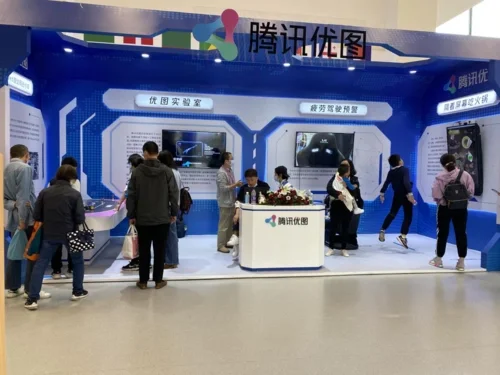
To appreciate Tencent’s AI ambitions, one must first understand the company itself. What is Tencent? Established in 1998 by Ma Huateng and headquartered in Shenzhen, Tencent is one of China’s largest technology conglomerates.
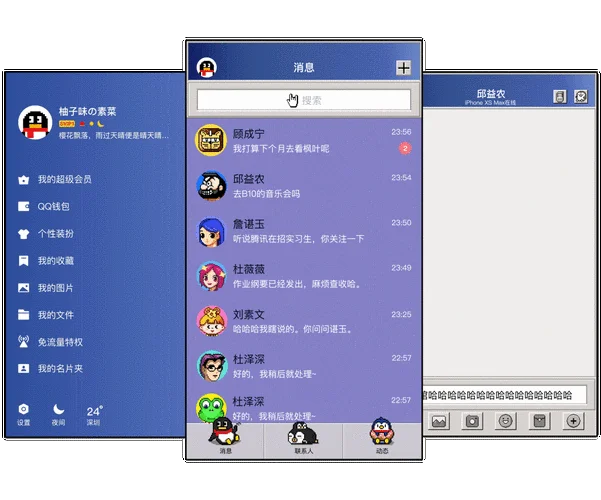
Its businesses span social media, entertainment, payments, and enterprise services. WeChat and QQ serve as daily gateways for messaging, payments, social feeds, and mini‑programs, while the company is also the world’s largest gaming publisher.
The group’s fintech arm includes WeChat Pay, and Tencent Cloud provides enterprise digitalization. Tencent holds major stakes in social platforms, gaming studios, cloud computing, and fintech; hence, the answer to the question “what does Tencent own” encompasses a wide range of consumer and enterprise brands. The company’s ability to infuse AI across these verticals is what distinguishes Tencent AI.
WeChat is Tencent’s primary AI distribution channel, with over 1.3 billion monthly active users. It functions as a super-app across communication, payments, and entertainment.
In 2024, WeChat Yuanbao launched as a built-in AI assistant. It drafts posts, answers queries, and generates content across chat, search, video, and mini-program interfaces. By 2026, it expanded into “Yuanbao PAI,” enabling group coordination within chats. It also delivers video summaries, structured search outputs, and comment-level interactions.
WeChat’s search now includes AI Search, introduced in 2025. It combines Tencent’s Hunyuan model with DeepSeek R1 to generate structured answers inside chat. Users can run complex queries, retrieve information, and access real-time results such as live event rankings. This positions WeChat as the central interface in Tencent’s AI system.
Mini-programs extend this capability. The ecosystem processes billions of API calls daily, with AI agents handling over 10 billion tool interactions. These agents book services, retrieve data, and execute multi-step tasks across third-party tools.
Tencent’s agent-as-a-service framework shifts AI from passive response to active execution. Yuanbao integrates with mini-programs across commerce, gaming, and productivity, embedding AI directly into user workflows rather than isolating it as a separate tool.

In September 2025, Tencent launched ADP 3.0 for international markets, followed by a global announcement at its 2025 Global Digital Ecosystem Summit. The platform lets enterprises build autonomous agents using proprietary data, supporting knowledge Q&A and API-based execution.
According to Tencent’s March 2026 presentation, agents can operate inside chat interfaces. Tools like WorkBuddy and QClaw help create customer service agents that draw on internal knowledge bases and interact across WeChat, QQ, and WhatsApp. The platform includes ADP infrastructure and Lighthouse cloud services for secure skill invocation and seamless chat integration.
Tencent is shifting from raw model access to packaged workflows—essentially agent-as-a-service—enabling enterprise copilots for customer service, coding, and internal knowledge tasks. Its overseas cloud client base doubled year over year following the ADP 3.0 launch.
Annual and quarterly reports show strong demand for Tencent Cloud’s AI offerings (APIs, GPUs, platform solutions, higher-value PaaS/SaaS), indicating that the enterprise layer already carries commercial weight.
Tencent’s gaming division is another area where AI is making an impact. The company owns Riot Games and holds stakes in multiple studios, making it the world’s largest gaming publisher. In 2025, Tencent began applying generative AI to game development: models like Hunyuan 3D accelerate art and environment creation, while conversational agents generate NPC dialogue.
These tools reduce development costs and personalize gameplay experiences. Tencent also reported a major hit with VALORANT Mobile, contributing to a 43 percent increase in international gaming revenue.
Beyond gaming, Tencent invests in immersive content, including digital humans and avatars. The company’s multimodal and 3D research leverages its strengths in visual computing and animation. This research positions Tencent to lead in high‑fidelity AI content, creating realistic avatars for entertainment, education, and customer service.
Generative gaming and synthetic characters will likely be integral to future platforms, and Tencent’s internal AI hardware, like Zixiao chips, helps support these compute‑intensive applications.
Tencent’s AI efforts translate to tangible business results. In Q3 2025, the company posted revenue of ¥192.9 billion (US$27.4 billion), up 15 percent year on year. Growth was driven by AI‑powered advertising targeting, coding tools, and higher game engagement. Tencent’s upgraded Hunyuan models improved its competitiveness in coding, mathematics, and science tasks.
Meanwhile, the mini‑program ecosystem exceeded US$250 billion in annual gross merchandise volume, reinforcing the platform’s position as an e‑commerce powerhouse. These figures suggest that AI integration is not just an experimental initiative; it has become a material driver of revenue and user engagement.
Tencent also expanded capital expenditure on AI infrastructure and extended its cloud footprint into Europe. TenPay Global Checkout illustrates the company’s push to embed payments into its global growth plan. By combining payment services, AI, and cloud computing, Tencent aims to create a seamless transaction experience for users and merchants worldwide.
The ChoZan report outlines four strategic priorities for Tencent’s AI roadmap in 2026.
Compliance remains a core priority. Tencent must align model outputs with China’s regulatory requirements while building trust with users and authorities. Its scale and integration mean that misuse could have large societal impacts. To address this, the company invests in safety research and collaborates with regulators to shape policy frameworks.
Tencent AI shows how China builds real systems, not isolated tools. What matters is not only the technology, but how platforms, data, and execution connect at scale. That is exactly where most global teams struggle.
ChoZan exists to solve that gap.
ChoZan is a China-focused research and digital transformation consultancy that helps global companies understand and apply what actually works within China’s innovation ecosystem.
Led by Ashley Dudarenok, a globally recognized expert on China’s digital economy, ChoZan works directly with Fortune 500 brands to translate fast-moving Chinese innovation into practical business strategy.
Here’s how ChoZan supports you:
This is not about understanding China out of curiosity. It is about learning from the world’s most advanced digital market and applying those lessons where they matter most.
If your goal is to move from observation to execution, ChoZan gives you the clarity, context, and strategic direction to do it right.
Book a consultation to explore how China’s AI and innovation systems can reshape your business strategy.
Tencent AI is more mixed than many people assume. Tencent keeps key Hunyuan capabilities proprietary within its products and cloud services, yet it has also open-sourced Hunyuan 3D models, which had surpassed 2.6 million downloads on Hugging Face by September 2025.
Yes. Tencent Cloud exposes Hunyuan text and 3D APIs, and its Agent Development Platform lets developers combine enterprise data, knowledge Q&A, and external API services to build agent applications faster.
Smaller teams can start without a huge contract. Tencent Cloud promotes free-tier offers, no-credit-card chat access for up to 1,000 MAU, and agent-platform trial incentives for early testing.
Yes. Tencent’s HunyuanVideo platform is designed for AI video generation, and Tencent says it can produce cinematic-quality clips with natural motion for advertising, film, and other industrial content production scenarios.
Yes. Tencent Cloud says it operates across 22 regions and 64 availability zones, and its infrastructure guidance recommends deploying near end users, supporting international builds rather than China-only deployments.
Tencent is already spending at scale on AI. Reuters reported that 2024 capital expenditure rose to US$10.7 billion, and Tencent’s 2025 annual report said rising AI investment covers infrastructure upgrades and top-tier talent recruitment.
Tencent is putting governance into its AI rollout. Its ESG reporting says an AI Technology Committee evaluates and guides AI projects, and Tencent Cloud says ADP data is subject to privacy and data processing agreements.
Tencent is prioritizing practical agents first. ADP highlights customer service upgrades, enterprise knowledge base assistants, and intelligent NPC use cases, which show Tencent wants agents tied to workflows, not only generic chat experiences.
Tencent is building talent, not only buying it. Its 2025 ESG report says 37 universities had joined its initiative by year’s end, reaching nearly 20,000 students, alongside broader recruitment of top-tier AI talent.
The next phase looks like deeper integration and bigger infrastructure. Tencent’s 2025 report highlighted HY 3.0, Yuanbao, WorkBuddy, and QClaw, while Reuters reported that Tencent plans to increase AI investment and launch a new WeChat agent.