
CONTENT

The noise around Chinese large language models has reached peak saturation. Most analyses recycle the same surface-level talking points. This piece will not do that. We will examine Alibaba AI Qwen through the lens of actual 2025 and 2026 developments, hard-benchmark data from Chinese evaluation platforms, real enterprise case studies, and the evolving competitive dynamics within China’s domestic AI landscape.
To understand Qwen’s position, you need to look at three things: the model system, what changed after 2025, and how it performs in real deployments.”
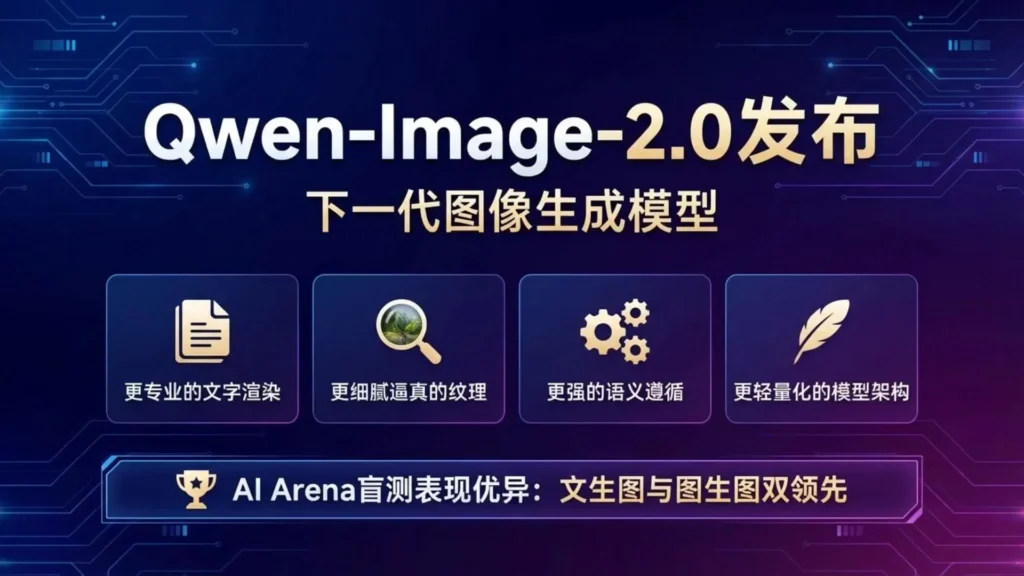
Alibaba AI Qwen is not a single model. It is a system designed to scale across developers and enterprises simultaneously. The way it spreads matters more than the model itself.
Qwen grows through two parallel paths.
First, Alibaba releases open-weight models. Developers download them, fine-tune them, and build variations for specific use cases. That has already produced more than one billion downloads and over 200,000 derivative models.
Second, Alibaba pushes Qwen through its cloud platform. Enterprises access the same model family through APIs and deploy it directly into production systems without managing infrastructure.
Most model ecosystems choose one path.
Qwen runs both.
This dual system creates a feedback loop.
Open models drive experimentation. Developers test ideas, adapt models, and explore edge use cases. At the same time, the cloud platform turns those ideas into deployable systems.
That combination accelerates adoption. It reduces friction for enterprises while keeping innovation distributed.
At this scale, the role of Qwen changes.
High download numbers show attention. High derivative counts show active usage. When both happen together, the model stops behaving like a standalone tool.
It becomes infrastructure.
That is Qwen’s actual position inside China’s AI ecosystem. It supports applications, enterprise systems, and industry-specific deployments as a base layer, not just a model offering.
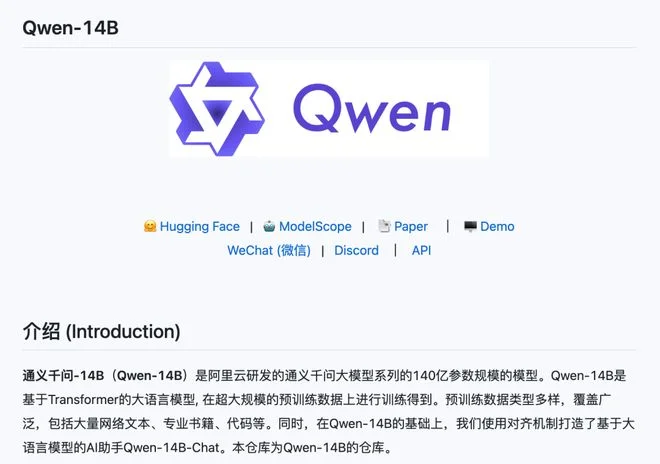
After 2025, Alibaba shifted Qwen from a model-focused system to an execution-focused system. The priority moved from generating outputs to completing tasks inside real workflows.
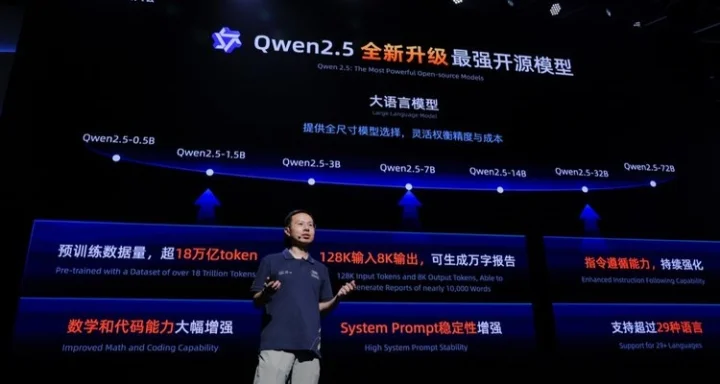
Qwen models expanded significantly in training scale. Qwen2.5-Max was trained on over 20 trillion tokens, while the Qwen3 family pushed this further to around 36 trillion tokens across more than 100 languages.
This expansion strengthened multilingual coverage and improved performance across broader task categories.
Alibaba introduced larger models while expanding mixture-of-experts systems to improve efficiency. This allowed Qwen to scale capability without increasing cost at the same rate.
Instead of relying only on larger dense models, the system distributes computation more selectively.
Qwen evolved into a fully multimodal system. Models like Qwen2.5-Omni and Qwen3-Omni process text, images, audio, and video within a single framework.
This removes the need for separate pipelines and allows unified reasoning across different input types.
Alibaba moved from periodic model launches to continuous iteration. New versions such as Qwen2.5, Qwen3, and Qwen3.5 were released in rapid succession, each targeting specific capability improvements.
This shift reflects a product mindset rather than a research-driven release cycle.
The most important change is functional.
Qwen models now support agent workflows, tool use, and task execution inside applications. Instead of generating standalone responses, they interact with tools, retrieve data, and complete actions.
This marks the transition from a passive model to an operational system.

Raw benchmark scores do not tell the full story. Qwen performs well across several areas, but its performance varies widely depending on the task type and the degree of output control required.
On MMLU-style evaluations, recent Qwen models reach the mid-to-high 80s. That puts them close to top-tier systems, even if they still sit slightly below the strongest closed models.
The pattern holds across reasoning and coding benchmarks. Qwen performs reliably on problem-solving tasks, code generation, and multilingual workloads, especially in Chinese and mixed-language environments.
It also handles long context inputs effectively, making it useful for document-heavy enterprise workflows.
The weakness appears when tasks require strict control.
Instruction-following accuracy drops when outputs must follow exact formats or multi-step constraints. Small prompt changes can lead to noticeable swings in results, even when the underlying knowledge is correct.
This creates inconsistency in scenarios where precision matters more than flexibility.
Qwen is strong in environments where tasks are open-ended, iterative, or high-volume. It performs well when the system can tolerate output variation and prioritize either speed or scale.
However, it becomes less reliable in workflows that demand strict formatting, deterministic behavior, or zero-error tolerance.
That distinction defines its real position.
It is competitive for applied workloads and enterprise automation, but it still requires careful testing in precision-critical systems.
Qwen’s positioning only becomes clear when you connect performance to cost. On benchmarks, it sits slightly below the top closed models. On pricing, the equation changes completely.
Alibaba prices Qwen on a pay-per-token model through Model Studio. Lower-tier models such as Qwen3.5-Flash can cost around $0.10 per million input tokens and $0.40 per million output tokens, while optimized variants like Qwen-Turbo drop even further to roughly $0.05 per million tokens.
Higher-capability models cost more, but still remain competitive. Qwen-Max and Qwen-Plus variants operate within a range that keeps them significantly cheaper than most frontier systems, especially when scaled across large workloads.
The gap becomes clearer at scale. Alibaba claims newer releases, such as Qwen3.5, reduce usage costs by around 60 percent while increasing processing capacity.
This is where evaluation changes.
If your system requires absolute precision, the performance gap with top closed models still matters. However, if your workload involves high-volume processing, internal automation, or multilingual tasks, cost efficiency becomes the primary driver.
Qwen does not need to outperform every model. It only needs to deliver comparable results at a fraction of the cost.
That is exactly what it does.
Qwen does not operate as a standalone model. It runs inside Alibaba’s broader AI stack, where models, tools, and infrastructure are tightly connected.
At the base, Qwen provides a range of models across different capabilities. This includes language, multimodal, and coding-focused variants within a single system.
These models are designed to work together rather than as isolated endpoints.
Above the models sits Alibaba Cloud Model Studio, also known as Bailian. This is where developers access Qwen, build applications, and manage deployment.
It handles scaling, orchestration, and execution, so teams do not need to manage infrastructure directly.
Qwen connects to external tools, APIs, and enterprise data through this layer.
Developers can combine models with retrieval systems, databases, and internal services within the same workflow. This allows Qwen to operate within applications rather than generating standalone outputs.
This stack turns Qwen into a working system rather than a model endpoint.
Applications can trigger actions, retrieve data, and execute tasks using the same environment. As a result, Qwen becomes part of the operational flow instead of sitting outside it.
Listing companies does not tell you how Alibaba AI Qwen is used. Patterns do.
Across 2025 deployments, four clear usage patterns emerge. These patterns explain why enterprises adopt Qwen and where it actually delivers value.
In high-volume service environments, Qwen powers conversational systems that handle routine interactions across channels.
In deployments such as Jietong Huasheng, these systems handle most standard customer queries by combining language models with internal knowledge bases and voice interfaces.
The outcome is not just automation. It is a consistent handling of repetitive workflows without increasing operational overhead.
Some companies integrate Qwen directly into existing software rather than building new systems.
Primesoft used Qwen inside internal tools for document processing, assistants, and workflow automation. The models connect to enterprise data and operate within existing systems.
This approach reduces adoption friction. Instead of replacing infrastructure, companies extend what already exists.
In regulated industries, generic models are not enough.
Baiwang used Qwen to build systems tailored for finance and taxation. These systems process structured data such as invoices and regulatory records, where accuracy and domain alignment matter more than general capability.
This shows how Qwen is adapted rather than deployed as-is.
Qwen is also moving beyond software environments.
In cases like Joyson Electronics, the model supports embodied AI systems that contribute to perception, reasoning, and interaction in physical settings.
This expands its role from digital workflows to real-world systems.
Qwen is not a universal fit. Its value depends on how well it aligns with your workload, tolerance for variation, and system requirements.
Qwen performs well on general reasoning and high-volume tasks. However, it becomes less consistent when outputs must follow strict formats or multi-step constraints.
If your application depends on deterministic behavior or exact structure, you need to test extensively before committing.
Qwen’s advantage increases with scale.
For workloads involving large volumes of text, multilingual processing, or internal automation, its cost structure becomes a significant factor. At that point, small performance gaps matter less than total system efficiency.
Qwen works best when it operates inside a connected environment.
If your use case requires integration with internal tools, APIs, or enterprise data systems, Alibaba’s stack provides a clear advantage. If you only need isolated model outputs, that advantage becomes less relevant.
Qwen is built for adaptation.
Its open-weight ecosystem allows teams to fine-tune models for specific industries and workflows. This is particularly relevant in regulated environments where generic models struggle to meet domain requirements.
There are still cases where Qwen is not the right choice.
Applications that require strict accuracy, low tolerance for variation, or highly controlled outputs may still favor stronger closed models. In these scenarios, cost efficiency does not offset reliability risk.
Understanding how systems like Qwen operate is only useful if it changes how you make decisions.
Most companies looking at China’s AI landscape face the same problem. The information exists, but it is fragmented, outdated, or disconnected from how things actually work in practice.
That gap is where Chozan operates.
Chozan helps global companies learn for China and learn from China by translating China’s digital systems into clear, executable strategies.
If you are evaluating systems like Qwen, the question is not what they are.
It is how they change your decisions.
Chozan helps you answer that. Book a consultation.
Alibaba AI Qwen is a family of large language models designed for real-world deployment across China’s digital ecosystem. It is used in enterprise automation, customer service, and AI-driven workflows, especially within Alibaba Cloud AI infrastructure and platform-based systems.
Alibaba Qwen vs global AI models depends on context. Qwen performs strongly on multilingual and enterprise tasks, particularly in Chinese environments, but may require more testing in precision-critical workflows than leading closed-source AI systems.
China’s AI ecosystem Qwen’s role comes from its integration across platforms and infrastructure. It supports applications, enterprise systems, and developer tools, making it less of a standalone model and more of a foundation layer inside China’s digital economy.
Alibaba Qwen enterprise use cases are already widespread, especially in automation, document processing, and customer interaction systems. However, suitability depends on workflow complexity, integration needs, and tolerance for variation in output accuracy and control.
Qwen benchmark performance is competitive in reasoning, coding, and multilingual tasks, particularly in Chinese contexts. However, real-world performance varies depending on output control, making testing essential for workflows that require strict formatting or deterministic behavior.
Alibaba Qwen limitations mainly appear in instruction-following and precision-sensitive tasks. While it handles flexible, high-volume workloads well, it may show variability when outputs must consistently follow strict rules or multi-step constraints.
Qwen cost vs performance is one of its strongest advantages. It delivers competitive results at significantly lower pricing, making it attractive for large-scale processing, multilingual workloads, and enterprise automation where cost efficiency matters more than marginal performance gains.
Alibaba Qwen integration with enterprise systems happens through Alibaba Cloud’s Model Studio and APIs. This allows companies to connect AI models with internal data, tools, and workflows, turning Qwen into part of operational systems rather than a standalone tool.
Industries using Alibaba Qwen include finance, customer service, enterprise software, and emerging robotics applications. Companies use it for automation, domain-specific systems, and AI-driven workflows that require scalability across large datasets and interactions.
How to evaluate Alibaba Qwen depends on your specific use case. Companies should assess precision requirements, scalability needs, integration complexity, and cost sensitivity before adoption, rather than relying only on benchmark comparisons or general performance claims.