CONTENT

Executives who look into 01.AI rarely need a simple founder profile. They need to understand where the company sits in China’s AI market as the conversation shifts toward deployment, workflow adoption, and commercial value.
ChoZan frames 2025 as the foundation year and 2026 as the deployment era. That context matters because the company is part of a broader shift from model development to products, platforms, and business use.
It places the company among the key Chinese tech enterprises to watch in 2026. It presents it as an enterprise-focused AI player built around the Yi family, then shows how it expanded into workflow products and a wider commercial stack. That makes it relevant to business readers who want more than benchmark headlines.
Founded in 2023 in Beijing by Li Kaifu, the company gained early traction through efficient large language models designed for enterprise and developer adoption. It also benefited from backing by Alibaba and Xiaomi, along with early adoption driven by the Yi family’s open-weight availability. Taken together, these factors explain why it attracted so much attention in China’s foundation model market.
The deeper point lies in timing. The expansion in 2024 and 2025 moved beyond model development into an AI 2.0 enterprise ecosystem. That shift matters because it places the company inside the next stage of China’s AI competition.
Buyers are now looking past raw model capability and asking a harder question. Which players can turn model performance into repeatable enterprise adoption? It belongs in that conversation because its activity now spans models, products, deployment tooling, and infrastructure.

The Yi family remains the clearest starting point for understanding the company. Yi 34B became the first Chinese large language model to top Hugging Face’s global leaderboard. That milestone gave it immediate credibility and showed that a Chinese open model could compete seriously in a global discussion shaped by Western labs.
01.AI did not stop at one successful release. It continued to refine the Yi family, then released Yi 9B for code and math tasks. That move matters because it points to a company thinking about model fit and technical efficiency in practical terms.
A buyer evaluating Yi AI should read that as a sign that the company understands diverse enterprise needs rather than pursuing a single, one-size-fits-all model.
The next set of releases reveals even more about the company’s direction. It unveiled Yi Large, a closed-source frontier-class model with hundreds of billions of parameters. Yi Lightning later debuted, ranking number six globally and number one in China on LMSYS.
That sequence matters because it shows 01.AI operating across open releases and premium model tiers simultaneously. For enterprise readers, Yi Lightning signals ambition at the top end of the market, while the broader Yi portfolio supports wider adoption routes.
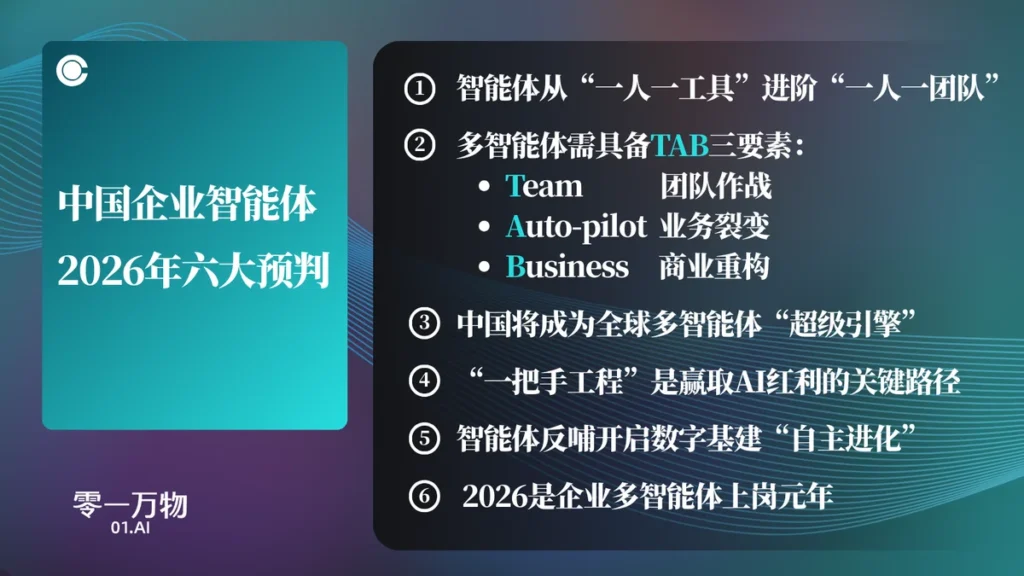
Enterprise adoption adds a more practical layer to the story. It launched the Wanzhi AI Work Platform to support office automation tasks, including meeting notes, PPT generation, and report writing.
It also introduced the Super Employee Wanzai agent for government and finance workflows. These details shift the story from model prestige to workflow value, showing where business adoption is expected to happen.
The business model also points toward enterprise execution. 01.AI monetizes through custom training, implementation support, consulting, and hosted API services. It also operates within a broader open source ecosystem that includes deployment tools, optimization utilities, and cloud integrations supported by Alibaba Cloud.
This is the profile of a player who aims to participate in implementation, not only in experimentation. That distinction matters when procurement teams compare model vendors that appear similar on the surface.

A legal drafting assistant, an internal knowledge tool, a coding copilot, and a document automation workflow do not need the same model profile. Enterprise teams should map task types, language needs, acceptable response quality, and real operational constraints before comparing vendors.
The Yi portfolio supports that kind of analysis as a family with distinct milestones and capability paths rather than a single undifferentiated label.
Hardware efficiency also strengthens the technical case. 01.AI focused on optimizing models for Alibaba’s compute stack and explored quantization and distillation to make large models deployable on limited hardware.
That means cost analysis should go beyond the list price. Buyers should consider the efficiency of inference and the operational costs of maintaining production quality over time.
Governance deserves the same level of attention. A credible AI provider should position itself as trusted and transparent, balancing open access with strong compliance and safety standards.
That should push enterprise teams to ask direct questions about data handling, hosting options, update control, auditability, support scope, and internal approval requirements. Those questions matter far more in finance, government, and internal knowledge workflows than in public demo environments.
A serious pilot needs a narrow workflow, a clear baseline, and a decision point tied to business value. Without that structure, even a strong Yi AI model can appear weaker than it is because the organization has not defined success properly.
Teams should decide in advance what improvement they want to measure, how long the pilot will run, and what conditions would justify expansion into a broader deployment.
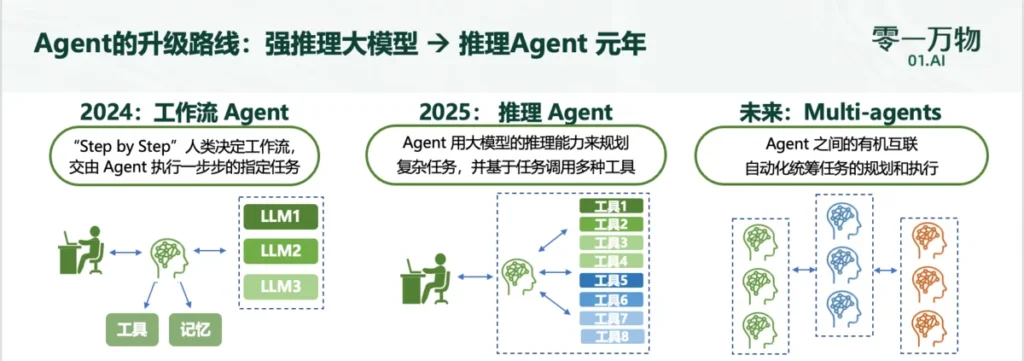
One common mistake in AI evaluation is naming drift. In this case, the company, model family, and specific model milestones are often treated as interchangeable, even though they are not. This distinction matters because each layer tells enterprise teams something different about capability, maturity, and fit.
Wanzhi and Wanzai are workflow products linked to the wider enterprise push. That distinction may sound basic, yet it matters during vendor review because naming confusion often leads to confusion in scope, expectations, and procurement.
A narrow search phrase can hide the full shape of the company. Terms such as “yi open foundation models” point to a single important layer but do not capture the wider stack. It operates across open models, a closed-source frontier-tier model, enterprise agents, and consulting-led commercial services. Serious buyers should evaluate the full offer with precision rather than assume a single keyword captures everything.
If your team is evaluating 01.AI, the Yi model family, or the wider shift from Chinese AI models into enterprise deployment, ChoZan can help you assess what matters and what does not. We help business leaders understand which China AI signals are commercially relevant, how to evaluate model, tool, and workflow layers, and what global companies can apply from China’s fast-moving AI ecosystem.
Book a consultation to discuss an executive briefing, expert session, or tailored China learning program.
Below are practical questions to help readers clarify how the company fits into the Chinese AI market and how enterprise teams should evaluate its models and products.
Yi Lightning stands out for frontier-level ambition inside China’s AI market. Its high ranking on LMSYS signals technical credibility, though fit still depends on deployment needs and business goals.
Yi AI models look strongest for business users who need coding, math, reasoning, and document-oriented workflows. They also support enterprise evaluation across task fit, cost discipline, and practical deployment planning in modern enterprise settings.
01.AI appears well-suited for coding, math, and reasoning tasks. Yi 9B is positioned for code and math performance, while the broader Yi portfolio reflects a focus on practical, technical capability for enterprise use today.
Possibly, but global companies should review hosting, compliance, support, and procurement details first. It may lower barriers for developers worldwide, but enterprise use still depends on governance needs and deployment constraints in practice.
Wanzhi plays a practical product role inside the ecosystem. It functions as an AI work platform for meeting notes, presentations, and writing tasks, linking models to everyday enterprise workflows at scale.
Wanzai is a workflow agent, while the Yi model family refers to underlying models. That difference matters because one supports applied business tasks, and the other represents the technical foundation behind them for enterprises today.
A strong pilot needs a narrow use case, baseline metrics, realistic timing, and clear success criteria. Teams should measure business value early and then decide whether broader deployment is justified for the organization in the long term.
No, Yi, open foundation models by 01.AI are rarely enough on their own for enterprise adoption. Most companies also need implementation support, governance controls, deployment tools, and workflow integration before real value becomes durable.