
What can China teach your team about getting customers to replace and upgrade, without relying only on a lower price?
China’s trade-in programmes show how to make upgrades easier, not just cheaper. Study the customer journey, distinguish new demand from earlier purchases, and check the economics behind collection and recovery.
A customer may want a better refrigerator and still postpone buying it. The old one works. Installation feels inconvenient. Disposing of it creates another task. A discount addresses the price, but leaves the rest of the decision unfinished.
This is a useful starting point for looking at China. Instead of asking how much retailers discount, ask how they help a customer move from considering an upgrade to completing one.
For leadership teams exploring retail innovation, the subject connects customer experience, merchandising, service and operations. It is not only relevant to companies planning to sell in China.

What makes customers replace a product before they have to?
A compelling upgrade needs both a reason to buy and a manageable way to make the change. Price is one part of that decision. Product benefits, service clarity and the effort of replacing the old item matter too.
China’s 2025 national policy provides a specific example of how an incentive can favour a type of upgrade. Eligible appliances meeting the second-tier energy or water efficiency standard received a 15% subsidy, while first-tier products received 20%, subject to programme limits. The offer gave qualifying efficiency improvements an additional price advantage.
That is a policy design, not proof that shoppers understood or valued the difference. For an overseas retail team, it creates a useful question: can customers see what they gain by choosing the better product, beyond the discount itself?
The service around the purchase is another place to look. JD’s published delivery-and-installation service combines delivery with installation for eligible products and locations. Its terms distinguish free and paid services and identify extra work that may carry additional charges. Availability depends on the order and address.
The lesson to investigate is straightforward: does your customer have to coordinate several steps that could be explained or arranged together? Compare that experience before assuming a larger discount is the only answer.
Keep the different offers separate. Government funding, a retailer’s discount and payment for a used product are not the same thing. China’s 2025 policy also included purchase subsidies for eligible digital devices; that provision was not itself a requirement to surrender an old device. A retailer-funded trade-in needs its own economics.
For the related question of how to make a premium offer worth paying for, explore Premium vs. Value.
Are retailers creating new demand, or moving purchases forward?
A busy sales period can contain several different stories. Some customers buy when they otherwise would not. Some bring a planned purchase forward. Others collect an incentive on a purchase they would have made at the same time anyway.
China’s appliance figures show why the reporting window matters. Among retail enterprises above the designated size, sales of household appliances and audio-video equipment rose 11.0% across 2025, but fell 18.7% year on year in December. These are sales-value measures, not unit volumes, and are not adjusted for prices.
The contrast does not establish how much demand was pulled forward. It also does not prove that subsidies caused the December decline. It does show why one strong period is an incomplete basis for planning the next one.
More sales. But what changed?
New demand
A purchase that would not otherwise happen.
Earlier purchase
A planned purchase brought forward.
Existing demand
A purchase that would happen anyway.
Look beyond the sales spike.
New demand means a purchase that would not otherwise have happened within the period being assessed. An earlier purchase changes timing. Existing demand receives support without an additional purchase. These are questions to investigate, not customer labels that a sales receipt can prove.
Compare the activity and the period after it with a credible estimate of what would have happened without the offer. Allow for seasonality, product launches, availability and changes elsewhere in the range. Choose the time window for the category: a refrigerator does not have the same replacement cycle as a frequently bought household product.
There is also a difference between gaining a sale for your business and growing the category. Winning a customer from a competitor may be commercially valuable even if total market demand is unchanged. Be clear about which outcome the programme is meant to achieve.
Bringing a purchase forward is not automatically a failure. It may serve an inventory or product-transition goal. The mistake is treating the resulting peak as a permanent rise in demand, then buying stock or committing spending on that assumption.

Could this be a useful learning topic for your team?
Tell Jemma your industry and the retail questions you want to explore in China.
What happens to the old product, and who pays?
A trade-in does not end when the new sale is completed. Someone must collect or receive the old item, assess its condition and decide whether to resell, refurbish or recycle it.
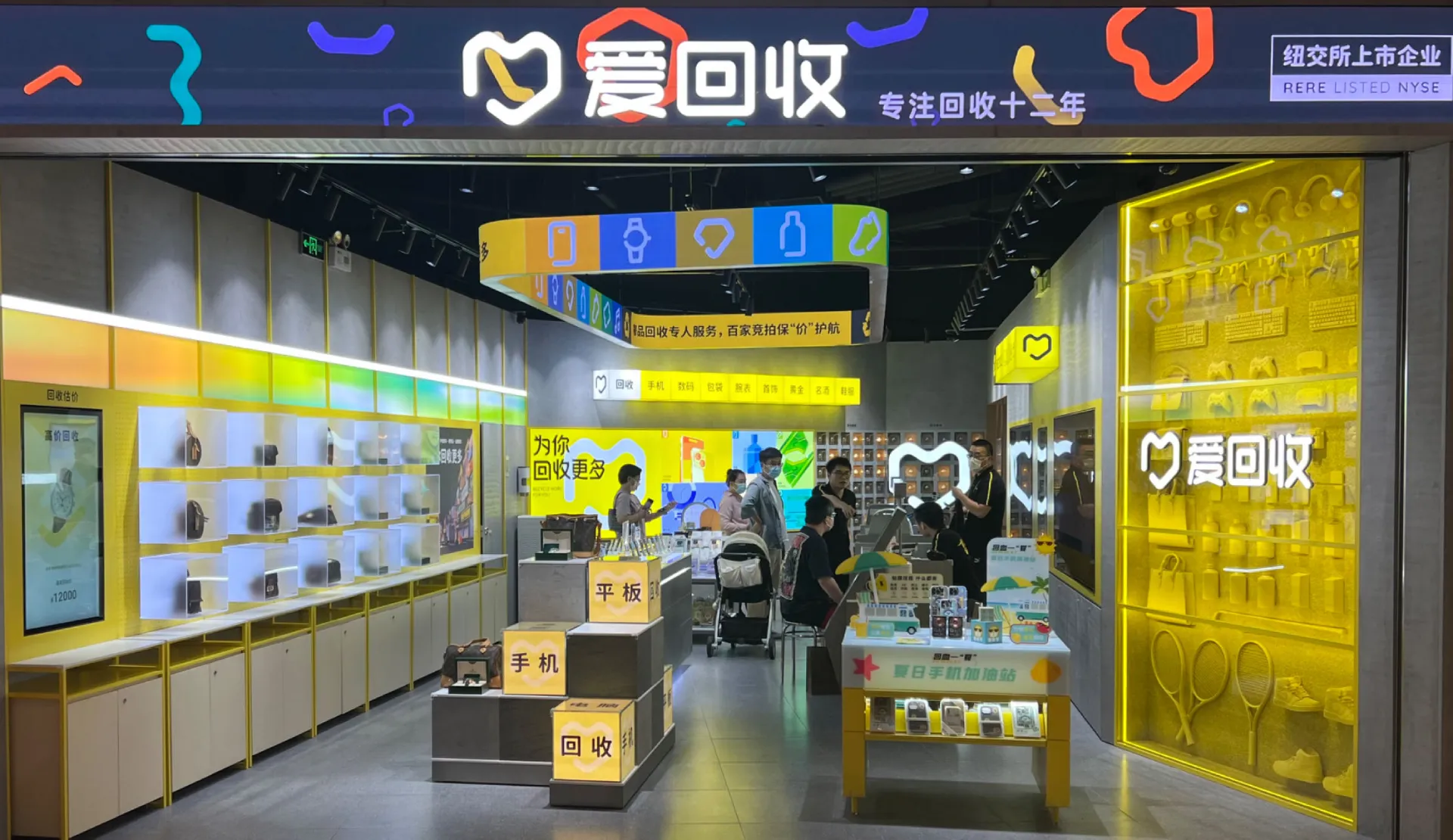
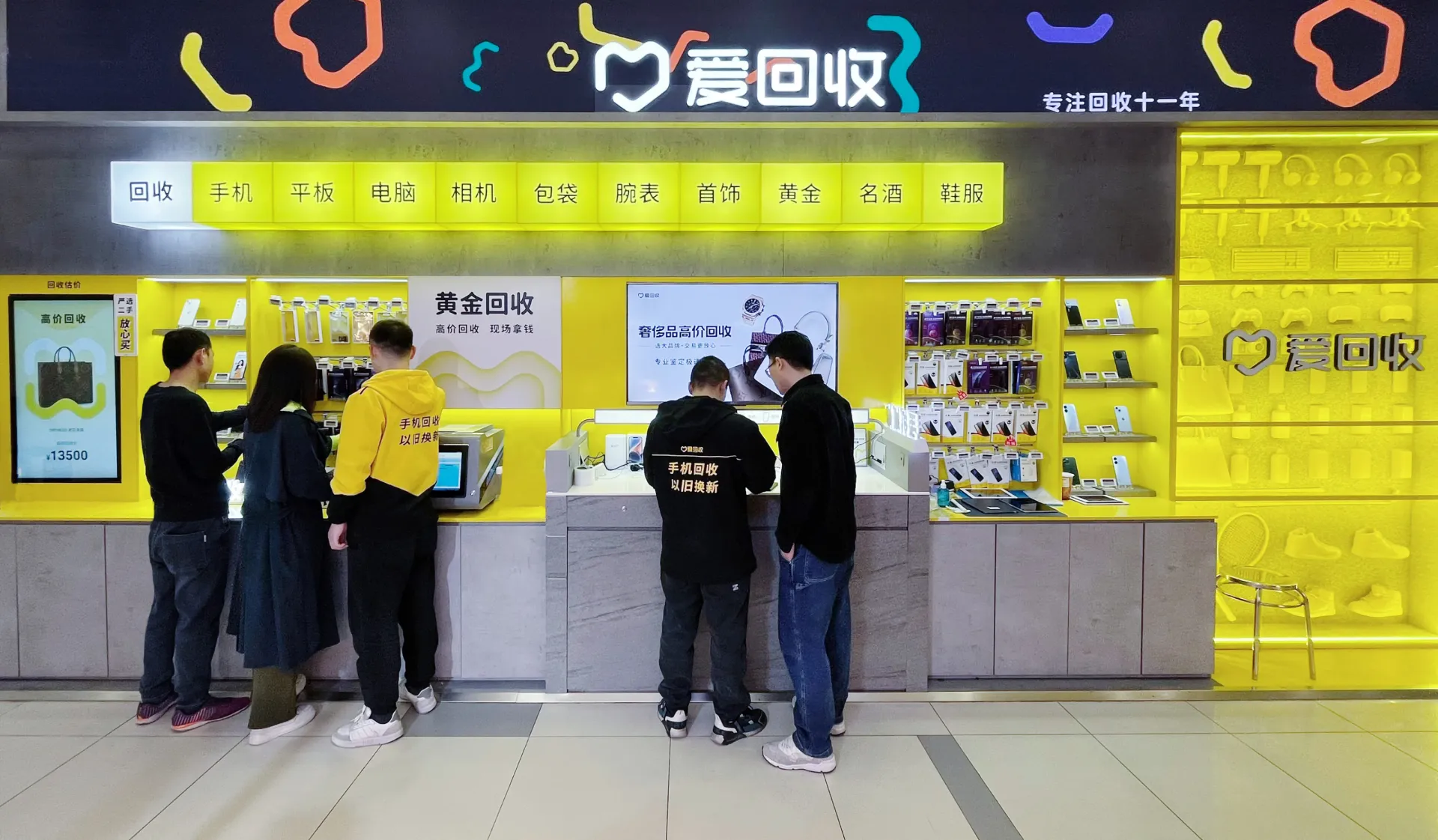
ATRenew offers a Chinese business example of that operating side. In its full-year 2025 results, published in March 2026, the company described an offline store network, door-to-door services and refurbishment capabilities supporting its recycling and trade-in business. It reported US$65.2 million in operating income for 2025.
That is a group-level result. It does not tell us the return on an individual retailer’s trade-in campaign or isolate the effect of government support. It does, however, give leadership teams a concrete business to study beyond the customer-facing offer.
Where does the trade-in value go?
Customer offer
Who funds it?
Collection
Who handles it?
Assessment
What can be recovered?
Resale or recycling
What remains after costs?
Follow the operating model, not just the discount.
Follow the item and the money separately. Who funds the customer benefit? Who takes ownership of the used product? Who carries the cost if its condition is worse than expected, or if it takes longer to sell?
Not every retailer needs to perform all these jobs. A specialist partner may handle assessment and recovery. But the agreement still needs to explain responsibilities, fees, settlement timing and what happens when the new purchase is returned.
Before calling the programme profitable, consider both the additional contribution from new purchases and the value recovered from old items. Include the costs of credits, handling, processing, selling, losses and programme operation, counting each cost once. Do not assume all new-sale margin is additional, or value every returned item at its best possible resale price.
Cash timing deserves its own question. A positive expected margin is not the same as cash available today. Credits, partner payments and resale proceeds can arrive at different times. That is a planning issue to examine, not a claim that all Chinese programmes experience payment delays.
What is worth seeing firsthand in China?
The most useful visit follows a customer decision, rather than collecting photographs of discounts. Start with a question your team is already trying to answer at home.
For a brand team, that might be how to explain an upgrade without making the whole conversation about price. For a retail team, it could be the handoff between purchase, delivery and installation. For an operations team, it may be how a used product is valued and routed to its next destination.
Three observations can make the learning more focused:
- Follow the offer. Can a customer distinguish the normal price, any discount, policy support and the value offered for the old item?
- Follow the handoffs. Where does the customer move between a store, an app, a delivery service or a recovery partner? What needs explaining twice?
- Follow the uncertainty. What happens if an item fails assessment, collection is delayed or the customer changes their mind?
These are observable parts of the experience. They are not substitutes for confidential cost information or a controlled test of sales impact. A visit can help your team identify a practice worth testing; it cannot establish the profitability of copying it in your market.
The relevant comparison is not whether your company can reproduce China’s subsidy budget. It is whether an idea about clearer value, easier replacement or better recovery could improve a specific customer journey at home.
For a broader approach to planning the learning, read what retail leaders should investigate on a China learning expedition.
The takeaway: study the experience behind the incentive. Separate the sales result from the timing effect, and the visible offer from the work required to deliver it.
See how the replacement journey works in practice.
Bring your team’s questions about customer value, upgrade journeys and retail execution. Explore which practices could be relevant to your market.
Specific visits and access are subject to confirmation. Article examples are not a promised itinerary.
Frequently asked questions
Is a trade-in the same as a discount?
No. A trade-in involves handing over an existing product in exchange for value, often linked to another purchase. A discount reduces the selling price without necessarily involving an old item. A purchase subsidy may be another separate component. Check who funds each benefit and what the customer must do to receive it.
Can retailers learn from China without government subsidies?
Yes, but they need to separate policy support from the retail practice. Clear upgrade choices, coordinated services and transparent used-product assessment are possible areas to investigate. Their costs and customer appeal still need testing locally.
Does a fall in sales after a promotion prove it failed?
No. A decline may reflect purchases brought forward, but other factors can also affect sales. Assess the wider period, costs and intended goal against a suitable comparison. Timing changes can be valuable without representing lasting demand growth.
Is this a relevant learning theme outside electronics and appliances?
The questions about replacement barriers, ownership and recovered value may apply to other durable categories. The operating model does not transfer automatically. A product’s condition, resale market and handling requirements determine how useful the comparison is.
Sources: NDRC and Ministry of Finance, 2025 policy notice · JD, delivery-and-installation service terms, accessed October 2026 · National Bureau of Statistics, December and full-year 2025 retail sales · ATRenew, full-year 2025 results, March 2026 · Circana, How to Tell If a Promotion Drove Real Growth

Consumer Growth & Retail Innovation

Premium vs. Value