CONTENT

Over the past two decades, China has evolved from an importer of Western cosmetics into the world’s second-largest beauty market. In 2024, its cosmetics and personal-care exports reached 51.2 billion yuan (US$7.2 billion), up 11.9 percent year-on-year. By mid-2025, exports climbed another 12 percent to 18.7 billion yuan.
Chinese skincare brands are no longer imitators. They lead innovation through biotechnology, artificial intelligence, traditional Chinese medicine (TCM) ingredients, and sustainable packaging. Live-streaming commerce and cross-border e-commerce now connect them with consumers from Jakarta to London.
As global growth slows and domestic regulation tightens, 2025–2026 marks a turning point. A new generation of consumers and rising demand for organic products are reshaping brand strategies at home and abroad.
This report analyzes how China’s top beauty players—backed by real-time data, regulatory shifts, and advanced R&D—are redefining global skincare.
beautiful healthy woman looking in the mirror
In 2025–2026, Chinese skincare’s evolution is defined by science rather than aesthetics. C-beauty has matured from influencer-driven trends to a research-led industry anchored in dermatology, biotechnology, and data. This transformation reflects China’s national pivot toward functional skincare—products proven to repair, strengthen, and protect skin rather than simply enhance appearance.
According to data from China National Medical Products Administration (NMPA), functional cosmetics now account for over 45% of all new skincare filings, with anti-aging, barrier repair, and sensitive-skin formulations leading growth. This shift has positioned China’s biotech clusters in Hangzhou, Suzhou, and Guangzhou as innovation hubs for beauty science.
Early C-beauty brands built their identity around packaging and pop culture. The 2025 consumer, however, demands ingredient evidence and measurable results. Brands like Winona, Biohyalux, and Dr. Yu invest heavily in clinical trials and publish dermatological data—practices once dominated by Western pharmaceutical brands.
These companies collaborate with hospitals and research institutes to validate efficacy, a strategy that’s earning trust among educated, health-focused consumers.
China’s beauty R&D ecosystem now blends pharmaceuticals and cosmetics. Bloomage Biotech, China’s largest hyaluronic acid producer, supplies raw materials to domestic and international brands while developing peptide complexes and micro-delivery systems. Proya established the Proya Biotechnology Research Institute, integrating microbiome research into its new “Barrier Code” line, tailored to Asia’s humid climate and pollution challenges.
The government’s “14th Five-Year Plan for Cosmetics Industry Development” further accelerates this shift by funding research on skin microbiome and green biomanufacturing. These initiatives align with China’s broader “Healthy China 2030” agenda, which merges wellness, data, and science into a single industrial framework.
C-beauty’s identity still honors its traditional roots. Ingredients such as Tremella, Artemisia, Ginseng, and Centella Asiatica are re-engineered through biotechnology to achieve higher purity and stability. This “modernized TCM” (Traditional Chinese Medicine) model helps brands bridge East-West appeal by merging natural heritage with lab-tested performance.
For example, Inoherb’s BioActive line extracts TCM herbs using low-temperature enzymatic processes, reducing irritants while enhancing antioxidant concentration. The result is a formula with both cultural resonance and scientific validation.
International retailers increasingly recognize China’s scientific progress. Sephora and Watsons introduced dedicated “C-dermocosmetics” sections in 2025, showcasing Chinese brands alongside La Roche-Posay and Avene. This signals a strategic reclassification—C-beauty is no longer “affordable local skincare.” It’s a credible, data-backed beauty science movement poised for export growth.
China’s skincare consumers in 2025–2026 are the most informed and digitally connected in Asia. They rely less on brand image and more on clinical data, ingredient transparency, and peer-reviewed results. This marks a decisive shift from aesthetic marketing to evidence-based skincare consumption.
According to Tmall’s 2025 “Beauty and Personal Care Report,” over 72% of urban consumers check ingredient labels before purchasing skincare, while 60% follow dermatologist accounts on Red (小红书) and Douyin. Gen Z and Gen Alpha users drive this movement, shaping a new form of digital skin literacy built on community learning, AI tools, and trusted content creators.
The post-pandemic mindset reframed beauty as wellness. Consumers now treat skincare as preventive health care—focusing on barrier repair, anti-inflammation, and skin resilience. Keywords like “肌肤屏障” (skin barrier) and “修护精华” (repair serum) dominate social media searches, while functional skincare and medical beauty hybrids continue to grow at double-digit rates.
Dermocosmetic brands such as Winona and Dr. Yu position themselves as “skin recovery partners,” emphasizing efficacy over appearance. Their collaborations with hospitals and dermatology associations strengthen credibility among cautious, health-conscious consumers.
AI-driven skincare has become mainstream in China’s beauty ecosystem. Major platforms like Douyin, JD Health, and Alibaba Cloud now integrate AI skin analysis tools that evaluate tone, hydration, and damage through selfies. These systems generate personalized recommendations and link users directly to compatible C-beauty products.
At the brand level, Proya, Pechoin, and Bloomage Biotech are embedding machine learning into product development—analyzing millions of consumer feedback loops to refine texture, absorption speed, and environmental tolerance. This data-to-product cycle shortens R&D time while keeping formulations relevant to regional climates and lifestyles.
Platforms like Red and Douyin remain the heartbeat of China’s skincare discourse. Red’s community of over 300 million monthly users serves as a digital lab for product validation—where micro-KOLs, dermatologists, and everyday users publish ingredient analyses, trial results, and side-by-side comparisons.
Meanwhile, Douyin’s beauty livestreams bring expert-led skincare education to mass audiences, transforming sales into guided learning sessions. The line between content, commerce, and consultation is dissolving, giving rise to a smarter, participatory beauty culture.
This generation of Chinese consumers values science, safety, and self-knowledge. Their decisions are shaped by real-time feedback, medical advice, and digital diagnostics—not advertising promises. For global marketers, understanding this data-driven consumer mindset is essential for brand entry, positioning, and long-term loyalty in China’s evolving skincare ecosystem.
China’s skincare revolution is led by a new generation of brands that blend science, technology, and local culture. These companies have moved beyond imitation toward original innovation — building credibility through R&D, partnerships, and consumer transparency.
Below are five case studies that represent how C-beauty is redefining the industry in 2025–2026.
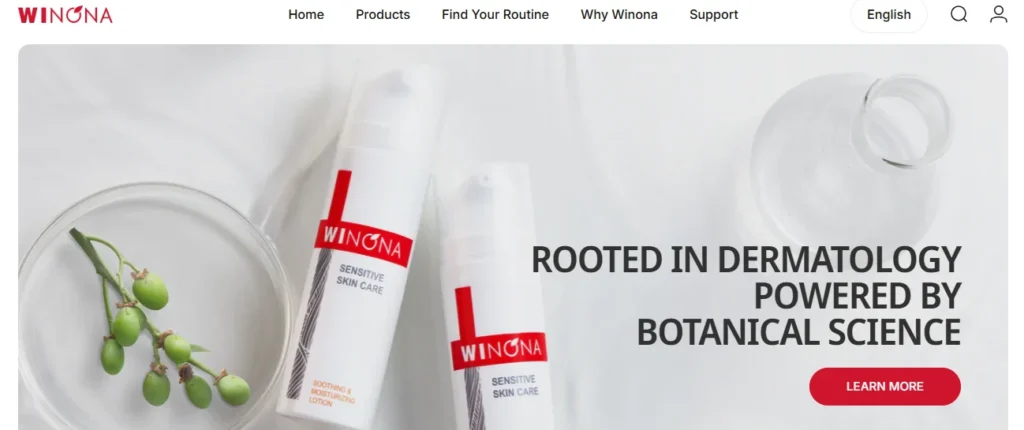
Founded in Yunnan, Winona leads China’s dermocosmetic segment, focusing on sensitive and barrier-damaged skin. Backed by Botanee Group, the brand operates a full dermatological R&D center and conducts hospital-grade clinical testing — a rarity in Asia’s beauty sector.
Its formulations use locally sourced plant extracts such as Portulaca oleracea and Centella Asiatica, refined through biotech for enhanced efficacy. Winona’s collaboration with dermatology departments across China strengthens its reputation as a science-first skincare brand, driving exports to Southeast Asia and Europe.
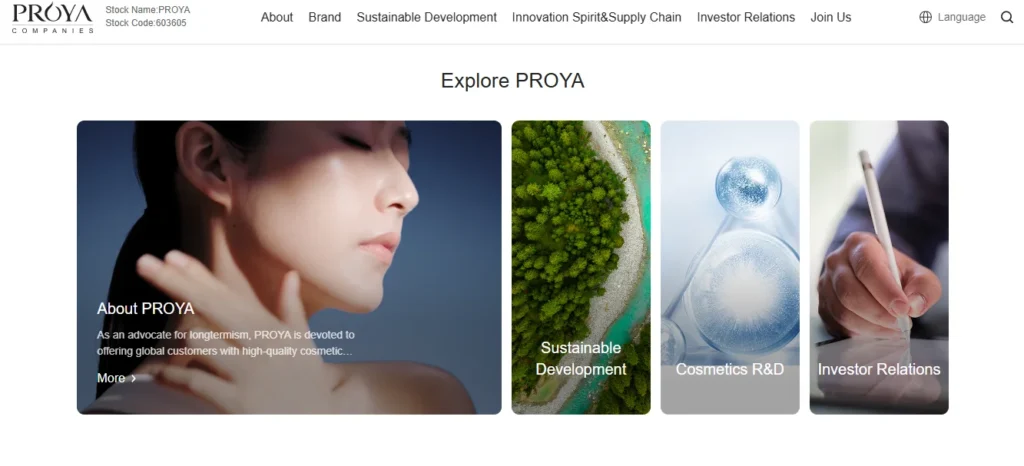
Once a mid-range brand, Proya has transformed into a high-performance beauty innovator. Its Proya Biotechnology Research Institute in Hangzhou integrates molecular biology and microbiome science to design products for urban, pollution-stressed skin.
The company’s “Barrier Code” and “Ocean Power” lines exemplify how local R&D meets marine and probiotic science. Beyond labs, Proya’s digital precision stands out — using AI to predict consumer preferences and dynamically adjust marketing through Douyin and Tmall data loops.
In 2024, Proya opened a Paris branch equipped with an R&D lab led by former Estée Lauder scientist Lieve Declercq. This European hub will serve as a scouting base for potential acquisitions in fragrance, men’s skincare, and baby‑care categories—segments where the company currently lacks expertise. Analysts believe Europe’s rich ecosystem of independent niche brands makes it a fertile hunting ground for Proya.
Herborist and Inoherb reinterpret China’s herbal legacy for the 21st century. Both brands are leading the movement known as “modern TCM skincare” — combining centuries-old botanical knowledge with pharmaceutical formulation standards.
Herborist’s “Tai Chi” series, for example, employs dual-compartment serums to stabilize active herbal ingredients. Inoherb uses enzymatic extraction and nanotechnology to enhance penetration and reduce allergens. Together, they demonstrate how cultural heritage and scientific validation can coexist, appealing to both domestic and global consumers seeking clean yet effective skincare.
Biohyalux, under Bloomage Biotech, epitomizes the convergence of pharmaceuticals and beauty. As the world’s largest producer of hyaluronic acid, Bloomage supplies ingredients to international giants like L’Oréal while developing its own consumer skincare line.
Biohyalux specializes in medical-grade hydration, collagen stimulation, and post-procedure recovery. Its clinical positioning and minimalist design reflect a shift toward professional credibility rather than trend-based marketing. The brand also collaborates with dermatologists to publish efficacy data — further elevating its trust factor among medical consumers.
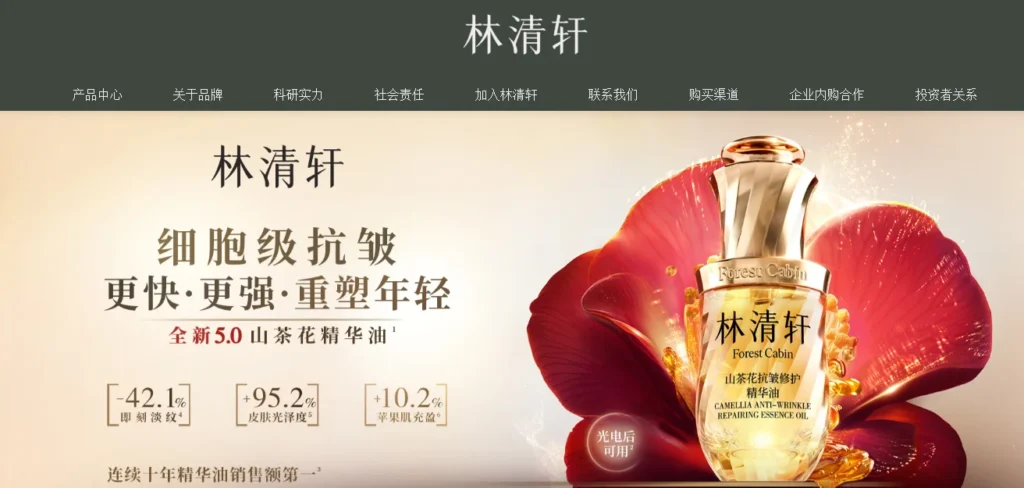
Once a niche brand, Forest Cabin (林清轩) has become China’s sustainability icon. After nearly collapsing in 2019, the brand restructured around ESG principles — introducing refillable packaging, traceable sourcing of Camellia oil, and plastic-free retail formats.
By 2025, Forest Cabin’s zero-waste initiatives and green manufacturing have earned national recognition, aligning with China’s “Green Beauty” policy goals. Its success story highlights the future direction of C-beauty — where environmental accountability enhances brand loyalty and global competitiveness.
JOY GROUP exemplifies the multi‑brand approach now popular among Chinese beauty houses. Its color‑cosmetics brands JUDYDOLL and JOOCYEE have achieved strong momentum by tailoring products and marketing to local tastes. Kong Fanqi, head of overseas business, emphasizes that each foreign market requires dedicated teams who understand local user preferences and operate with autonomy.
As a result, JOY GROUP’s brands are now sold in over 50 countries. The company reinforces this localization strategy by establishing overseas R&D centers and factories to shorten logistics cycles and reduce tariffs.
In October 2025, JOY GROUP acquired Italian hair‑care brand Foltène. The deal included Foltène’s intellectual property, distribution network, supply chain, and Italian laboratory. Foltène’s portfolio encompasses gender‑specific anti‑hair‑loss treatments and nail‑repair essences backed by decades of research.
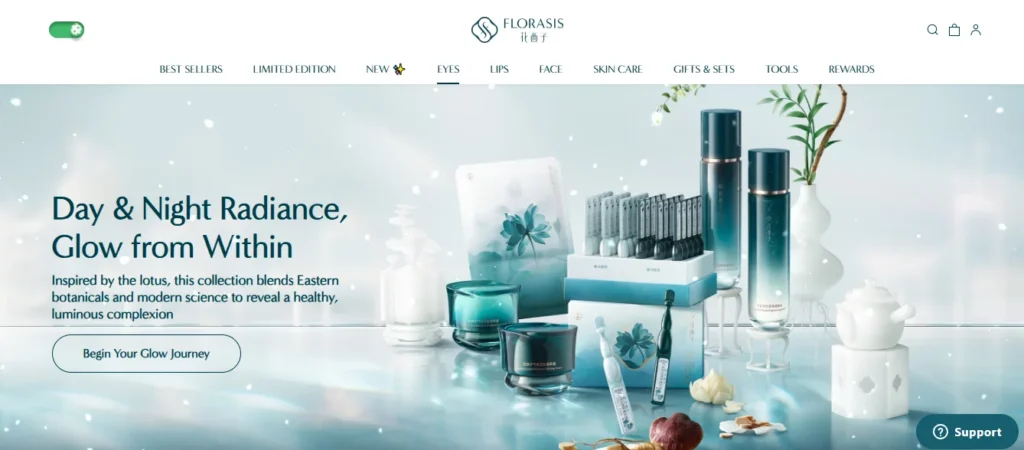
Florasis, known for its ornate packaging inspired by Chinese art, offers another blueprint. The company initially targeted the United States, working with more than 1,500 U.S. influencers and amassing over one million TikTok followers. However, escalating trade frictions prompted Florasis to shift its expansion strategy toward Japan, Southeast Asia, and Europe in 2025, pausing U.S. investments despite maintaining a stable American business.
The brand ships to over 100 countries, but management recognized that markets with fewer political headwinds offer better opportunities. This pivot underscores the need for Chinese brands to navigate geopolitical uncertainties while pursuing global growth.
Florasis continues to leverage TCM ingredients and cultural motifs; its retail store at the China International Consumer Products Expo displayed AI‑powered devices for personalized product recommendations, hinting at a fusion of technology and tradition.
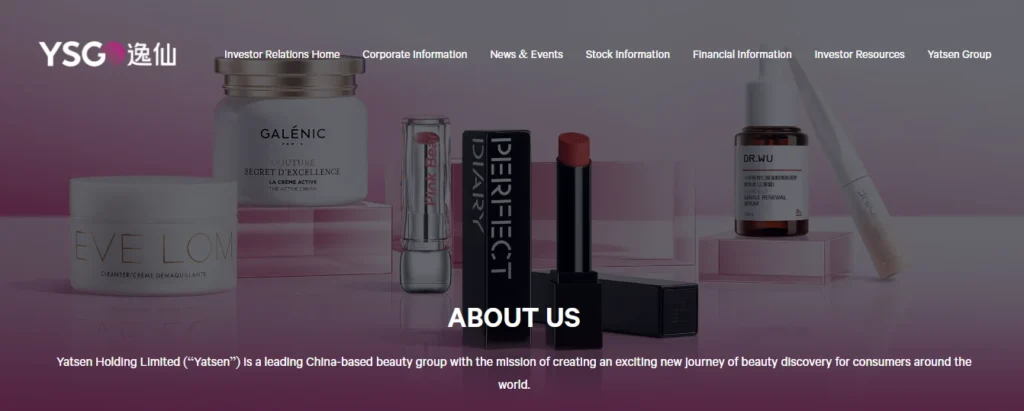
Yatsen, once China’s beauty-tech star, built its rise on Perfect Diary’s aggressive KOL and livestream marketing. In 2019, it earned 3.03 billion yuan in revenue and 75 million yuan in profit before a high-profile IPO. But marketing costs ballooned from 309 million yuan (2018) to 4.01 billion yuan (2021)—68.6 percent of revenue—eroding margins.
To survive, Yatsen launched a “second entrepreneurship” centered on skincare. It introduced Wanzixinxuan and Abby’s Choice, and acquired Galénic, Eve Lom, and Dr. Wu. These moves lifted skincare revenue to 580 million yuan in Q2 2025, up 78.7 percent year-on-year, accounting for 53.5 percent of total sales. First-half 2025 revenue reached 1.92 billion yuan, up 22.4 percent, with losses narrowing mainly through cost control.
Yatsen’s trajectory underscores the limits of influencer-driven growth and the shift toward product efficacy, brand credibility, and diversified portfolios in China’s evolving beauty market.
The Hebe Beauty group operates several brands that have rapidly penetrated Southeast Asia. Its labels, Y.O.U and Dazzle Me, leverage platforms like Shopee and TikTok to deliver affordable yet trendy products, capitalizing on Euromonitor’s finding that Chinese brands posted a 115% CAGR in Southeast Asia’s mass‑skincare market from 2019–2024.
Meanwhile, the Indonesian‑focused brand Skintific, owned by Guangzhou Feimei Cosmetic Co., achieved cumulative sales of over RMB 800 million within two years and topped the sales charts on Shopee, Lazada, and TikTok Shop in 2022.
The brand excels in using TikTok’s algorithm to generate viral “before‑and‑after” videos and invests heavily in localized product registration and halal certification. Hebe Beauty’s ability to supply more than 30 markets through cross‑border warehouses demonstrates how Chinese companies are mastering supply‑chain logistics to support viral marketing.
These pioneers prove that C-beauty is no longer defined by price or aesthetics. Biotech, data, and purpose power it. Each brand shows how Chinese companies are scaling innovation through R&D infrastructure, ingredient transparency, and digital ecosystems — setting new benchmarks for the global beauty industry.
Between 2025 and 2026, Chinese skincare brands will no longer be confined to domestic growth. They are entering international markets with confidence, supported by advanced R&D, competitive pricing, and a clear understanding of regional skin needs. The new wave of C-beauty exports reflects China’s ambition to position itself as both a manufacturing hub and a creative powerhouse in the global beauty market.
According to data from the China Chamber of Commerce for Import and Export of Medicines and Health Products, China’s skincare exports grew by 27% in 2025, driven by Southeast Asia, Europe, and the Middle East. Brands are building cross-border pipelines through Tmall Global, TikTok Shop, and Shopee, targeting diverse consumers with localized product lines and region-specific narratives.
Southeast Asia is emerging as the most dynamic region for Chinese cosmetics exports. Euromonitor expects the region’s beauty and personal‑care market to exceed US$40 billion by 2028. Shared climate conditions and similar skin concerns — humidity, pollution, and sensitivity — make markets like Thailand, Vietnam, and Malaysia ideal testing grounds.
Brands such as Winona and Dr. Yu are expanding through pharmacy chains and online retailers, emphasizing clinical credibility and sensitive-skin science. Their educational campaigns mirror the success of K-beauty’s early expansion but are rooted in data and dermatology rather than pop culture.
In 2025, Proya and Bloomage Biotech’s Biohyalux entered select European markets, leveraging partnerships with aesthetic clinics and wellness retailers. European consumers increasingly value clean formulations, ingredient transparency, and biotech efficacy — areas where C-beauty excels.
Meanwhile, in the Middle East, Herborist and Inoherb highlight their TCM-inspired formulations as part of holistic self-care. Their storytelling combines herbal science and cultural authenticity, aligning with the rising demand for wellness-focused skincare.
Unlike traditional global rollouts, C-beauty’s expansion model is digital-first. Brands use TikTok, Instagram, and Shopee Live to reach consumers directly, bypassing the high costs of retail footprints.
This strategy leverages China’s advanced social commerce playbook — integrating influencer storytelling, live consultation, and instant checkout. For instance, Forest Cabin launched a sustainability-focused campaign on TikTok Europe in 2025, collaborating with eco-lifestyle creators to introduce refillable packaging to global audiences.
Localized storytelling remains central: English, Arabic, and Thai content all emphasize efficacy, transparency, and health — not nationality. The goal is to win trust through science and experience, not “Made in China” branding.
Successful C-beauty expansion depends on cultural fluency. Brands are adapting their storytelling to local beauty values. For example, Winona highlights “skin barrier health” in Europe, while in Southeast Asia, it markets “cooling repair for tropical skin.”
Proya frames its technology-driven innovation in scientific terms for Western audiences but maintains an emotional, wellness-oriented tone in Asian markets. This agility — backed by data and social listening — allows Chinese skincare brands to scale without losing identity.
C-beauty’s international rise signals a more profound transformation in the beauty economy: innovation no longer flows one way from West to East. China’s blend of science, technology, and cultural intelligence is now shaping global beauty standards — influencing ingredient trends, product textures, and even consumer expectations worldwide.
China’s skincare revolution would not exist without its digital infrastructure. Between 2025 and 2026, WeChat, Douyin, and Red (Xiaohongshu) have evolved into interconnected ecosystems where beauty discovery, education, and commerce merge seamlessly. These platforms shape how C-beauty brands build authority, engage consumers, and convert attention into loyalty.
Social media in China no longer functions as a marketing channel — it is the operating system of the beauty industry.
WeChat remains the backbone of long-term skincare brand engagement. Official accounts, mini-program stores, and CRM tools allow brands to turn followers into loyal members.
Leading skincare labels for virtual consultations, AI-driven skin analysis, and membership-based product recommendations. These programs seamlessly integrate with offline clinics or pop-up stores, offering consumers consistent service at every touchpoint.
WeChat’s private traffic model — where brands manage first-party consumer data — supports personalized product journeys. In 2025, over 68% of skincare purchases initiated on WeChat came from mini-program interactions, according to QuestMobile.
Douyin (China’s TikTok) has become the most influential beauty marketing platform of 2025. Short-form video and livestream commerce have replaced traditional advertising with interactive education. Dermatologists, chemists, and micro-influencers now dominate the skincare conversation, translating scientific claims into relatable content.
Brands use Douyin’s algorithmic precision to reach segmented audiences based on skin type, climate zone, and even local pollution index. Douyin’s integration with TikTok Shop also accelerates cross-border growth — allowing C-beauty brands to reach Southeast Asia, Europe, and the US through localized versions of the duplicate interactive content.
Red has evolved into China’s digital dermatology forum. Its community of over 300 million monthly active users fuels peer-to-peer product testing and ingredient-based reviews. The platform’s visual, diary-style content format allows users to document long-term skincare results — creating a public record of product efficacy.
Brands rely on Red for credibility building. Instead of large celebrity endorsements, they collaborate with micro-KOLs, medical aestheticians, and skincare bloggers who share data-backed testimonials. Red’s search algorithm favors authenticity — rewarding educational posts over ads — making it a critical channel for consumer trust.
What sets China apart is integration. A consumer may discover a serum on Red, watch a clinical explanation on Douyin, and purchase it through a WeChat mini-program — all within the same digital loop.
This interconnected design gives brands real-time insights into user behavior, sentiment, and repurchase patterns. AI analytics on these platforms provide precise audience segmentation, reducing ad waste and strengthening lifetime value.
For global beauty players, China’s digital model offers a preview of the future. These ecosystems blur the line between content, commerce, and consultation. Success depends on data fluency and authentic education rather than traditional advertising budgets.
Understanding how WeChat, Douyin, and Red operate together is key to decoding China’s next stage of skincare growth.
China’s skincare market is evolving around biotech innovation, TCM science, and digital ecosystems like Douyin, Red, and WeChat. ChoZan helps beauty leaders understand and act on these shifts through four focused services.
To explore tailored insights for your beauty brand, book a consultation with ChoZan and gain the clarity needed to lead in China’s next-generation skincare industry.
Consumers in China’s smaller cities (tier 3-4 and below) contribute significantly to domestic growth by adopting premium skincare as incomes rise and retail penetration increases. Brands tap these markets via digital channels and regional influencers, lowering cost-per-acquisition and gaining scale before entering ultra-competitive major cities. That gives them surplus expertise and capital to launch globally later.
Chinese skincare brands are increasingly publishing sustainability or ESG reports tailored for global investors and consumers, detailing sourcing of botanical ingredients, water-use optimization, and plastic-reduction efforts. They often integrate domestic government frameworks (like China’s national “Green Beauty” initiatives) into their disclosures, combining local regulatory alignment with global transparency expectations.
When entering markets such as the EU or the US, Chinese skincare brands must adapt their products to meet different ingredient restrictions, labeling requirements, and clinical claim substantiation requirements. They often commission third-party testing or adjust preservative systems and packaging iconography. These extra steps absorb cost and time, so brands that plan a regulatory strategy early reduce the risk of launch delays.
To scale internationally, Chinese skincare brands establish cross-border fulfillment centers in key regions (e.g., Southeast Asia hubs and EU warehouses), optimize duty and tariff structures, and use local shipping partners to reduce delivery times. They also integrate inventory-management dashboards that synchronize stock across China and overseas fulfillment centers, improving the customer experience and diminishing returns.
Brands often showcase full supply-chain details for their traditional-medicinal plant ingredients — including cultivation regions, harvest methods, enzyme-extraction techniques, and lab analytics for purity. By doing so, they turn cultural heritage into a verified scientific narrative, which strengthens authenticity for global consumers who value transparency alongside performance.
Chinese skincare brands feed millions of data points from social commerce, livestream feedback, skin analysis apps, and e-commerce behavior into AI models that suggest ideal launch windows, regional skin-type preferences, and localized messaging. This predictive model shortens development cycles and helps the brand align product timing and features with target audiences before competitors.
As China tightens regulations on exports, animal-testing exemptions, cosmetic safety filings, and marketing claims, Chinese brands preparing to go global stay ahead by building compliant R&D and documentation systems. That same infrastructure becomes a competitive advantage overseas because it signals regulatory finesse, reducing inbound risk for international partnerships and retailers.
When Chinese skincare brands launch abroad, they must overcome perception gaps (e.g., assumptions of mass-market or low-price positioning). They build trust by securing local third-party dermatological endorsements, publishing localized clinical trial data, and packaging term translations aligned with local regulatory norms. This strategic localization helps reposition the brand from “imported novelty” to a credible science-backed player.
To resonate with different regions, Chinese skincare brands produce content in local languages (English, Thai, Arabic, etc.) that features regional skin-climate insights, culturally relevant storytelling, and localized influencer collaborations. They adapt platforms (for example, using TikTok Shop in Southeast Asia, Instagram Reels in Europe) and tailor terminology so that efficacy messages feel native and relatable rather than translated.