CONTENT

In 2026, China became an even clearer preview of where retail is heading. Official data shows total retail sales of consumer goods reached RMB 50.12 trillion (USD 7.33 trillion), up 3.7 percent year on year.
Retail sales of goods reached RMB 44.32 trillion (USD 6.48 trillion), while online retail sales rose 8.6 percent, with online sales of physical goods accounting for 26.1 percent of total retail sales. The signal is clear: retail is not moving toward e-commerce replacing stores, but toward faster, more connected, and more intelligent systems.
In July 2025, Meituan said its instant retail daily order volume hit 150 million, with an average delivery time of 34 minutes. At the same time, physical formats continued to grow in popularity for their convenience.
Together, these shifts show that the next era of retail will be shaped by fulfillment speed, decision design, store utility, and system-level coordination.
China’s clearest retail lesson is that fulfillment is no longer a support function. It is part of the offer itself.
The Ministry of Commerce research system also described instant retail as a major new growth engine, estimating that the sector reached RMB 781 billion (USD 114.3 billion) and is set to exceed RMB 1 trillion (USD 146.3 billion) in 2026. This shows that speed is no longer just an emergency feature. It is becoming a normal consumer expectation.
Official 2025 data showed that convenience stores grew 5.5 percent and supermarkets grew 4.3 percent, even as online retail continued to rise. That only makes sense if stores do more than just display goods. They are becoming local stock points that serve nearby demand more quickly and reliably.
This changes how retail value is created. The advantage no longer comes only from assortment or traffic. It comes from turning nearby supply into near-immediate certainty. That is why the future of retail will be shaped as much by local execution as by merchandising.
China’s next retail lesson is that platforms are not just influencing demand. They are increasingly shaping the path to purchase. In Tencent’s 2025 second-quarter results, Weixin Search marketing services revenue grew about 60 percent year on year, while Mini Programs marketing services revenue rose about 50 percent, helped by closed-loop marketing and better ad relevance as large language models improved understanding of merchandise and user intent.
This matters because retail growth isn’t coming solely from more traffic. It is coming from better alignment between intent, ranking, recommendations, and conversion.
The deeper lesson is that discovery in China is becoming a designed environment rather than a neutral shelf. Search results, recommendation systems, and social proof now work together to reduce hesitation before a shopper even compares options.
China’s internet regulator makes this visible in another way. Its 2025 algorithm filing lists multiple e-commerce recommendation systems that sort and personalize product exposure based on user behavior and product attributes. In other words, recommendations are no longer a side feature. They are now part of the retail infrastructure.

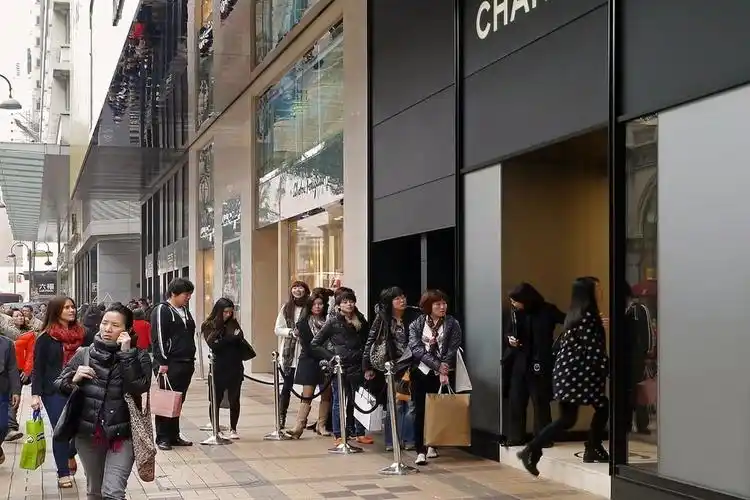
China’s physical retail story is a redesign of what stores are for. Ministry of Commerce data showed that from January to May 2025, retail sales at physical stores above the designated size rose 4.5 percent, while warehouse membership stores grew by more than 30 percent.
From January to August, retail sales at shopping centers were up 6.6 percent. Stores create value by offering what digital retail cannot fully replace: trust through visible product quality and authenticity, service through guidance and problem-solving, and immediate access when consumers want certainty rather than wait for delivery.
Physical retail in China is not surviving by becoming more theatrical. It is becoming more useful. Official commentary in 2025 links store resilience to better environments, improved service, and format innovation, such as warehouse clubs and upgraded shopping centers.
China’s retail system is moving so fast that trust can no longer rest solely on brand messaging. It has to be built into the transaction itself. In late 2025, regulators made that clear in guidance focused on improving product and service quality on online transaction platforms.
Officials said the goal is to help consumers buy genuine products and receive good service by tackling counterfeits, false labeling, and weak service standards.
The same policy push also emphasized the disclosure of visible rules, merchant credential display, transparent product information, and stronger credit systems for online consumption.
The most useful part of this guidance is that it treats trust as an operating system:
That matters because the pressure points are real. Multiple consumer complaint summaries across Chinese market supervision systems continued to show that after-sales service and product quality remain among the most concentrated sources of complaints, especially in network transactions.
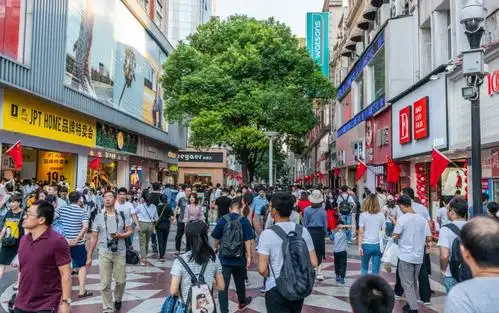
China’s 2025 retail data suggests that growth is increasingly coming from formats that lower the cost of saying yes. In 2025, discount retailers grew the fastest, while warehouse clubs, curated variety stores, and cashier-less stores also saw strong double-digit sales growth.
Consumers are responding to formats that reduce decision pressure by offering clearer value, lower risk, and an easier first-purchase logic. The key lesson is not simply that shoppers want cheaper products. They increasingly prefer entry models that feel easier to test. Discount formats lower financial risk. Warehouse membership formats make value easier to measure.
Service or experience purchases can feel less irreversible than larger product commitments. That is why Chinese retail looks less like a race toward maximum basket size and more like a race toward smarter first conversion.
Officials from the Ministry of Commerce also highlighted that retail operators are expanding new consumption scenarios and improving the consumer experience rather than relying on older store logic.
China’s 2026 retail lesson is that consumer experience increasingly depends on backstage coordination. The plan linked smarter supply chains to three goals: improving the modern commercial circulation system, lowering logistics costs across society, and strengthening supply chain competitiveness and resilience.
This shows that coordination is no longer treated as a narrow logistics issue. It is now a core retail capability.
The most useful insight is that Chinese retail is moving from isolated optimization to system-level coordination. Official 2025 guidance on commercial circulation stressed stronger data integration, closer coordination between production and supply, and more stable supply relationships.
At the local policy level, this is being translated into digital supply chain service platforms and coordinated systems linking production, supply, sales, storage, and transport.
JD described itself in its 2025 full-year results as a supply chain-based technology and service provider, and JD Retail generated RMB 1.126 trillion (about USD 164.8 billion) in revenue. The deeper point is not the revenue figure alone. It is the model behind it. Chinese retail leaders are competing on visibility, coordination, and execution, not just merchandising.
One of China’s most useful retail lessons is that durable growth depends less on one-time traffic spikes and more on building a system that makes the next purchase easier than the first.
In January 2025, JD upgraded its PLUS membership with a broader lifestyle service package, expanded unlimited free shipping, and a 180-day replacement or repair policy for certain self-operated electronics and home appliances. Membership is no longer just a discount tool. It is becoming a way to build habit, convenience, and switching costs.
The same shift appears in Tencent’s retail ecosystem. Its retail growth guide highlights how merchants use Mini Programs, dedicated member groups, and tailored offers to drive repeat purchases rather than rely only on new acquisition. The logic is simple. Once a retailer can remember what a customer buys, how often they return, and which offers trigger action, growth becomes more predictable.
That thinking is also becoming more formalized. The 2025 draft standard for retail POS systems under the Ministry of Commerce explicitly lists member analysis, including consumption frequency, product preferences, and repurchase rate, as part of core operating capability.
If your team is serious about learning what China’s retail market is actually revealing about fulfillment, decision design, store utility, trust systems, and retention, ChoZan can help translate those signals into practical strategy.
From executive education to China retail research and innovation workshops, ChoZan helps brands move beyond surface-level trend-watching and understand which parts of China’s retail evolution are worth adapting and which require a different market response.
Book a consultant to explore what China’s retail evolution means for your business and where the real opportunities are.
The biggest mistake is copying visible tactics without understanding the operating conditions behind them. China’s retail outcomes depend on local density, competition, infrastructure, platform behavior, and merchant discipline. Copying surfaces without context often results in failure.
The transferable lessons are operating principles, not Chinese platform features. Retailers can learn how to shorten response times, improve clarity, reduce decision waste, and align channels around behavior. Those principles travel far better than tactics.
A trend is usually structural when it changes how merchants operate, invest, and organize supply, even after incentives fade. If it only works during subsidies or promotions, it is probably temporary rather than a foundational change.
Lower-tier cities matter because they test whether a retail model has depth beyond elite urban pockets. They expose differences in income, loyalty, category priorities, and store economics, making them essential for judging true scalability.
China shows that value is not just a lower price. Consumers increasingly compare usefulness, durability, fit, and confidence in their purchase decisions. Retailers win when they make spending feel justified, clear, and proportionate to real needs today.
Local brands are changing retail by competing through faster adaptation, sharper category insight, and alignment with local taste. They no longer rely on being cheaper alternatives. They increasingly challenge foreign brands on relevance, not affordability.
Shopping festivals still matter, but their power weakens when every promotion feels predictable. The better lesson is to combine urgency with logic, seasonal relevance, and assortment changes so discounts support demand rather than training delays.
Grocery and FMCG brands show that repeat business is built through small frictions and routine benefits. Packaging, freshness, portioning, replenishment, and reliability often matter more than campaign noise because everyday categories expose real consumer priorities.
Premium brands in China cannot rely solely on status. They need sharper product truth, clearer relevance, and stronger justification for their price. Premium now has to prove why it deserves preference, not assume automatic admiration.
China shows that platforms can accelerate brands while also making them dependent on those platforms. The real question is what demand the brand truly owns. If learning, visibility, and sales all live on platforms, replaceability rises very quickly.