CONTENT
Jinko Solar is one of China’s largest vertically integrated photovoltaic manufacturers and the first supplier to report more than 400 GW of cumulative module deliveries. Its position rests on manufacturing scale, rapid commercialization of N-type TOPCon technology, and a sales network built around major solar markets.
The company matters because it shows how China converts cell innovation into mass-market hardware at remarkable speed. Yet scale alone does not remove risk. Lower module prices, trade barriers, and uneven factory economics now shape supplier decisions as much as efficiency and wattage.
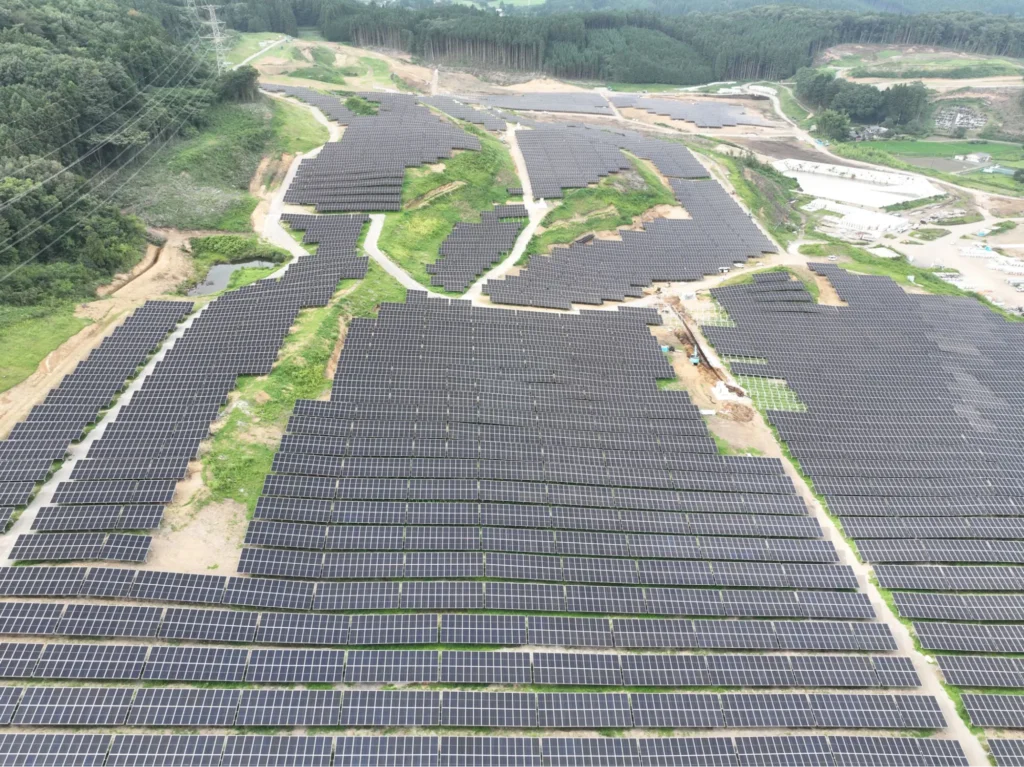
JinkoSolar Holding is a Cayman Islands holding company listed in New York. Its main operating subsidiary, Jinko Solar Co., Ltd., carries out much of the manufacturing activity and trades on Shanghai’s STAR Market. That structure matters because investors, lenders, and customers may contract with different legal entities across regions.
For 2025, the company reported 86 GW of module shipments and said that volume ranked first in the industry. Cumulative deliveries passed 390 GW by year-end. In the first quarter of 2026, cumulative shipments exceeded 400 GW, while the Tiger Neo family reached about 240 GW. More than 80% of that quarter’s 13.7 GW went to overseas markets, according to the April 2026 results.
These global shipments make execution the strongest case for leadership. They do not prove that every Jinko solar module carries the best economics for every project. Buyers still need model-level testing, contract analysis, and country-specific compliance checks.
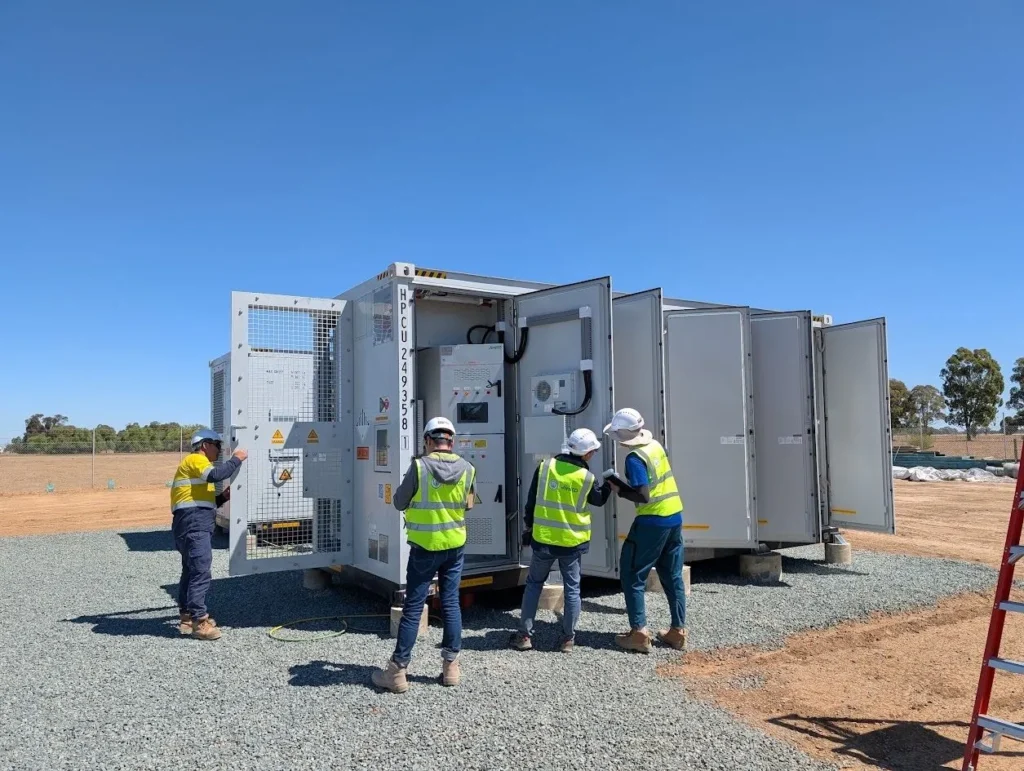
JinkoSolar controls three critical stages: silicon wafers, solar cells, and finished PV modules. Its 2025 SEC disclosure reported the following annual production capacities at December 31, 2025:
| Manufacturing stage | Annual capacity |
| Monocrystalline silicon wafers | 120 GW |
| Solar cells | 95 GW |
| Solar modules | 130 GW |
This structure gives the company more control over technology transfers, quality checkpoints, cost allocation, and production scheduling. It also helps move TOPCon improvements from the cell line into commercial modules without relying entirely on outside suppliers.
Production capacity and output remain different measures. Module capacity exceeds cell capacity, while shipments sit below both. That gap creates decisions around external sourcing, plant loading, product mix, and line upgrades. It also shows why nameplate manufacturing capacity should never serve as a stand-alone proxy for competitiveness.
Management now expects annual integrated capacity of about 100 GW at the end of 2026, including 14 GW overseas. This forecast suggests a more selective supply-chain strategy centered on high-efficiency lines and regional production rather than another broad expansion cycle.
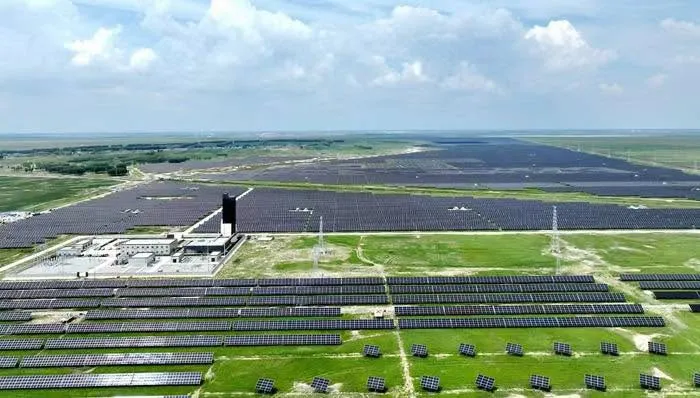
Jinko Solar’s technology differentiation rests on its N-type TOPCon platform, commercialized through the Tiger Neo series. By the end of Q3 2025, cumulative shipments of the Tiger Neo series surpassed 200 GW, making it the best-selling module series in history. By the end of 2025, total Tiger Neo shipments exceeded 220 GW.
The Tiger Neo 3.0, Jinko Solar’s next-generation N-type TOPCon flagship, entered mass production in late 2025 with over 15 GW in initial global orders. Key specifications include:
For EPCs and asset owners, these specs translate into lower balance-of-system costs, higher energy yield in high-temperature environments (critical for Middle Eastern and tropical markets), and improved project IRR.
The 2 GW Tiger Neo 3.0 supply agreement with China Energy Engineering Corporation for Saudi Arabia’s PIF-backed Furais PV project demonstrates the product’s appeal in utility-scale tenders where performance bankability is non-negotiable.
As of March 2026, the company reported more than ten production facilities and more than 20 overseas subsidiaries. Its U.S. business states that EAGLE modules come from facilities in Vietnam, Malaysia, and Florida. The Jacksonville factory lists more than 300 job opportunities, while a May 2025 local report documented plans to add about 118,600 square feet of adjacent storage space.
China also canceled VAT export rebates for photovoltaic products from April 1, 2026, according to the State Council Information Office. Origin, cell source, contract terms, tariff scope, and delivery route now influence the landed cost of Jinko panels.
A global factory map adds resilience only when commercial teams pair it with traceable sourcing and market-specific compliance.
The 2025 results show the tension inside China’s solar manufacturing model. Full-year revenue was RMB65.50 billion, or US$9.37 billion, as average module selling prices declined. Gross margin was 2.2%, and the company recorded a US$1.27 billion operating loss.
The first quarter of 2026 showed partial improvement. Gross margin recovered to 8.3%, and the net loss attributable to ordinary shareholders narrowed to US$67.2 million. Module shipments still declined to 13.7 GW from 24.2 GW in the previous quarter.
This contrast matters. High shipment volume can strengthen procurement reach and factory learning while aggressive pricing weakens cash generation. China’s industry ministry pledged in July 2025 to curb disorderly low-price competition, and regulators were still pressing the sector on pricing compliance in July 2026, according to Reuters.
JinkoSolar reported a top AAA score in PV Tech’s Q2 2026 ModuleTech Bankability Ratings. PV Tech’s methodology combines financial health, manufacturing strength, shipments, and technology. The rating supports the company’s standing in utility-scale procurement, but it should begin due diligence rather than end it.
Long-term buyers should assess the named warranty provider, audited finances, local service capacity, product certificates, insurance requirements, supply-chain traceability, and the enforceability of remedies. A bankable brand can still present different risk profiles across entities, models, factories, and destination markets.
In June 2026, the manufacturer announced that an N-type TOPCon and perovskite tandem cell reached 34.82% conversion efficiency. The Shanghai Institute of Microsystem and Information Technology at the Chinese Academy of Sciences certified the result.
The design stacks complementary light-absorbing materials so the cell can capture more of the solar spectrum. It gives the company a possible route beyond the practical limits of single-junction silicon.
The result remains a cell-level research milestone, not evidence of a 34.82% commercial Jinko solar panel. Stability, encapsulation, yield, factory throughput, and lifetime performance must reach bankable standards before tandem modules can affect project procurement.
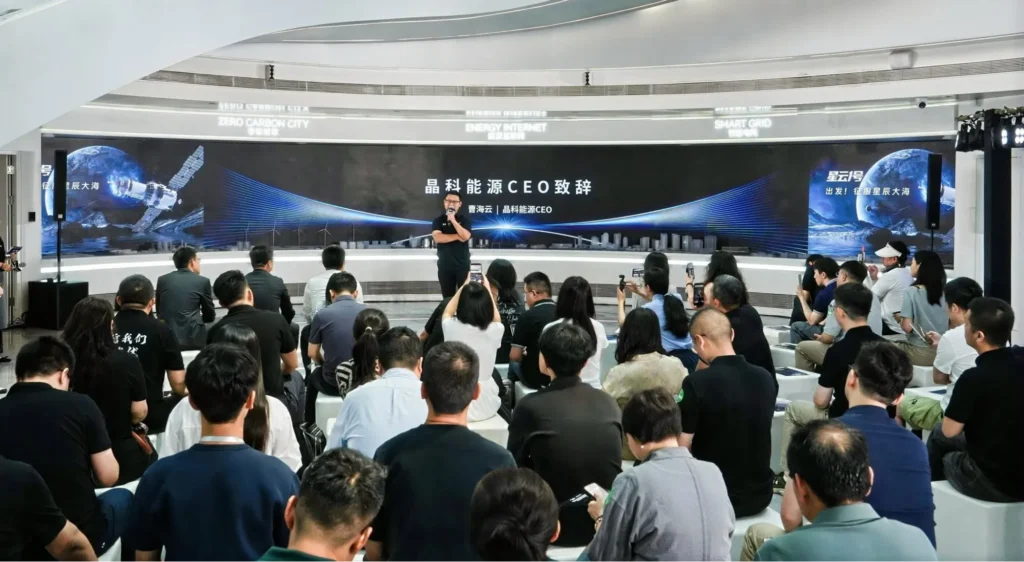
The model’s advantage comes from the connection between R&D, large production lines, global sales, and fast product iteration. Its current position also exposes the new rules of solar competition. The company’s scale must now work alongside regional compliance, disciplined capacity, stronger margins, and verifiable product performance.
The practical lesson is clear. Evaluate JinkoSolar as a system of technology, manufacturing, finance, and market access. A single Jinko Solar panel specification cannot explain supplier resilience, while a shipment ranking cannot replace model-level engineering and contractual due diligence.
Jinko Solar’s next moves will depend on technology, industrial policy, pricing, and trade rules. ChoZan’s China Tech Trends service combines competitor monitoring, real-time data tracking, expert interviews, and policy impact assessments.
Teams can receive tailored reports, executive briefings, and strategic recommendations or arrange expert calls for focused guidance.
Book a consultation to build a research program around your sourcing, investment, or competitive priorities.
Yes, selected residential formats can suit rooftop systems, but the right choice depends on roof area, structural limits, local certification, shade, and inverter design. Ask the installer for the exact model datasheet and regional warranty.
N-type describes the silicon base and electrical architecture used in the cell. In the current range, it supports TOPCon designs with high efficiency, lower temperature-related losses, and strong bifacial performance under suitable system conditions.
Compare exact model numbers rather than family names. Check rated power, module efficiency, physical dimensions, weight, bifaciality, temperature coefficient, mechanical loads, connector type, warranty provider, degradation schedule, and certificates accepted in the destination market.
No. Efficiency indicates power produced per unit of module area under standard test conditions. Actual yield also depends on temperature, irradiance, shading, orientation, soiling, bifacial gain, electrical design, degradation, and system availability.
A bifacial module collects direct light on the front and reflected light on the rear. Its added yield depends on ground reflectivity, mounting height, row spacing, tracker design, rear-side shading, and local irradiance conditions.
Purchase through an authorized channel and match serial numbers, labels, model codes, invoices, and packaging records. Buyers should also request factory certificates and written warranty confirmation from the relevant regional entity before accepting a shipment.
Requirements vary by country and application. Buyers commonly request current IEC safety and performance certificates, market-specific electrical approvals, fire classifications, factory quality documents, and test reports tied to the exact model and production site.
A linear power warranty promises a defined minimum output over time under stated conditions. It usually differs from the product warranty and may exclude labor, transport, removal, reinstallation, indirect losses, or damage caused by improper system design.
Review first-year degradation, the annual decline allowance, final guaranteed output, test methodology, and exclusions. Independent field data from a comparable climate provides stronger decision support than a headline percentage taken from a general product brochure.
It can, but engineers must check electrical compatibility, dimensions, mounting loads, connector types, string design, and inverter limits. A mixed-model array may complicate spare-parts planning, warranties, commissioning tests, and long-term operations documentation.