CONTENT
The rise of autonomous mobility has moved from lab prototypes to commercial services that carry passengers every day. This transition reflects broader shifts in China’s artificial intelligence, where systems are moving from experimentation to real-world deployment. Pony AI has emerged as one of the leaders in this transformation. The company, founded by James Peng in 2016 and headquartered in Guangzhou, operates on both sides of the Pacific.
It is not just another tech startup from China; it is a pioneer in Level 4 autonomous driving, developing a full‑stack system that integrates seamlessly with vehicles from partners such as Toyota, Hyundai, and Guangzhou Automobile Group.
By combining advanced artificial intelligence with a pragmatic commercial strategy, Pony AI is redefining urban transportation and freight. This mirrors how Chinese high-tech companies are scaling from innovation to infrastructure-level impact.
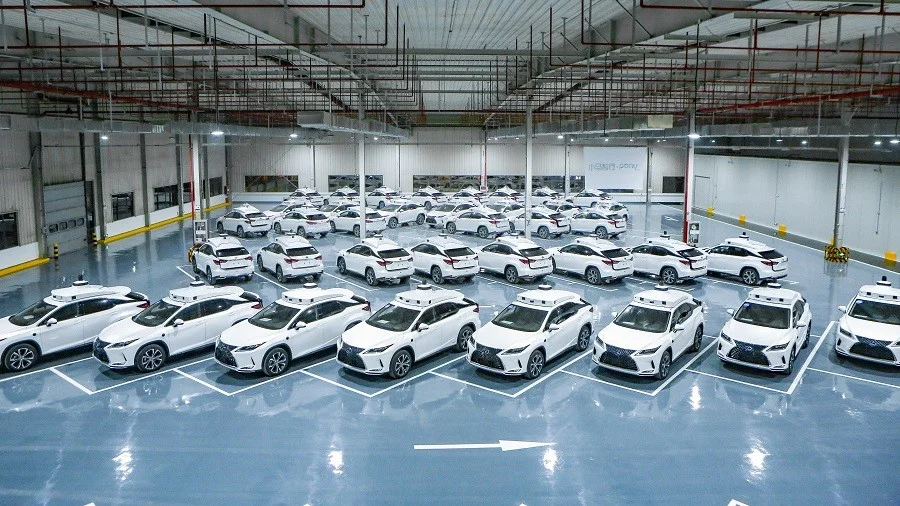
Pony AI operates out of Guangzhou and Fremont and focuses on Level 4 autonomy, which allows vehicles to handle most driving tasks without human intervention. The company has always built a full‑stack solution rather than a component‑only product. This full-stack approach aligns with China tech trends, where control across the system matters more than individual components.
Its Virtual Driver software and PonyWorld world model work together to perceive the road, predict other traffic participants, plan routes, and control the vehicle. This approach lets the startup deploy its technology across multiple platforms without manufacturing its own cars.
The mission is simple: bring safe, advanced, and reliable autonomous driving technology to the world while enabling “Autonomous Mobility Everywhere.”
The firm gained early prominence in China’s autonomous driving ecosystem thanks to its dual‑base strategy in China and the United States. Over the years, it secured key driverless permits and, by 2025, launched paid robotaxi services in major Chinese cities.
These efforts laid the foundation for the commercial push now underway. The company is publicly traded on both the NASDAQ and the Hong Kong stock exchanges, providing it with access to capital for research and development and fleet expansion.
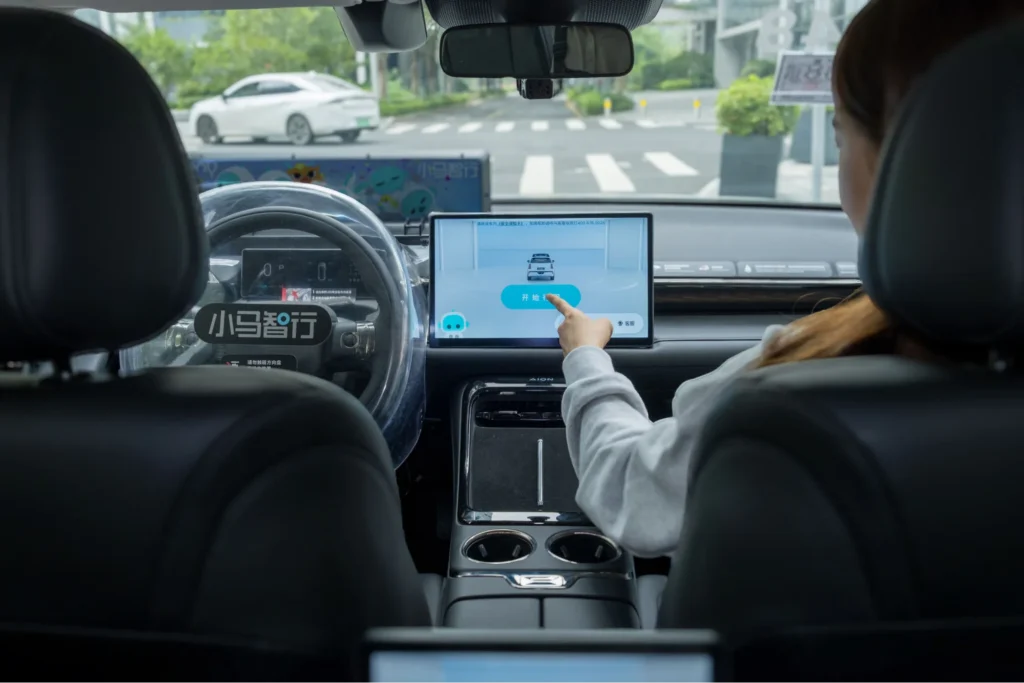
At the heart of Pony AI’s success is its commitment to a full‑stack Level 4 solution. These advances reflect how China is building applied AI systems rather than standalone models, a shift also seen across China’s digital transformation strategies. The Virtual Driver combines perception, prediction, planning, and control algorithms. Sensors, including lidar, radar, and high‑definition cameras, feed data into the system to create a detailed understanding of the surrounding environment.
The company’s seventh‑generation robotaxi uses automotive‑grade components and has achieved a 70 percent drop in the cost of its autonomous driving kit compared with earlier versions. A further 20 percent reduction in bill‑of‑materials costs is targeted by the end of 2026 to improve unit economics.
In April 2026, Pony AI introduced PonyWorld 2.0, a self‑improving physical AI engine that represents a major leap in autonomous driving. Unlike basic simulation tools, this upgraded world model can diagnose its own weaknesses and guide targeted data collection.
It incorporates a structured intention layer that allows the AI to understand why it made a decision and identify scenarios where its performance needs improvement. This self‑diagnosis capability accelerates training and ensures faster, more reliable improvements.
The system is already applied across the company’s Level 4 driverless fleet to enhance safety, ride comfort, and traffic efficiency. The launch of PonyWorld 2.0 signals a shift from proving autonomous technology to refining it for large‑scale deployment, positioning the company for the next phase of commercial rollout.
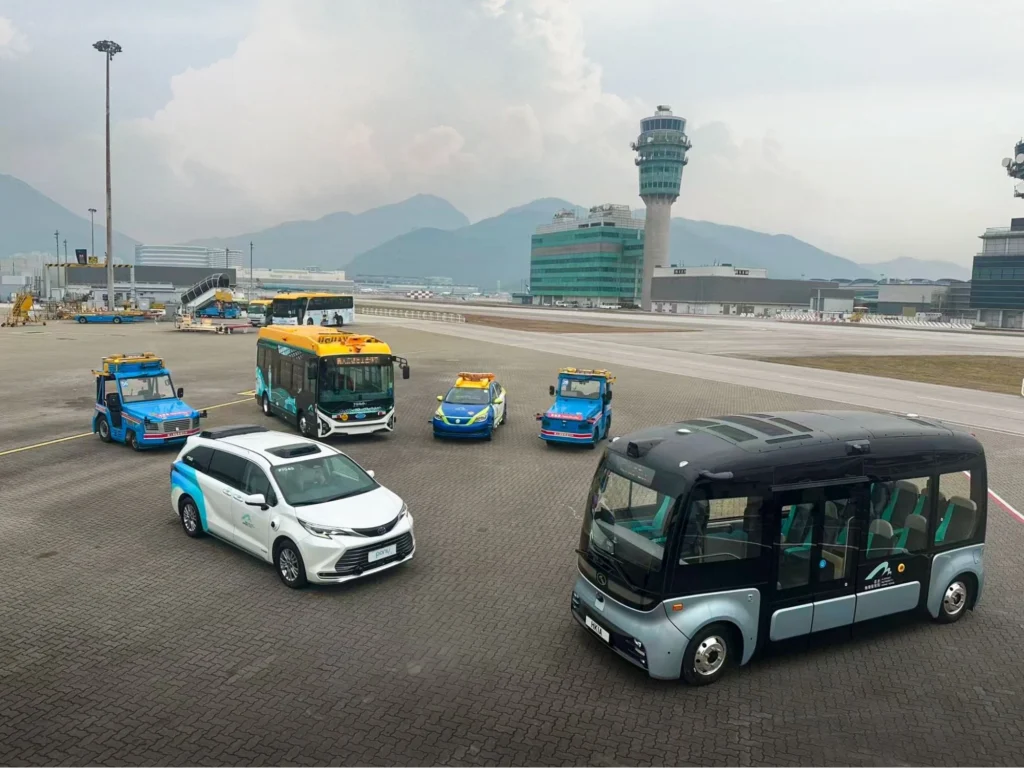
The company’s revenue strategy rests on three pillars.
The first pillar is the Pony AI robotaxi service. This ride‑hailing business operates fleets in multiple cities and also licenses the technology to mobility operators. Since 2025, the company has offered fare‑charging rides in Guangzhou, Shenzhen, Beijing, and other tier‑one cities, generating real-world revenue and proving that passengers are willing to pay for autonomous trips. This shift from testing to monetization reflects a broader move toward deployment across China retail trends, where platforms prioritize conversion and scale.
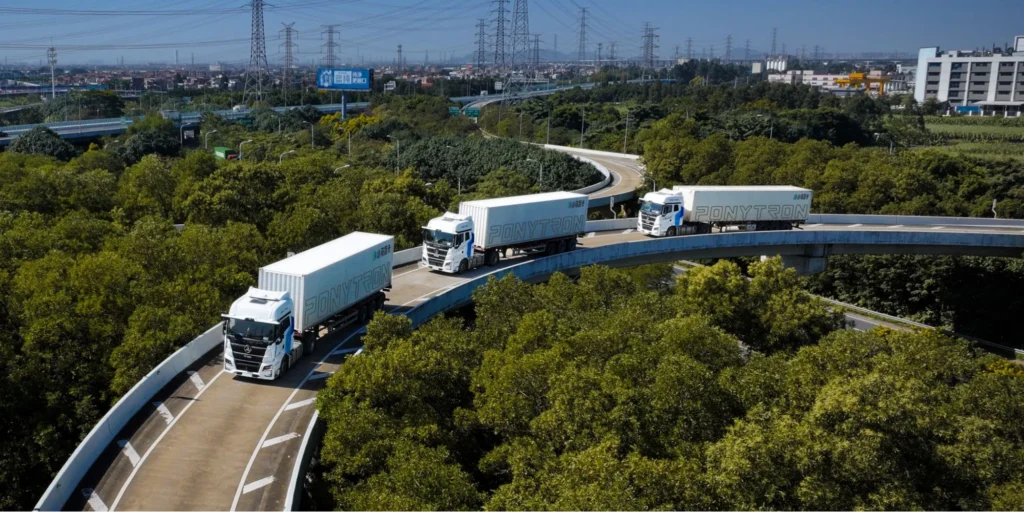
The second pillar is autonomous trucking under the PonyTruck brand. This segment targets highway freight and hub‑to‑hub logistics, where routes are predictable, and the return on investment is clearer.
By sharing 80 percent of the technology stack between the robotaxi and robotruck platforms, the company leverages economies of scale while serving two distinct markets.
In 2026, the firm introduced a fourth‑generation robotruck with a 70 percent reduction in autonomous driving kit costs and plans to begin mass production and deployment by late 2026.
The third pillar is a fleet management platform that offers dispatch tools, teleoperation support, and real‑time operational oversight. This platform powers the customer app for booking robotaxi rides and provides fleet operators with analytics and remote assistance tools.
Together, these pillars create a balanced business model that blends direct operations with technology licensing and platform services.
One of the most critical milestones in Pony AI’s recent history is achieving unit economics breakeven for its seventh‑generation robotaxi. In early 2026, the company announced that its Gen‑7 robotaxi fleet in Shenzhen had reached breakeven, following a similar success in Guangzhou.
On average, each vehicle generated RMB 338 (USD 47) in daily net revenue and completed 23 rides per day. By March 2026, the company reported a record daily net revenue of RMB 394 (USD 55) per vehicle, with 25 orders per vehicle. These metrics demonstrate that the technology is not only technologically viable but also commercially sustainable.
In its unaudited 2025 results released in March 2026, Pony AI reported that robotaxi services revenue grew 160 percent year over year in the fourth quarter and that fare‑charging revenue surged by over 500 percent.
The company delivered more than 1,446 robotaxi vehicles by March 25, 2026, and aims to exceed 3,000 units by the end of the year. Its user base in China reached 1 million by late March 2026. These numbers underscore strong user adoption and highlight the service’s scalability.
Strategic partnerships underpin Pony AI’s expansion. A March 2026 agreement with OnTime Mobility deepened a long‑standing collaboration. Under the upgraded partnership, OnTime assumes responsibility for capital expenditures, safety assurance, and order allocation, while Pony AI focuses on R&D and technology licensing.
The arrangement allows both firms to generate recurring revenue and accelerates fleet growth beyond current operations. An initial batch of over 100 seventh‑generation vehicles will be delivered to OnTime, setting the stage for larger deployments.
The company has also strengthened its relationship with Toyota. Through a joint deployment model, Toyota’s manufacturing expertise supports mass production of the Gen‑7 robotaxi, with 1,000 bZ4X vehicles secured for deployment in 2026. Partnerships with BAIC and GAC provide access to mature supply chains and after‑sales networks, while SANY and Dongfeng Liuzhou collaborate on the development of next‑generation robotrucks.
Integration with Tencent’s WeChat “Mobility Services” platform allows seamless booking through the country’s most popular messaging app. Together, these alliances illustrate how Pony AI combines its technological edge with partners’ strengths to scale rapidly.
Pony AI is scaling globally with clear commercial milestones.
In April 2026, Pony AI launched its first commercial robotaxi service in Europe, starting in Zagreb. The service covers roughly 90 square kilometers, including the airport, and operates daily from 7 a.m. to 9 p.m.
Bookings currently run through the Verne app, with Uber integration planned. The structure is deliberate. Pony AI supplies the autonomous driving system, while Verne and local partners handle operations and regulatory alignment.
The Middle East represents the next major expansion layer. At the Dubai World Congress for Self-Driving Transport, the company announced plans to deploy 1,000 robotaxis across the region by 2028.
This aligns closely with Dubai’s transport strategy, which targets 25% of trips to be made through autonomous mobility by 2030. As a result, the market offers both regulatory clarity and infrastructure readiness.
Pilot programs are already underway in Dubai, with public services expected to launch in 2026. Partnerships with the Roads and Transport Authority and Uber will integrate robotaxis directly into the city’s transport ecosystem.
Beyond Europe and the Middle East, expansion continues across key mobility hubs. In Doha, the company is working with Mowasalat Karwa, while in Singapore, it has partnered with ComfortDelGro.
At the same time, domestic expansion remains active. New entries into Hangzhou and Changsha complement deeper deployment in established hubs such as Shenzhen and Guangzhou.
The next twelve months will determine whether Pony AI becomes the first profitable large-scale robotaxi operator or remains a promising but unproven startup. The company has the right pieces. A profitable unit model. A multi-vertical approach that balances passenger and freight revenue. Global partnerships that provide local market access. A cost structure that continues to improve.
The 3000-vehicle target for 2026 is ambitious but achievable if the Guangzhou breakeven model transfers to other cities. The Middle East deployment will test the company’s ability to operate outside China. The trucking division will demonstrate whether autonomous freight can scale faster than robotaxis.
What is Pony AI becoming? The answer is visible in the 2025 results. Pony AI is becoming the first autonomous-vehicle company to treat autonomy as a business rather than a science project. That shift from demo to deployment is exactly the pattern this report identified as China’s defining technology trend for 2026.
If Pony AI shows where autonomous mobility is heading, ChoZan helps leadership teams understand what that shift means on the ground.
ChoZan works with global companies through China learning expeditions, innovation tours, executive keynotes and workshops, custom research, digital transformation consulting, and expert dialogues focused on China’s fast-moving tech and business landscape.
Book a consultation with ChoZan if your team wants to go beyond headlines and study how China is commercializing autonomy, robotics, AI, and next-generation infrastructure.
ChoZan can support your team with a tailored briefing, a research project, an expert call, or an on-the-ground innovation tour that turns China’s market signals into practical strategic insight.
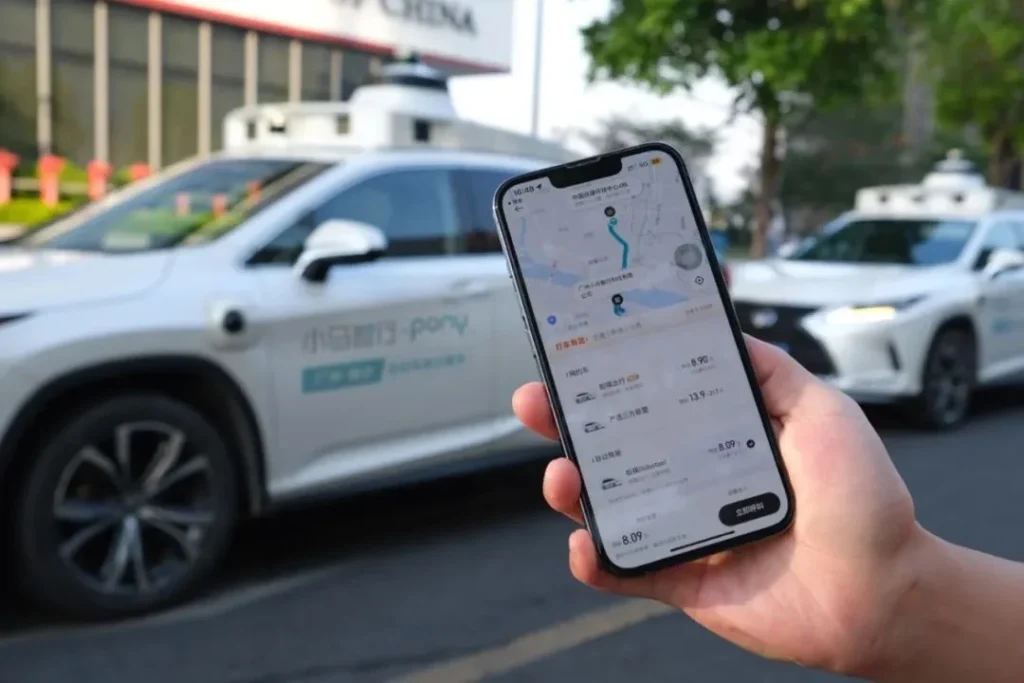
You can book a Pony AI ride through the PonyPilot app, and in some Guangzhou zones through Tencent’s WeChat Mobility Services. Route availability depends on service coverage, pickup point, and local operating permissions.
No. Pony.ai said its paid Guangzhou robotaxi routes were priced in line with standard local taxi fares, which matters because mass adoption depends on familiar pricing rather than premium novelty for everyday riders.
Yes. Pony.ai already runs paid routes linking Guangzhou’s city center with Baiyun Airport and Guangzhou South Railway Station, and it has also launched paid service connected to major rail and airport hubs in Beijing.
Sometimes yes, sometimes no. Pony.ai now operates fully driverless commercial services in approved zones, but expansion in each city still follows staged regulatory validation before broader coverage opens to more riders.
No. Pony.ai does not build its own mass-market cars. It supplies the autonomous driving system and works with automakers such as Toyota, BAIC, and GAC to deploy robotaxi fleets at scale.
It is no longer limited to PonyPilot. In designated Guangzhou service areas, riders can book fully driverless trips through Tencent’s WeChat Mobility Services, giving Pony.ai access to a much broader consumer base.
Waymo still leads in ride volume, reporting more than 200,000 paid trips per week in early 2025. Pony.ai looks stronger in China-scale economics, automaker partnerships, and multi-market expansion, but it remains earlier in its commercial maturity.
PonyTruck gives Pony.ai a second commercial lane beyond passenger rides. Freight routes are more structured, easier to monetize, and now tied to a Gen 4 truck platform built for mass production and deployment in 2026.
Airport and railway routes matter because they generate repeat demand, visible use cases, and higher trust. Pony.ai has focused on these hubs in Beijing and Guangzhou as part of its efforts to turn robotaxis into everyday transport.
Through partnerships. In Croatia, Pony.ai provides the autonomous driving system, Verne owns and manages the fleet, and Uber handles user access, a structure built to expand faster without forcing Pony.ai to carry every operating asset.