CONTENT

The Hangzhou Six Little Dragons are six fast-rising technology companies based in Hangzhou that operate across AI, robotics, gaming, brain-computer interface, and spatial intelligence. They matter because they show how China is turning advanced research into real products at speed across multiple industries.
The group includes DeepSeek, Game Science, Unitree Robotics, DEEP Robotics, BrainCo, and Manycore Tech. Each company works in a different technical domain, yet together they form a connected system that covers model development, physical robotics, human-machine interaction, and digital environment simulation.
What makes the six little dragons Hangzhou cluster important is not individual success. The real signal lies in how these companies align with China’s current phase of technology deployment. Instead of focusing only on research breakthroughs, they build systems that can be produced, scaled, and used in real environments.
This is why the China Six Little Dragons are attracting global attention. Their work shows how AI, robotics, and software are moving out of labs and into everyday applications such as industrial inspection, consumer products, digital design, and entertainment.
The story is not about six startups. It is about a city that has learned to connect talent, capital, and manufacturing into a single execution engine. That is what turns innovation into market reality.
The Hangzhou Six Little Dragons emerged from a system designed to turn ideas into real products quickly. Hangzhou brings together universities, capital, industry, and policy in one place, enabling companies to build, test, and scale without friction. This is what turns technical capability into commercial results.
Together, these elements create a system that consistently produces companies like China’s six little dragons. The advantage is not a single factor. It is how all parts work together to shorten the path from idea to market.
The Hangzhou Six Little Dragons do not operate in the same category. Each company builds a different layer of technology, and together they form a complete system that connects software, hardware, and real-world deployment. This structure explains why the six little dragons of Hangzhou are seen as a model for applied innovation rather than isolated success stories.

At the foundation, DeepSeek focuses on model innovation and cost efficiency. It builds large language models that deliver high performance at lower training and inference costs.
This approach shifts AI from a research-heavy field into something that companies can actually deploy at scale. The emphasis on open-weight models also enables developers and enterprises to adapt systems quickly, thereby supporting broader adoption across industries.
This layer defines how intelligence is created and distributed.

Game Science operates in a completely different space, yet it plays a critical role. It builds high-end, story-driven games that meet global production standards.
This matters because AAA Chinese game development requires advanced rendering, animation systems, and production pipelines. These capabilities overlap with simulation, virtual environments, and digital content creation.
In this sense, Game Science contributes to the technical and creative infrastructure needed for immersive digital worlds.
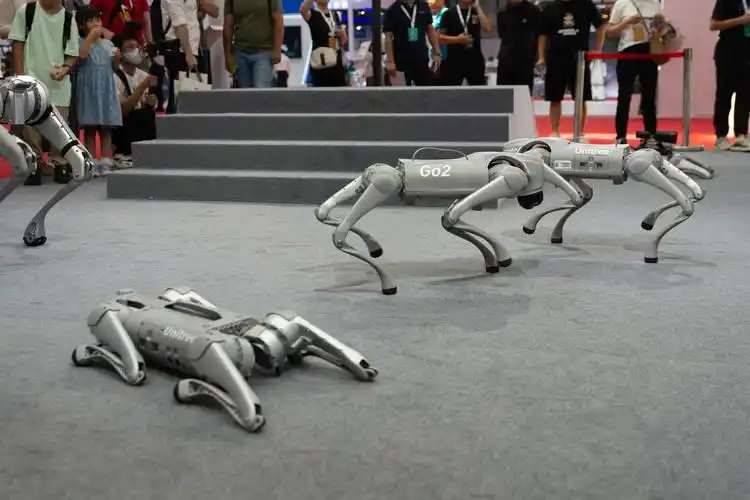
Unitree Robotics focuses on embodied intelligence through physical machines. It develops quadruped robots and humanoid systems that can move, balance, and interact in real environments.
The key advantage here is cost and scalability. By producing robots at lower price points, Unitree expands access beyond research labs into education, inspection, and commercial use.
This layer represents the transition from digital intelligence into physical action.
DEEP Robotics builds on a similar foundation but targets industrial use. Its robots operate in harsh environments, including power plants, disaster zones, and inspection sites.
The focus here is reliability and autonomy. These systems must function in unpredictable conditions, which pushes advancements in navigation, perception, and durability.
This layer shows how robotics commercialization moves from demonstration to real operational value.
BrainCo works at the interface between humans and machines. It develops non-invasive brain-computer interface systems that interpret neural signals and translate them into actions.
This technology supports prosthetics, rehabilitation, and cognitive training. It also points to a future in which human intent can directly control digital and physical systems.
This layer expands how humans interact with technology itself.
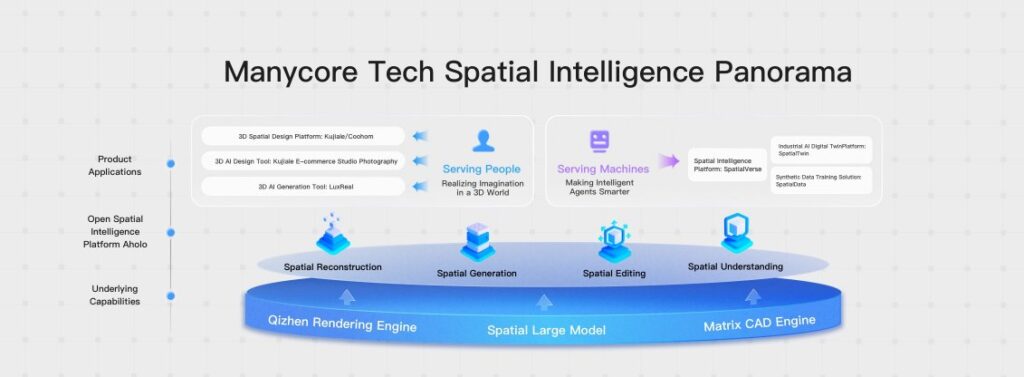
Manycore Tech builds the spatial layer that connects digital and physical environments. Its platforms generate and simulate 3D spaces used in design, robotics training, and digital twins.
This capability is critical for embodied AI because machines need structured environments to learn and operate. Spatial intelligence enables systems to understand space, movement, and relationships among objects at scale.
This layer supports both virtual creation and real-world automation.
When viewed together, the six little dragons form a connected architecture. Models create intelligence. Spatial systems structure environments. Robotics executes actions. Interfaces connect humans to machines.
This is why China’s six little dragons matter beyond individual success. They show how multiple technologies can develop in parallel and integrate into a single ecosystem that supports real deployment.
The result is not incremental progress. It is a coordinated shift toward systems that can operate across digital and physical domains.
The Hangzhou Six Little Dragons show that China has moved from building technology to deploying it at scale. The focus is no longer on isolated breakthroughs. The priority now is to turn those breakthroughs into systems that work in real-world environments and generate commercial value.
In earlier phases, progress in AI was measured by model performance. Now the emphasis has shifted toward usability, cost, and integration.
DeepSeek reflects this change clearly. It reduced the cost of advanced models and made them easier to deploy, which pushed AI from research labs into practical use across industries.
This shift matters because it lowers the barrier to adoption. Companies no longer need massive resources to use advanced AI. They can integrate it into workflows, products, and services much faster.
Another major shift is the move from pure software to physical systems.
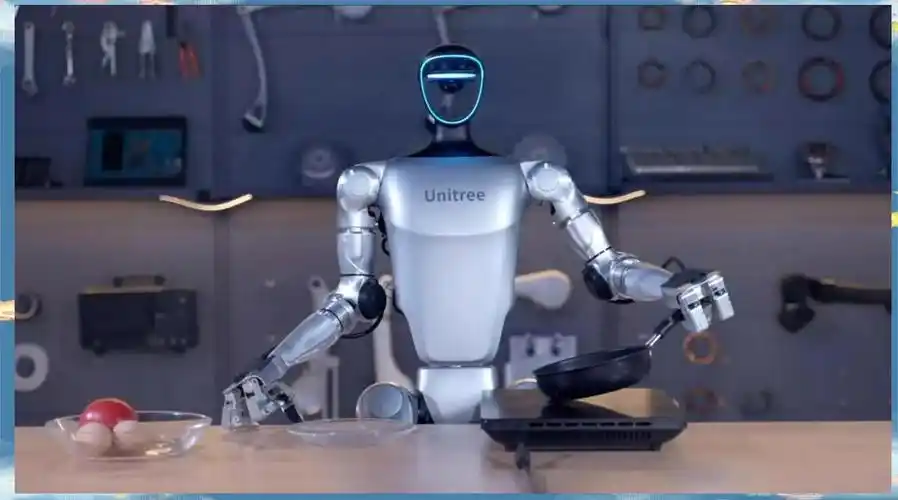
Companies like Unitree and DEEP Robotics show how AI is entering the physical world through robots that can operate in factories, infrastructure, and public environments. This is part of a broader push toward embodied intelligence, where machines act, move, and respond in real space.
This changes the role of AI. It is no longer limited to generating text or analysis. It becomes part of industrial operations, inspection systems, and logistics.
The six little dragons of Hangzhou highlight how quickly China can move from development to market.
These companies do not spend long periods refining isolated prototypes. They release products early, test them in real scenarios, and improve them through iteration. This creates a cycle where deployment itself drives improvement.
This speed is supported by manufacturing access and supply chain integration. When hardware and production sit close to development teams, companies can scale faster than competitors that rely on fragmented systems.
The six little dragons are not competing in the same space. They operate across different layers, yet their work connects.
This reflects a broader approach in China’s technology strategy. Instead of relying on one dominant company, the system develops multiple capabilities in parallel.
This creates a more resilient and flexible ecosystem. If one area slows down, others continue to advance. Over time, these layers combine into a complete technology stack.
The china six little dragons signal a change in how technological leadership is built.
The advantage no longer comes only from research or capital. It stems from the ability to connect research, production, and deployment into a single continuous process.
This model shortens the path from idea to impact. It also allows companies to compete globally by offering systems that are ready to use, not just technologies that need further development.
The Hangzhou Six Little Dragons matter globally because they demonstrate a different approach to building and scaling technology. The advantage is not based on a single breakthrough. It comes from integrating research, production, and deployment into a single continuous system that moves faster than traditional models.
In many global tech ecosystems, innovation begins with research and moves slowly toward commercialization. In Hangzhou, this sequence is compressed.
The six little dragons of Hangzhou demonstrate how coordination between universities, government support, and private companies can accelerate development timelines. This approach allows multiple technologies to advance simultaneously rather than waiting for a single dominant player to lead.
This creates a system where progress is distributed across layers rather than concentrated in a single company.
Another global implication is cost.
DeepSeek showed that high-level AI performance does not require the same level of investment as Western models. Lower costs make advanced technology accessible to a wider range of companies and developers.
This shifts competition from who builds the most powerful system to who can deploy it widely and efficiently.
The six little dragons highlight the importance of manufacturing in modern technology competition.
China’s ability to produce hardware at scale gives companies like Unitree and DEEP Robotics an advantage in robotics commercialization. The integration of design, testing, and production reduces iteration time and speeds up deployment.
This is a structural advantage that cannot be replicated easily in ecosystems that separate software from manufacturing.
The Chinese six little dragons also signal that the future of AI extends beyond software.
Their work spans robotics, brain-computer interfaces, and spatial intelligence, showing how AI is becoming embedded in physical systems and human interaction.
This expands the scope of competition. It is no longer limited to digital platforms. It now includes infrastructure, machines, and real-world environments.
The most important takeaway is the shift from company-level competition to system-level competition.
The Hangzhou Six Little Dragons operate across different layers, yet their capabilities connect. This creates a complete technology stack that can support real-world deployment across industries.
This model allows faster scaling, stronger integration, and more resilience. It also sets a new benchmark for how emerging technologies move from concept to impact.
The Hangzhou Six Little Dragons demonstrate how quickly technology advances when systems are aligned. The real question is not what these companies build. The real question is how their execution model applies to your business.
At ChoZan, we go beyond surface analysis. We break down how China’s innovation ecosystem operates in practice, from AI deployment to robotics commercialization and real market scaling.
You gain direct access to:
If you are evaluating AI, robotics, or digital transformation, this is where clarity comes from.
Join a China Learning Expedition and see how innovation actually works inside these ecosystems.
The Hangzhou six little dragons refer to six technology startups based in Hangzhou that work across AI, robotics, gaming, brain-computer interfaces, and spatial intelligence. These companies gained attention for building real-world applications rather than focusing solely on research.
The six little dragons of Hangzhou include DeepSeek, Game Science, Unitree Robotics, DEEP Robotics, BrainCo, and Manycore Tech. Each company operates in a different domain but contributes to a broader applied technology ecosystem.
The six little dragons of China are important because they show how China is moving from research to deployment. Their focus on real products and scalable systems reflects a shift toward commercialization across the AI and robotics industries.
The six little dragons operate in artificial intelligence, robotics, AAA game development, brain-computer interface, and spatial intelligence. This range allows them to cover both digital and physical technology layers.
Hangzhou became a hub due to strong government support, university talent, and an innovation-friendly environment. These factors created conditions where startups could develop and deploy technology quickly.
The Hangzhou Six Little Dragons focus on applied innovation. Instead of building isolated technologies, they develop systems that can be tested, scaled, and used in real-world environments across industries.
No, the six little dragons of Hangzhou go beyond AI. Their work includes robotics, human-machine interaction, and 3D spatial systems, which shows how AI is integrated into physical and industrial applications.
Robotics is a major component of China’s six little dragons. Companies like Unitree and DEEP Robotics focus on quadruped robots and industrial systems that operate in real environments, supporting inspection and automation.
The Hangzhou six little dragons reflect a strategy focused on cost efficiency, open models, and rapid deployment. This approach allows China to scale AI adoption across industries faster than traditional models.
Global companies can learn how the six little dragons integrate research, manufacturing, and deployment into a single system. This approach reduces development time and accelerates commercialization across multiple industries.