CONTENT

Ask what is BYD, and the clean answer starts here. BYD is one of China’s most important clean-energy and vehicle companies, and it stands out for controlling far more of its value chain than most automakers. In ChoZan’s latest China innovation analysis, BYD appears as a company pushing electrification into mass production, exports, advanced manufacturing, and driver assistance at scale.
The company name comes from “Build Your Dreams.” That slogan matters less than the operating model behind it. BYD began in rechargeable batteries in 1995 in Shenzhen under founder Wang Chuanfu, then moved into automotive manufacturing after acquiring Qinchuan Automobile in 2003.
That origin still matters because BYD did not enter the car market on the strength of its branding or dealership network. It entered from manufacturing depth, battery know-how, and component control.
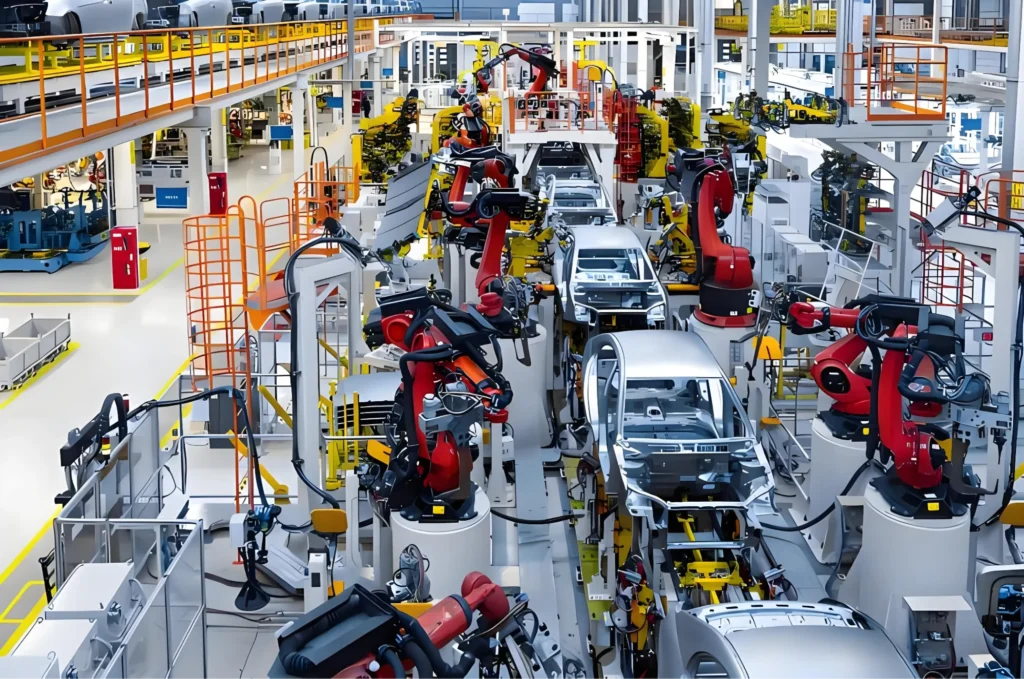
BYD built capabilities across batteries, vehicles, power electronics, and core components long before many global carmakers treated electrification as their central industrial strategy. It also continues to push advanced manufacturing and local production into overseas markets.
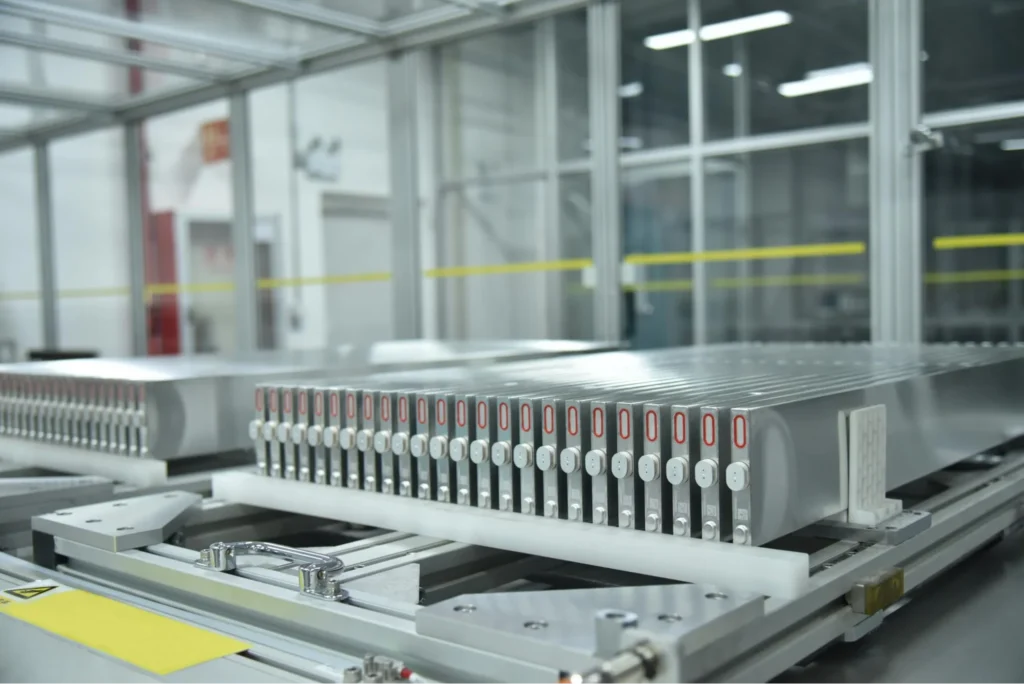
BYD is often hailed for its vertical integration. Unlike many car companies that depend on external suppliers, BYD produces molds, production lines, and most key components internally. It claims that over 70% of the parts used in its vehicles are made by the group, with 75% of components in the BYD Seal manufactured in-house. This control extends to batteries, electric motors, and electronic controls
That matters far beyond China. In an EV market where pricing pressure is intense and product cycles move quickly, the company with tighter control over chemistry, components, and assembly usually gets more room to compete.
BYD also operates its own shipping fleet and has commissioned roll‑on/roll‑off vessels capable of carrying up to 9,200 cars, enabling direct exports to Europe and South America
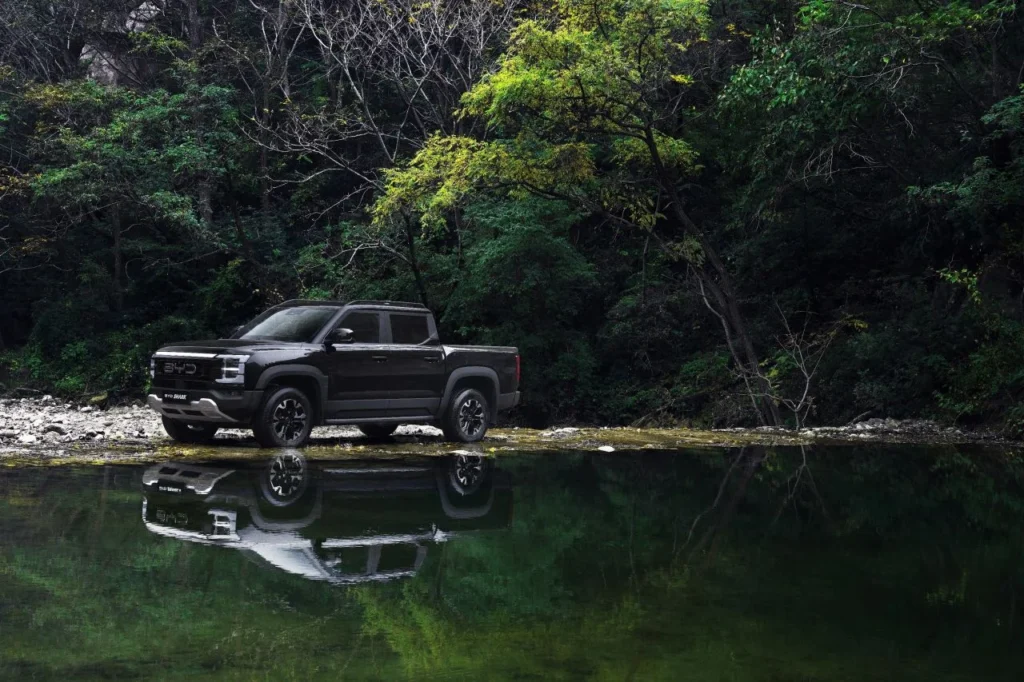
The next step in answering what BYD is is understanding how broad the product portfolio has become. BYD serves the mass market through the Dynasty series and Ocean series, pushes upward through Denza, reaches the ultra premium tier through Yangwang, and addresses adventure and off-road positioning through FangChengBao. This spread lets BYD compete across price bands without relying on a single hero model.
That brand architecture also shows that BYD’s electric strategy is no longer about proving that Chinese EVs can work. BYD is now segmenting demand with precision. It can sell a practical family vehicle, a premium performance model, an off-road product, or a commercial fleet solution while still drawing on shared manufacturing logic underneath.
This is also where BYD’s positioning of its new energy vehicles becomes more powerful than a purely battery-electric narrative. BYD has been willing to scale both battery-electric and plug-in hybrid products in a disciplined manner. That approach gives it more flexibility in markets where charging infrastructure, regulation, and buyer preferences still vary.
The BYD automobile portfolio covers mass market, fleet, premium, and off-road segments. The Dynasty Series includes Han, Tang, Qin, Song, and Yuan. The Ocean Series includes Seagull, Dolphin, Seal, and Sealion.
BYD also sells the e Series for taxi and ride-hailing fleets. Denza covers luxury MPVs and SUVs. Yangwang covers halo vehicles such as the U8 and U9. FangChengBao focuses on SUVs and off-road models, starting with the Bao 5. In 2025, major sellers included the Seagull or Dolphin Mini, Song Plus, and Qin Plus.
Battery technology still anchors BYD, but the system has moved forward. The latest Blade Battery 2.0, introduced in 2026, supports ultra-fast charging and higher energy density. BYD says it can charge from 20 percent to 97 percent in under 12 minutes and deliver a range of up to about 777 km, with some premium models targeting 1,000 km.
BYD also advanced its charging stack. Its 2025 Super e Platform supports up to 1,000 kW charging, which can add about 400 km of range in five minutes under ideal conditions.
On the hybrid side, BYD moved to fifth-generation DM i 5.0 systems across multiple models launched in 2025 and 2026. These systems use a battery-first architecture, in which the electric motor handles most driving, and the engine supports efficiency and range.
BYD is also a major commercial EV maker. It became one of the world’s largest battery electric bus manufacturers, with more than 100,000 buses delivered worldwide by 2023. It has bus production in California, Brazil, Canada, and Hungary. The company is also a major supplier of BYD electric buses in Asia and Europe.
In the United States, the company sells vehicles such as the BYD 8TT and T8 street sweeper, and it also plans to expand heavy‑duty truck production overseas.
BYD’s business extends beyond vehicles. It makes stationary energy storage systems and home energy products that combine solar panels, batteries, and inverters. It also produces solar panels, forklifts, and rail transit systems. Its semiconductor unit makes integrated circuits, IGBT modules, and LEDs for BYD vehicles and related applications.
The company also invested in large‑scale contracts; for example, BYD Energy Storage signed a deal with Saudi Electricity Company in February 2025 for 12.5 GWh of storage. BYD also manufactures solar panels, forklifts, and rail‑transit systems
To match global leaders in assisted driving, BYD launched the DiPilot intelligent driving system in February 2025. The DiPilot 600 uses three LiDAR sensors for top‑end models, while the DiPilot 300 relies on one LiDAR, and the DiPilot 100 uses a triple‑camera setup for mainstream cars.
Features include
BYD claims the DiPilot 100 can drive over 1,000 kilometers without manual intervention, and its emergency braking function reliably stops the car from speeds up to 100 km/h. An army of more than 5,000 engineers works on intelligent driving, leveraging data from 4.4 million vehicles equipped with Level‑2 ADAS.
These advancements, alongside BYD’s e‑Platform 3.0 and distributed-drive e⁴ platform, show the company’s focus on software and system architecture as much as hardware.
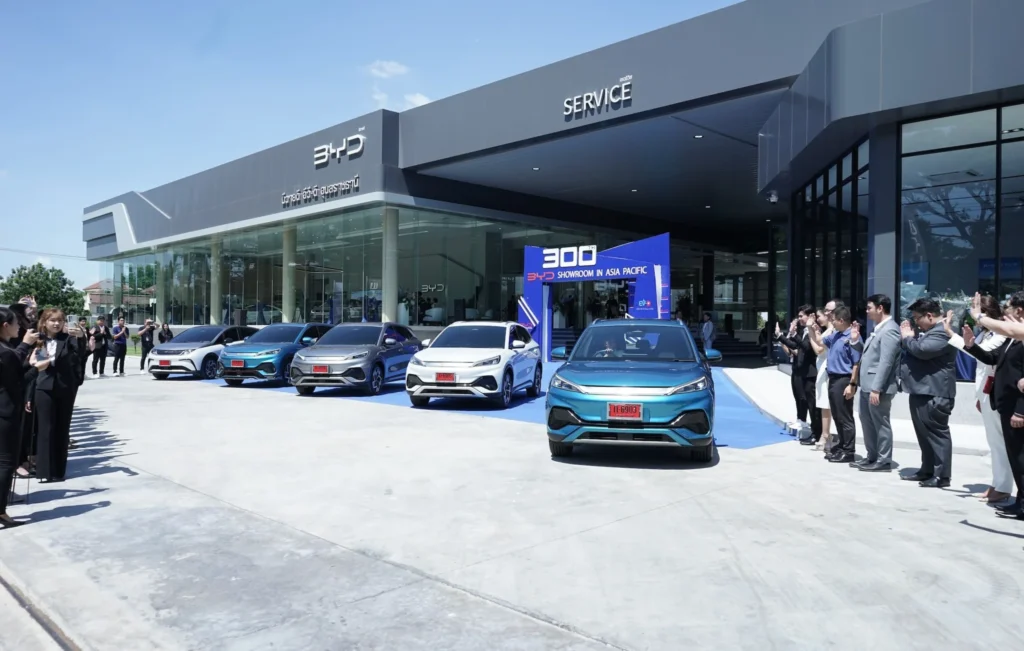
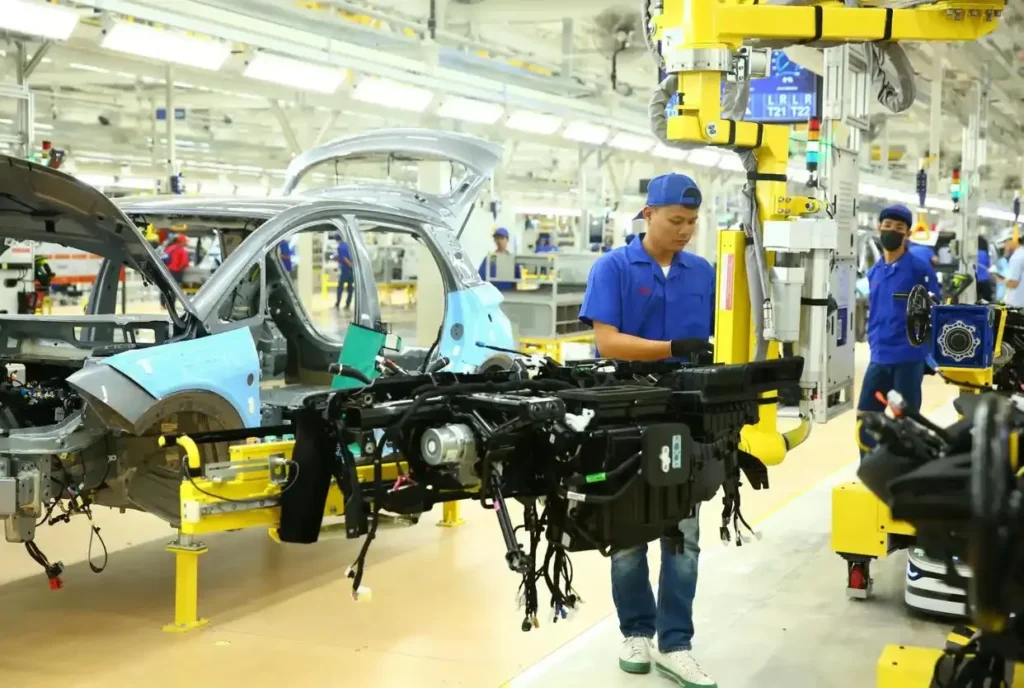
BYD accelerated global expansion after 2021. It added overseas manufacturing in Thailand, Brazil, Hungary, and other markets while continuing exports from China.
The company has built eight mega‑factories in China and has been investing heavily in overseas plants. BYD plans additional factories in Spain and Turkey while ramping up exports from China.
According to a Reuters report in November 2025, BYD had shipped around 20% of its vehicles overseas that year and was building overseas plants in Hungary and Brazil, with Spain considered for a third European facility. The company aims to sell up to 1.6 million vehicles abroad in 2026
This mix of exports and local manufacturing helps BYD reduce trade frictions and respond more quickly to regional demand.
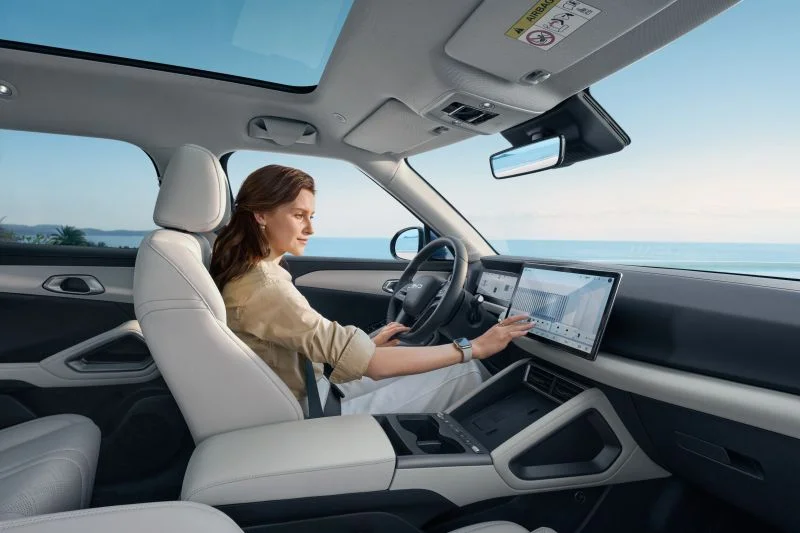
So, what is BYD in 2025 and beyond? It is one of the clearest examples of how China’s industrial strengths are moving from capability building into global deployment. BYD combines batteries, vehicles, semiconductors, energy systems, software features, export expansion, and local manufacturing into a single integrated operating model. That combination is hard to replicate quickly.
For business leaders, the lesson is clear. BYD’s rise is not only about EV demand. It is about what happens when component control, manufacturing scale, portfolio breadth, and market timing line up inside one company.
That is why BYD matters across the future of new energy vehicles, electrified public transport, battery competition, and the next phase of global auto manufacturing.
BYD is not an isolated success story. It is part of a broader industrial system in which batteries, manufacturing, software, and energy infrastructure move together.
That system is already shaping global competition in the automotive, energy, and advanced manufacturing sectors. Most companies still try to interpret it from the outside, often too late.
ChoZan works directly at that system level.
We help leadership teams understand how companies like BYD actually operate, not as brands, but as integrated industrial platforms. That includes how vertical integration translates into cost advantage, how Chinese EV players scale across markets, and how new energy ecosystems evolve across vehicles, batteries, and infrastructure.
Our work spans:
If you are trying to understand where EV competition is going, you cannot rely on surface-level analysis. You need to see the system up close.
Book a consultation with ChoZan to understand how China’s electrification model is evolving, and what it means for your business.
BYD became the world’s largest EV seller by volume, surpassing Tesla in total electrified vehicle deliveries. Its advantage comes from combining battery electric and plug-in hybrid vehicles, which expands its addressable market across regions.
BYD reduces costs through vertical integration and in-house manufacturing of batteries, motors, and electronics. This control reduces supplier dependence and pricing pressure, enabling BYD to offer competitive pricing across multiple vehicle segments.
BYD’s Blade Battery uses lithium iron phosphate chemistry and has passed extreme safety tests, such as nail penetration without fire. This design improves thermal stability and durability compared to many conventional lithium-ion battery systems.
BYD operates in more than 100 countries and regions, with growing expansion across Europe, Southeast Asia, and Latin America. Its global push now combines exports with local manufacturing to strengthen market entry and scale.
Yes, BYD produces most key components in-house, including batteries, electric motors, and electronic control systems. This integrated approach enables faster product development, better cost control, and more stable supply chains than traditional automakers do.
BYD operates across multiple sectors, including renewable energy, rail transit, semiconductors, and battery manufacturing. It focuses on energy generation, storage, and application as part of a broader clean energy ecosystem.
BYD’s overseas sales have grown rapidly, with exports rising significantly and targets set to reach up to 1.6 million vehicles abroad by 2026. The company is also expanding manufacturing in Europe, Brazil, and Southeast Asia.
BYD operates as an integrated technology company rather than a pure car manufacturer. It combines batteries, vehicles, energy systems, and electronics into a single system, enabling faster scaling and tighter control over innovation and production.
No, BYD focuses on new energy vehicles, which include both battery electric and plug-in hybrid models. This approach helps the company scale across markets where charging infrastructure and regulations differ.
BYD faces intense competition in China, slowing domestic growth, and pricing pressure across the EV market. At the same time, it is shifting focus toward exports and technology upgrades to sustain long-term growth.