CONTENT

China’s AI agent startups are no longer prototypes in a lab. They are running factory floors, routing logistics networks, and managing enterprise workflows at a scale that is reshaping how business leaders think about automation.
With the government’s “AI+” industrial strategy accelerating deployment timelines, the question is not whether Chinese agent technology will matter globally. The question is whether you understand it well enough to act on it.
This article maps the leading players, unpacks real industrial deployments, and delivers strategic takeaways for executives who want to stay ahead of the curve.
AI agents are autonomous systems that plan, execute multi-step tasks, and adapt in real time with minimal human oversight. Unlike basic chatbots, agents integrate reasoning engines, tool use, persistent memory, and environmental interaction to pursue goals across complex workflows.
Think of the difference between a calculator and a junior analyst: one responds, the other plans, executes, and course-corrects. For enterprise leaders, this distinction is critical.
Agents can autonomously handle competitive research, supply-chain decisions, and factory-floor coordination without a human approving each step. That operational leverage is why China’s agent ecosystem is drawing significant international attention heading into 2026.
Several structural advantages explain why China is moving faster than most markets on agent adoption:
The result is an ecosystem that produces working agents faster than almost any comparable market.
China’s AI agent startups landscape is driven by three converging forces: the maturation of domestic foundational models, concentrated engineering talent from universities like Tsinghua and Peking University, and urgent enterprise demand for practical automation tools.
Investor appetite has intensified sharply through late 2025 and into 2026. Below are the key startups every business leader should be tracking.
Manus, created by Beijing-rooted startup Butterfly Effect, debuted in March 2025 as a general-purpose autonomous agent. It quickly drew global attention for its GAIA benchmark results:
Manus handles end-to-end tasks including competitive analysis, research synthesis, and automated reporting. The company relocated to Singapore in mid-2025 and was acquired by Meta Platforms in December 2025 for an estimated $2–3 billion.
Its rise remains a defining case study in how fast Chinese-origin agent teams can move from launch to global commercial traction.
Beijing-based Moonshot AI is notable for its long-context agentic planning capabilities. Its Kimi model family can process lengthy documents and data streams while maintaining coherent goal pursuit across dozens of sequential steps.
Kimi-powered agents are deployed in content workflows, operational dashboards, and enterprise knowledge systems. The company raised over $700 million in early 2026, pushing its valuation from $4.3 billion in December 2025 toward a target of up to $18 billion, according to Bloomberg and SCMP.
Originating from Tsinghua University, Zhipu AI develops the GLM series of foundational models with particular strength in multi-agent coordination. Close ties to academia and government bodies have enabled pilots in data analysis, regulatory compliance, and public-sector decision support.
Zhipu is among China’s recognized “AI Tiger” group. For enterprise buyers, its models offer strong reliability on structured reasoning tasks at competitive deployment costs.
Stepfun focuses on large-scale multimodal models optimized for reliable agentic execution under real-world compute constraints. Where many models require heavy infrastructure, Stepfun’s architectures are engineered for efficiency.
This makes them well suited to complex task orchestration in resource-limited environments, gaining traction where agent reliability and cost-per-task matter most.
Industrial deployments are where China’s advantage becomes concrete. The following companies show what scalable, results-driven agent deployment actually looks like on the factory floor.
Midea operates a central “factory brain” at its Jingzhou facility coordinating 14 specialized AI agents. These agents dispatch robots and cobots in real time, using image recognition for process analysis, adaptive screwing, and multi-model production on single lines.
Human workers integrate via AI-enabled glasses while core operations run largely autonomously. The setup earned recognition as the world’s first multi-scenario coverage AI agent factory, delivering flexibility and continuous self-improvement in high-volume appliance manufacturing.
Shanghai-based AgiBot produces full-size humanoid robots as physical AI agents for industrial use. Key verified figures from Omdia’s 2026 report:
Deployments are concentrated in automotive parts factories covering assembly, material handling, and complex manipulation tasks.
Beijing-based Galaxea AI develops the R1 humanoid and dual-arm platforms for factory automation. Deployed in automotive assembly for transport, sorting, and collaborative tasks alongside existing equipment, Galaxea has secured orders from major industrial clients.
Its robots are enabling scalable automation in EV manufacturing while reducing manual labor dependency at a pace attracting attention from global automotive suppliers.
Hangzhou-based Unitree shipped more than 5,500 humanoid robots in 2025, surpassing the combined output of all U.S. competitors, per SCMP. The company targets 10,000 to 20,000 units in 2026.
Its robots are powered by the UnifoLM family of embodied AI models. The UnifoLM-VLA-0 vision-language-action model, released in January 2026, achieved the highest published score on the LIBERO simulation benchmark.
Unitree also deploys its own robots on its manufacturing lines to generate training data, creating a continuous improvement loop. The company has filed for an IPO on Shanghai’s STAR Market, reporting 1.7 billion yuan in 2025 revenue.
Huawei applies its Pangu large models and HarmonyOS Agent Framework to industrial scenarios, building software agents for predictive maintenance, supply-chain orchestration, and smart factory coordination.
These systems integrate with existing hardware for end-to-end intelligent operations. Results include higher equipment uptime, optimized resource allocation, and alignment with national “AI + Manufacturing” targets across electronics, energy, and heavy industry.
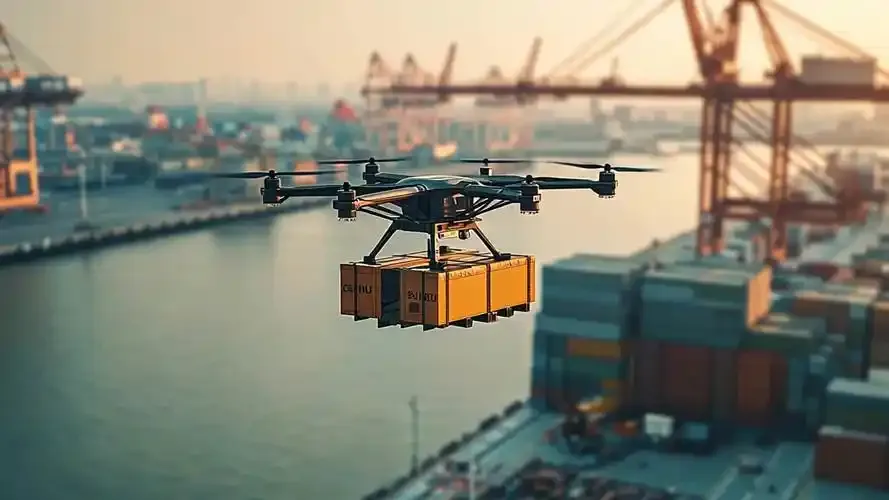
Cainiao applies AI and algorithmic optimization across its warehouse and logistics network at massive scale.
Its smart parcel consolidation system, recognized by the INFORMS Daniel H. Wagner Prize, has been deployed across 52 countries since 2020, shortening delivery times by at least 50% for consolidated cross-border orders while saving tens of millions of dollars annually.
The broader “Global 5-Day Delivery” initiative is now operational across 14 countries in Europe, the Americas, and Asia.

The enterprise impact of China’s AI agent startups extends well beyond manufacturing. Key application areas include:
Chinese deployments consistently deliver measurable efficiency gains, rapid iteration from pilot to scale, and cost structures that make agent deployment accessible beyond large enterprises.
China’s agent implementations offer competitive intelligence that is hard to replicate from press releases alone. Key strategic lessons:
Direct observation of live deployments provides clarity that desk research simply cannot match.
ChoZan organizes tailored China Learning Expeditions to AI and innovation hubs in Beijing, Shanghai, Shenzhen, and Hangzhou. Programs combine expert keynotes, live deployment site visits, workshops, and direct dialogue with industry leaders across China’s top ai agent ecosystem.
ChoZan’s full suite of services includes China Learning Expeditions, market research, strategy consulting, executive keynotes, and customized training for global teams. Every engagement is tailored to your specific business objectives, helping you translate China insights into global competitive strategy.
Chinese startups prioritize practical deployment over benchmark performance, moving faster on enterprise automation and industrial embodiment. Policy alignment and super-app data integration give them structural advantages that are difficult to replicate elsewhere.
Manufacturing, logistics, e-commerce, and financial services lead. Industrial automation via humanoid robots and factory orchestration systems is the highest-growth segment right now.
Leading Chinese AI agent startups offer API access, enterprise licensing, and partnership structures for international clients. Due diligence on data governance and IP terms is essential before engagement.
Open-source is increasingly central. Models like Zhipu’s GLM and Moonshot’s Kimi K2 let smaller startups build capable agents without developing foundational models from scratch.
ChoZan designs customized China Learning Expeditions combining keynotes, company visits, workshops, and expert briefings. Every program is tailored by industry and strategic objective.