CONTENT
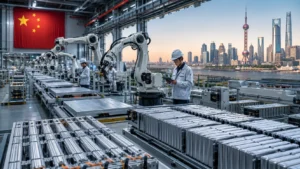
Robots in logistics are no longer a future-facing experiment. China has made them the operational backbone of the world’s busiest supply chains.
Automated systems are replacing manual processes at every stage of the supply chain. They operate on warehouse floors, city streets, and intercity freight corridors. The scale, speed, and sophistication of what China has built puts it ahead of every other market.
This article walks through what logistics robots are and how China built its advantage. It shows what global supply chain leaders need to know.
Robots in logistics are automated systems that move, sort, pick, pack, or deliver goods. They operate with minimal or zero human involvement. They replace the most repetitive and time-intensive tasks in supply chain operations.
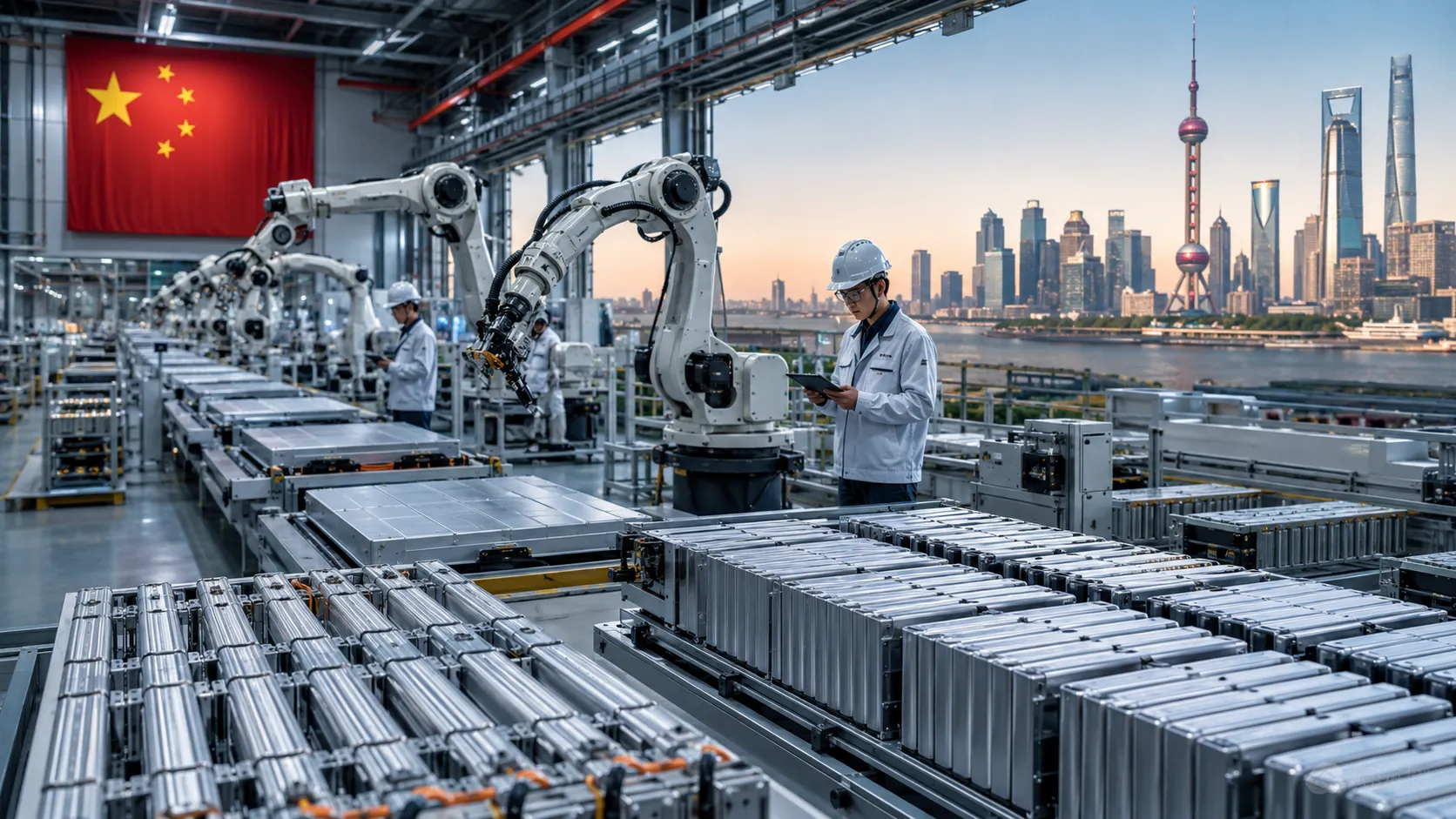
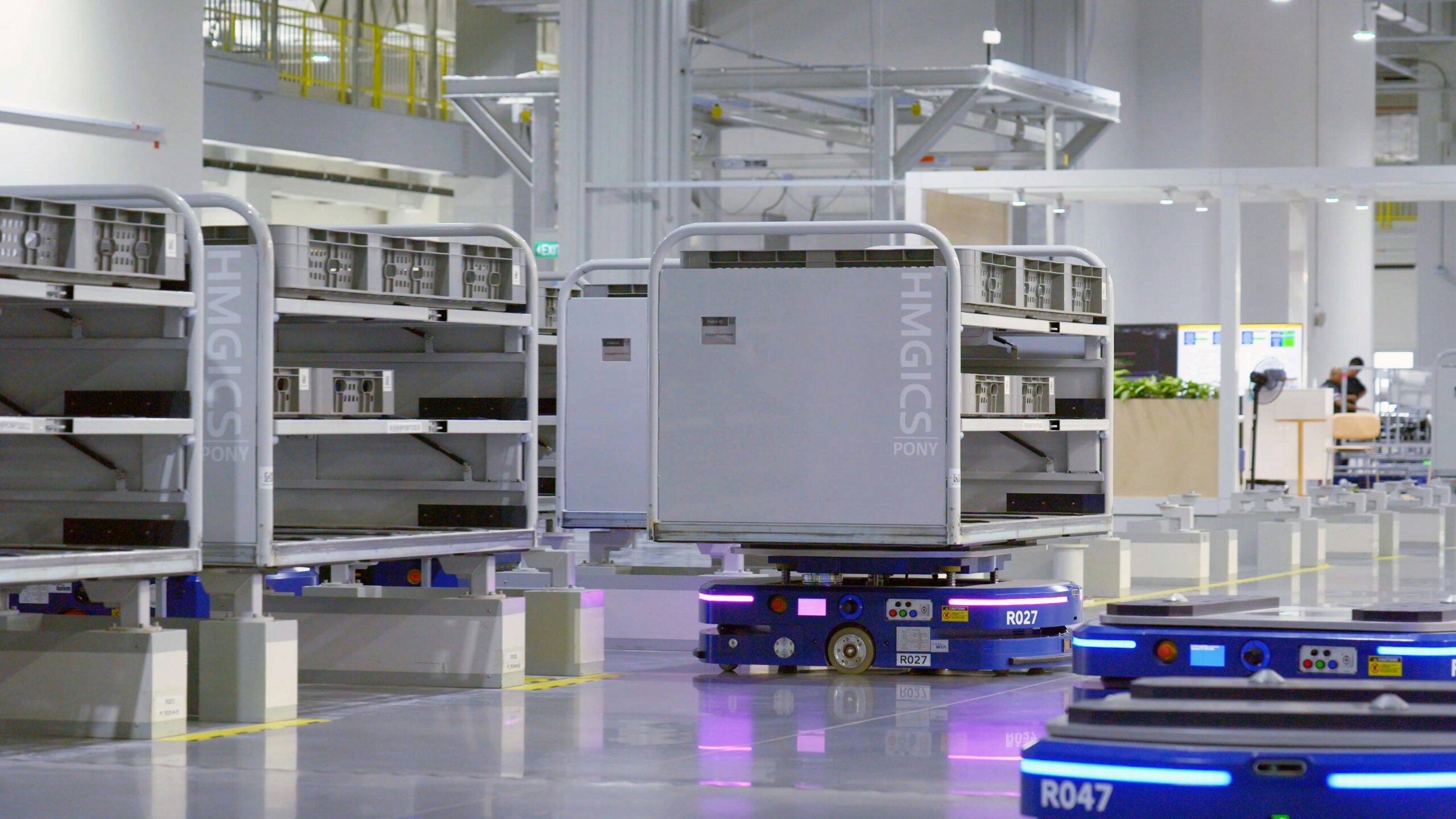
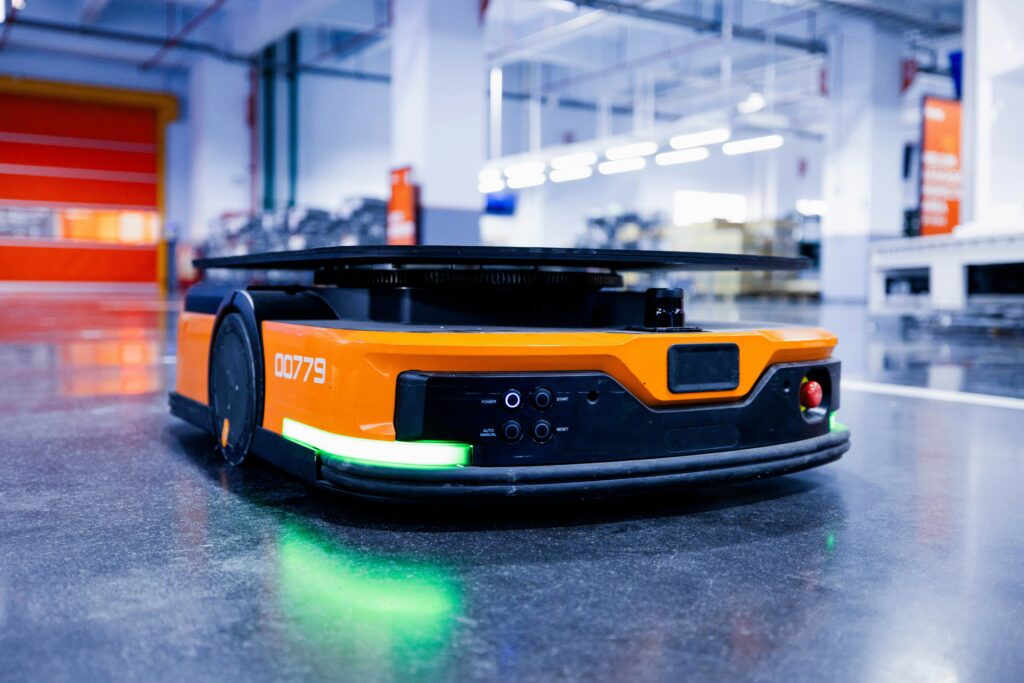
The main types deployed in China’s logistics sector are four. Autonomous Mobile Robots (AMRs) navigate warehouse floors independently using AI and vision systems. Automated Guided Vehicles (AGVs) follow fixed routes to transport pallets and goods. Robotic arms handle picking, packing, and sorting at high speed. Autonomous delivery vehicles handle last-mile parcel delivery on public roads.
Together, these systems allow warehouses and delivery networks to run faster. Error rates fall and cost per unit drops significantly. China processed 216.5 billion parcels in 2025, processing over 6,200 parcels every second. At that volume, logistics automation is no longer a competitive advantage. It is a baseline requirement.
The numbers behind China’s logistics automation push are difficult to overstate. This is not incremental improvement. It is a full infrastructure rebuild.
The global logistics robots market was valued at $15 billion in 2024, growing to $17.2 billion in 2025. It is projected to reach $72.6 billion by 2034, at a CAGR of 17.3%. China dominates the Asia-Pacific region with 41% market share. China’s logistics robot sector revenue reached 18.5 billion yuan ($2.57 billion) by end of 2025. That is up 50% from 12.3 billion yuan in 2024. China’s autonomous last-mile delivery market is projected to reach $15.98 billion by 2032.
In October 2025, JD Logistics unveiled a five-year plan. It targets 3 million robots, 1 million autonomous vehicles, and 100,000 drones. It already operates 3,600 warehouses and 1,600 self-run facilities as of early 2025.
China allocated over $20 billion in robotics subsidies in late 2024 and early 2025. Funding came through grants, loans, tax credits, and state-backed venture capital. The NDRC launched a $137 billion guidance fund in March 2025. It is directed at AI and robotics startups over the next 20 years.
The warehouse is where China’s logistics robot story begins. Three companies show what full-scale warehouse automation looks like across China’s express and fulfillment sectors. These high tech companies have moved beyond pilot programs into continuous, high-volume production.
SF Express is China’s largest express delivery company by revenue and ranked 415th in the Fortune Global 500. It processed 7.8 billion parcels in H1 2025 alone, with revenue growing 9.26% year-on-year. Its automated sorting hubs deploy circular sorters, AGV robots, ISC automated systems, and AI-driven scheduling. In June 2025, SF broke ground on a 225,000 sq m Central China Multimodal Logistics Hub in Zhengzhou. The investment exceeds RMB 1.5 billion. It integrates smart logistics, multimodal transport, and AI-driven scheduling. It also partnered with DAX Robotics to deploy embodied AI bots across its sorting centers. These bots replace rigid legacy automation with intelligent, self-directing robots powered by the XBrain 2.0 model.
Geek+ builds AMRs used by Walmart, Nike, and Decathlon in their fulfillment centers. Its robots handle fast order picking at peak-season volumes. As China artificial intelligence advances, Geek+ robots adapt to changing warehouse layouts without reprogramming. Geek+ is now one of the most deployed AMR brands globally.
Hikrobot, the robotics arm of Hikvision, supplies AMRs to logistics operators across China and internationally. Its systems improved warehouse efficiency for Decathlon by 40%. Hikrobot is among the highest-volume AMR suppliers in the Chinese market.
Getting parcels from depot to doorstep is the most expensive part of the supply chain. China is automating it faster than any other country.
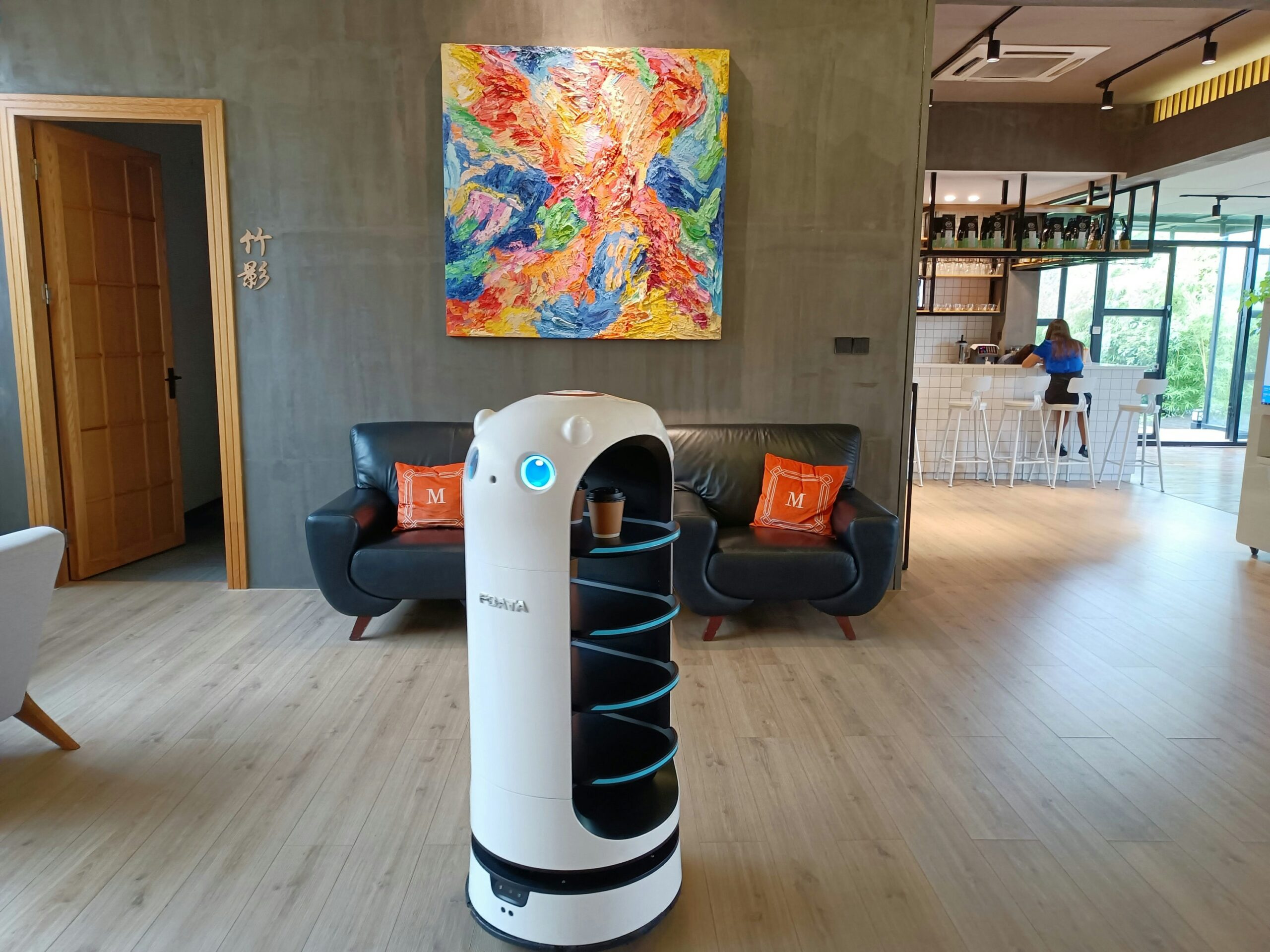
SF Express launched a Level 4 autonomous delivery fleet in June 2025. Each vehicle uses multiple lidar sensors and 360-degree cameras for real-time obstacle avoidance and route optimization. AI-powered delivery robots handle the final approach, operating 24 hours a day without human drivers. The fleet is part of SF’s broader push to automate every stage of its delivery network.
China’s autonomous last-mile sector is scaling sharply. China shipped 6,600 unmanned delivery vehicles in all of 2024. In H1 2025 alone, over 12,000 units were delivered — more than double the previous year’s total. By mid-2025, 103 Chinese cities had opened roads to unmanned delivery vehicles. Soochow Securities forecasts sales will exceed 30,000 units in full-year 2025. Every major Chinese express carrier is building toward this model.
In August 2025, Shenzhen launched the world’s first subway delivery pilot. 41 robots boarded trains to restock convenience stores across metro stations. In July 2025, STO Express committed to deploying 2,000 autonomous vehicles in suburban last-mile grids. The Greater Bay Area has become the primary testing ground for urban and suburban delivery automation in China.
Autonomous logistics does not stop at the city boundary. China is building the same automation model for intercity freight and rural delivery.
Inceptio Technology delivered 400 autonomous heavy-duty trucks to ZTO Express in August 2024. It was the largest single delivery of intelligent trucks globally. Over 2,000 Inceptio-powered trucks are now active in the fleets of China’s leading logistics companies. These trucks have surpassed 200 million kilometers in commercial operation. A joint study with insurer CPIC found Inceptio trucks perform 75–99% better than human-operated vehicles on safety indicators. Operators report 20–50% reductions in labor costs and a 3–7% improvement in fuel efficiency per route.
China’s express carriers are also building drone networks for rural and remote delivery. By end of 2024, nearly 3 million parcels had been delivered by drone across China. Drone delivery now covers areas once unreachable within standard freight corridors. This includes mountainous regions and frontier communities above 5,000 meters altitude. China’s low-altitude economy is projected to reach $280 billion by 2030. It covers drones, air logistics, and urban aviation. The government has designated low-altitude airspace development a strategic national priority in its 15th Five-Year Plan.
Together, these long-haul deployments extend automation from warehouse to every point in the chain. In China, a parcel can travel from robot picker to autonomous truck to unmanned delivery vehicle. No human hands required. That is no longer theoretical. It is operational.
China’s logistics robot buildout carries consequences that reach well beyond its own borders.
Delivery speed expectations are resetting globally. Chinese platforms deliver groceries in under 15 minutes. Same-day delivery is standard for e-commerce. These expectations are spreading to every market where Chinese brands and platforms compete. Manual supply chains cannot keep up.
Cost structures are diverging fast. Automated logistics reduces cost per delivery over time. Companies competing with Chinese operators face a structural cost gap. The gap widens as robots improve and deployment costs fall.
Chinese logistics technology is now export-ready. Geek+ and Hikrobot supply AMRs to Walmart, Nike, and Decathlon internationally. SF Express is expanding its autonomous delivery operations into Southeast Asia and the Middle East. The digital transformation that reshaped Chinese warehouses is now reshaping global ones.
Understanding China’s logistics automation from the outside is a starting point. Seeing it in person is where real insight begins.
ChoZan’s China Innovation Tours take business leaders into logistics hubs, automation facilities, and technology headquarters across China.
Book a consultation with ChoZan and start learning from China’s logistics innovation frontier today.
Robots in logistics are not a trend that is coming. They are a transformation already underway, and China is running it faster than anywhere else in the world.
For global executives, the question is not whether this matters. It is how quickly they can understand what China has built. And what it means for their own supply chains.
ChoZan is the bridge.
Robots in logistics are automated systems that move, sort, pick, pack, or deliver goods. They include AMRs, AGVs, robotic arms, and autonomous delivery vehicles.
China’s e-commerce volume, government investment, and domestic robotics manufacturing give it unmatched scale. It processed 216.5 billion parcels in 2025 and has built the infrastructure to match.
Key companies include SF Express, Geek+, Hikrobot, STO Express, ZTO Express, and Inceptio. All deploy logistics robots at scale across warehouses, delivery, and freight.
Yes. Geek+ and Hikrobot supply AMRs to Walmart, Nike, and Decathlon globally. SF Express is expanding its autonomous delivery operations internationally. The digital transformation that reshaped Chinese warehouses is now reshaping global ones.
ChoZan’s China Innovation Tours offer structured visits to smart logistics facilities and automation companies across China. Expert sessions with on-the-ground practitioners are included.