CONTENT
China’s wind energy now sits at the center of the country’s clean power buildout. The story is no longer only about turbines on remote plains or coastal waters. It is about grid reform, industrial demand, offshore engineering, turbine scale, and the companies shaping global competition in equipment.
For business leaders, wind power in China matters because it reflects how China turns policy direction into deployment speed. Wind now connects energy security, industrial upgrading, green manufacturing, heavy industry decarbonization, and export strategy.
The question is no longer “can China build wind capacity?” The better question is how quickly it can absorb that power into a more flexible electricity system.
China’s wind energy matters because China has moved from capacity expansion to system integration. In 2025, the country added wind and solar at a scale that few markets can match. Yet the strategic issue has shifted toward utilization, grid access, pricing discipline, and demand creation across the industry.
This shift changes how executives should read wind energy in China. Capacity still matters, but the more important signal is how wind links with storage, long-distance transmission, green hydrogen, industrial parks, and power market reform. China is using wind as part of a broader energy stack.
For investors and strategy teams, this creates two useful lenses.
China has onshore wind farms across Inner Mongolia, Gansu, Xinjiang, Hebei, Shanxi, Jilin, and other resource-rich areas. It also has fast-growing offshore bases along coastal provinces.
Northern and western regions offer strong wind resources and large land availability. Eastern and southern provinces bring demand centers, ports, offshore engineering assets, and industrial customers. This geography pushes China to address both transmission and consumption simultaneously.
A typical Chinese wind farm now sits within a larger power-system logic. It may connect to ultra-high-voltage transmission, local storage, green power trading, or nearby industrial demand. This differs from older development cycles, in which adding turbines often mattered more than matching generation to real-time consumption.
Wind power in China has entered a more demanding phase. Adding turbines remains important, but electricity markets now reward projects that can forecast output, manage curtailment risk, sell power efficiently, and fit provincial consumption rules.
China’s 2025 pricing reform clearly shows this shift. The government moved renewables further toward market-based pricing and differentiated treatment for existing and new projects. This pushes developers to think beyond installation volume. Project returns now depend more on power prices, local demand, storage, and grid access.
This matters for global companies because China and wind power now intersect with procurement and manufacturing strategy. A factory that buys green electricity in China may face different local rules by province. A supplier that claims to produce low-carbon needs to understand power trading, certificates, and renewable consumption standards.
Offshore wind gives China wind power a second growth engine. Onshore wind delivers the volume. Offshore wind adds engineering depth, port-based industrial clusters, larger turbines, marine services, foundations, cables, and new routes into coastal demand centers.
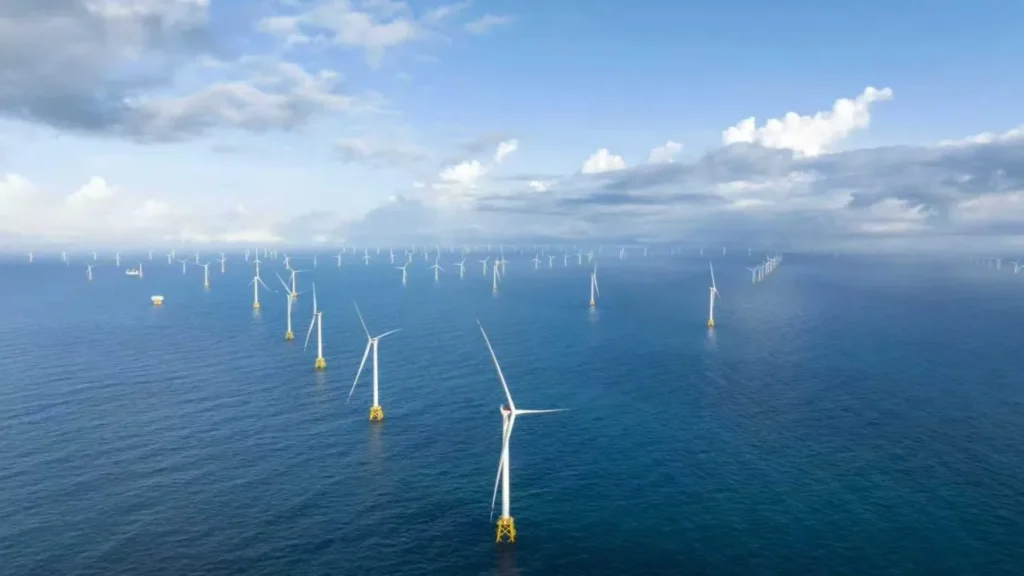
In 2025, China accounted for most new offshore wind capacity connected globally. This matters because offshore projects are harder to execute. They require marine logistics, stronger foundations, typhoon resistance, grid connection, corrosion control, and specialized operations. China’s coastal provinces now act as test beds for industrialized offshore deployment.
The frontier is moving into deeper water. Floating offshore wind remains in its early stages, but 2026 activity shows that Chinese developers are testing larger floating platforms. This matters for markets with limited shallow seabeds. It also gives Chinese companies another route into global offshore supply chains.
The companies shaping wind power in China are no longer only domestic equipment suppliers. They are becoming system players across turbines, energy storage, digital operation, offshore technology, and international project delivery.
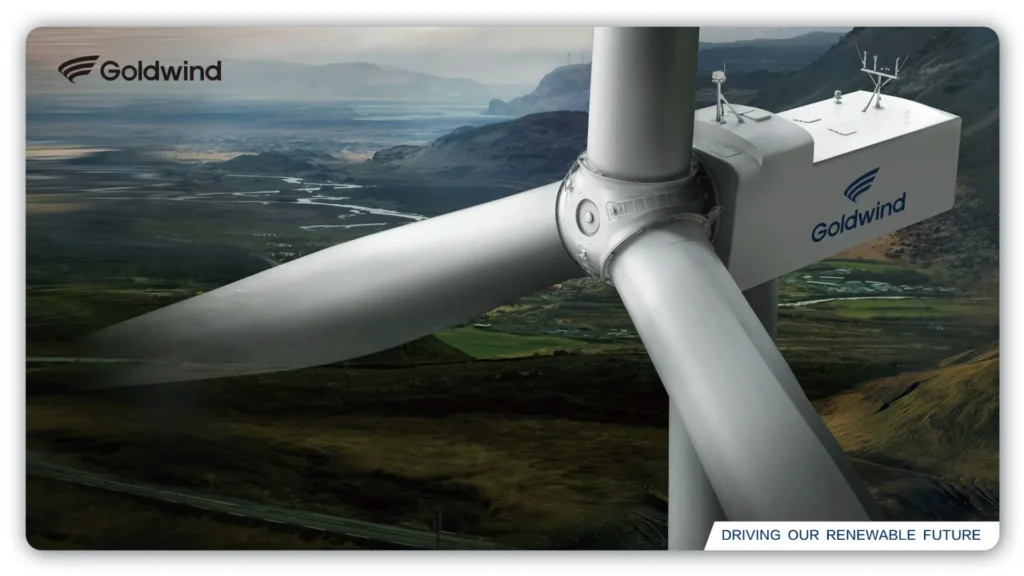
Goldwind remains one of the most important names in Chinese wind power. Its strength comes from experience, project delivery, service capability, and a wider clean energy solutions portfolio. The company positions itself around equipment, services, energy development, digital systems, and zero-carbon industrial solutions.
For executives, Goldwind is important because it shows how turbine makers are moving into integrated energy services. The company’s digital platforms and zero-carbon park offerings point toward a broader role in industrial energy management.
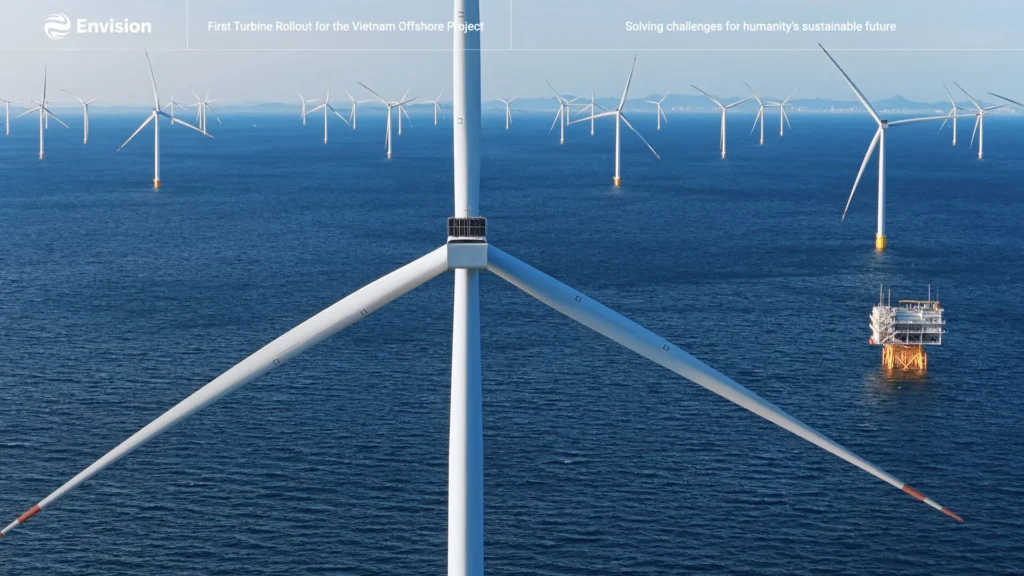
Envision is another company to watch because it connects smart turbines, storage, hydrogen, and digital energy systems. Its positioning fits China’s next stage: wind generation must be linked to flexible demand, software, and low-carbon industrial applications.
Envision also stands out for its international activity. As Chinese manufacturers face tight margins at home, overseas projects become more strategic. Envision’s model shows how Chinese wind companies can package turbines with broader renewable energy solutions.
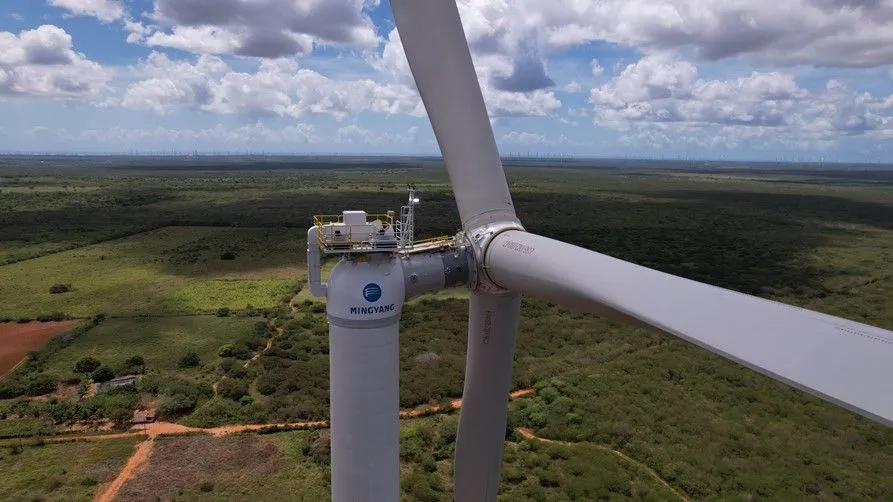
Ming Yang is especially relevant for offshore wind. The company highlights onshore, offshore, and floating solutions, with hybrid drive technology, lifecycle management, and typhoon-resistant offshore designs. That makes it important in coastal China and international offshore markets.
For strategy teams, Ming Yang represents China’s engineering direction and wind energy. Larger machines, marine reliability, and floating systems are all part of the next offshore cycle.
Windey has become highly visible through high-capacity onshore turbines, international expansion, and integrated wind-plus-storage solutions. Its 2026 activity in markets such as the Middle East, Vietnam, and Brazil shows how Chinese turbine makers are turning domestic scale into global outreach.
Windey matters because it reflects the next stage of equipment competition. Cost, reliability, certification, financeability, and local project support now matter as much as headline turbine size.
SANY and Dongfang Electric complete the picture of rising Chinese turbine competition. Their scale shows that China’s wind sector has depth across several manufacturers. This creates pricing pressure at home and gives overseas buyers more Chinese options.
For global competitors, the message is clear. Chinese OEMs now compete on delivery speed, turbine scale, supply chain depth, and cost control. The next test will be long-term service performance outside China.
China and wind power now matter beyond electricity generation. In 2025, China set renewable consumption standards for industries such as steel, cement, and polysilicon, as well as certain data centers. That turns wind into a business input, not only a utility-scale asset.
This is strategically important. Heavy industry uses large amounts of electricity and faces growing pressure to lower carbon intensity. Data centers also need cleaner power as AI demand rises. Wind can help, especially when paired with solar, storage, green power trading, and direct industrial consumption.
For multinational companies, this affects supplier audits, manufacturing footprints in China, and decarbonization claims. A China-based supplier may have access to green electricity, but availability depends on province, contract structure, grid rules, and local renewable targets.
The strongest opportunity in wind energy may sit beyond the turbine itself. Grid investment, storage, forecasting software, power trading systems, and flexible industrial demand will determine how much of the wind output becomes useful electricity.
This is where China’s wind buildout becomes commercially interesting. Curtailment risk creates demand for better dispatch, batteries, pumped storage, green hydrogen, and industrial load management. It also pushes project developers to consider revenue quality instead of capacity headlines.
Global firms should watch this layer closely. The next set of opportunities may involve grid digitalization, high voltage equipment, offshore cables, energy storage integration, weather analytics, asset monitoring, and power market services.
China’s wind energy offers three strategic lessons. First, deployment speed comes from domestic demand, industrial policy, and manufacturing depth working together. Second, scale creates cost pressure that pushes companies to innovate or expand overseas. Third, clean power only becomes strategic when the grid and demand side can absorb it.
This matters to executives because China’s wind buildout is not a simple renewable-energy story. It is a manufacturing story, a power market story, a coastal infrastructure story, and an industrial competitiveness story.
For investors, the strongest signals come from project quality, grid access, offshore engineering, service revenue, and overseas execution. For brands and manufacturers, the key question is how the availability of green power can strengthen supply chain resilience and low-carbon positioning.
Chozan helps global executives understand China’s renewable energy ecosystem through research, briefings, workshops, access to experts, and China learning expeditions.
If your team wants to understand China’s wind energy, clean technology deployment, or China’s broader power transition, Chozan can help turn market complexity into practical strategic insight.
Book a consultation with Chozan to explore the opportunities, risks, and business lessons behind China’s clean power buildout.
China’s wind energy is growing fast because policy support, domestic manufacturing scale, grid investment, and provincial clean energy targets work together. The market also benefits from large industrial electricity demand and strong turbine supply chains.
Wind farms in China are concentrated in northern, western, and coastal regions. Inner Mongolia, Gansu, Xinjiang, Hebei, and coastal provinces matter because they combine wind resources, land, ports, or industrial power demand.
Offshore wind power in China requires marine engineering, stronger foundations, ports, vessels, cables, and typhoon-resistant turbine design. Onshore wind usually scales faster because land logistics and construction conditions are simpler.
A Chinese wind farm may involve state-owned developers, local energy companies, private suppliers, or mixed project structures. Ownership depends on province, project type, financing model, and the role of large power groups.
Wind power in China matters because green electricity affects factory emissions, supplier reporting, product carbon footprints, and industrial competitiveness. Companies sourcing from China increasingly need to understand renewable power availability by province.
The biggest challenge for China and wind power is not turbine production. The harder issue is absorbing variable electricity through stronger grids, storage, flexible demand, better forecasting, and market-based pricing.
Wind in China can support green hydrogen when renewable electricity powers electrolysis near industrial clusters or coastal projects. This matters for chemicals, shipping fuels, ammonia, methanol, and heavy industry decarbonization.
China’s wind power equipment is led by companies such as Goldwind, Envision, Windey, Ming Yang, SANY, and Dongfang Electric. Their strengths differ across onshore turbines, offshore engineering, digital systems, and overseas expansion.
Wind energy in China can help reduce data center emissions when operators secure verified green electricity through local power markets, renewable contracts, or green certificates. Provincial rules and grid access shape the real impact.
Executives should track developments in China and wind energy because they affect clean technology costs, offshore supply chains, industrial decarbonization, renewable procurement, and global turbine competition. China’s deployment model offers practical lessons for other markets.