CONTENT
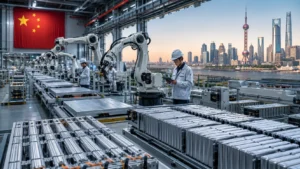
Robots in the hospitality industry are no longer a novelty reserved for tech demonstrations. China has turned them into everyday operational tools across hotels, restaurants, and service venues. No other market has matched this scale.
The question for global hospitality operators is no longer whether robots belong in hotels and restaurants. It is how China is using them and what it has learned. And how to apply those lessons without stripping the human warmth that makes hospitality what it is.
Robots in the hospitality industry are service-oriented automated systems. They interact with guests, deliver items, clean spaces, or handle front-of-house tasks. Industrial robots operate out of sight. Hospitality robots work directly alongside guests and staff in lobbies, corridors, restaurants, and guest rooms.
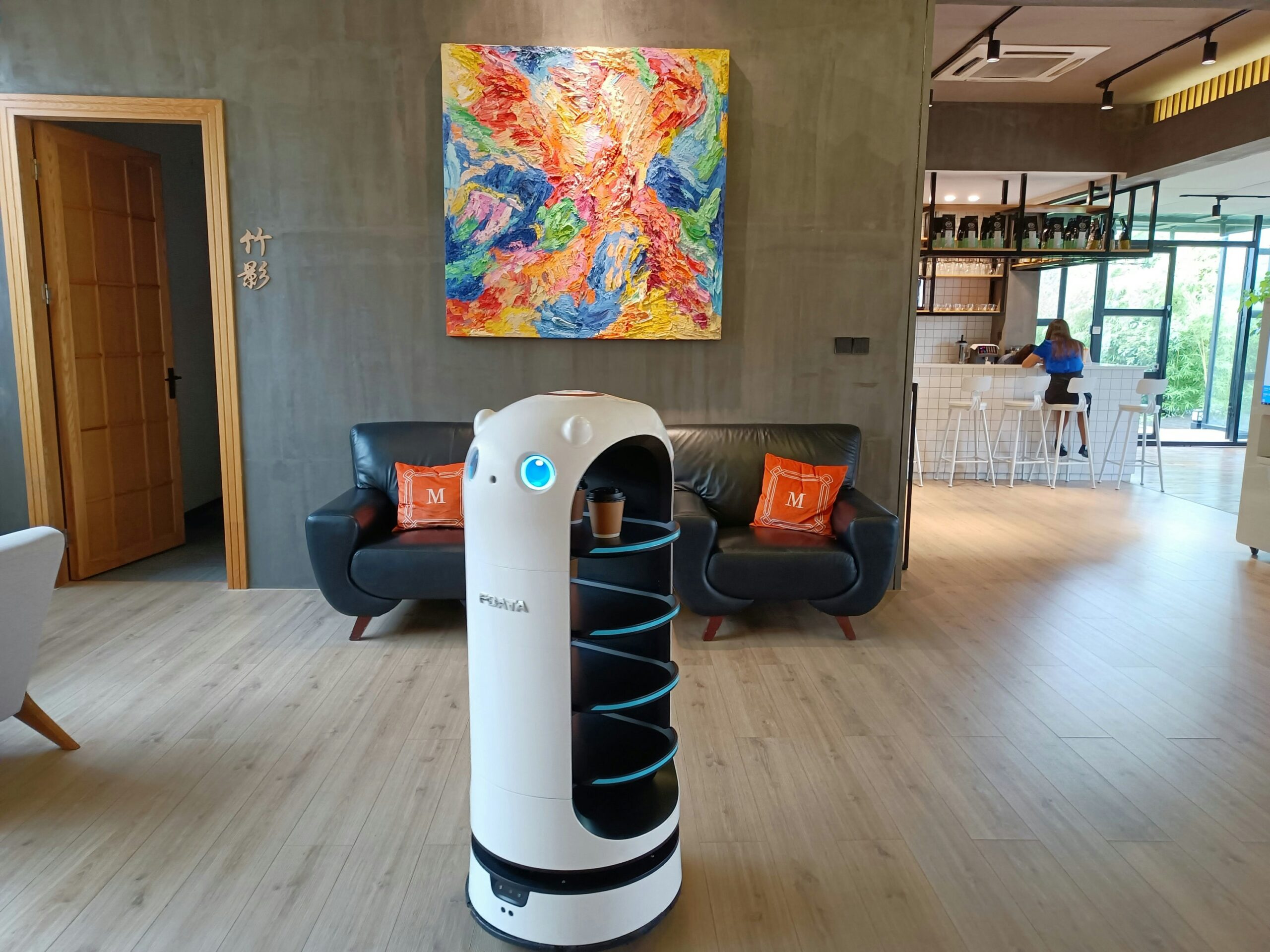
The main categories deployed in China are four. Delivery robots navigate elevators and hallways autonomously to bring food, amenities, and parcels to guest rooms.
Concierge and reception robots handle check-in, information requests, and multilingual guest queries. Cleaning robots sanitize lobbies, corridors, and rooms around the clock. Restaurant service robots carry dishes from kitchen to table and collect used tableware.
What makes China’s deployment different is not just the technology. It is the volume, speed of iteration, and operational learning. This comes from deploying tens of thousands of units across real hospitality environments.
China’s hospitality robot sector has moved well past the novelty phase. It is now a mature, commercially competitive market shaped by falling hardware costs and rising guest expectations.
The global hospitality robots market reached $1.02 billion in 2025 (Intel Market Research). Across the broader hotel service robot segment, the market is projected to exceed $3.1 billion by 2026. Delivery robots alone account for 40% of all service robot deployments.
Many of China’s leading deployments come from high tech companies that scaled in manufacturing before expanding into services. Globally, 76% of hotel guests now view robotics positively and 43% have indicated active interest in robotic services. Up to 20% operational cost savings have been reported in establishments that deploy robot systems.
In China, the average price per hotel service robot has dropped to around 10,000 yuan (~$1,380) per unit. One robot typically replaces one to two service staff. It saves hotels between 5,000 and 8,000 yuan ($690–$1,100) per month in labor costs. That calculation has convinced chain hotels across China to deploy at scale.
Labor cost pressure is the primary driver. According to STR Global 2025, labor now consumes approximately 33% of total hotel revenue globally. In 2025, 87% of hotels reported staffing shortages (AHLA). Housekeeping and front desk positions were the hardest to fill. Robots reduce both cost and instability.
Yunji’s newest multi-functional hotel robots dropped by two-thirds in H1 2025. Prices fell to around 17,000 yuan ($2,450) per unit. Keenon’s ButlerBot W3 is priced at $9,500–$13,500 in 2026, down sharply from earlier premium pricing.
China’s service robots are not deployed randomly. They are placed at touchpoints where efficiency matters most. Human presence adds the least value at these moments.
Keenon Robotics is the most widely deployed hospitality robot brand in China. Its ButlerBot W3 carries a 45-litre payload and navigates multiple floors autonomously. A single unit handles over 300 deliveries per day. Keenon has shipped over 100,000 service robots globally.
It ranks #1 in catering delivery robot exports. IDC places its global food delivery robot market share at 40%. In October 2025, Shangri-La Traders Hotel at Shanghai Airport deployed Keenon’s XMAN-R1 humanoid for guest greetings.
It was the world’s first hotel to run humanoid and special-purpose robots together. At CES 2026, Keenon unveiled the Xman-R1 to the US market and expanded into home robotics. Keenon now operates in over 60 countries. Half of its revenue comes from overseas.
Yunji Technology holds the largest share of China’s domestic hotel robot market. In October 2025, Yunji listed on the Hong Kong Stock Exchange (stock code: 2670). It was the first Chinese hospitality robot company to go public. As of May 2025, its network covered over 34,000 hotels and 150 hospitals worldwide.
Partners include Marriott, Hilton, Hyatt, and InterContinental. Yunji ranks #1 globally in robots deployed in 3D space scenarios. Its single-day peak reached 36,000 active units simultaneously.
Annual service volume has exceeded 500 million interactions. Hotels use Yunji robots for item delivery. Front desk staff focus on guest-facing interactions that require judgment and genuine care.
UBTECH Robotics deploys humanoid robots for customer service roles in premium hotels. Its Walker S model handles reception, information queries, and guest engagement. It uses facial recognition and multilingual natural language processing.
Pudu Robotics shipped over 100,000 units as of April 2025, serving more than 1,000 cities in 80+ countries. It doubled overall sales in 2025 through international expansion. Three-fifths of its cleaning robots now ship to North America and Europe. In March 2025, Pudu launched the FlashBot Arm.
This commercial humanoid robot uses mechanical arms to operate elevators autonomously. This could save the industry $1.8 billion annually in elevator-control costs. At iREX 2025 in Tokyo, Pudu showcased the D5 robot dog and BellaBot Pro. The exhibition covered its full hospitality and logistics robot ecosystem.
It is preparing for a Hong Kong Stock Exchange IPO. Its BellaBot model reduces repetitive staff movement by 50%, freeing floor staff to focus on guest engagement. Pudu robots use China artificial intelligence to adapt routes based on live table occupancy and order timing.
Keenon’s DINERBOT series handles restaurant food delivery from kitchen to table. Its T8 model is deployed in over 25,000 restaurants globally, handling food running and table bussing. In June 2025, Keenon showcased its full restaurant automation lineup at Food Hotel Tech Paris.
At CES 2026, it demonstrated XMAN-R1 alongside its full hospitality robot ecosystem to the US market. The shift is now complete: Keenon is a global supplier, with half its revenue from overseas.
Orion Star Robotics is based in the Greater Bay Area. It develops AI-powered service robots for restaurant and hotel front-of-house deployment. Its systems integrate voice, vision, and navigation for real-time guest interaction.
Gaussian Robotics is China’s leading commercial cleaning robot company. Its systems operate in hotel lobbies, corridors, and public spaces. Cleaning robots run up to 80% faster in public areas than human housekeeping staff.
They also clean guest rooms 20% faster. The IFR’s latest data shows nearly 12,000 professional cleaning robots sold globally. Floor cleaning is the dominant application. UV sterilization and HEPA-filter models are now deployed across major hotel chains, airports, and convention centers globally.
The title of this article raises a question that Chinese hospitality operators have already answered through experience. Not every guest touchpoint benefits from a robot.
Robots work best where the task is predictable. Delivering towels, running dishes, sweeping corridors at 3 a.m. These are tasks where consistency and speed matter more than warmth. Chinese hotels have learned that robots handle these moments well.
Human staff must own the emotionally loaded moments. Check-in for a guest who has had a delayed flight. A complaint about a noisy room. A celebration dinner where the couple wants to feel noticed. These moments require the kind of reading, adapting, and genuine care that no robot currently delivers reliably. The most successful Chinese hospitality operators do not replace human staff. They redeploy them.
The digital transformation lesson from China’s best operators is that robots free staff from repetitive invisible tasks. Every human interaction then becomes more intentional. A robot that delivers breakfast means a staff member who has time to remember a returning guest’s name.
76% of hotel guests globally now view robotics positively. Guest acceptance is growing, not shrinking. Among travelers, 43% have indicated active interest in robotic services. Acceptance is highest when robots are visibly efficient and human staff remain visibly engaged. The combination is what Chinese hotels are learning to get right.
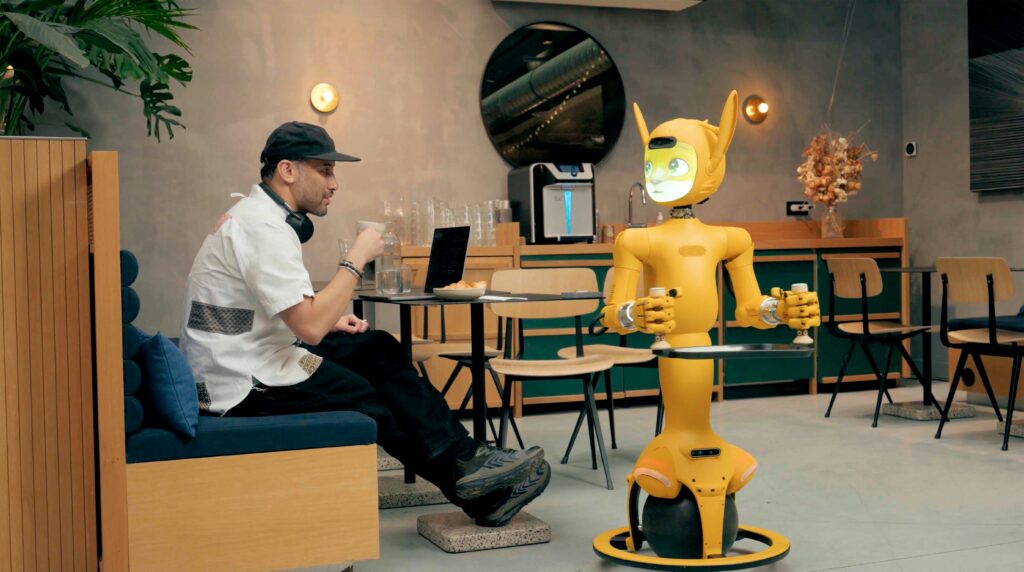
China’s hospitality robot story is not just about efficiency. It is a case study in redesigning guest experience around automation and human judgment working together.
ChoZan’s China Innovation Tours take business leaders into the hotels, restaurants, and tech companies driving this transformation firsthand.
Book a consultation with ChoZan and start learning from China’s hospitality innovation frontier today.
Robots in the hospitality industry are not replacing the human touch. They are clarifying where it belongs.
China has deployed more hospitality robots than any other country. It has generated more real-world operational learning in the process. The brands, models, pricing, guest response data, and deployment lessons are all available to study.
For global hospitality operators, China is the clearest signal of where this industry is heading. ChoZan is the bridge to understanding it firsthand.
Robots in the hospitality industry are service-oriented automated systems. They handle tasks like room delivery, restaurant service, front desk assistance, and cleaning in hotels and dining venues.
Key Chinese companies include Keenon Robotics, Pudu Robotics, Yunji Technology, UBTECH Robotics, Gaussian Robotics, and Orion Star Robotics.
Not in China’s leading hotels. Robots handle repetitive tasks like deliveries and cleaning. Human staff focus on guest-facing interactions that require judgment, empathy, and personalized service.
In China, hotel service robots now average around 10,000 yuan (~$1,380) per unit. Delivery robots save hotels 5,000 to 8,000 yuan ($690–$1,100) per month. Most properties report payback within 6 to 18 months.
ChoZan’s China Innovation Tours offer visits to robot-deployed hotels, restaurants, and service robot companies across China. Expert sessions with on-the-ground practitioners are included.