TL;DR.
China is running the world’s largest test of whether AI can lift consumer spending, with a national “AI Plus” plan and AI wired into payments, delivery, and shopping. The early read: AI is boosting the supply side and the buying experience, but it has not yet revived broad household spending. Here is what works, what doesn’t, and what a brand should copy.
Every government and retailer is asking the same question: can AI actually make people spend more? China is the clearest place to look, because it has turned that question into national policy and wired AI into daily life faster than anywhere else. The answer so far is mixed and worth understanding in detail. AI is lifting how goods are sold and how efficient sellers are. It has not, on its own, revived the broad consumer confidence that drives an economy.
This piece walks through China’s experiment and what a brand can take from it.
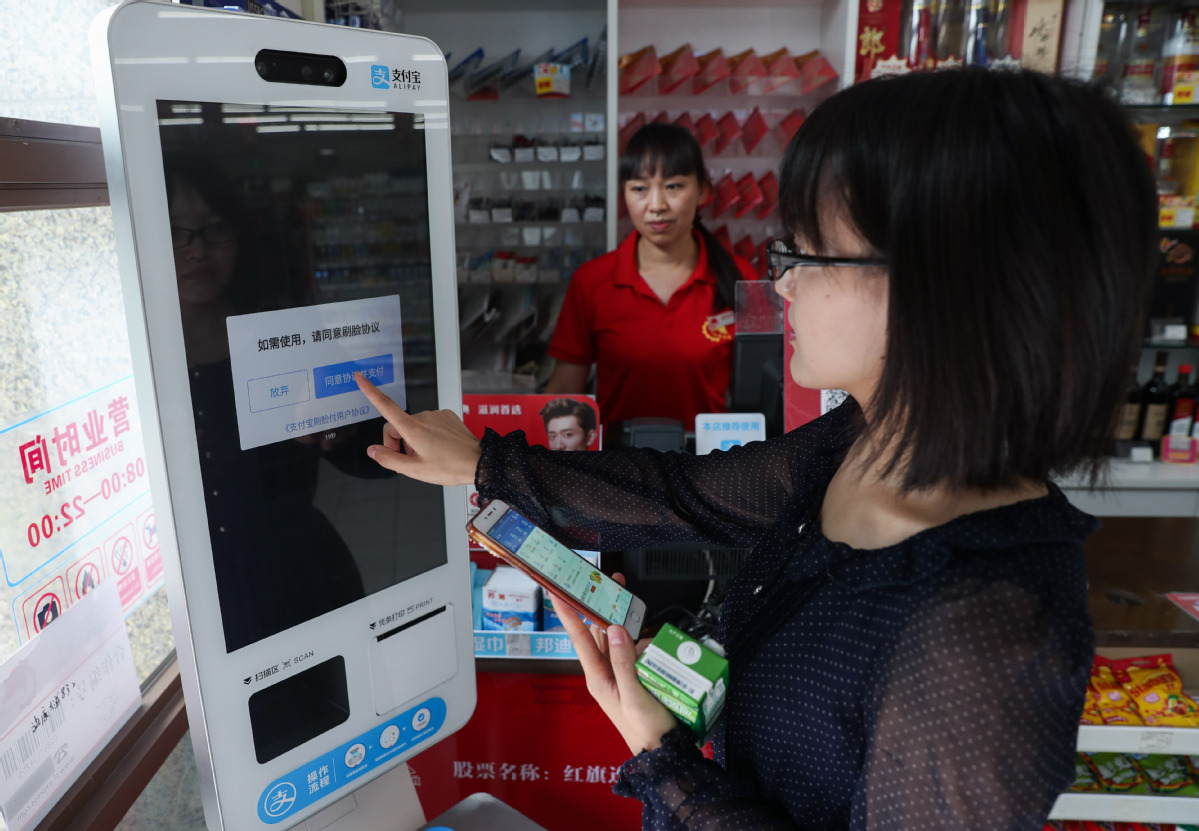
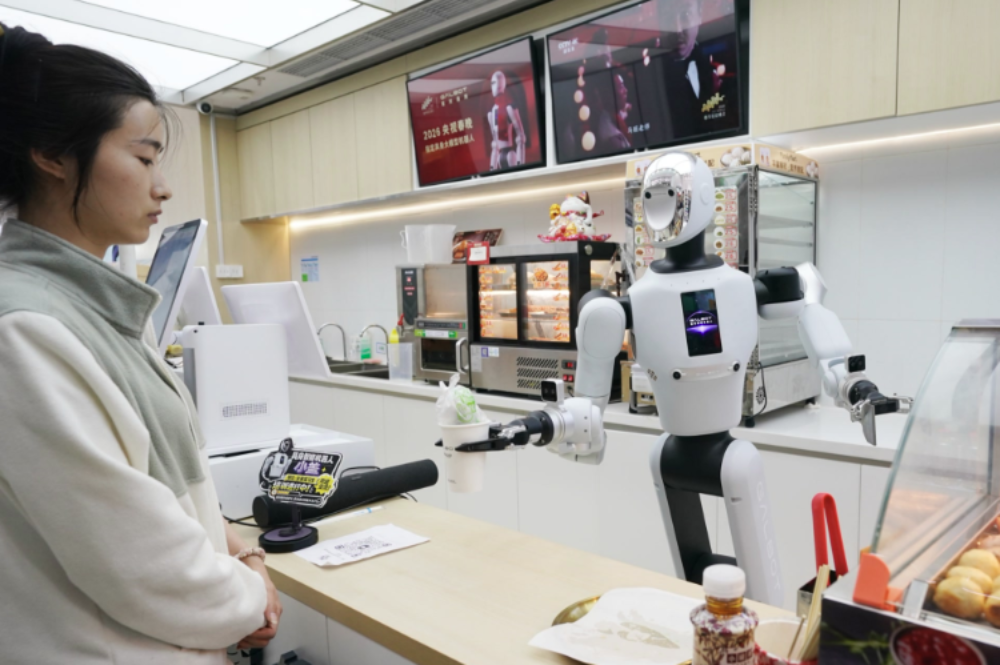
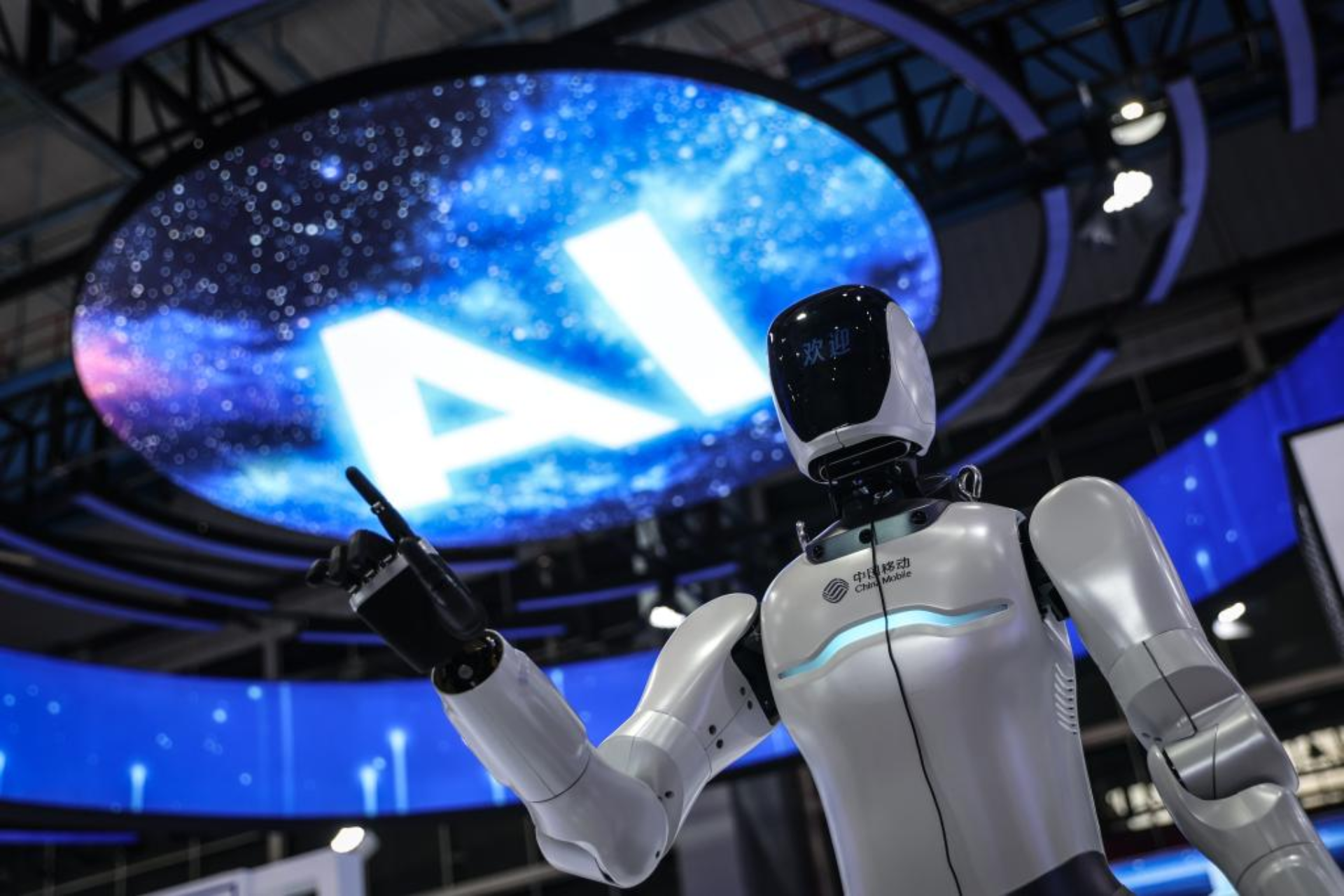
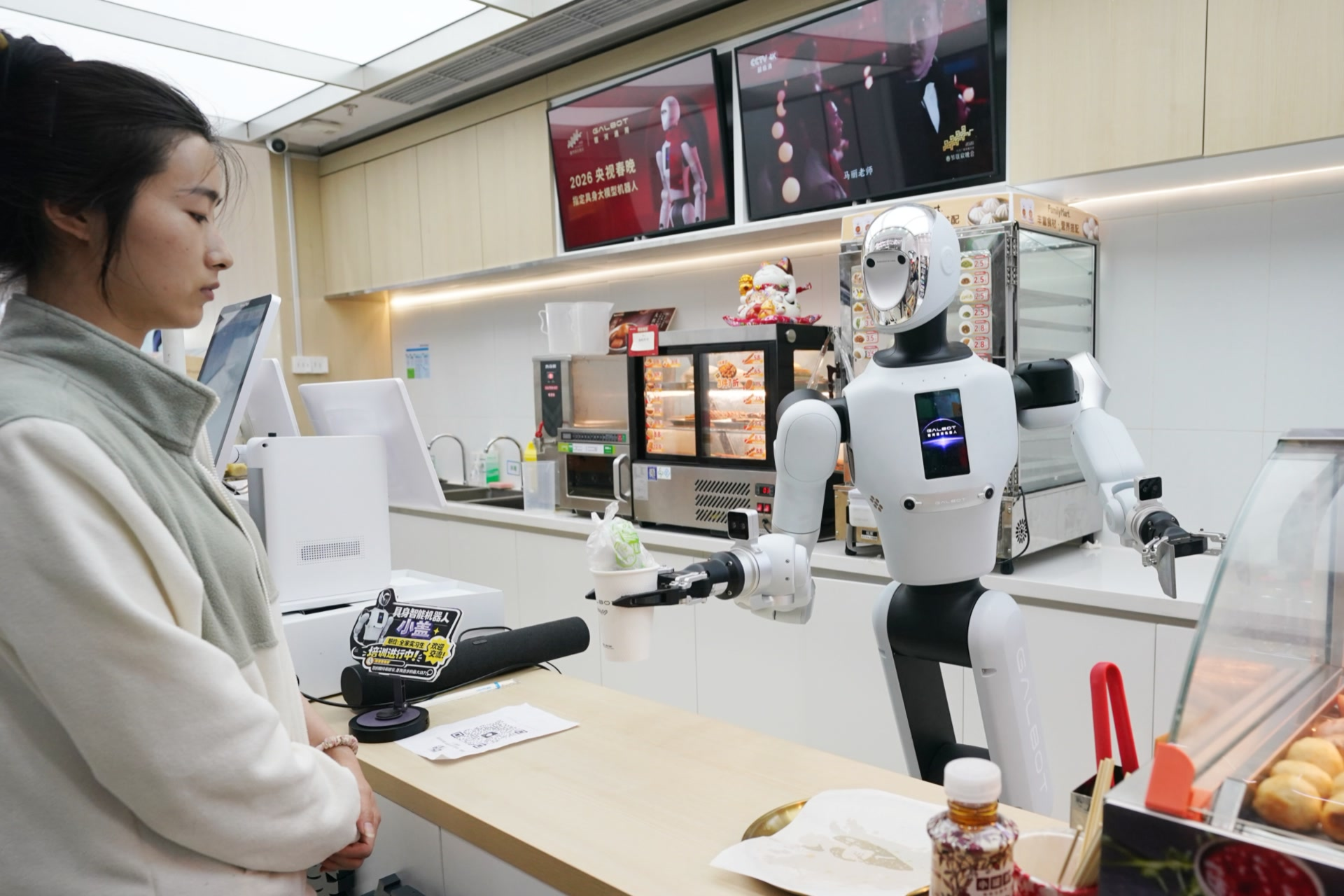
AI is woven into daily spending in China, from coffee orders to robotaxis.
At a glance
- Baidu’s Apollo Go robotaxi has passed 22 million+ cumulative rides across 27 cities (Baidu, 2026).
- ByteDance’s Doubao AI app reached 382 million monthly users (QuestMobile, May 2026).
- China’s Ministry of Commerce and seven agencies issued a June 2026 plan to embed AI across consumption (SCMP, June 2026).
- Yet AI has not reversed weak domestic demand; a property downturn and cautious households still drag spending (SCMP, 2026).
Can AI actually boost a consumer economy?
What is China's "AI Plus Consumption" plan?
It is a national push to make AI part of everyday spending. In June 2026, China’s Ministry of Commerce and seven other agencies issued a plan to weave AI across retail, services, and daily life, under the broader State Council “AI Plus” strategy (SCMP; Tech in Asia, June 2026). The aim is to use AI to make shopping easier, personalize offers, and nudge households to replace old appliances and devices with smarter ones.
For a brand, the signal is straightforward: AI-assisted commerce in China now has state backing and subsidies behind it, so the pace of adoption is policy-driven, not just market-driven.
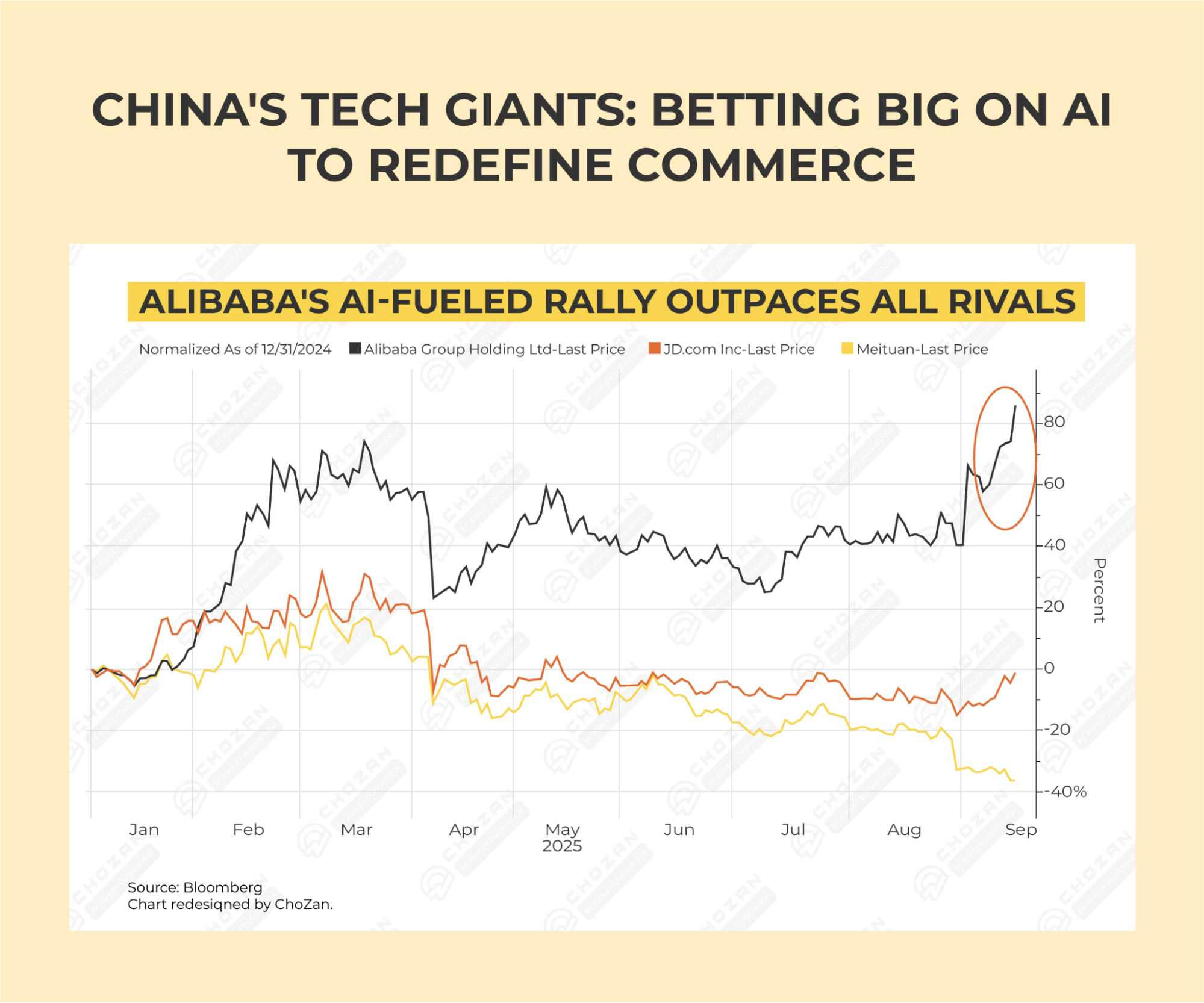
Markets are betting big on AI: Alibaba’s shares roughly doubled through 2025 on its AI push, far outpacing JD and Meituan. A rally is not the same as consumer spending. Source: Bloomberg (redesigned by ChoZan).
Where is AI already lifting Chinese consumer spending?
In the moments where AI removes friction between wanting something and paying for it. The clearest, most durable examples:
- Conversational payments. Alipay and Luckin Coffee, a large Chinese coffee chain, run ordering and payment inside a single chat (TechCrunch, January 2025).
- AI life assistants. Meituan’s Xiaomei handles food orders, bookings, and recommendations in one place, part of a shift beyond price wars.
- AI livestream hosts. Digital presenters sell around the clock on Taobao and Douyin, China’s version of TikTok, cutting the cost of running a storefront.
- Autonomous everyday services. Baidu’s Apollo Go robotaxi passed 22 million rides across 27 cities (Baidu, 2026), turning a novelty into routine spending.
Each one shortens the path to purchase, which lifts how often and how easily people buy. You can ride Apollo Go and see these AI services in person on a China Innovation Tour. For how the assistant then chooses which product to surface, see the 30 June spoke: When China’s AI Picks the Product, Does It Pick Yours?
Why hasn't AI revived China's broader consumption yet?
Because what holds spending back is confidence, not convenience. A property downturn, cautious households, and uneven income growth keep people saving, and no interface fixes that (SCMP, 2026). Two more limits are worth naming. AI is booming most on the supply side, in exports and productivity, which does not automatically put money in shoppers’ pockets. And the rollout has hit real guardrails: China’s AI Companion Law took effect in July 2026, forcing some AI companion features offline (TechTimes, July 2026).
What should your brand learn from China's AI consumption experiment?
Use AI where it demonstrably works, on friction and conversion, and do not expect it to manufacture demand. Three moves:
- Put AI on the last inch of the purchase. China’s wins are all at the point of decision and payment. Shorten your own checkout, service, and reorder flows before building anything fancier.
- Sell the upgrade, not the novelty. The Chinese plan nudges people to replace old devices with smarter ones. Frame your AI features as a concrete reason to buy now, not a demo.
- Read your demand honestly. AI will lift conversion on intent you already have. If your category has a demand problem, AI is not the fix, and China is the proof.
Want these lessons for your leadership team? Book Ashley Dudarenok as a keynote speaker, or follow Ashley on LinkedIn for the next read.
FAQ About AI and China's Consumer Economy
Can AI boost a consumer economy?
Partly. AI lowers the cost of selling and personalizes the experience, which lifts conversion and efficiency, but it does not fix weak demand caused by low income or confidence. China shows an AI-driven supply boom alongside still-cautious household spending.
Is AI reviving China's consumer economy?
On the supply and experience side, yes. AI is boosting exports, productivity, and how goods are sold. Broad domestic consumer spending has not yet recovered, held back by a property downturn and cautious households (SCMP, 2026).
What is China's "AI Plus Consumption" plan?
A June 2026 plan from China’s Ministry of Commerce and seven agencies to embed AI across retail, services, and daily life, under the State Council’s “AI Plus” strategy, with subsidies to nudge upgrades to smart devices.
What can global brands learn from it?
Deploy AI where it works, on checkout, service, and reorder friction, and frame AI features as a reason to upgrade. Do not expect AI to create demand that isn’t there.

Sources: South China Morning Post (2026) · Baidu investor materials (2026) · QuestMobile / BigGo (May 2026) · TechCrunch, “Ant Group partners with Luckin Coffee on AI ordering via Alipay” (January 2025) · Tech in Asia (June 2026) · Forbes, “China Wants AI To Make Consumers Spend Again” (June 2026) · TechTimes, China AI Companion Law (July 2026) · State Council “AI Plus” guidance.