CONTENT
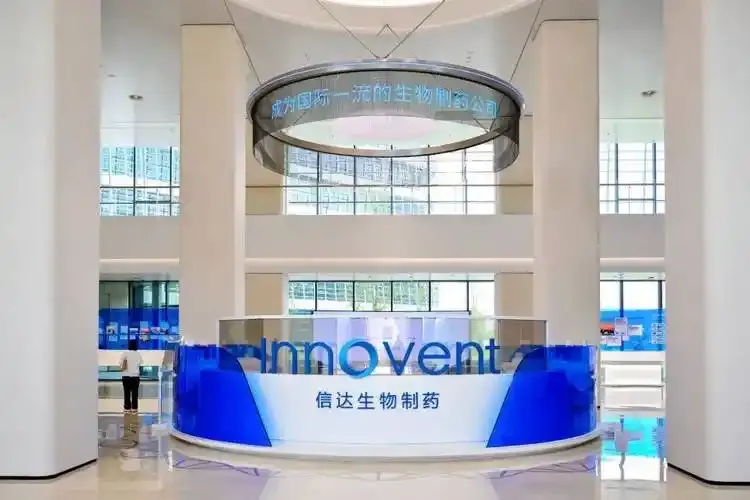
Innovent Biologics is a China-based biopharmaceutical company that discovers, develops, manufactures, and sells medicines. Its portfolio spans oncology, metabolic disease, autoimmune disease, and eye conditions, combining marketed treatments with experimental programs and international partnerships. An October 2026 company update reported 20 launched products.
The company matters because it offers a concrete example of China’s expanding contribution to drug innovation. The commercial question is how effectively it can turn research into approved treatments, recurring product sales, and a larger role in global development.
Recent evidence shows progress, while clinical uncertainty and demanding partnership commitments remain central to the story.
Innovent Biologics Inc operates across discovery, clinical trials, manufacturing, and commercialization. This gives the business several routes to value creation: medicine sales, income from licensed programs, and commercial agreements for partners’ products.
In its August 2026 interim results, Innovent reported 57% year-over-year growth in product revenue during the first half of 2026. IFRS net profit grew approximately 50%. It also reported cash reserves of RMB 30.2 billion (approximately US $4.5 billion) as of July 31, 2026.
These measures answer different questions. Product revenue indicates the scale of the marketed business. Profit shows what remains after recognized costs. Cash reserves help assess the resources available for upcoming obligations.
A useful assessment should examine all three, alongside the timing and accounting treatment of licensing payments.
The drug pipeline spans multiple technologies and stages. The selected programs below show why a single company valuation or partnership headline cannot describe every asset’s maturity.
| Product or candidate | Technology and focus | Verified position |
| Mazdutide | Dual glucagon/GLP-1 receptor agonist for metabolic conditions | Approved in China for adult weight management and type 2 diabetes |
| Picankibart, branded PECONDLE | IL-23p19 antibody for plaque psoriasis | China approved it in November 2025 for eligible adults with moderate-to-severe disease. |
| IBI363, also TAK-928 | PD-1/alpha-biased IL-2 fusion protein for cancer | Investigational; global Phase 3 development includes immunotherapy-resistant lung cancer. |
| IBI343, also TAK-921 | CLDN18.2-targeted antibody-drug conjugate for cancer | Positive Phase 3 results; China application accepted with Priority Review. It remains investigational. |
The distinction between a marketed product and a clinical candidate affects launch planning, resource allocation, and the evidence required for the next investment decision. Picankibart needs commercial execution in its approved population. Investigational programs still face development and regulatory decisions.
IBI363 pairs PD-1 blockade with an engineered IL-2 signal intended to activate antitumor immune responses. Its design places two mechanisms within one medicine. The October 26 update covers preliminary studies in lung and gastric cancer, alongside ongoing randomized development.
Commercial differentiation depends on whether this approach can help patients whose cancers resist earlier immunotherapy, with an acceptable safety profile. That proposition still requires evidence for each intended use. Early results can guide further development without establishing the eventual breadth of a product’s approved market.
On October 23, 2026, Takeda reported that IBI343 met both primary endpoints in G-HOPE-001, a randomized Phase 3 trial involving 464 patients in China and Japan with previously treated, CLDN18.2-positive advanced gastric or gastroesophageal junction cancer.
Median overall survival reached 10.2 months with IBI343 versus 6.9 months with physician-selected treatment. Grade 3 or higher treatment-related adverse events occurred in 47.4% and 55.9% of patients, respectively.
These results strengthen the evidence supporting regulatory submissions, while documenting a substantial side-effect burden. They do not establish effectiveness across every cancer or treatment setting.
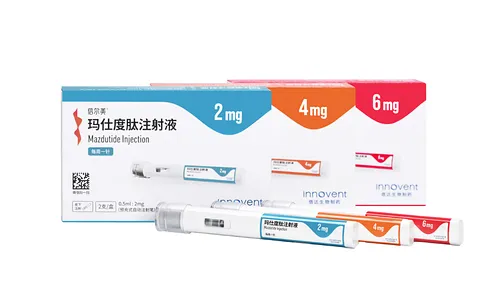
Mazdutide tests Innovent’s ability to build a chronic-care franchise alongside oncology. China approved it for adult chronic weight management in June 2025 and adult type 2 diabetes in September 2025, according to the company’s 2025 annual report, published in 2026.
The commercial implications require indication-level analysis. Innovent’s 2026 reimbursement application materials, published through China’s National Healthcare Security Administration, describe adult diabetes use. That application should not be assumed to mean that insurance covers every approved weight-management use.
For market planning, this means separating the approved population, prescribing pathway, and payment mechanism for each indication. A large obesity opportunity does not automatically translate into reimbursed demand. A credible commercial forecast needs assumptions about access, treatment persistence and net pricing, with sensitivity to changes in each.
The broader opportunity extends beyond the first product. Innovent’s June 2026 research presentations included oral GLP-1 programs, an amylin analog and an RNA-based approach targeting INHBE. Their different development stages make them research options whose eventual commercial contribution remains uncertain.
Innovent’s agreements allocate scientific work and commercial responsibility in different ways. Those terms reveal more about the business model than the largest potential payment.
The February 2026 Lilly collaboration assigns Innovent development from initial concept through Phase 2 completion in China. Lilly receives exclusive rights outside Greater China, while Innovent retains Greater China rights.
The agreement provides US350 million upfront,with upto approximately US$8.5 billion in additional development, regulatory, and commercial milestones, plus royalties.
The milestone amount depends on future events. It represents potential contractual consideration and carries a different risk profile than the upfront payment.
The May 2026 Pfizer agreement covers 12 programs, including eight originating at Innovent and four Pfizer-proposed discovery programs. Innovent leads development through Phase 1, after which Pfizer leads further global development.
Four programs carry exclusive global licenses for Pfizer. Another four give Pfizer rights outside Greater China. The remaining four involve shared development costs and joint commercialization in the United States and Europe, with profit sharing. Innovent retains Greater China rights for that joint group.
Financial terms include US $650 million upfrontandup to US $9.85 billion in milestones. The practical distinction is how much responsibility and downstream participation Innovent retains for each program.
The partnership flow also runs toward China. In June 2026, Lilly and Innovent agreed that Innovent would handle importation, marketing, distribution, and promotion of Verzenios, Lilly’s breast cancer medicine, in mainland China. Lilly retains manufacturing, supply, and development responsibilities.
This arrangement highlights a separate source of strategic value: the ability to bring another company’s medicine to local prescribers and patients. It also requires clear operating boundaries. Partnerships should assess supply reliability, promotional responsibilities, and commercial execution alongside scientific quality.
These agreements suggest Innovent is expanding its role by taking on selective responsibilities across the drug development process. Partners contribute different capabilities, while the company retains defined territories, work packages, or a share of future profits.
This structure deserves scrutiny at the operating level. A joint commercial role creates staffing and coordination obligations. A shared development program requires decisions about budgets, trial priorities, and timelines. Each retained responsibility needs people and systems behind it to deliver lasting value.
The lesson for a cross-border partnership is practical. Evaluate who controls development decisions, who funds the next trial, who supplies the product, and who owns the customer relationship. These details determine how scientific progress can become a sustainable business.
Innovent provides evidence of China’s growing contribution to that process; future approvals and operating results will determine its ultimate scale.
Innovent Biologics raises a broader question: which parts of China’s innovation model could improve your own business?
Founded by China specialist Ashley Dudarenok, ChoZan offers China market and consumer research, innovation learning expeditions, expert calls, and tailored workshops. Our free reports and Innovation Factory resource provide a starting point.
Explore our China research services to turn a broad interest in Chinese innovation into a focused question about customers, competition, or commercial strategy.
Book a consultation to discuss your research needs.
Dr. De-Chao Michael Yu founded Innovent and serves as its chairman and chief executive. The company’s 2026 disclosures identify him as both founder and current leader, helping readers connect the names Michael Yu and De-Chao Yu.
Innovent’s head office and principal business location in China are in Suzhou Industrial Park. Its annual report also lists a Hong Kong business address and a Cayman Islands registered office, each serving a different corporate purpose.
Innovent trades on the Hong Kong Stock Exchange under stock code 1801, also displayed as 01801. Use that identifier when searching official filings, since third-party platforms can format company names and market symbols differently.
Innovent describes its principal business as discovering, developing, manufacturing and selling medicines. Evaluate it as a product-focused biopharmaceutical business. Its manufacturing capabilities support that broader model; they do not establish that contract manufacturing is its primary activity.
Its portfolio also includes small-molecule treatments. The company’s March 2026 results identify medicines such as fulzerasib and taletrectinib alongside antibody-based products. The corporate name therefore should not determine how you classify every medicine or development program.
Search ClinicalTrials.gov using the study’s NCT number, then check the sponsor, eligibility criteria, endpoints, and record history. G-HOPE-001 uses NCT06238843. Match those details against the announcement before comparing its findings with another trial.
No. Takeda’s October 2026 announcement identifies FDA Fast Track status for IBI343 in previously treated pancreatic cancer while explicitly describing the medicine as unapproved. A development designation and permission to market a medicine are separate regulatory events.
IBI3032 targets once-daily oral dosing, while IBI3042 targets once-weekly oral dosing. These development goals address treatment convenience. Their clinical evidence, safety, and regulatory status require separate assessment before either program can support a commercial launch.
Innovent’s 2025 annual report reconciles non-IFRS profit by adjusting IFRS profit for share-based compensation and net foreign exchange effects. Read the reconciliation alongside reported earnings because the adjusted figure excludes costs or movements included under IFRS.
No. China’s healthcare security authority says formal application review establishes eligibility for further assessment, but it does not confirm inclusion on the reimbursement list. Check the final listing, covered indication, and effective date before making assumptions about mazdutide’s coverage.